

Time:2026-05-29
The commercial real estate sector is moving fast. In 2026, asset managers, real estate developers, and corporate facility engineers face intense pressure. They must slash sky-high operating costs, hit strict green building mandates, and improve workplace comfort. Traditional, isolated lighting structures no longer cut it. They waste massive amounts of electricity and require constant manual repairs.
Do you run a warehouse, a multi-floor office building, or an industrial park? If so, running a thorough commercial smart lighting cost review is the single best way to protect your budget.
Upgrading to a modern lighting control system is not just about changing bulbs. It is a strategic corporate investment. By combining high-efficiency LED hardware with intelligent Internet of Things (IoT) controls, enterprise buyers unlock major financial gains. This deep-dive financial guide breaks down upfront installation costs. It details hidden operational savings. It also provides the exact tools you need to get the best long-term return on investment (ROI).
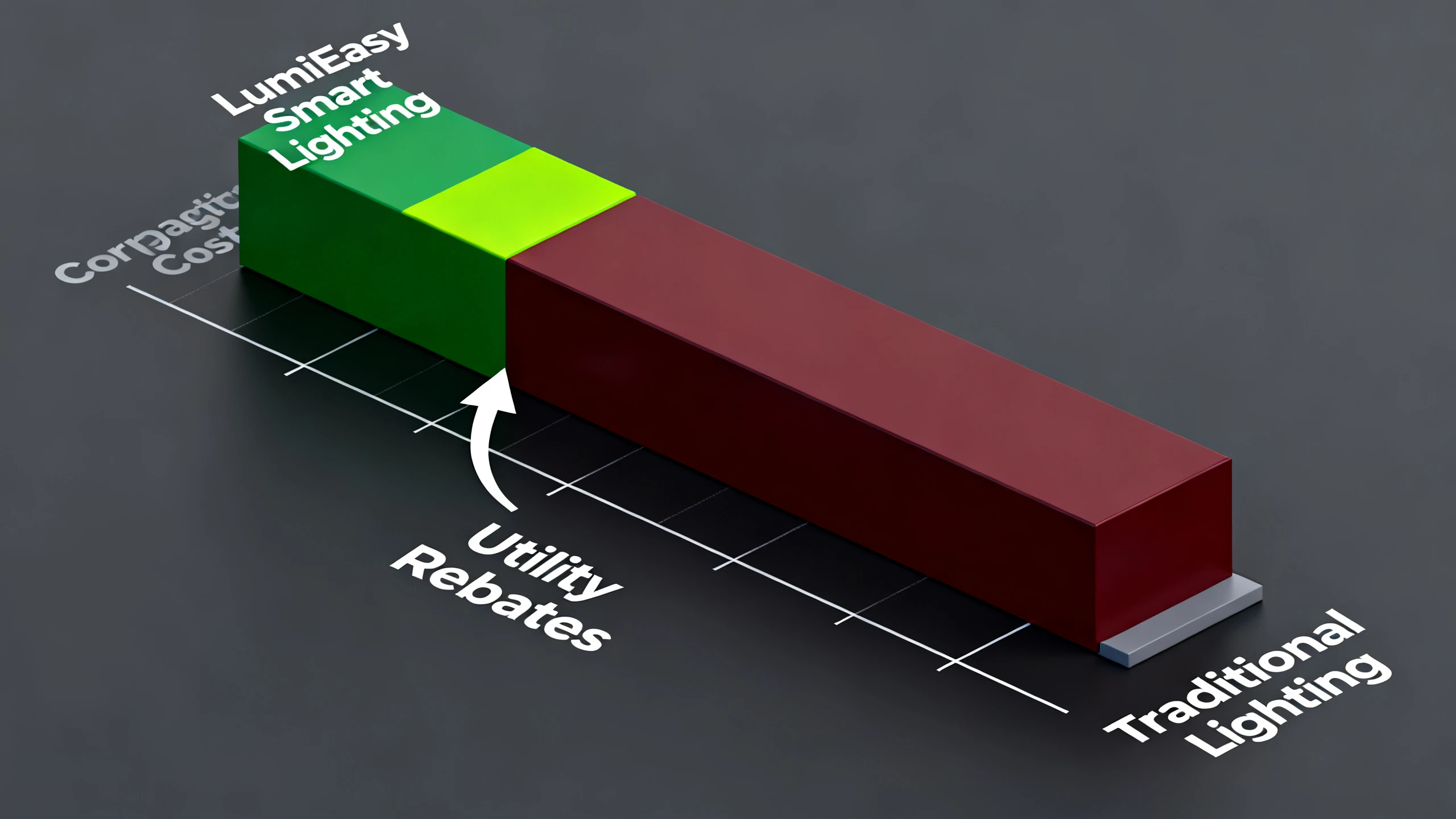
To build an accurate financial model, you must map out every part of your initial hardware and installation expense. Many companies only look at the retail cost of an individual led fixture. However, a true corporate cost breakdown covers five distinct capital areas:
High-Output LED Hardware and Fixtures: This represents the largest single hardware expense. Pricing spans a wide range based on your exact spatial needs, lens quality, and driver components. For example, you might outfit a large industrial space with heavy-duty high-bay lights. This choice demands premium thermal engineering to stop early driver failure.
Smart Components, Nodes, and Network Controls: Smart setups add intelligent elements to your lighting grid. This budget line item features embedded Bluetooth Mesh radio chips. It also includes Passive Infrared (PIR) motion sensors, ambient daylight sensors, and central Smart Gateways. While these advanced controls add to your starting hardware costs, they are the exact tools needed to trigger maximum long-term power drops.
Field Installation Labor and Wiring Rework: Contractor labor typically accounts for a significant portion of your total project invoice. Labor steps include taking down old fluorescent troffers or dangerous HID high-bays. Teams must also adjust ceiling support wires, mount every new led fixture, and connect digital control circuits.
Engineering Fees and Photometric Testing: Large commercial projects require professional lighting assessments, spatial planning, and photometric analysis. This engineering phase guarantees that your new fixture layout meets local building codes. It also creates a perfect light balance across work surfaces and avoids harsh glares that tire out workers.
Scrap Disposal and Material Recycling: Safe disposal of legacy equipment adds minor costs. Removing old fluorescent tubes or high-pressure sodium ballasts often requires certified disposal teams. These teams handle toxic mercury traces or hazardous materials safely.
Once your new smart system goes live, it instantly cuts your monthly utility overhead. The financial returns show up clearly in two distinct areas of your monthly power bill:
Upgrading legacy fixtures to standard LEDs drops your baseline lighting power consumption by 40% to 70% right away. However, adding an automated lighting control system pushes those energy savings past 75%. Instead of running lights at full power all day long, an intelligent layout uses advanced control strategies. These steps stop energy waste completely:
Occupancy and Vacancy Sensing: Sensors track human presence in real time. Does a warehouse aisle or corporate conference room stay empty for 10 minutes? If so, the local sensor node automatically turns off the local fixtures.
Daylight Harvesting Control Calibration: Ambient light sensors measure natural daylight flooding in from windows and skylights. The system dims artificial lighting to balance the incoming sunlight. This step keeps workspace light levels perfectly steady while using minimal grid power.
Task Tuning and Scheduling: A professional energy manager can set maximum brightness limits to 80% for non-critical zones. This function lowers energy bills further. It does not affect occupant visibility.
Traditional incandescent and high-intensity discharge (HID) lamps operate at extremely high temperatures. They convert up to 90% of their consumed energy into waste heat rather than functional light. In large facilities, this constant heat output places a massive, hidden burden on your commercial air conditioning units.
Premium, commercial-grade LEDs run remarkably cool to the touch. They produce up to 80% less waste heat than old-school bulbs. By switching a 100,000-square-foot facility to cool-running LEDs, you slash thousands of watts of waste heat from your building interior. Your building’s HVAC cooling pumps do not have to work nearly as hard to maintain a comfortable temperature. This thermal cross-effect drops your monthly air conditioning bill, speeding up your overall project payback timeline.
When executives calculate the ROI of a lighting upgrade, they often focus entirely on the electric bill. This is a major financial mistake. A complete commercial smart lighting cost review must include ongoing maintenance savings. This is the only way to see the true value of the upgrade. Taking a full-picture view typically reveals a huge benefit. Maintenance savings increase your true system ROI by 30% or more over a simple, energy-only projection.
Legacy fluorescent tubes and metal halide bulbs have short lifespans. They usually burn out after 10,000 to 20,000 hours of use. In a commercial facility running 12 to 24 hours a day, maintenance crews must constantly swap out dead lamps. This creates persistent operational expenses:
Buying replacement lamps, ballasts, and starters every few months.
Paying dedicated maintenance labor hours just to change bulbs.
Renting expensive scissor lifts to reach high warehouse ceilings or office lobbies.
Facing costly downtime when active production lines or warehouse aisles are blocked by maintenance ladders.
Quality commercial-grade LEDs are engineered for exceptional longevity, lasting between 50,000 and 100,000+ hours. At typical commercial runtime rates, these solid-state systems run smoothly for 10 to 15+ years. They do not need a single component replacement during this time. By switching to long-lasting LEDs, you cut out routine lamp replacement expenses completely and eliminate maintenance callbacks. Your facility team can stop climbing ladders and refocus their valuable hours on mission-critical building repairs.
One of the easiest ways to skyrocket your smart lighting ROI is to look for public and private financial incentives. You should do this aggressively before signing any purchase orders. Commercial buildings consume a huge share of the global power grid. Because of this, utility providers and governments offer massive funding to speed up smart upgrades.
Most major commercial electric utilities offer direct cash-back programs for certified LED retrofits. These come in two styles:
Prescriptive Rebates: These programs offer a fixed, predictable dollar amount back. You get a set credit for every specific fixture type you install. For example, you might get $25 back per led fixture.
Custom Rebates: These pay out based on total measured energy demand reduction across your entire facility. For massive commercial complexes, custom rebates can cover up to 50% of your total project material invoices.
In many regions, building owners can claim significant tax advantages. For example, look at the United States market. The 179D Commercial Buildings Energy-Efficiency Tax Deduction is a great tool. It allows corporate property owners to claim a massive tax deduction per square foot. To get it, you must install qualifying high-efficiency lighting and smart control networks.
To lock in these crucial savings and maximize your project ROI, always check your hardware sources. Ensure your alternative component sourcing sticks to hardware that carries proper industry quality listings. Look for DesignLights Consortium (DLC) certification. Non-certified, ultra-cheap unbranded imports do not qualify for utility rebates. If you buy them, you will have to pay the entire bill on your own.
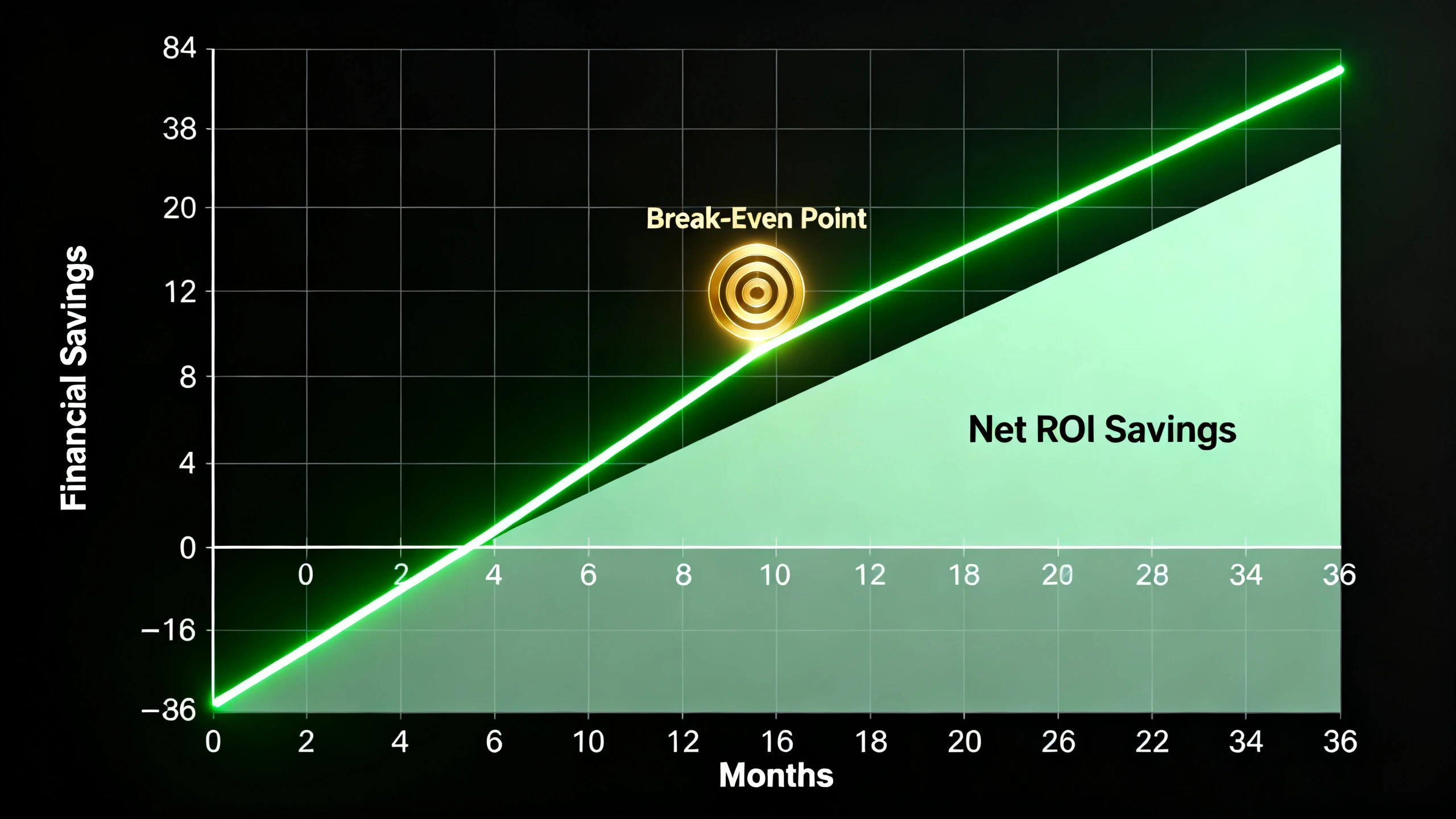
Beyond direct utility drops and labor savings, modern networked lighting layouts create a powerful new corporate resource. They integrate smoothly with your existing building management systems to provide continuous, actionable operations data.
Alternative smart sensors do more than just switch lights on and off based on human presence. They can do this easily when they communicate across a unified wireless network. They track fine-grained environmental data throughout your entire facility layout. By routing this uncorrupted data back through a central Smart Gateway, asset managers can build comprehensive data models:
Space Use Data Collection: Real-time PIR motion tracking logs the exact duration of room usage. This identifies empty zones or underused office floors. This data helps corporate teams downsize or repurpose real estate effectively.
Daylight Optimization Logs: Continuous photocell lux tracking near windows and skylights monitors live daylight levels. This tracks how well natural light replaces grid power. It provides the empirical proof needed to lower facility carbon footprints, optimize cleaning schedules based on real room usage, and earn prestigious international green building certifications.
Predictive System Maintenance: Live operating temperature and wireless signal tracing across nodes flags efficiency drops or hardware issues early. This allows teams to complete quick fixes before a total component blackout occurs.
Q: Can LumiEasy sensors help us qualify for maximum utility rebates and tax credits?
A: Absolutely. This technical validation ensures that your upgrade projects qualify for top-tier prescriptive and custom utility rebates. All LumiEasy high-performance sensors and components are fully compliant with current DesignLights Consortium (DLC) performance standards. This compliance helps you offset up to 50% of your starting capital costs.
Q: How does LumiEasy lower upfront installation labor costs during a commercial lighting retrofit?
A: Traditional high-voltage sensors require heavy metal conduit and thick copper wiring. They also need expensive, certified electricians to handle hazardous line-voltage circuits. LumiEasy eliminates this issue. We specialize in highly adaptable low-voltage systems operating on a safe 12v/24v dc input loop. LumiEasy low-voltage sensors clip into place quickly using simple control wires. This design allows general data technicians to complete installations rapidly without metal pipes, cutting your labor costs in half.
Q: We want to use daylight harvesting to maximize our ROI. How does LumiEasy prevent system setup errors?
A: Traditional daylight harvesting calibration often fails because technicians have to physically climb ladders to adjust mechanical dials, leading to imprecise settings. LumiEasy stops this problem completely. We link all sensors to advanced ble commissioning tools. An experienced energy manager can handle a complete, precise lighting sensor sensitivity adjustment completely from the floor. They use intuitive smartphone or tablet apps. This workflow guarantees optimal energy savings with zero ladder maintenance costs.
Q: Can LumiEasy components work with our existing third-party central controller systems?
A: Yes. LumiEasy alternative hardware utilizes open, standardized Bluetooth Mesh profiles and certified Bluetooth NLC models. This design means our smart devices communicate flawlessly with your existing central controller and third-party lighting nodes. This setup allows you to scale up your building network smoothly. You can grow without getting trapped by a single closed hardware vendor.
Q: Are LumiEasy sensors durable enough to maintain a high ROI in harsh industrial settings?
A: Yes, our equipment is built for a maximum service life. Do you manage rough commercial spaces like outdoor loading bays or unheated distribution hubs? For these areas, LumiEasy offers specialized rugged options. They carry a verified linear smart sensor ip rating up to IP65/IP66. These housings use tight physical seals to protect the internal chips. The casing keeps out fine dust, ambient moisture, and water washdowns. This protection prevents early equipment failures and keeps your maintenance costs at zero.
【Contact us for a free quote】
Related Articles
Commercial Smart Lighting Cost Analysis: Unlocking Long-Term Savings for Businesses


)
)
)
)

+86 15899791249

+86 755 2955 3313


Address: Huafeng No.1 Science and Technology Park, Sanwei, Bao'an District, Shenzhen, Guangdong, China.
