

Time:2026-06-16
Managing large industrial facilities requires strict budget control. Traditional high-bay lights waste too much power. They run at full output over empty warehouse aisles all day. This bad setup creates huge electric bills every month.
Mixing different hardware brands creates severe tech bottlenecks. Mismatched drivers and wireless sensors fail to connect. Signal lines drop out. This integration failure leaves property directors trapped with single-vendor hardware loops.
Using a clear commercial smart lighting energy savings plan solves these errors. Smart Networked lighting control systems ensure all ceiling devices work together out of the box. Pre-tested hardware pairs fast. It eliminates field debugging entirely. This clean approach lowers setup mistakes. It connects smoothly with cloud tracking tools and helps you qualify for major utility rebates.
Smart Networked lighting control systems shift your property away from old manual breaker panels. This advanced framework introduces localized, intelligent hardware tracking at the fixture level. Every high-bay luminaire operates as an independent smart data point. Each housing features a built-in motion sensor, a low-voltage microchip, and a wireless radio antenna. This distributed setup provides excellent system backup. If one station drops offline, neighboring units route the signals without any delay. The overhead grid continues to operate normally.
This self-healing setup uses open digital streams to communicate with your central software dashboard:
Dynamic Mesh Topologies: Factory-certified fixtures form flexible wireless pathways. These paths guide data packets safely around structural steel beams and high product pallets.
Live Node Monitoring: Compatible devices stream constant runtime reports. They show real-time dimming percentages and immediate warning signals straight to your display.
Direct Cloud Integration: Open software channels allow your main corporate database to import energy metrics instantly. This keeps your compliance logs accurate.
Using this modular setup allows your electrical team to group lights instantly. You can change standby timer levels using a simple computer app. Technicians no longer need to use high scissor lifts just to modify the settings of a single ceiling sensor.
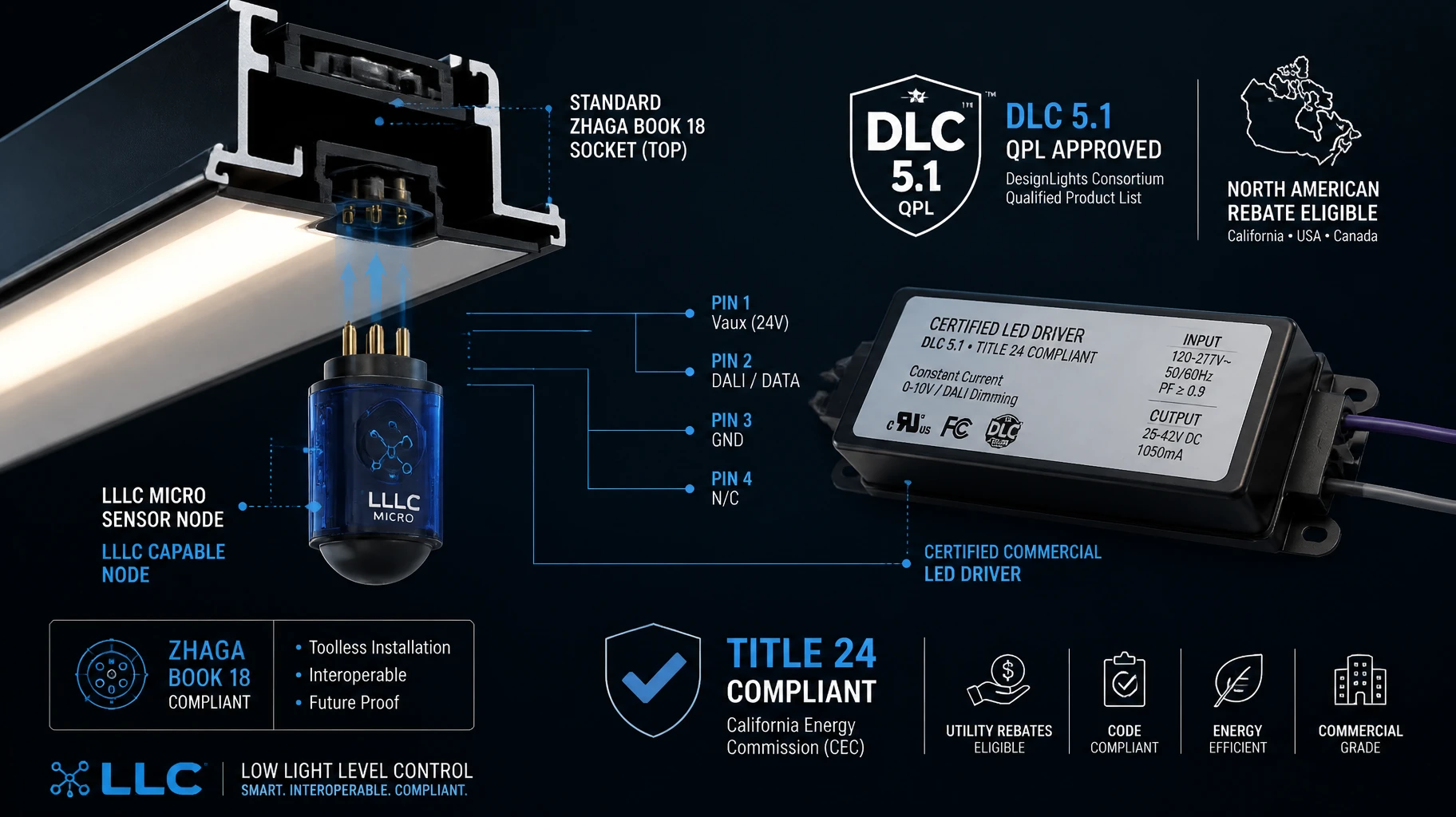
Modern commercial networks require smart lighting components that follow strict interoperability rules. Testing your hardware keeps the whole ceiling grid safe. It prevents random software bugs and communication lags. The reference index below shows the exact specifications that procurement managers look for. Matching these targets ensures a smooth commercial lighting diagnostics workflow across your facility:
Signal Transport Stability: Stops connection drops across mixed hardware grids. It keeps command response times under 100 milliseconds.
Modular Hardware Interface: Allows compact sensor modules to snap directly into the fixture body. No custom wire splicing is needed.
Smooth Dimming Range Performance: Delivers smooth dimming changes from 100% down to 1% power. This preserves high visual comfort for employees.
Continuous Ambient Light Ingestion: Tracks natural sun entering through skylights. It lowers fixture output automatically to maximize utility savings.
Network Data Protection Protocol: Validates secure wireless encryption keys at the hardware level. This protects internal company networks from digital threats.
Central Enterprise Log Sharing: Sends real-time sensor updates and power diagnostic logs straight into your main database.
Choosing fixtures that match this clean profile protects your capital investments from early software bugs and signal blind spots.
Let us review a real-world retrofitting project completed for an international supply chain hub. This field example shows how advanced automated controls lower operational costs quickly.
The logistics company managed a massive 75,000-square-meter facility. Their old lighting setup kept every aisle fully bright 24 hours a day. This caused massive electric bills. When the facility team tried to add standard wireless sensors from random brands, the high steel racks blocked the signals. Nodes dropped offline constantly. This created unexpected warehouse blackouts. These lighting drops slowed down automated sorting lines and created safety hazards for forklift drivers.
The logistics board solved these communication errors by deploying a high-performance commercial smart lighting energy savings framework. They swapped out their old high-bays for smart LED fixtures featuring factory-embedded wireless sensors. The technical integration followed three clean rules:
Automatic Network Paths: The new high-bays built a self-healing wireless mesh network. It routed data packets around tall inventory piles easily.
Dynamic Aisle Tracking: Embedded motion sensors detected approaching workers. They brought specific zones to full brightness while leaving empty aisles at a low standby level.
Unified Data Ingestion: The facility team linked their wireless lights directly to their core warehouse software using open data streams.
Audited performance logs collected during the first 14 months of live operations showed excellent results across the entire facility:
Setup and Commissioning Time: Accelerated by 44%. Pre-validated components paired instantly without field debugging.
Total Lighting Power Demand: Achieved a major energy reduction of 61% by combining occupancy tracking with daylight sensing.
Floor Safety Incidents: Dropped to zero. Responsive sensors turned lights on instantly along active forklift paths.
Routine Maintenance Labor: Slashed by 54% through the use of automated software tracking that flags failing drivers early.
The commercial lighting rebate landscape is undergoing a massive shift. Historically, utility incentive programs focused on flat payouts for simple LED swaps. However, due to widespread LED adoption, utility administrators are changing their financial strategies. Modern utility goals require deeper, measurable grid demand reductions. To achieve this, programs are moving away from simple equipment swaps. They are heavily incentivizing smart building automation.
This evolution presents a massive capital opportunity for businesses upgrading their networks:
Strategic Incentive Increases: Prescriptive lighting incentives have risen an average of 17% across North America. Specific high-bay categories climbed over 30%.
The Rise of Control Adders: Utilities aggressively promote smart controls. They boost average rebate values for integrated sensors by 12% to 20%.
Shifting to Energy-Based Metrics: Programs move toward performance calculated by watts reduced or annual kilowatt-hours saved. This approach heavily favors smart systems that actively minimize runtime.
Streamlined Prescriptive Tracks: Over 63% of NLC incentives are now handled through prescriptive tracks rather than complex custom applications. This change simplifies verification and pays out rewards much faster.
LED-to-LED Upgrade Payouts: For facilities that adopted early LED models years ago, programs allowing LED-to-LED upgrade rebates have expanded by 22%. This applies if the new fixtures feature advanced smart controls.
Furthermore, several states enforce strict regulatory bans on old fluorescent tubes. In these territories, utility companies are sunsetting traditional lamp retrofits. Some regions now explicitly require advanced lighting controls as a baseline mandatory rule just to qualify for any lighting project incentives.
Setting up open-standard wireless lighting controls requires careful planning. High concentrations of steel racks, thick concrete walls, and metallic equipment can block radio waves. Moving machinery and other wireless industrial tools can cause severe signal interference. These technical bugs disrupt your central control system. They lead to delayed sensor response times and cause dropped energy logs. Bad wireless layouts create completely unresponsive lighting zones. You must keep your data paths clear to ensure high reliability.
Following these clean wireless deployment rules protects your digital data pathways:
Strategic Gateway Distribution: Put wireless network bridges at elevated, clear locations across the ceiling grid. Avoid placing them near heavy electrical transformers or high-power Wi-Fi routers.
Enforcing Strict Node Grouping Limits: Divide vast building floors into small sub-mesh networks. Cap each group at a maximum of 100 nodes to prevent data packet collisions. This keeps the radio channels fast.
Optimizing Sensor Polling Intervals: Set your software to pull non-critical energy data during low-traffic windows. This keeps the network clear for instant motion commands during peak working shifts.
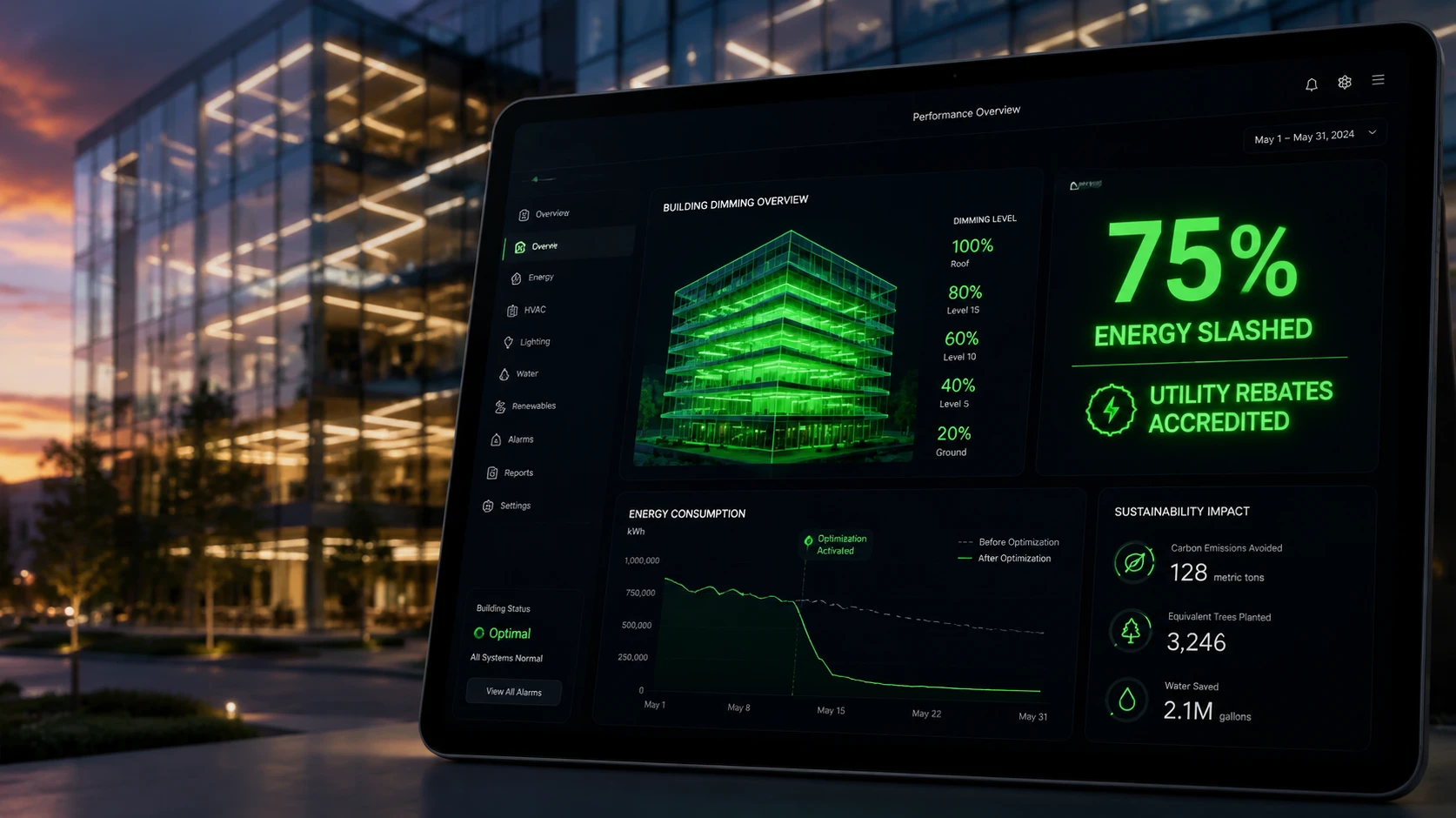
Investing in certified networked controls delivers a rapid return on investment (ROI). It slashes daily electrical waste and simplifies building layout adaptations. This automated approach is effective for high-volume fulfillment spaces, cold-storage centers, and manufacturing plants. The initial capital spent on acquiring pre-validated fixtures is recovered within a short 14 to 20 months due to modern utility cash injections.
On-Demand Power Trimming: Eliminates thousands of wasted kilowatt-hours by matching light output with real-time floor occupancy.
Layout Modification Savings: Lowers space conversion costs by 82%. Grouping updates happen in the cloud without pulling new wires.
Automated Usage Logging: Replaces manual check sheets with secure cloud tracking tools accurate to within 1%.
Proactive Component Alerts: Drops emergency repair costs by sending automated warnings before a component breaks down completely.
This software-driven adaptability eliminates the need for expensive structural overhauls. It stabilizes your monthly building maintenance budgets, reduces overhead, and keeps your commercial spaces running smoothly.
Corporate asset buyers do not choose hardware based on cheap unit prices alone. Modern industrial procurement requires clear proof of deep industry experience. You need technical mastery, structural reliability, and strict adherence to international quality models. Designing your indoor environments with intelligent building controls shows a strong commitment to quality work, field-tested expertise, and good asset management.
Your property's interior electrical networks must follow trusted safety codes. These include UL standards, CE markings, or RoHS rules. Following them proves your team's engineering skills in modern industrial design.
Show the world that your facilities achieve a permanent energy reduction during working hours. This path helps protect the environment, cuts your carbon footprint, and supports green smart grid initiatives. It marks your company as a trusted leader in sustainable corporate operations.
Lowering your daily utility bills while keeping your property safe requires a smart, unified approach. It demands pairing rugged, energy-saving lighting controls with durable, intelligent hardware components. Upgrading to a professional commercial system protects your long-term budget, satisfies strict safety codes, and ensures reliable lighting.
Are you ready to stop manual check waste, eliminate emergency maintenance callouts, and bring reliable, automated efficiency to your commercial properties? Do not let drifting timers or unmonitored systems inflate your operating costs and drain your maintenance funds. Partner with an industry-tested commercial automation and lighting leader. We will help you deploy high-efficiency, network-tested sensor frameworks built to your exact site needs.
Do you need deep technical code sheets, product catalog updates, or an exact price quote for your next facility upgrade? Connect with our specialized engineering advisory desk directly through our
A: Yes. All LumiEasy and partner-brand commercial networks are engineered for native cross-platform networking. They link directly into your current smart building framework or Networked lighting control systems. Our open wireless data streams convert smoothly into standard building protocols. This allows your IT teams to view real-time occupancy maps and energy logs directly inside your primary operational console.
A: Yes, they can. The standardized framework handles data across all linked components smoothly. When using LumiEasy wireless extensions, our sensors feed real-time occupancy updates directly to automated ventilation controls. This allows your maintenance team to adjust airflow patterns based on active space traffic. It optimizes energy efficiency across your entire facility footprint.
A: Maintaining data integrity and system uptime are central pillars of LumiEasy's product engineering strategy. Every luminaire built to unified compatibility criteria features non-volatile onboard memory chips. If your main gateway loses its cloud connection, individual nodes store localized occupancy data and operational logs locally. As soon as the network connection is restored, the system uploads the stored files to your analytics dashboard without data loss.


)
)
)
)

+86 15899791249

+86 755 2955 3313


Address: Huafeng No.1 Science and Technology Park, Sanwei, Bao'an District, Shenzhen, Guangdong, China.
