

Time:2026-06-24
Commercial property directors face severe pressure from rising operational energy costs and strict local environmental rules. Many large factories and warehouses keep their lights running at full power all day long. This waste happens even when big windows and skylights fill the floor with natural sunlight. This critical operational gap wastes immense power, inflates monthly corporate utility bills, and severely damages long-term environmental sustainability ratings. To resolve these inefficiencies, enterprise asset teams must look past unverified product brochures and generic green slogans. They demand auditable, compliance-ready proof of true resource efficiency before approving capital funds. Basic tools create data gaps. This makes it impossible to prove real environmental compliance to your board.
Deploying a certified daylight harvesting energy savings performance verification ESG framework resolves these grid bottlenecks. Smart photo sensors continuously track true ambient light levels along active picking aisles and office zones. The system runs daylight harvesting energy saving rules. It dims your LED lamps automatically when the sun is bright. These automated adjustments lower daily power demand, secure stable utility savings, and generate clean tracking files. Smart web-linked light controls keep your site safe and efficient. They also help you meet global green rules easily.
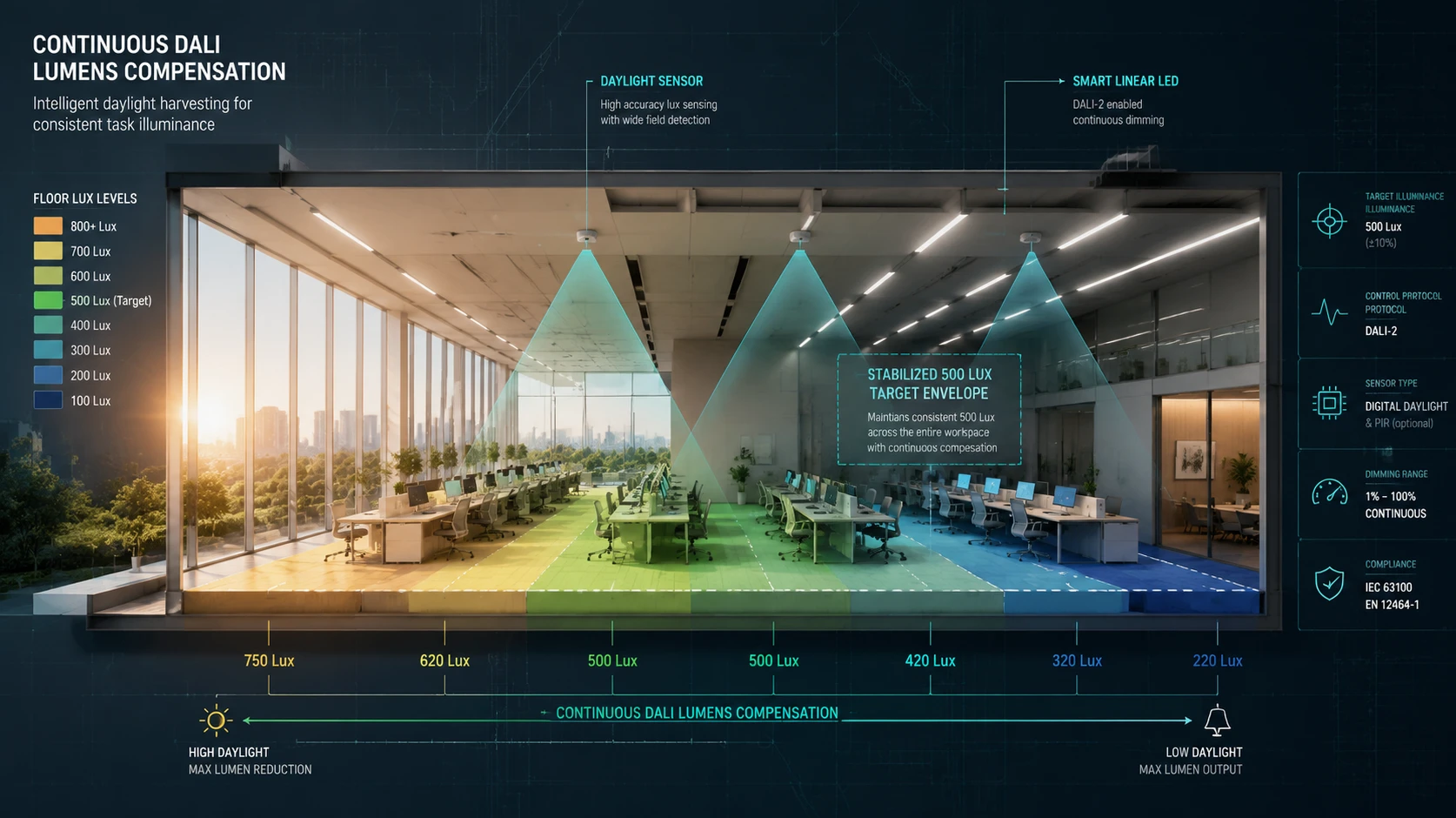
Modern commercial structures need reactive facility networks to capture maximum energy savings. Automated daylight harvesting systems use high-precision photodiode elements to monitor real-time illumination across deep indoor workspaces. These localized sensors track the total light hitting the floor, combining both natural sun rays and artificial lamp output. This dynamic tracking ensures that the facility never over-illuminates an active zone while the sun is bright outside.
The hardware operates on a continuous, closed-loop control system that monitors the internal environment in real-time. The sensor faces directly down toward the active work zone, tracking the reflected light from the floor and shelving. When natural sunlight enters the room, the sensor notes the rising light levels and alerts the central controller.
The controller sends a low-voltage signal to the electronic LED drivers via the central bus. The system relies on smooth 0-10V dimming curves to lower fixture power draw incrementally. This change occurs slowly over several minutes, making it completely unnoticeable to your warehouse workers. This smooth transition protects staff from eye strain and distraction while slashing utility draw across busy production runs.
Enterprise procurement desks cannot rely on estimated savings curves or promotional simulations. Proving real financial returns to green auditors requires a structured, multi-week field testing process. This methodical auditing path ensures all data meets international standards for corporate environmental accountability. Using a daylight harvesting energy savings performance verification ESG blueprint fixes timer errors. It cuts bills and gives you clear data logs:
Phase 1: Base Utility Tracking. Engineers mount digital sub-meters to track raw power draw for 30 days before activating any automation. This sets an undeniable baseline of unmanaged energy use, recording daily spikes and operational peak hours.
Phase 2: Live Sensor Logging. The system logs every dimming step and tracks weather changes. It works perfectly on both sunny days and dark storms.
Phase 3: Auditable Delta Analysis. Specialized software cross-checks the active dimming files against the base numbers. This isolates true kilowatt-hour reductions, giving asset teams data files for green reporting.
Clean energy data helps sites get local green grants faster. It also speeds up carbon tax credits and cash rebates.
Modern corporate properties rely on integrated networks to cut building upkeep fees and streamline daily facilities management. Isolating your facility data limits your control over daily operations and reduces your overall return on investment. Link your motion sensors and light sensors to one central platform. This setup unlocks true site efficiency across your rooms.
When these nodes link into smart building automation networks, they handle multiple tasks at once without human help. During high-traffic morning hours, the sensors run daylight harvesting programs to lower electricity use. At night, the same tools act as a guard shield for your commercial security systems. They flag intruders using smart motion detection.
To keep lighting levels completely balanced, installers set up distinct zone boundaries parallel to your facility windows:
Zone 1 (Near Windows): Lights close to the glass dim deeply because they get direct, bright sun all day.
Zone 2 (Middle Rows): Middle rows dim to a medium level. This blends daylight with lamp light to keep coverage even.
Zone 3 (Deep Inside): Inner rows stay at high power. This ensures dark paths and rear walls stay perfectly bright.
If a warehouse aisle stays empty of workers for more than ten minutes, the central monitoring systems send a new command. The system dims that specific zone down to 10%. This cuts power draw further while keeping the area safe and clear.
Corporate buyers and system engineering groups choose hardware based on long-term performance metrics rather than cheap unit invoices. Installing low-grade control hardware leads to constant field failures, expensive downtime, and high maintenance repair costs. Partnering with an experienced, industrial-grade manufacturing facility is vital to securing your investment.
When reviewing factory manufacturing lines and component suppliers, prioritize these technical milestones:
Official Code Stamps: Check for clear UL, CE, and RoHS marks on the sensors. This proves they meet global electrical safety rules.
Low Idle Power: Choose parts that use under 0.5 watts at night. This stops phantom power drain across your network.
Open Communication Standards: Select controllers that support open protocols like BACnet or 0-10V interfaces. This open layout avoids vendor lock-in and keeps your future expansion options flexible.
Factory Warranty: Buy from partners who give a full five-year warranty. This ensures reliable service over years of heavy use.
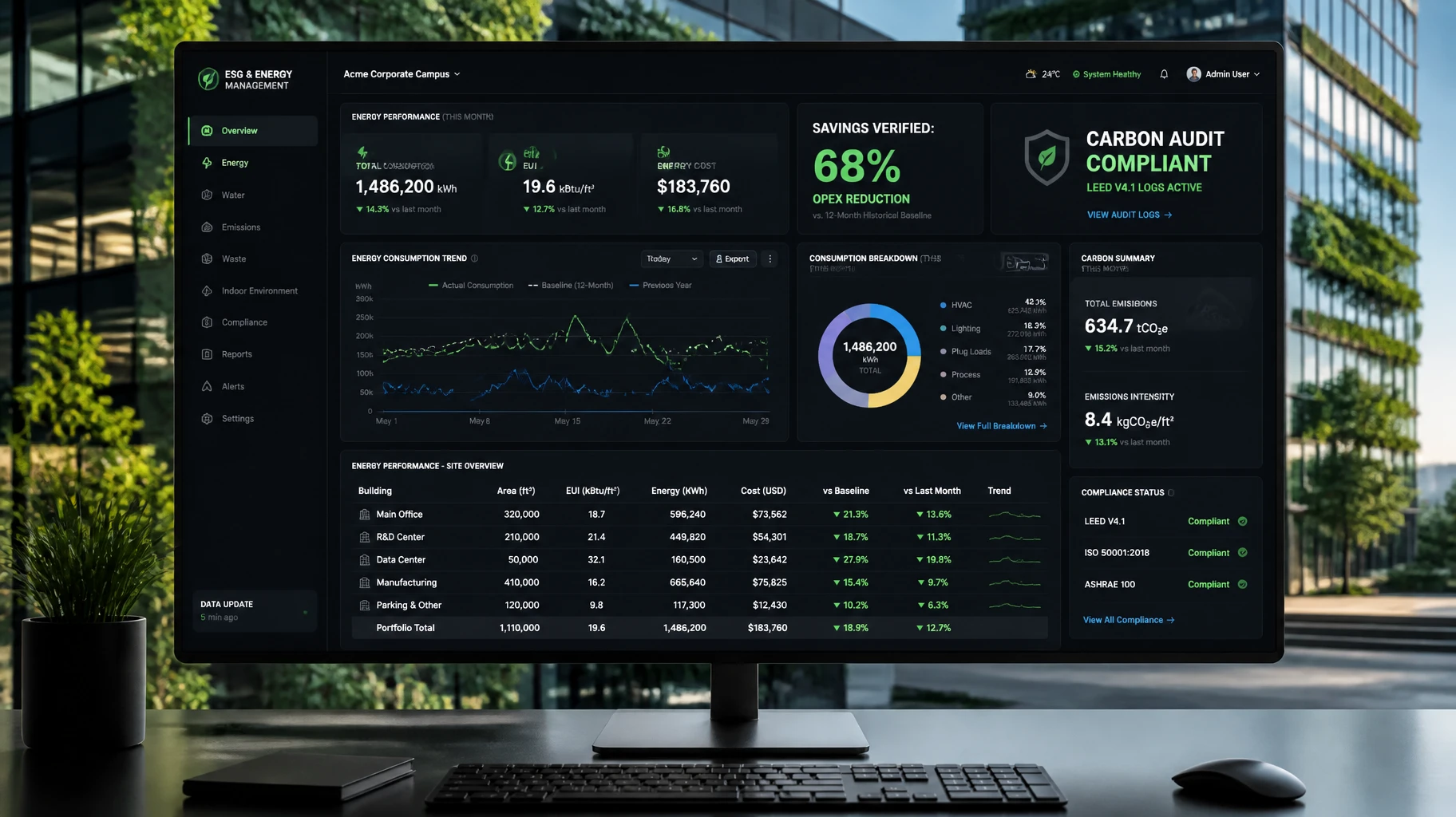
Optimizing your commercial property network requires a balanced approach to data accuracy and grid efficiency. This automated setup removes manual errors completely. It lowers upkeep fees and saves you money for years while helping your enterprise hit strict carbon reduction goals.
Do not let unmanaged lighting grids or outdated hardware drain your corporate budgets and lower your green asset scores. Invest in industrial-grade, automated light tracking systems built for demanding commercial environments.
Are you ready to lower your costs, claim high cash rebates, and bring true data tracking to your site? For data sheets, bulk pricing, or custom layout advice, contact our engineering desk. Visit our
A: Our smart sensors track real-time ambient conditions rather than relying on fixed calendar clocks. On dark, stormy days, the LumiEasy system automatically ramps fixture brightness up to 100% to protect worker safety. The system logs these changes to give your team an exact account of grid use under all weather conditions.
A: Yes. LumiEasy sensors use standard 0-10V and BACnet protocols. They connect cleanly with your existing video platforms, asset management software, and security infrastructure without interface friction. This open setup lets our tracking tools trigger automated dimming. It streams power logs to your main database easily.
A: A: Basic timers cannot react to changing natural light or sudden storms. This leads to wasted power or unsafe dark spots. LumiEasy hardware pairs strict daylight harvesting tracking with instant dimming controls. This automated setup removes manual errors completely. It lowers upkeep fees and saves you money for years.


)
)
)
)

+86 15899791249

+86 755 2955 3313


Address: Huafeng No.1 Science and Technology Park, Sanwei, Bao'an District, Shenzhen, Guangdong, China.
