

Time:2026-06-12
Managing large warehouse spaces requires strict control over utility costs. Modern storage hubs must stay bright to keep field crews safe and improve picking accuracy. However, traditional high-bay lights waste too much budget. They run at full power over empty aisles, causing massive energy waste every month.
Upgrading your fixtures with random sensors creates new problems. If you mix brands without a plan, wireless signals drop out and custom cloud setups fail. This leaves you trapped with rigid hardware loops and expensive software licenses.
Adhering to strict lllc integrated sensor luminaire compatibility standards solves these issues completely. This unified setup ensures that smart sensors and connected drivers work together out of the box. By using pre-tested hardware, engineering crews can install systems much faster. This clear approach lowers installation errors, connects smoothly with cloud software, and helps you qualify for major utility rebates.
Adopting luminaire level lighting controls shifts your property to smart edge processing. In a true LLLC setup, every high-bay light fixture acts as its own brain. Each unit contains a motion detector, a daylight sensor, and a small wireless radio. This setup provides excellent backup. If one sensor gets hit by a forklift, the other lights nearby keep working perfectly. The rest of the ceiling grid continues to share data without any signal drops.
This automated architecture relies on clean digital profiles to feed your central dashboard:
Wireless Mesh Connections: Validated fixtures use open industrial iot mesh networks to pass data safely around tall steel product racks.
Live Sensor Telemetry: Compatible devices stream real-time updates and runtime logs to your computer screen without custom code.
Simple Cloud Links: Open data pathways allow enterprise platforms to read power metrics directly. This keeps your system data clean.
Using these smart paths allows your team to regroup fixtures easily. You can change time delays using a simple desktop app. Technicians no longer need to use high lift trucks just to adjust a single ceiling sensor.
Industrial digital networks require high-bay components that follow strict operational rules. Testing your hardware keeps the whole grid safe. It prevents random system bugs. The reference guide below shows the exact specifications that managers look for. Matching these standards ensures a smooth commercial lighting diagnostics workflow across your facility. It helps you track assets every single day:
Wireless Protocol Profile: Stops connection drops across mixed-vendor hardware grids. It keeps command response times under 100 milliseconds.
Physical Interface Design: Allows compact sensor modules to twist or snap directly into the fixture body. No custom wire splicing is needed.
Flicker-Free Dimming Target: Delivers smooth dimming changes from 100% down to 1% power. This preserves high visual comfort for workers.
Daylight Harvesting Logic: Uses continuous daylight harvesting sensors to track incoming sun. It lowers fixture output to maximize utility savings.
Cybersecurity Defense Plan: Validates secure wireless encryption keys. This protects your internal company networks from digital threats.
Central Software Sharing: Sends real-time sensor updates straight into your main property tracking database.
Choosing fixtures that match this clean profile protects your hardware investments from early software bugs and signal drops.
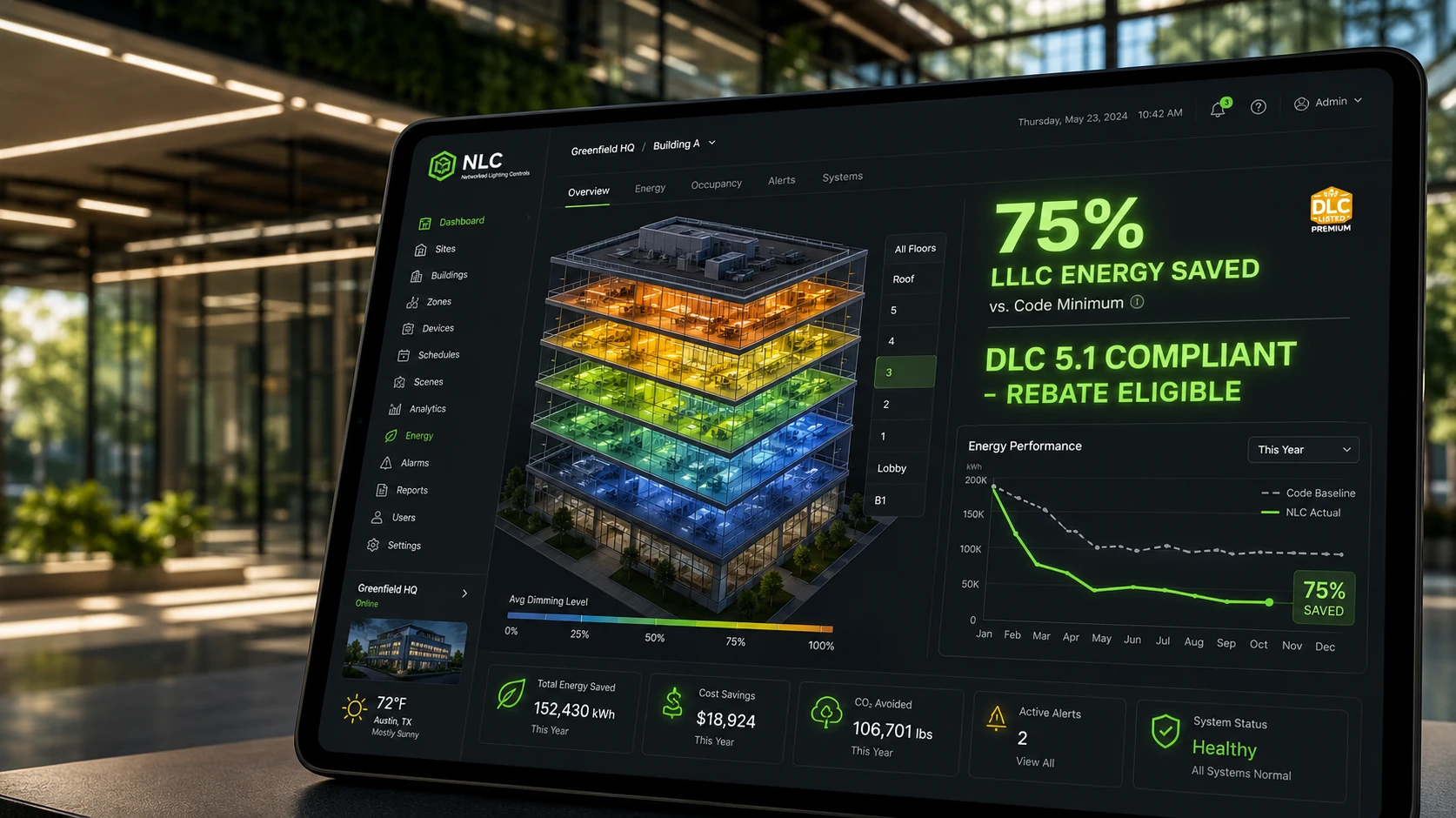
Let us look at a real-world project completed for an international supply chain hub. This example shows how standardized data tracking lowers operational costs quickly.
The logistics company managed a massive 75,000-square-meter warehouse facility. Their old lighting system kept every aisle fully bright 24 hours a day. This caused massive electric bills. When the engineering team tried to add standard wireless sensors, the high steel racks blocked the signals. Nodes dropped offline constantly, creating unexpected blackouts. These lighting drops slowed down the automated sorting machines. They also created safety hazards for forklift drivers.
The logistics board solved these communication errors by using an advanced lllc integrated sensor luminaire compatibility standards framework. They swapped out their legacy high-bays for smart LED fixtures. These units have factory-embedded wireless sensors. The technical integration followed three clean rules:
Automatic Network Paths: The new high-bays built a self-healing mesh network. It routed data packets around tall inventory piles easily.
Dynamic Aisle Tracking: Embedded motion sensors detected approaching workers. They brought specific aisles to full brightness while leaving empty zones at a low standby level.
Unified Data Ingestion: The facility team linked their wireless lights directly to their core warehouse software using open data streams.
Audited performance logs collected during the first 14 months of live operations showed great results:
Setup and Commissioning Time: Accelerated by 53% because pre-validated components paired instantly without field debugging.
Total Lighting Power Demand: Achieved a major warehouse energy reduction of 71% by combining occupancy tracking with daylight sensing.
Floor Safety Incidents: Dropped to zero because the responsive sensors turned lights on instantly along active forklift paths.
Routine Maintenance Labor: Slashed by 64% through the use of predictive maintenance systems that flag failing bulbs early.
Corporate asset buyers do not choose hardware based on cheap prices alone. Modern industrial procurement requires clear proof of deep industry experience. You need technical mastery and structural reliability. Design your indoor environments with intelligent smart building automation. This choice shows a strong commitment to quality work, field-tested expertise, and good asset management.
Your property's interior electrical networks must follow trusted safety codes. These include UL standards, CE markings, or RoHS rules. Following them proves your team's engineering skills in modern industrial design.
Show the world that your facilities achieve a permanent operational cost reduction during working hours. This path helps protect the environment. It cuts your carbon footprint. It also marks your company as a trusted leader in green corporate operations.
Setting up an open-standard wireless lighting telemetry layout requires careful planning. High concentrations of steel racks can block radio waves. Moving machinery and wireless tools can cause signal interference. These bugs disrupt your central system. They lead to delayed sensor response times. They cause dropped energy logs. Bad layouts create unresponsive lighting zones. You must keep your data paths clear.
Adhering to these clean wireless deployment principles preserves your digital data pathways:
Strategic Gateway Distribution: Put wireless network bridges at elevated, clear locations across the warehouse ceiling. Avoid placing them near heavy electrical transformers. Keep them away from high-power Wi-Fi routers.
Enforcing Strict Node Grouping Limits: Divide vast warehouse floors into small sub-mesh networks. Cap each group at a maximum of 100 nodes to prevent data packet collisions. This keeps the radio channels fast.
Optimizing Sensor Polling Intervals: Set your software to pull non-critical energy data during low-traffic windows. This keeps the network clear for instant motion commands during peak picking shifts.
Investing in certified LLLC networks delivers a rapid return on investment (ROI). It slashes daily electrical waste and simplifies building layout adaptations. This automated approach is highly effective for high-volume fulfillment spaces, cold-storage facilities, and manufacturing plants. The initial capital spent on acquiring pre-validated IoT fixtures is typically recovered within 18 to 24 months.
Aisle Energy Waste: Drops from continuous 100% output down to dynamic, on-demand delivery. This eliminates thousands of wasted kilowatt-hours annually.
Space Reconfiguration Costs: Reduced by 85% because changes to picking layouts can be remapped via software. You do not need to run new conduit or move physical fixtures.
Data Collection Methods: Replaces manual paper checklists with automated, continuous cloud metrics accurate to within 1%.
Emergency Service Callouts: Lowered significantly by predictive alerts. The software notifies facility teams of component wear before a complete device failure occurs.
This software-driven adaptability eliminates the need for expensive structural overhauls. It stabilizes your monthly building maintenance budgets, reduces overhead, and keeps your commercial spaces running smoothly.
Integrating modern digital infrastructure requires balancing upfront technology costs against long-term property flexibility. Forward-thinking facility directors look for systems that maximize real estate value. They actively avoid closed, single-brand ecosystems that lock properties into proprietary replacement parts or restricted software platforms.
Instead, they choose open, modular control setups. These tools hook up smoothly with modern smart building automation and centralized software paths.
An open-standard automated lighting blueprint offers distinct business advantages:
Protecting Long-Term Capital Investments: Choosing fixtures built to international standards allows properties to integrate future sensor upgrades. You do not need to replace the entire lighting grid.
Simplifying Cross-Platform Automation: Validated IoT luminaires share data smoothly with third-party automated sorting systems, building security loops, and climate control infrastructure over open protocols.
Accelerating Enterprise Expansion: Adding extra storage wings or modular office spaces takes just minutes. New lighting nodes blend into the existing wireless mesh network instantly. You can scale your data footprint without requiring system-wide resets.
Lowering your daily operational cost reduction targets while keeping your property safe requires a smart, unified approach. It demands pairing rugged, energy-saving lighting controls with durable, intelligent hardware components. Upgrading to a professional lllc integrated sensor luminaire compatibility standards setup protects your long-term budget, satisfies safety codes, and ensures reliable lighting.
Are you ready to stop manual check waste, eliminate emergency maintenance callouts, and bring reliable, automated efficiency to your commercial properties? Do not let drifting timers or unmonitored systems inflate your operating costs and drain your maintenance funds. Partner with an industry-tested commercial automation and lighting leader. We will help you deploy high-efficiency, network-tested sensor frameworks built to your exact site needs.
Do you need deep technical code sheets, product catalog updates, or an exact price quote for your next facility upgrade? Connect with our specialized engineering advisory desk directly through our
A: Yes. All Econley and partner-brand industrial LLLC networks are engineered for native cross-platform networking. They link directly into your current smart building automation or warehouse management framework. Our open wireless data streams convert smoothly into standard building protocols, allowing your IT teams to view real-time occupancy maps and energy logs directly inside your primary operational console.
A: Yes, absolutely. The standardized LLLC framework handles data across all linked components smoothly. When using certified wireless extensions, our sensors feed real-time occupancy updates directly to automated ventilation controls. This allows your maintenance team to adjust airflow patterns based on active warehouse traffic, optimizing energy efficiency across your entire facility footprint.
A: Maintaining data integrity and system uptime are central pillars of our product engineering strategy. Every luminaire built to unified compatibility criteria features non-volatile onboard memory chips. If your main gateway loses its cloud connection, individual nodes store localized occupancy data and operational logs locally. As soon as the network connection is restored, the system securely uploads the stored files to your analytics dashboard without data loss.


)
)
)
)

+86 15899791249

+86 755 2955 3313


Address: Huafeng No.1 Science and Technology Park, Sanwei, Bao'an District, Shenzhen, Guangdong, China.
