

Time:2026-07-07
In the highly competitive North American commercial and industrial lighting markets, energy efficiency is no longer just a trend—it is dictated by law and financial incentives. For LED luminaire manufacturers, energy service companies (ESCOs), and commercial building integrators, the adoption of nlc certified lighting controls represents the single most effective pathway to scaling market share. The DesignLights Consortium (DLC) establishes strict specifications under its Networked Lighting Controls (NLC) Qualified Products List (QPL). Fixtures and control hardware that fail to achieve this classification are effectively excluded from multi-million dollar regional retrofit contracts.
Sourcing components that align with these strict protocols can introduce extensive engineering overhead and high certification costs for factory buyers. This technical whitepaper analyzes the core engineering parameters of NLC compliance, architectural implementation methodologies, and supply chain execution strategies tailored specifically for high-volume luminaire OEMs.
For electrical contractors and commercial real estate developers, the initial capital expenditure of a smart building upgrade heavily depends on dlc premium rebate programs. Local utility companies utilize the DLC QPL as an absolute baseline; they will not release financial incentives unless the installed infrastructure features verified advanced energy-saving capabilities.
By transitioning your fixture manufacturing lines to focus on qualified smart configurations, factory-level suppliers unlock immediate B2B market advantages:
Guaranteed Rebate Eligibility: Products directly satisfy the multi-tier utility qualification matrices across major US power grids (such as Pacific Gas and Electric, National Grid, and ComEd).
Accelerated Project Sales Cycles: Commercial distributors and ESCO buyers prioritize pre-certified vendor lists to eliminate inspection bottlenecks.
Future-Proof Compliance: Pre-vetted architectures guarantee seamless alignment with evolving building mandates such as ASHRAE 90.1 and California Title 24.
To legally achieve qualification status under the latest NLC 5.1 frameworks, wireless lighting control commercial networks must provide specialized, interconnected functionalities out of the box.
Systems must execute continuous dimming transitions rather than blunt, stepped on/off cycles. When a commercial space becomes vacant, sensors must dynamically scale power draw downward over micro-intervals, drastically lowering building energy Baselines without sudden visual shifts that distract building occupants.
The deployment of localized photocell light arrays allows nodes to continuously evaluate incoming natural ambient lux levels. The control system automatically lowers the fixture's output to balance target room lumens perfectly, achieving optimal daylight harvesting energy savings near windows and skylights.
Legacy commercial automation relied heavily on vulnerable, centralized routing servers. Modern network structures mandate a decentralized, peer-to-peer data layout. Utilizing standardized Bluetooth SIG Mesh profiles allows individual sensors and drivers to store scheduling parameters locally, ensuring the building continues to operate safely even if an internet gateway loses connectivity.
When building out your smart luminaire product catalog, factory engineering groups must decide between zone-level network topologies or granular fixture-level integration.
| Technical Variable / Metric | Networked Lighting Controls (NLC Zone) | Luminaire Level Lighting Control (LLLC) | Factory Manufacturing Strategy |
| System Granularity | Multiple luminaires governed by an external, shared wireless sensor node. | A dedicated sensor and intelligent controller embedded in every single fixture. | LLLC offers maximum design flexibility for fast-paced corporate offices. |
| Rebate Optimization | Qualifies for standard commercial utility energy-conservation rebates. | Qualifies for premium, top-tier financial incentives across US utility zones. | High-bay fixtures with LLLC maximize ROI in high-ceiling warehouse setups. |
| Wiring & Assembly Friction | Requires external low-voltage communication cabling between fixtures. | 100% wireless, plug-and-play assembly line integration. | Slashes structural field installation labor costs by up to 60%. |
| Data Collection Depth | Grouped energy usage logging at the gateway level. | Granular, individual fixture diagnostics and power monitoring. | Enables advanced preventative maintenance scheduling models. |
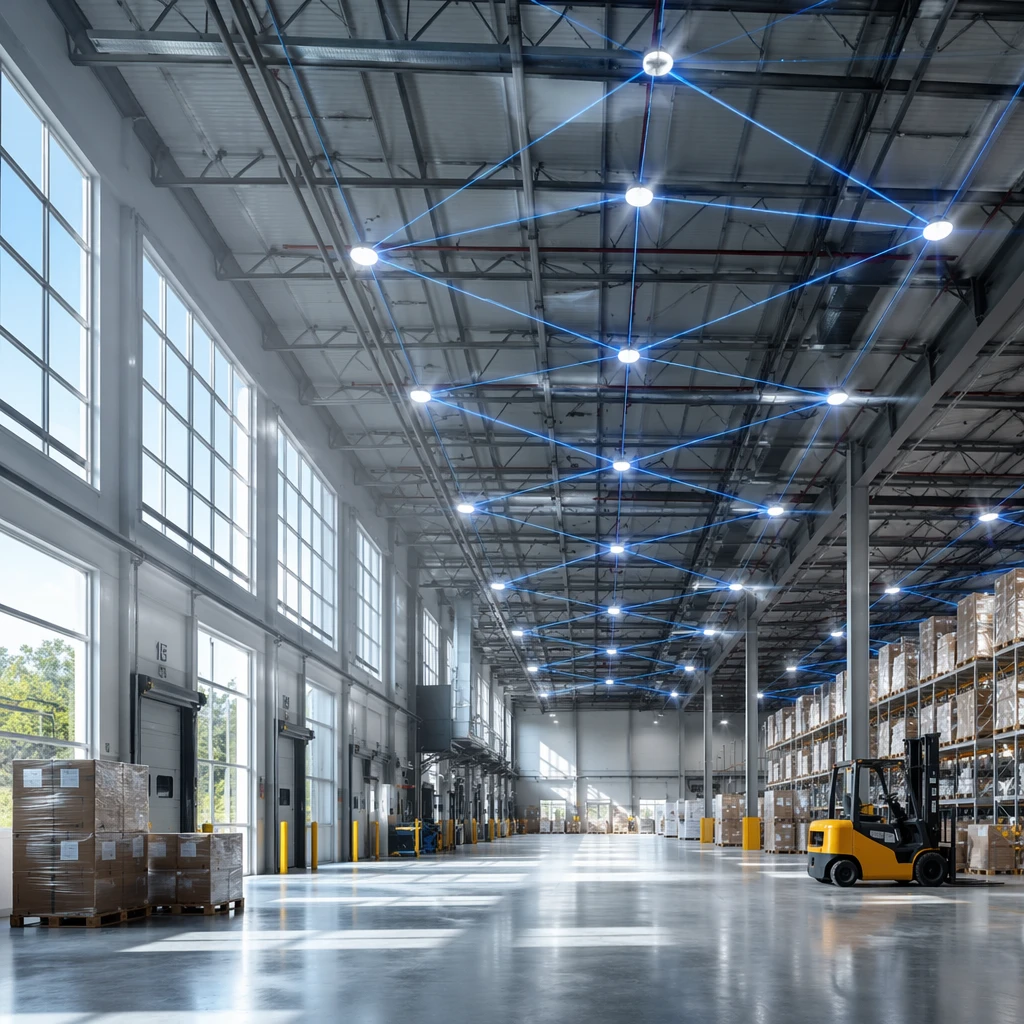
Developing an intelligent wireless control matrix from the ground up can take months of firmware tuning and cost thousands of dollars in independent testing fees. For majority luminaire factories, the most cost-efficient scaling strategy is sourcing pre-certified component hardware from an agile, established smart lighting solutions provider.
To streamline this process, engineering firms heavily leverage vetted technology directories. Reviewing a qualified
At LumiEasy, our internal quality-assurance facilities utilize high-speed digital logic sniffers and RF signal monitoring chambers to stress-test every production batch. We simulate complex building environments by running massive network arrays under high data-packet congestion, ensuring that our hardware maintains zero signal dropouts and instantaneous device grouping transitions before shipment.
The true differentiator of a high-tier commercial automation system is the simplicity of its commissioning process. High-volume electrical installations fail when installers must spend hours programming individual nodes.
Modern network designs utilize field-ready ble network commissioning tools running on standard mobile devices. Installers can walk through a new commercial warehouse or high-rise office building, map hundreds of connected luminaire nodes simultaneously, assign distinct zone behaviors, and configure custom daylight harvesting schedules in minutes.
Once commissioned, the network streams encrypted diagnostic data packets to centralized dashboards or facility infrastructure. For a comprehensive, step-by-step engineering breakdown of setting up your regional device addresses, managing security certificates, and establishing stable wireless gateways, consult our definitive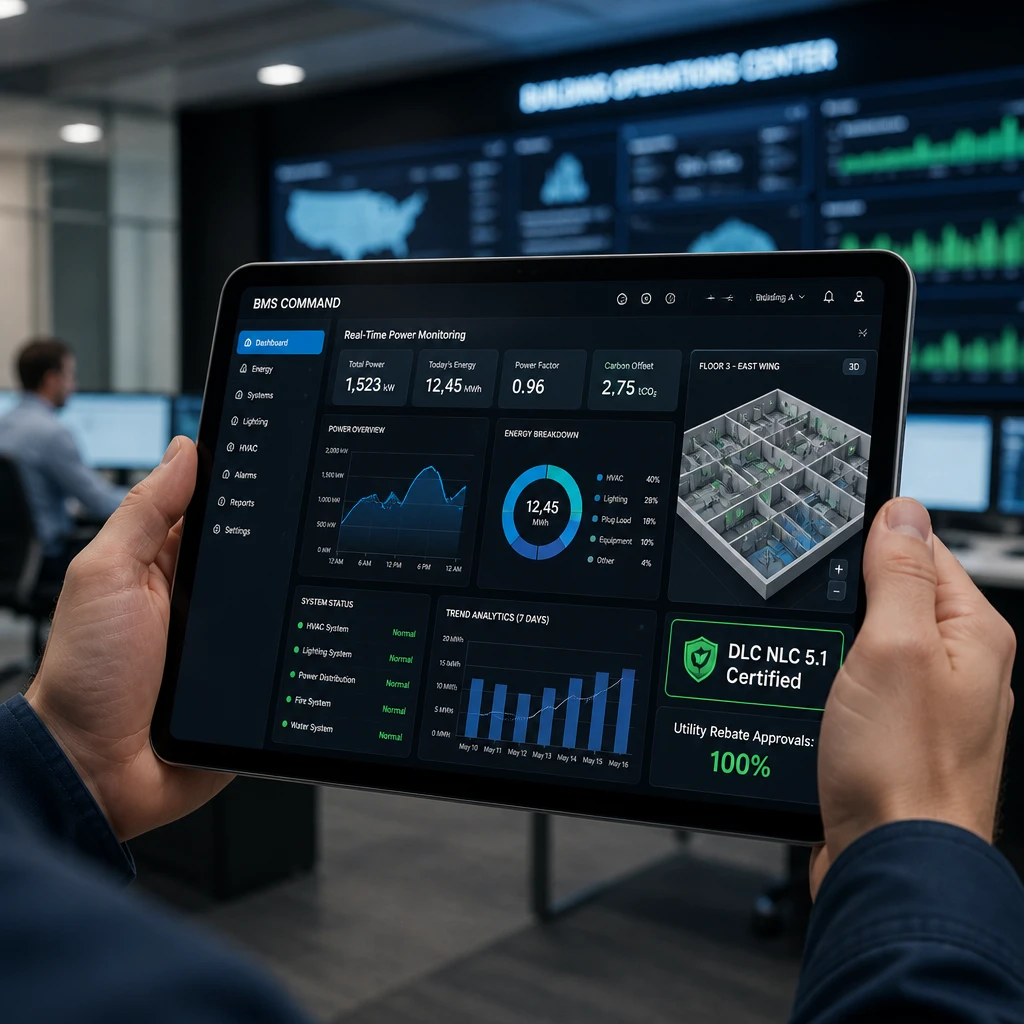
To ensure your factory maintains high yield rates when assembling fixtures equipped with sensitive wireless mesh controllers, implement the following operational standards:
Antenna Geometric Placement: Never conceal the RF trace or ceramic antenna portion of your wireless module behind aluminum brackets or steel housings. Ensure the antenna array projects cleanly through a non-metallic composite cover to maintain long-range signal integrity.
Driver Inrush Current Protection: High-power commercial LED drivers generate heavy electrical inrush currents during startup cycles. Ensure your chosen sensor controllers incorporate robust zero-cross relay switching technologies to prevent internal component degradation over time.
Automated Factory RF Burn-In Testing: Implement an automated validation station at the end of your assembly lines to ping each wireless node, confirming active Bluetooth broadcasting and proper low-voltage dimming responses before packaging.
A1: Adopting pre-approved components allows factories to immediately bypass high certification expenses. It guarantees that your finished luminaires qualify for major dlc premium rebate programs across North America, giving your sales force an immediate competitive advantage.
A2: LumiEasy manufactures high-performance, pre-certified wireless smart sensors and industrial gateways that utilize standard, certified firmware stacks. This enables luminaire OEMs to instantly achieve nlc connected system certification for their product portfolios without risking field failures.
A3: Yes. LumiEasy smart sensors feature versatile, modular form-factors designed for both external junction-box zoning and direct internal luminaire integration, providing total engineering flexibility across all commercial project layouts.
Sourcing components for high-end international commercial projects should never involve regulatory uncertainty. By partnering with a dedicated IoT hardware developer like LumiEasy, your manufacturing lines gain immediate access to stable, certified, and cost-efficient control architectures built to dominate the modern smart building market. Protect your project margins, ensure out-of-the-box field compatibility, and build a high-performance product catalog that utility companies reward.
Don't let rigid international compliance testing delay your product launches. Contact our expert engineering team today to review technical drawings, request pre-certified evaluation samples, and lock in volume factory pricing.


)
)
)
)

+86 15899791249

+86 755 2955 3313


Address: Huafeng No.1 Science and Technology Park, Sanwei, Bao'an District, Shenzhen, Guangdong, China.
