

Time:2026-06-22
Eco park operators face severe challenges from rising electricity bills. Large public green spaces require reliable sustainable park lighting to protect visitors and assets. Traditional manual timers fail to adapt to changing seasonal weather. They stay on too long during clear summer nights, causing massive waste. This scheduling mismatch wastes immense power and creates safety blind spots.
Using a professional photocell dusk dawn operation framework resolves these grid problems. Intelligent light sensors track actual ambient daylight levels in real time. They activate fixtures automatically when darkness falls. They shut down power paths the moment the sun rises. This automated control strategy delivers instant energy efficiency benefits. Investing in automated infrastructure ensures your facility remains secure, compliant, and highly cost-effective over the long term.
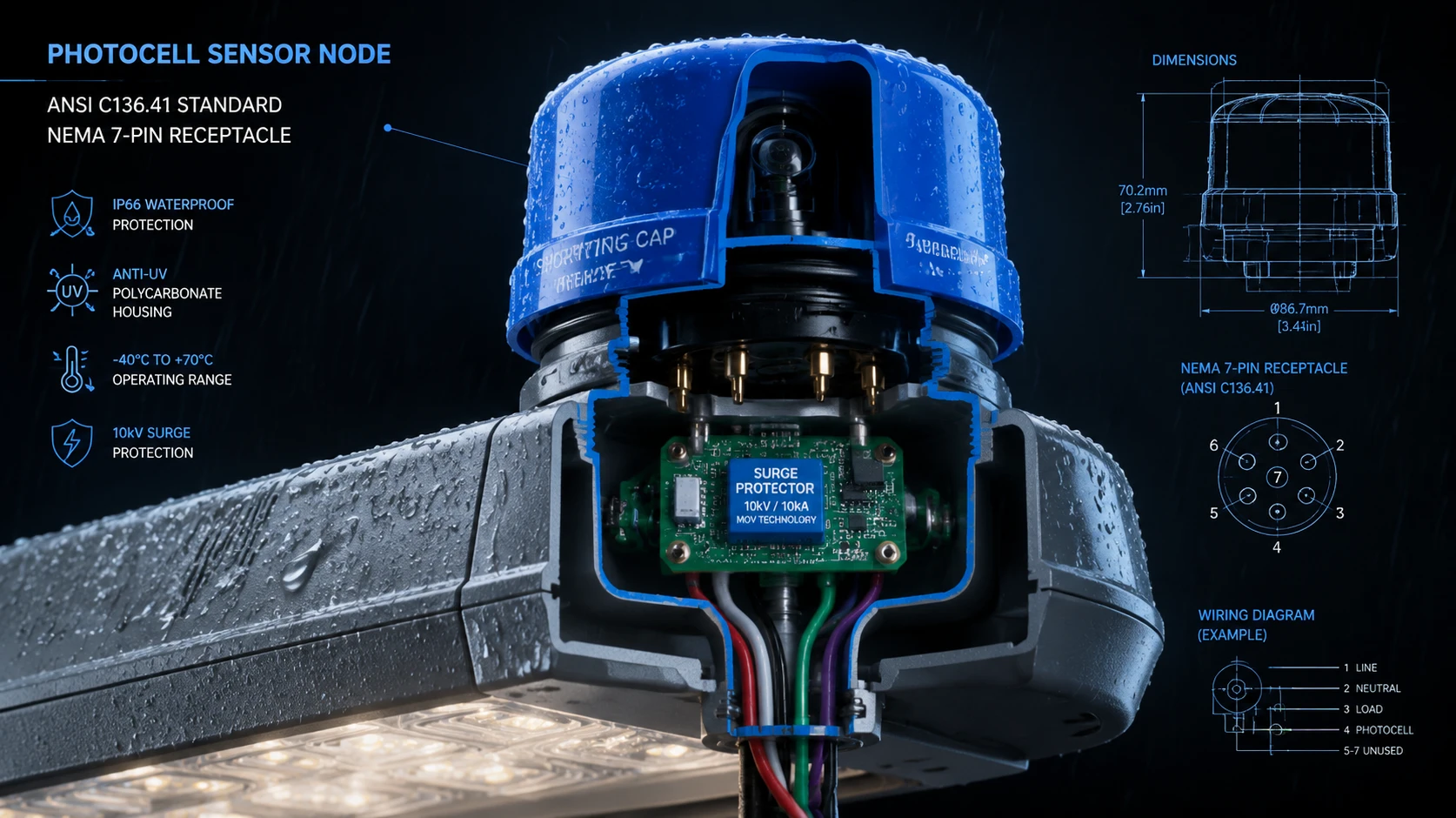
Modern eco parks require smart daylight tracking controllers that react to true environmental conditions. Digital photocells use light-sensitive materials to manage electrical circuits. Advanced silicon photodiodes change their electrical resistance based on incoming daylight. When sunlight hits the sensor face, internal resistance drops. This flow change signals the internal switch to break the lighting circuit.
As darkness approaches, ambient light levels decline steadily. The photocell surface detects this drop. Internal resistance rises sharply, closing the switch mechanism. This action sends electrical current directly to your LED outdoor fixtures. The entire process requires no human intervention or central server connection.
This autonomous behavior makes sensors ideal for large public conservation zones. Standard digital clock systems need regular manual updates for seasonal shifts. Photocells adapt instantly to heavy cloud cover, sudden storms, and unexpected fog banks. They ensure walkways and parking lots receive proper light exactly when conditions become unsafe.
Deploying smart daylight tracking systems delivers measurable operational improvements for municipal networks. Large eco parks feature long walking paths, open public areas, and administrative buildings. Managing these spread-out assets manually drains public engineering hours.
Drastic Energy Savings: Automated switches eliminate daylight running hours completely. Systems dim or shut off the moment daylight passes safety thresholds.
Enhanced Safety Protocols: Automatic activation ensures dark trails light up before accidents occur. It maintains clear visibility for security cameras along peripheral fences.
High Cost Effectiveness: Reducing daily burn times by just two hours saves over 700 operating hours annually. This delay protects LED chips from early thermal decay.
Reduced Labor Demands: Facility crews no longer need to adjust mechanical timers across distant park sectors every month.
Automated light tracking also supports global green building certification goals. Sustainable parks often target specific low-carbon milestones. Reducing nocturnal light pollution is a key requirement for these environmental ratings. Photocells ensure fixtures emit light only when functional safety demands it.
Achieving high-efficiency outdoor sensor engineering requires strategic hardware placement. Installing a light sensor in a dark shadow causes the entire grid to activate too early. Conversely, placing a node near artificial light sources blinds the system entirely.
Engineering crews must follow strict placement rules to secure accurate data tracking:
North-Facing Orientation: Always point the photocell window toward the northern sky in the northern hemisphere. This orientation avoids direct morning and evening sun glare.
Clear Canopy Clearance: Mount sensors far above tree lines and thick ornamental bushes. Growing leaves can block daylight and trigger premature activation.
Shielding from Artificial Backlight: Ensure no adjacent wall packs shine directly into the sensor lens. Artificial glare traps the system in a permanent off-state.
Elevated Mounting Structural Positions: Position central control eyes high on main utility poles. This height prevents vandalism and blocks dust buildup from pedestrian paths.
When managing vast multi-acre eco zones, a single central sensor may not suffice. Topographical variations like deep ravines or thick forest canopies create unique microclimates. Smart layout design groups park fixtures into separate geographical zones. Each cluster relies on its own localized photocell node to maximize overall energy savings.
Outdoor electrical hardware in public eco parks must withstand severe environmental stress. Systems face intense summer heat, freezing winter moisture, and high UV exposure. Standard indoor control blocks fail quickly when exposed to these outdoor variables.
Industrial photocells utilize rugged polycarbonate housings to protect internal electronics. These enclosures carry tight IP65 or IP66 ingress protection ratings. This sealing engineering blocks heavy wind-driven rain, blowing dust, and nesting insects from shorting the circuit boards.
Selecting twist-lock style photocells simplifies long term field maintenance. These industry-standard components allow technicians to replace a worn sensor eye in seconds. No complex wire splicing or pole teardowns are required. The worker simply twists the old unit out and snaps a new one into the socket.
Advanced eco-park designs often link localized light sensors with central management software. This hybrid approach combines autonomous local switching with enterprise-level data collection. The photocell acts as the frontline gatekeeper for power routing.
When the sensor triggers a state change, it alerts a localized wireless node. This node transmits power usage metrics and status logs back to the park dashboard. Facility directors can monitor energy consumption across every trail segment from a single screen.
Instant Component Failure Warnings: The central platform flags fixtures that draw zero power during scheduled night runs.
Custom Late-Night Dimming Overrides: Smart controllers allow systems to scale output down to 30% past midnight when foot traffic drops.
Accurate Dynamic Power Logging: Tracks precise kilowatt-hour savings generated by daylight harvesting schedules over months of tracking.
This layered digital network helps public parks optimize their financial choices. Tracking exact operational runtimes reveals which sectors consume the most utility funding. It identifies fading assets before complete hardware failure occurs.
Corporate B2B buyers and municipal engineering desks do not source hardware based on cheap item prices alone. Industrial lighting projects demand proven performance, manufacturing transparency, and long-term warranties. Choosing unverified generic imports leads to high failure rates and constant replacement costs.
When evaluating factory suppliers, procurement directors focus on strategic smart grid component sourcing:
Verified Regulatory Compliance Marks: Look for clear UL, CE, and RoHS certifications on the sensor body. These marks prove the hardware passed rigorous electrical safety testing.
High Switch Cycle Ratings: Ensure the internal relay is rated for at least 5,000 on-off cycles under full electrical loads. This rating guarantees over a decade of daily operation.
Comprehensive Low Standby Power Metrics: Select sensors that consume less than 0.5 watts during daylight standby hours to prevent phantom power drain.
Extended Multi-Year Factory Warranties: Professional manufacturers offer clear five-year replacement coverage to back up their field reliability claims.
Optimizing public park grids requires a unified approach to energy efficiency and public protection. Implementing an automated photocell dusk dawn operation plan eliminates manual scheduling waste, lowers monthly utility expenditure, and extends the life of your lighting infrastructure. These smart sensors provide enhanced safety for pedestrians while supporting your regional carbon reduction goals.
Do not let outdated manual timers or fragile control components inflate your operating costs and drain municipal maintenance funds. Invest in field-tested, industrial-grade light tracking systems built for demanding outdoor environments.
For technical datasheets, bulk pricing, or custom advice for your green project, contact our engineering desk. Visit our
A: Extreme blizzards can temporarily bury a sensor eye. If this happens, the internal circuit views the darkness as night. It turns the lights on immediately to keep the park safe. Sourcing high-quality nodes with built-in heaters helps melt frost quickly. This setup ensures normal daylight tracking starts again right after the storm passes.
A: Yes. Commercial controls are built to handle brief, intense electrical currents. These power spikes happen when LED drivers turn on. Buying parts from trusted smart grid sellers ensures internal switches survive thousands of fast cycles. The contacts will not stick or wear out, saving the city money.
A: Industrial designs feature tight seals and UV-safe windows that retail timers lack. This rugged build stops water leaks and prevents the lens from turning yellow. It ensures the system gives true light readings, keeps trails safe, and lasts for a very long time.


)
)
)
)

+86 15899791249

+86 755 2955 3313


Address: Huafeng No.1 Science and Technology Park, Sanwei, Bao'an District, Shenzhen, Guangdong, China.
