

Time:2026-06-10
Managing large commercial properties, factory yards, or warehouse sites means balancing safety against rising operational expenditure (OpEx). Outdoor illumination is vital for property security and perimeter safety. However, many facilities managers face an expensive problem. Outdated manual switches or mechanical timers keep outdoor lights running during bright daylight hours. This wasted energy leads to high utility bills and ruins expensive light bulbs early.
Leaving your exterior building lights active during the day burns through cash. Standard timers drift during power outages or fail to match changing seasonal daylight hours. This means maintenance crews must spend time resetting them constantly. Even worse, basic outdoor switches often fail in extreme weather conditions. Moisture, rain, heavy coastal fog, and freezing temperatures corrode internal wiring nodes. This causes short circuits, early system failures, and sudden lighting outages that raise your overall maintenance costs.
The best strategy to achieve an operational cost reduction is adding outdoor lighting automation. Running a professional weatherproof photocell sensor installation removes human error completely. This simple upgrade protects your hardware and slashes energy bills by turning lights on only when natural light drops. Outdoor-rated dusk-to-dawn sensors help sites stop power waste. They shield your lighting gear from storms and build a highly efficient property layout.
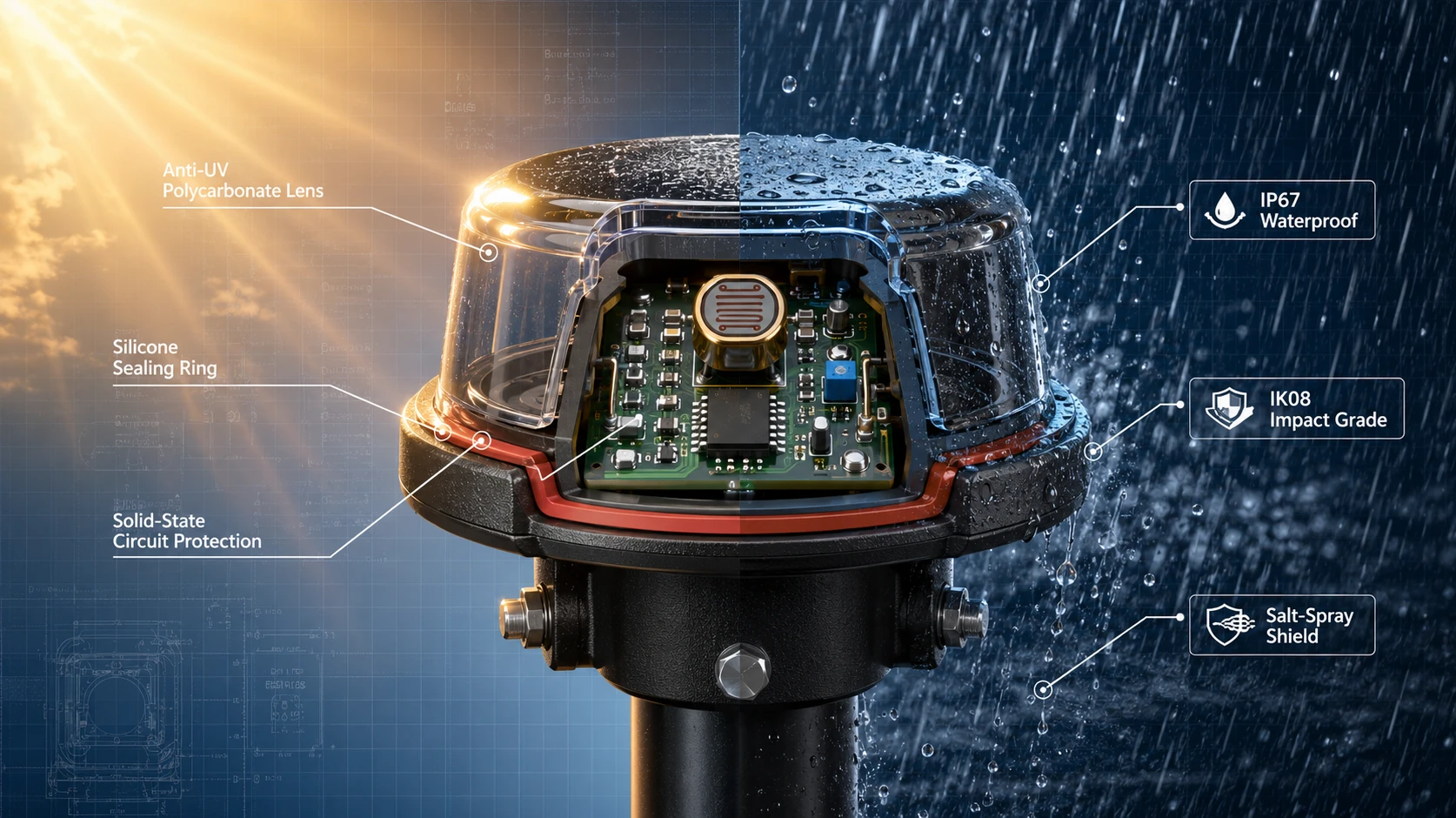
To build a reliable automated outdoor lighting setup, team leaders must know how a photocell installation works. Unlike mechanical clocks that count time, photocells use light-sensitive parts to measure actual sunlight in real time. When natural sunlight drops at dusk, the sensor closes the internal electrical circuit. This action powers the connected light bulbs instantly. At sunrise, as natural daylight returns, the sensor opens the circuit and shuts off power to the fixtures.
When installing automation across outdoor spaces, choosing standard indoor sensors is a major mistake. Basic sensors lack the tight seals needed to handle wind, driving rain, humidity, and strong ultraviolet (UV) rays. A high-grade weatherproof photocell keeps your commercial lighting controls working through rain, winter blizzards, and summer heat. This keeps your site safe and efficient.
Commercial outdoor gear must meet strict international safety and weather standards. The table below shows the key ratings and specifications that facilities managers need. These standards ensure long-term durability in tough outdoor areas:
| Engineering Attribute | Technical Specification Standard | Direct Operational Benefit |
| Ingress Protection Rating | IP65 / NEMA 4X Certified | Blocks dust, dirt, and water from hitting wires. |
| Operating Temperature | -40°C to +70°C (-40°F to +158°F) | Guarantees reliable operation in extreme weather conditions. |
| Electrical Load Rating | 1000W Tungsten / 1800VA Ballast | Lets a single sensor unit manage large lighting loops safely. |
| Surge Protection Node | 20kV / 10kA Built-In Arrester | Protects expensive light bulbs from power spikes during storms. |
| Housing Construction | UV-Stabilized Polycarbonate | Prevents the outer shell from cracking or weakening under the sun. |
| Turn-Off Time Delay | 2 to 15 Seconds Delay | Stops lights from blinking due to car headlights or cloud shadows. |
Choose components that match these clean engineering rules. Doing so helps energy teams shield their commercial lighting controls from early failures and weather damage.
Let us look at a real-world case study to see the financial impact of automated light tools. This security upgrade helped a large shipping yard lower its daily operational expenditure.
The logistics facility managed over 450 high-power exterior LED floodlights across a 60-acre seaside site. The property used standard industrial timer clocks to run perimeter security lights. However, the site sat right on the coast. Heavy salt fog, heavy rain, and high humidity constantly ruined the outdoor control boxes.
The mechanical timers lost track of time during storms. This kept the exterior light bulbs turned on for six hours of broad daylight every single day. Even worse, moisture seeped into basic sensor cases, causing short circuits. This forced maintenance teams to rent costly boom lifts, spiking the site's ongoing maintenance costs.
The facility's engineering group overhauled the exterior lighting grid by launching a systematic weatherproof photocell sensor installation project. They mounted rugged, NEMA-rated dusk-to-dawn sensors onto every light pole, backed by three specific system rules:
North-Facing Mounting Layout: Every sensor node was installed facing due north. This stopped morning sun glare and kept the lens clear of passing truck headlights.
Cross-Talk Isolation Setup: Place sensors far away from the light paths of nearby floodlights. This ensures the bulbs do not accidentally trigger themselves off at night.
High-Capacity Control Relays: The teams wired the photocells to heavy-duty industrial contactor boxes. This took high electrical current off the delicate sensor housings and routed it safely through heavy breakers.
The new outdoor lighting automation tools brought massive efficiency gains during the first year. We saw clear improvements across all major operational areas:
Utility Expenses Slashed: Annual power costs dropped by 34% by ending daytime lighting waste.
Maintenance Costs Slashed: Emergency repair runs dropped by 88% because water could not enter the sealed units.
Fixture Lifespan Extended: Overall bulb life rose by 22%, saving thousands in replacement costs.
Manual Timing Overlap: Manual adjustments dropped to Zero, letting crews focus on actual warehouse work.
Corporate asset buyers, commercial developers, and facility engineering boards do not choose automation hardware based on cheap prices alone. Modern industrial procurement requires clear proof of deep industry experience, technical mastery, and structural reliability. Designing your outdoor lighting grids with durable, weather-sealed automation shows a strong commitment to quality work, field-tested expertise, and good asset management.
Your property's exterior electrical networks must follow trusted safety codes. These include UL standards, CE markings, or RoHS rules. Following them proves your team's engineering skills in modern industrial design.
Show the world that your facilities achieve a permanent operational cost reduction during daylight hours. This path helps protect the environment, cuts your carbon footprint, and marks your company as a trusted leader in green corporate operations.
For commercial maintenance managers and electrical teams, a proper photocell installation requires careful planning. Mounting sensors incorrectly causes issues. Even top-tier weatherproof hardware can suffer from frequent false triggers or early failure. This leads to unwanted downtime and extra maintenance costs.
Following proven deployment rules helps engineering teams avoid system interference and ensures smooth operations:
Preventing Light Reflection Loop Issues: Never let a sensor catch the light from its own light bulbs. If it does, it will enter a fast "on-off" blinking loop. This error can quickly burn out your LED drivers.
Using Proper Weatherproof Sealing: Always face the sensor lens up or out according to factory guides. Use premium silicone sealant and rubber washers around the entry points. This extra layer stops rainwater from leaking into the electrical box.
Isolating Nearby Shadow Factors: Do not position sensors under deep building eaves or dense tree canopies. Also, keep them away from high utility walls. Permanent daytime shadows can trick the sensor into keeping your lights on all day.
Investing in premium outdoor lighting automation provides a rapid return on investment (ROI). It lowers daily utility use and cuts down on routine maintenance costs. This layout works great for large distribution centers or industrial plants. The cost of updating older manual switches to modern automated controls is often fully recovered within the very first year.
| Cost Center & Resource Metric | Legacy Manual/Timer Configuration | Automated Weatherproof Sensor System | Long-Term Operational Impact |
| Daily Burning Hours | ~14 to 16 Hours (Due to timing drift) | ~10 to 11 Hours (Exact daylight tracking) | Saves up to 5 hours of electricity waste per day. |
| Weighing Annual Power Use | 584 kWh | 401 kWh | Lowers total operational expenditure by over 30%. |
| Maintenance Lifespan | 2 to 3 Years (Corrosion damage) | 8 to 10 Years (Sealed housing protection) | Drastically reduces ongoing repair bills. |
This modern design reduces heat buildup inside the sensor box. It allows your company to cut down on energy waste while extending the life of your entire outdoor electrical setup. This reliable approach lowers your daily facility overhead, stabilizes your building budgets, and keeps your property safe from unexpected electrical breakdowns.
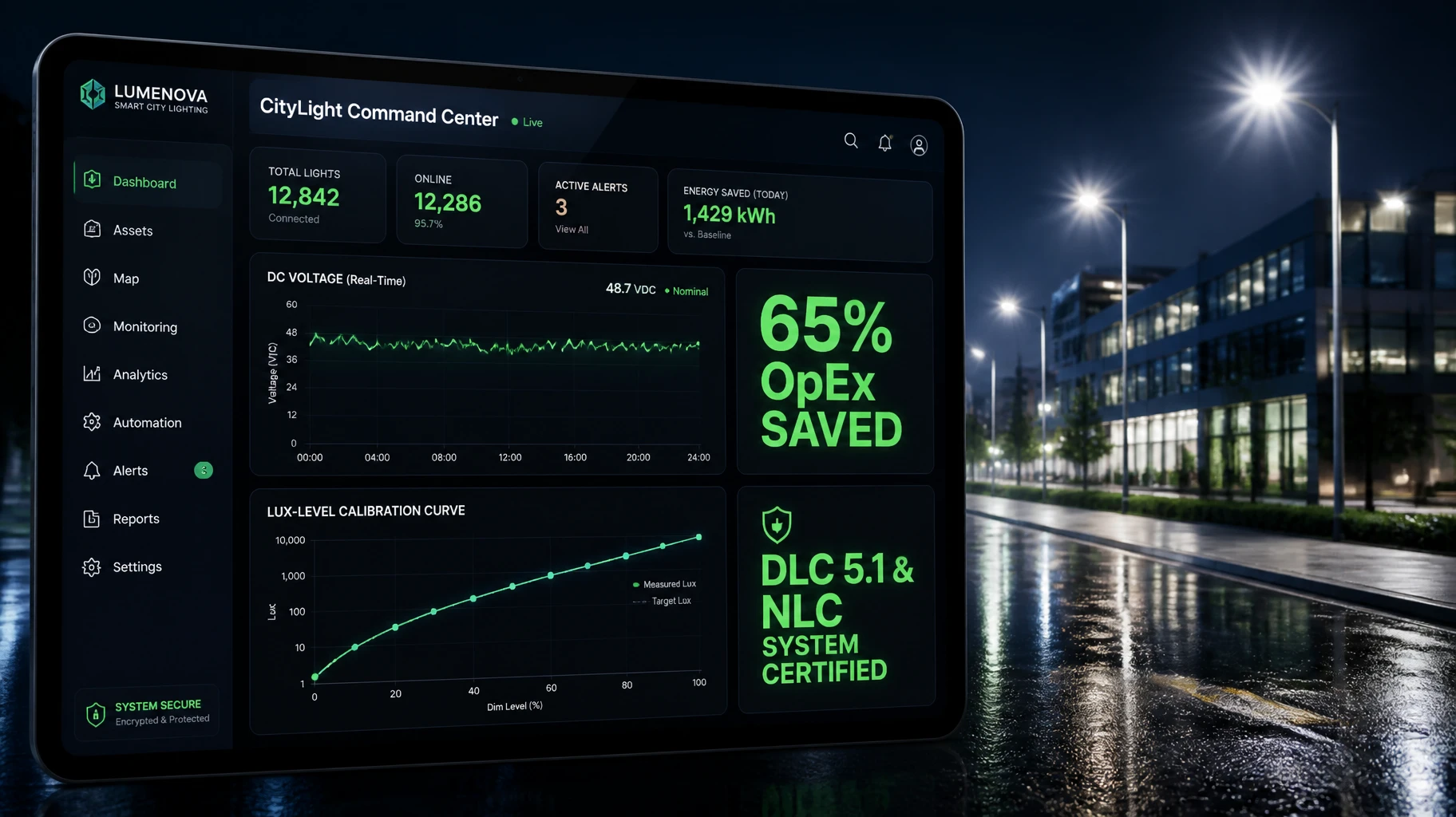
Integrating a new digital infrastructure upgrade requires balancing upfront development and hardware costs against long-term operational flexibility. Smart facilities managers look for the best possible return on investment. They avoid rigid, single-brand systems that lock properties into custom wiring lines or closed code.
Instead, they choose open, modular control setups. These tools hook up smoothly with a modern building management system and centralized software paths.
An open-standard automated lighting blueprint offers distinct business advantages:
No Need for Expensive Custom Connections: Standardized NEMA twist-lock pins plug right into existing commercial light hoods. You do not need to rewire whole lighting poles or buy custom adapters.
Lower Long-Term Maintenance Overhead: Modular photocells use stable, industry-standard connections. Because of this, your in-house maintenance crew can handle routine replacements in seconds without special tools.
Simple, Fast Scaling: As your business grows, expanding your property footprint or adding more security lights takes just minutes. The plug-and-play sensors adapt instantly without causing system downtime or requiring expensive site recoding.
Lowering your daily operational expenditure while keeping your property safe requires a smart, unified approach. It demands pairing rugged, energy-saving lighting controls with durable, weather-sealed hardware components. Move away from manual switches or drift-prone timer clocks. Upgrading to a professional weatherproof photocell sensor installation protects your long-term budget, satisfies safety codes, and ensures reliable lighting.
Are you ready to stop daytime energy waste, eliminate emergency maintenance callouts, and bring reliable, automated efficiency to your commercial properties? Do not let drifting timers or rusted sensors inflate your operating costs and drain your maintenance funds. Partner with an industry-tested commercial automation and lighting leader. We will help you deploy high-efficiency, weather-tested sensor frameworks built to your exact site needs.
Do you need deep technical code sheets, product catalog updates, or an exact price quote for your next facility upgrade? Connect with our specialized engineering advisory desk directly through our
A: Yes. This setup allows our units to connect directly with your existing building management systems bms or smart facility networks. This gives your energy teams real-time data tracking alongside automated, local lighting control. It supports standard low-voltage control lines and industrial contactors perfectly.
A: Our industrial sensors are built to withstand extreme weather conditions. The smooth, rounded lens cover prevents thick snow and heavy ice from building up over the light sensor. This cover ensures your lighting cycles keep running perfectly through the toughest winter blizzards down to -40°C.
A: Yes, absolutely. A standard sensor controls a single light fixture directly. However, you can wire our weatherproof photocell directly to an industrial relay. This trick allows a single sensor node to manage a whole row of parking lot lights or security light bulbs at the same time, saving on hardware costs.
【Contact us for a free quote】
Related Articles


)
)
)
)

+86 15899791249

+86 755 2955 3313


Address: Huafeng No.1 Science and Technology Park, Sanwei, Bao'an District, Shenzhen, Guangdong, China.
