

Time:2025-12-30
In the construction of smart buildings and intelligent spaces, ceiling-mounted sensors serve as the "eyes" for perceiving environmental changes and user activities, underpinning the operation of lighting, HVAC, and security systems. However, traditional ceiling sensors with fixed detection ranges struggle to adapt to the diverse and dynamic characteristics of modern indoor spaces. Adjustable detection range ceiling sensors, which allow flexible adjustment of sensing coverage according to space size, layout, and usage scenarios, have become a game-changer in smart sensing. By enabling targeted detection without blind spots or redundant coverage, these sensors balance detection precision, energy efficiency, and operational flexibility. For facility managers, building designers, and smart space solution providers, adopting adjustable detection range ceiling sensors is crucial to optimizing sensing system performance and adapting to the ever-changing needs of indoor spaces. This article explores the core advantages, targeted application scenarios, implementation guidelines, and future trends of adjustable detection range ceiling sensors, highlighting their pivotal role in intelligent space management.
Fixed detection range ceiling sensors face inherent limitations that hinder their effectiveness in modern dynamic indoor environments. Their unchangeable sensing coverage often fails to match the actual characteristics of the space: in large open areas, they may leave detection blind spots in corners or distant zones; in small partitioned spaces, they may cover adjacent areas, leading to false triggers. For example, a fixed-range sensor installed in a multi-purpose conference room may not cover the entire space when it is used for large gatherings, or may incorrectly detect activities in the adjacent corridor when the room is small-scale.
Another critical drawback is the lack of adaptability to space layout changes. As modern offices, retail stores, and public spaces often undergo layout adjustments (such as rearranging office cubicles, changing retail display zones, or modifying event venues), fixed-range sensors become ineffective after adjustments, requiring costly reinstallation or replacement. Additionally, fixed detection ranges lead to inefficient energy use—sensors may activate systems in unoccupied areas due to excessive coverage, or fail to trigger necessary adjustments in occupied blind spots, compromising both energy efficiency and user comfort. These limitations underscore the necessity of adjustable detection range ceiling sensors to meet the flexible needs of modern smart spaces.
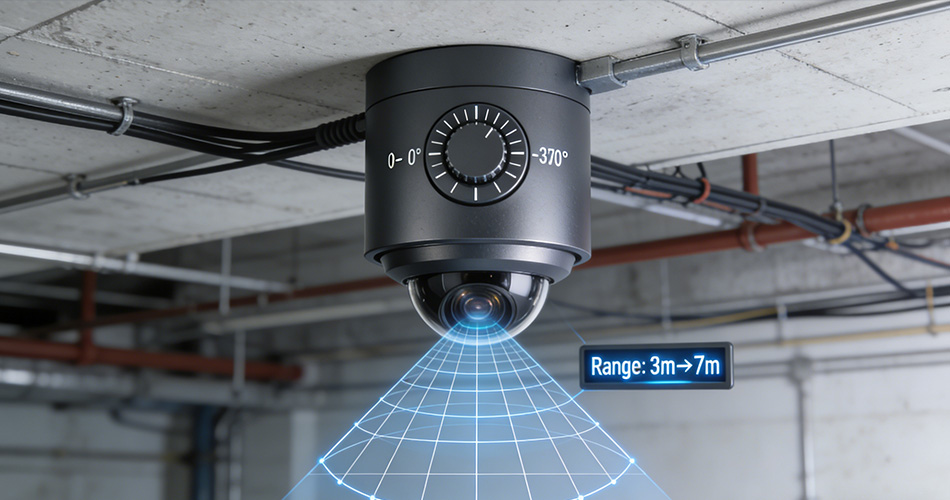
Adjustable detection range ceiling sensors deliver four key advantages that address the shortcomings of fixed-range models and elevate smart sensing performance:
- Flexible adaptation to diverse space characteristics: By adjusting detection range (from a few square meters to dozens of square meters), these sensors can perfectly match spaces of different sizes and layouts—from small private offices and restrooms to large open offices and exhibition halls. For irregularly shaped spaces (such as curved corridors or polygonal meeting rooms), adjustable range ensures full coverage without redundant sensing, improving detection accuracy.
- Reduction of false triggers and blind spots: Precise range adjustment allows sensors to focus on the target area, avoiding interference from adjacent spaces or irrelevant movements (such as pedestrian flow in corridors or equipment operation in adjacent workshops). This minimizes false triggers of lighting, HVAC, or security systems, while eliminating blind spots that fixed-range sensors cannot cover, ensuring reliable sensing of actual occupancy or environmental changes.
- Cost savings in installation and maintenance: Unlike fixed-range sensors that require replacement when space layouts change, adjustable detection range ceiling sensors can be reconfigured on-site without reinstallation. This reduces labor and material costs for sensor replacement and maintenance. In large-scale projects (such as smart campuses or commercial complexes), using a single type of adjustable sensor for multiple spaces also simplifies procurement and inventory management.
- Optimized energy efficiency and system coordination: By aligning detection range with actual space usage, these sensors ensure that connected systems (lighting, HVAC) are only activated in occupied areas, avoiding energy waste from unnecessary operations. They also facilitate coordinated operation of multiple sensors in large spaces—each sensor covers a specific zone, enabling zoned control of systems and further enhancing energy savings.
Adjustable detection range ceiling sensors excel in scenarios with dynamic space usage, diverse layouts, or frequent layout changes, delivering unique value across commercial, industrial, educational, and hospitality sectors:
- Multi-zone Office Spaces: Modern open offices often divide spaces into workstations, meeting zones, and rest areas. Adjustable detection range ceiling sensors can be set to narrow ranges for individual workstations (avoiding interference between adjacent seats) and wide ranges for meeting zones (covering the entire gathering area). When office layouts are rearranged, sensors can be re-adjusted without replacement, adapting to new space configurations.
- Large Warehouses and Sorting Centers: Warehouses have variable storage layouts, with goods stacked in different zones that change regularly. Adjustable detection range ceiling sensors can adjust their sensing coverage according to the location of goods piles, avoiding false triggers from moving forklifts in non-target zones and ensuring that lighting or security systems are activated only in staff working areas.
- Educational Institutions (Multi-purpose Halls and Classrooms): Multi-purpose halls are used for lectures, performances, and exams, with varying occupancy ranges and activity areas. Adjustable sensors can expand detection ranges for full-capacity events and narrow them for small-scale activities. In classrooms, sensors can adjust coverage according to the number of students or desk arrangements, ensuring appropriate activation of lighting and ventilation systems.
- Hotel Banquet Halls and Convention Centers: Banquet halls and convention centers host events of different scales (from small dinners to large conferences) with flexible seating arrangements. Adjustable detection range ceiling sensors can be quickly reconfigured according to event layouts, ensuring that lighting, air conditioning, and audio-visual systems are accurately controlled based on the actual occupied area, optimizing energy use and event experience.
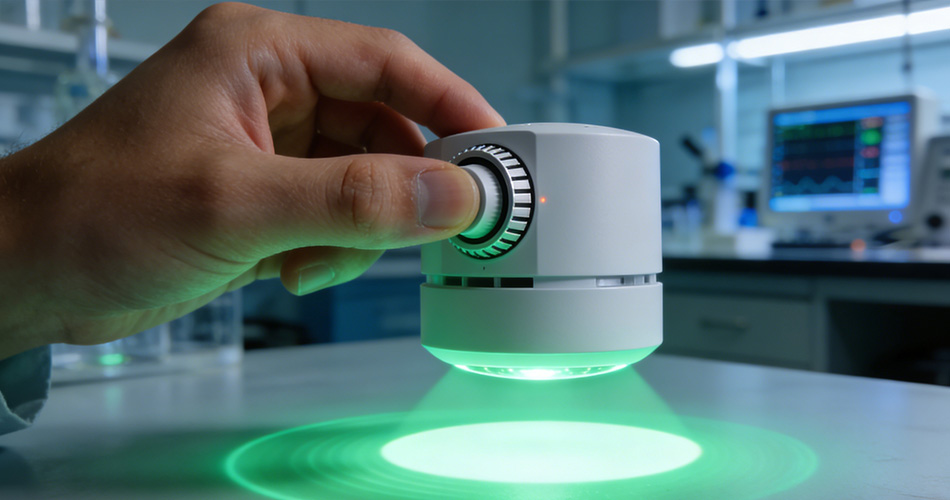
To maximize the performance of adjustable detection range ceiling sensors, follow these practical implementation guidelines:
- Conduct pre-installation space assessment: Before installation, thoroughly assess the space’s size, layout, usage patterns, and potential interference sources (such as moving equipment, reflective surfaces, or sunlight). Based on the assessment, determine the initial detection range for each sensor to ensure coverage matches the target area.
- Adopt zoned configuration for large spaces: In large open spaces (such as warehouses or exhibition halls), install multiple adjustable sensors and configure them into zones. Each zone’s detection range is set to cover its specific area without overlapping excessively with adjacent zones, enabling precise zoned control and reducing mutual interference.
- Regularly re-calibrate with space changes: When space layouts or usage patterns change (such as office rearrangements or warehouse storage adjustments), promptly re-adjust the sensor’s detection range. Conduct regular walk-test verifications to ensure sensors accurately detect activities in the target area and do not trigger false alarms from adjacent spaces.
- Ensure compatibility with smart systems: Select adjustable detection range ceiling sensors that support mainstream smart building protocols (such as Matter, BACnet) to ensure seamless integration with lighting, HVAC, and security systems. This enables coordinated operation between sensors and connected devices, maximizing the overall efficiency of the intelligent space ecosystem.
Driven by advancements in IoT, AI, and smart building technologies, adjustable detection range ceiling sensors are evolving toward greater intelligence and automation:
- AI-driven automatic range adjustment: Future sensors will integrate AI algorithms to learn space usage patterns and automatically adjust detection ranges in real time. For example, in a multi-purpose hall, the sensor can detect the size of the gathering and adjust coverage accordingly without manual intervention.
- Remote intelligent control and monitoring: Sensors will support cloud-based remote control platforms, allowing facility managers to adjust detection ranges, view sensing data, and troubleshoot issues from a central dashboard. This simplifies management of sensors across multiple buildings or large-scale spaces.
- Multi-sensor data fusion for precision enhancement: Adjustable sensors will collaborate with other sensors (such as occupancy sensors, ambient light sensors, and sound sensors) to fuse data and optimize detection ranges. For example, combining occupancy density data with range adjustment ensures that sensing coverage matches the actual number of people in the space.
- Energy-harvesting integrated design: Future models will integrate energy-harvesting technologies (such as solar or kinetic energy) to power themselves, reducing reliance on wired power or batteries. This enhances deployment flexibility, especially in spaces where wiring is difficult, while aligning with green building sustainability goals.
In conclusion, adjustable detection range ceiling sensors are a critical innovation in smart space sensing, addressing the inflexibility of fixed-range sensors and enabling precise, adaptive detection in dynamic indoor environments. Their ability to adapt to diverse space layouts, reduce false triggers, and save costs makes them indispensable in multi-zone offices, warehouses, educational institutions, and hospitality venues. By following scientific implementation guidelines—such as pre-installation assessment and regular re-calibration—users can fully leverage their advantages to optimize energy efficiency and user experience. As AI and remote control technologies advance, adjustable detection range ceiling sensors will become even more intelligent and integrated, playing a central role in the future of human-centric smart buildings. For anyone involved in the design, construction, or management of smart spaces, prioritizing adjustable detection range ceiling sensors is a strategic choice to enhance flexibility, precision, and long-term value of sensing systems.


)
)
)
)

+86 15899791249

+86 755 2955 3313


Address: Huafeng No.1 Science and Technology Park, Sanwei, Bao'an District, Shenzhen, Guangdong, China.
