

Time:2025-11-10
In the evolving landscape of commercial smart lighting solutions, App control has emerged as a pivotal technology, redefining how businesses oversee lighting infrastructure. By seamlessly integrating with core components like smart sensors, controllers, gateways, and switches, App control empowers facility managers, IT teams, and business owners to manage lighting systems with unprecedented convenience, efficiency, and flexibility. Whether for retail chains, industrial warehouses, office campuses, or hospitality venues, this tool eliminates the limitations of traditional on-site control, unlocking new levels of cost savings, operational agility, and user-centric customization. This article explores the core value, key capabilities, industry applications, and best practices of App control in commercial smart lighting ecosystems.
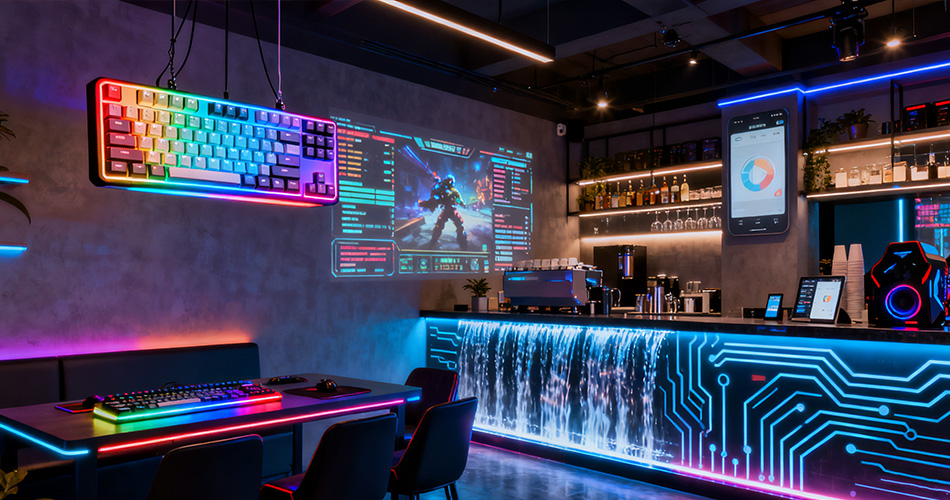
Commercial operations demand lighting systems that adapt to dynamic needs—from fluctuating foot traffic to evolving energy regulations—and App control delivers on these fronts by addressing three critical pain points:
- Operational Efficiency: Gone are the days of manually adjusting lights across multiple floors or locations. App control enables one-tap modifications to brightness, schedules, or lighting scenes, cutting the time spent on lighting management by up to 60%. Facility managers can make changes from their desk, a remote office, or even while traveling.
- Cost Optimization: By automating lighting based on occupancy (via sensors) or natural daylight levels, and enabling remote troubleshooting of issues like faulty controllers, businesses reduce energy costs by 25–40%. Additionally, the need for on-site technician visits drops dramatically, slashing travel and labor expenses.
- Customization & Adaptability: Every commercial space has unique lighting requirements—retail stores need ambiance to highlight merchandise, while factories need bright, safe work zones. App control lets users create and activate custom profiles in real time, ensuring lighting aligns with specific activities or events.
For example, a multi-location café chain can use App control to set “morning rush” lighting (bright, energizing tones) and “evening unwind” lighting (warm, soft hues) across all stores simultaneously, ensuring a consistent brand experience without on-site visits.
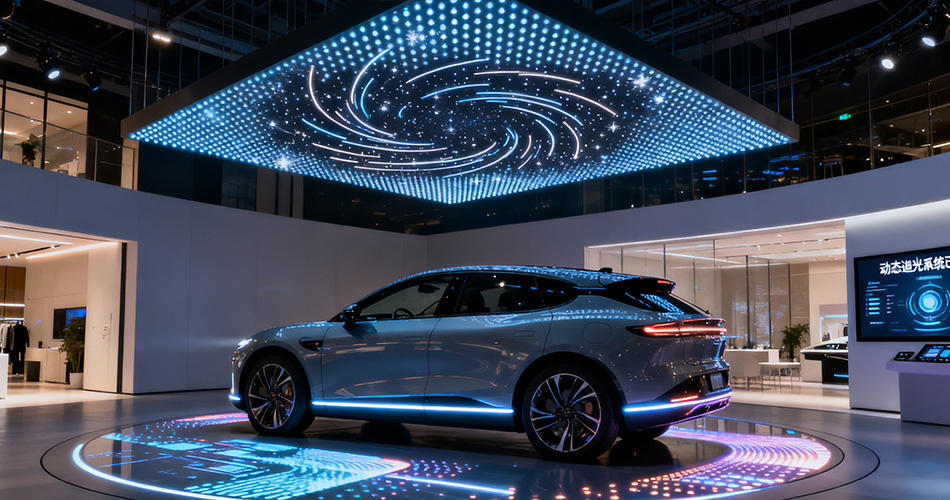
Not all smart lighting apps are created equal—commercial users require enterprise-grade features that support scale and complexity. The most impactful capabilities of App control for businesses include:
For businesses with multiple locations (e.g., retail chains, hotel groups), App control provides a unified dashboard to monitor and control lighting across all sites. Users can drill down into specific zones (e.g., “Store 123 – Entrance” or “Warehouse B – Loading Dock”) to adjust settings, ensuring consistency while allowing site-specific tweaks.
Pairing with sensors and controllers, App control enables custom automation rules. For instance: “Turn off office lights 30 minutes after the last employee leaves (detected via motion sensors)” or “Dim retail display lights to 70% during cloudy afternoons (triggered by photocell sensors).” These rules run automatically, reducing human intervention.
App control collects data on energy usage, device performance, and lighting patterns, presenting it in easy-to-read reports. Businesses can identify inefficiencies (e.g., “Warehouse C lights are on 2 hours longer than needed”) and make data-driven adjustments to cut costs.
Instead of sending technicians to diagnose issues, App control sends alerts for problems like a faulty gateway or unresponsive switch. Many issues can be resolved remotely—such as resetting a controller or updating firmware—minimizing downtime and repair costs.
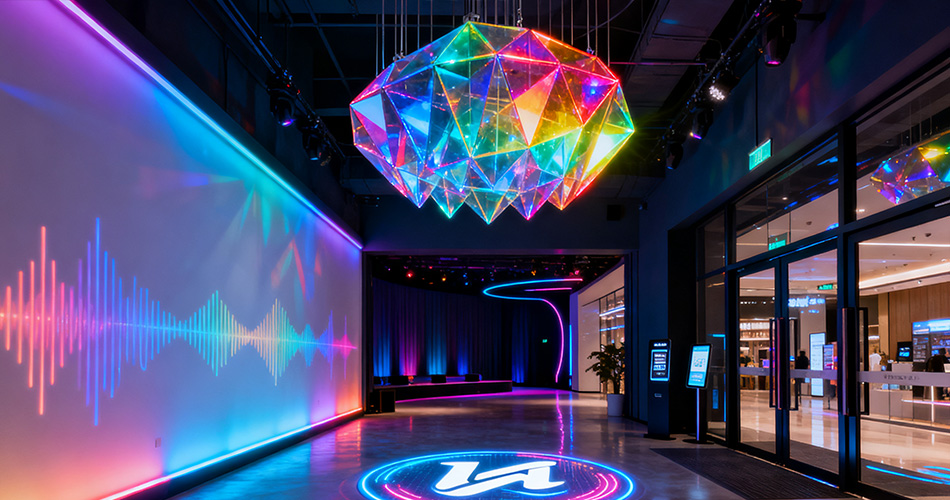
App control adapts seamlessly to the unique needs of diverse commercial sectors:
Retailers use App control to create “promotion-specific” lighting—brightening sale displays and entrance areas during events like Black Friday. They can also adjust lighting based on foot traffic data, dimming less-visited sections to save energy while keeping high-traffic zones well-lit.
In warehouses and manufacturing plants, App control syncs lighting with shift schedules: brightening assembly lines during active shifts and dimming non-essential zones during breaks. Remote access lets managers adjust settings for night shifts without visiting the facility.
App control enables “hotdesk” lighting—employees can use their phones to adjust lights at their workspace via the app. It also integrates with meeting room booking systems, automatically turning on lights when a room is reserved and off when it’s vacant.
Hotels use App control to tailor guest room lighting (e.g., “Welcome” mode with soft lights upon check-in) and manage public areas like lobbies and restaurants. Staff can adjust lighting remotely to prepare for events or adapt to guest preferences.
To fully leverage App control in commercial smart lighting, businesses should:
- Ensure Device Compatibility: Choose an app that works seamlessly with existing sensors, controllers, and gateways to avoid integration issues.
- Implement Role-Based Access: Restrict app access by role (e.g., managers get full control, staff get limited adjustments) to prevent unauthorized changes.
- Regularly Update the App: Install firmware and software updates to access new features, security patches, and performance improvements.
App control is no longer a luxury but a necessity for businesses investing in commercial smart lighting solutions. By centralizing management, automating processes, and providing actionable insights, it empowers organizations to reduce costs, boost efficiency, and create tailored lighting experiences. When paired with a full suite of components—from sensors and controllers to gateways and switches—App control forms a cohesive ecosystem that adapts to the evolving needs of commercial spaces.
For businesses looking to stay ahead in the era of smart buildings, prioritizing App control is a strategic decision that delivers long-term value in operational agility, cost savings, and user satisfaction. As commercial lighting continues to evolve, App control will remain at the forefront, driving innovation and transforming how businesses manage their lighting infrastructure.


)
)
)
)

+86 15899791249

+86 755 2955 3313


Address: Huafeng No.1 Science and Technology Park, Sanwei, Bao'an District, Shenzhen, Guangdong, China.
