

Time:2026-03-13
The rapid development of smart building technologies has transformed how industrial facilities manage energy, automation, and operational efficiency. Among these innovations, app control for smart lighting systems has become one of the most practical and powerful tools for facility managers. Instead of relying on manual switches or fixed schedules, modern lighting infrastructures can now be managed through mobile applications, allowing users to monitor, adjust, and optimize lighting conditions anytime and anywhere.
For factories, warehouses, and industrial campuses, lighting represents a significant portion of energy consumption. Traditional lighting systems often lack flexibility and real-time management capabilities. However, with smart lighting app control, managers can automate lighting schedules, monitor energy usage, and remotely control lighting zones across entire facilities.
LumiEasy provides advanced smart lighting solutions that integrate mobile app control, intelligent sensors, and cloud-based management platforms. These technologies enable industrial clients to build efficient, scalable lighting systems that reduce operational costs while improving workplace safety.
This article explores how app-controlled lighting works, why it is essential for industrial environments, and how modern mobile control platforms can enhance lighting management across large-scale facilities.
The concept of a parental control app typically refers to applications that allow parents to monitor and manage how children use digital devices. While this functionality is primarily associated with consumer electronics, the underlying idea of permission-based control is also essential in smart lighting systems.
Industrial lighting applications often include permission management features similar to those found in parental control apps. This allows facility managers to assign different levels of control to different users.
For example:
Administrators can configure system settings and automation rules.
Maintenance staff can access diagnostics and system alerts.
Operators may control lighting only within designated zones.
By implementing multi user app permissions, smart lighting platforms ensure that system access remains secure while allowing efficient collaboration across departments.
LumiEasy smart lighting apps allow facility managers to control user access levels, preventing unauthorized changes to critical lighting infrastructure.
The term app control parental highlights the broader concept of controlling systems through mobile applications. In the context of industrial lighting, app-based control enables managers to monitor and adjust lighting operations remotely.
Using a mobile lighting control app provides several advantages:
Remote operation of lighting systems
Real-time system monitoring
Customizable lighting schedules
Instant alerts for system issues
Industrial lighting networks may consist of hundreds or even thousands of fixtures. App-based management simplifies control by centralizing all lighting operations within a single interface.
LumiEasy integrates advanced smart lighting app control platforms that provide intuitive dashboards for monitoring and managing industrial lighting infrastructure.
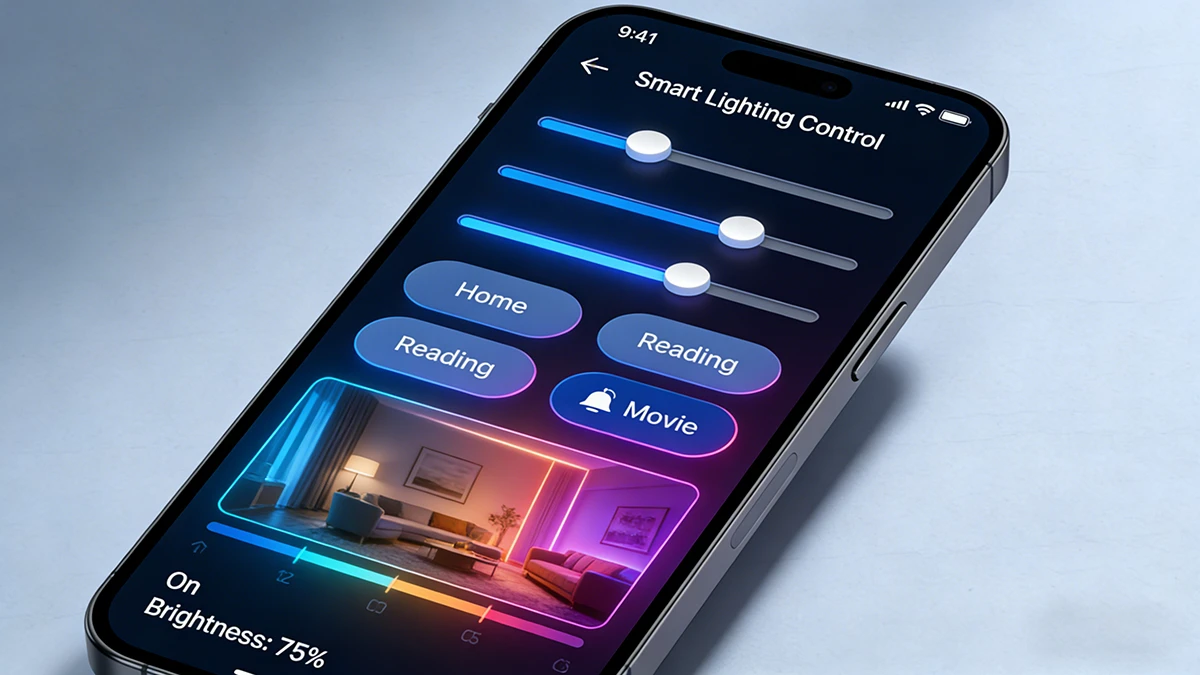
The mobile passport control app used by travelers demonstrates how mobile applications can simplify complex processes. Similarly, smart lighting apps simplify the management of large lighting networks within industrial facilities.
Factories often contain multiple operational zones such as:
Production lines
Storage areas
Maintenance corridors
Loading docks
Managing lighting across these zones manually can be inefficient. App-based lighting control allows facility managers to organize lighting systems into zones and control them easily through mobile devices.
With LumiEasy smart lighting platforms, managers can configure lighting zones, automate schedules, and monitor system performance from a centralized app interface.
A remote control app for Apple TV allows users to control entertainment systems using their smartphones. This concept of replacing physical remote controls with mobile applications is also central to modern lighting control technology.
In industrial environments, physical switches and manual controls are increasingly replaced by smart mobile applications. App-based lighting control offers:
Wireless operation without manual switches
Remote system access across multiple buildings
Integration with IoT sensors and automation systems
With LumiEasy lighting solutions, facility managers can control lighting systems remotely through mobile devices or tablets, eliminating the need for manual control panels.
Weight control apps help users track data, monitor progress, and optimize health outcomes. Similarly, lighting control apps monitor energy consumption and system performance.
Lighting control apps provide analytics tools that track:
Energy usage across lighting zones
Fixture performance and maintenance status
Historical lighting schedules
System alerts and operational diagnostics
The energy monitoring app dashboard offered by LumiEasy enables facility managers to analyze lighting performance and identify opportunities for energy savings.
By leveraging data analytics, industrial facilities can make informed decisions about lighting optimization.
The Roku remote control app demonstrates how mobile interfaces simplify device management. Smart lighting systems follow the same concept by allowing users to control complex lighting networks through simple mobile interfaces.
Modern lighting control apps feature intuitive interfaces that allow users to:
Turn lights on or off remotely
Adjust brightness levels
Configure lighting schedules
Monitor energy usage
LumiEasy smart lighting applications are designed with user-friendly dashboards that simplify lighting management for facility operators.
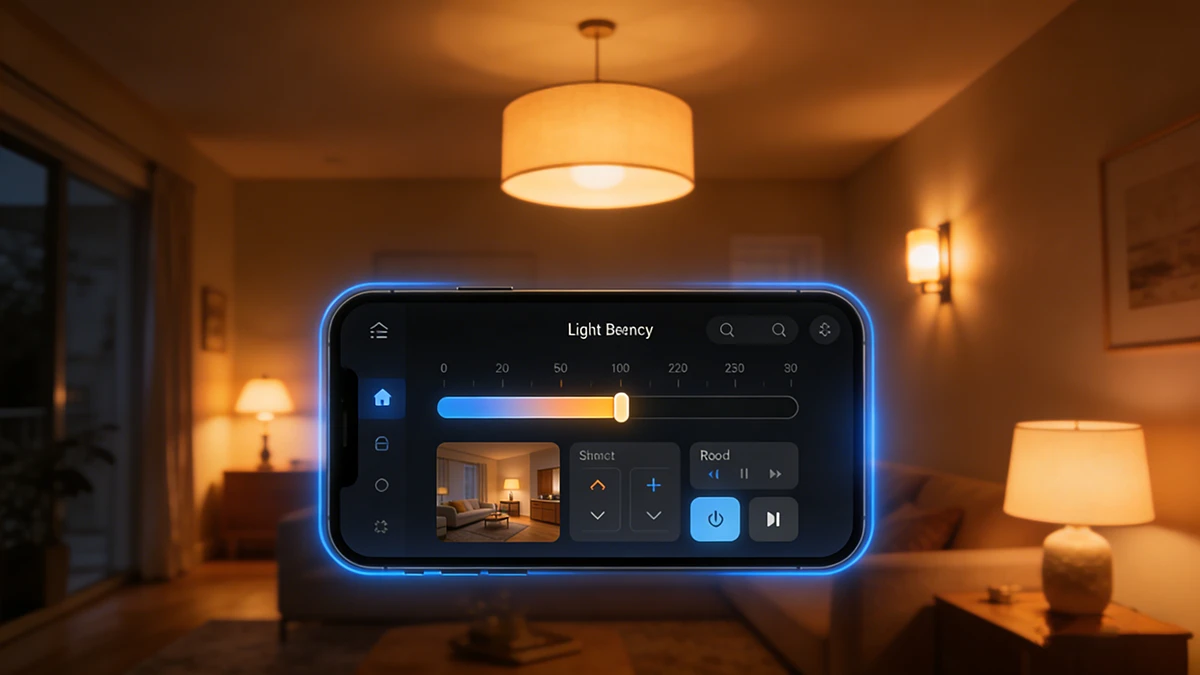
Smart lighting app control is the core technology enabling remote lighting management in industrial environments.
Centralized control of lighting systems
Remote monitoring through mobile devices
Real-time system notifications
Integration with occupancy sensors and daylight sensors
Smart lighting apps enable facility managers to maintain full control over lighting operations regardless of location.
Industrial lighting systems often involve multiple users, including engineers, technicians, and facility managers.
Multi user app permissions ensure secure system management by assigning different access levels to users.
For example:
Administrators configure automation rules.
Technicians access maintenance tools.
Operators control lighting within specific zones.
This hierarchical control structure improves security and operational efficiency.
Lighting automation is one of the most valuable features of smart lighting systems.
With lighting schedule app programming, facility managers can create automated schedules that control lighting based on operational needs.
Examples include:
Turning lights on during working hours
Dimming lights during low-activity periods
Activating security lighting at night
These automated schedules reduce energy waste while maintaining appropriate lighting conditions.
An energy monitoring app dashboard provides real-time insights into lighting performance and electricity consumption.
Identify high-energy consumption zones
Track long-term energy savings
Monitor system performance
Support sustainability goals
LumiEasy lighting platforms provide advanced energy dashboards that help industrial clients optimize lighting operations and reduce costs.
Implementing app-controlled lighting systems provides numerous benefits for industrial facilities.
Smart lighting apps enable automated dimming and scheduling to reduce electricity consumption.
Facility managers can control lighting across multiple buildings from a single mobile interface.
Lighting conditions can be adjusted instantly to meet changing operational requirements.
Monitoring dashboards allow early detection of fixture failures and maintenance needs.
App-controlled lighting systems can integrate with broader IoT platforms and building management systems.
LumiEasy develops advanced lighting technologies designed for industrial and commercial environments.
Our solutions include:
Intelligent LED luminaires
Wireless lighting control modules
Mobile app control platforms
Energy monitoring dashboards
Automated scheduling systems
These technologies enable factories to transform traditional lighting systems into fully automated smart lighting infrastructures.
By combining mobile control with intelligent lighting networks, LumiEasy helps industrial clients reduce energy costs while improving operational efficiency.
As smart factories continue to evolve, app-controlled lighting will become an essential component of industrial automation.
Future developments may include:
AI-powered lighting optimization
Integration with industrial IoT networks
Voice-controlled lighting interfaces
Predictive energy management systems
These technologies will further enhance the efficiency and flexibility of industrial lighting systems.
In general, corporate control of apps can be removed by disconnecting device management settings or removing corporate profiles. For industrial lighting systems like LumiEasy, user permissions are managed through secure role-based access control within the lighting app.
Apps can typically be removed by adjusting parental control settings in the device management menu. In LumiEasy lighting systems, administrators can manage user access and permissions directly within the smart lighting control application.
Remote phone control generally requires built-in features or specialized software. For smart lighting systems, remote control is achieved through dedicated mobile applications that connect securely to the lighting network.
Yes. Smart lighting systems can be controlled remotely through mobile applications connected to cloud-based platforms. LumiEasy smart lighting solutions allow facility managers to monitor and control lighting systems from anywhere using mobile devices.


)
)
)
)

+86 15899791249

+86 755 2955 3313


Address: Huafeng No.1 Science and Technology Park, Sanwei, Bao'an District, Shenzhen, Guangdong, China.
