

Time:2025-12-08
Lighting is a fundamental component of every built environment, from commercial offices and retail spaces to healthcare facilities and industrial plants. However, traditional lighting management—relying on manual switches, fixed timers, or basic sensors—fails to keep pace with the dynamic needs of modern facilities, leading to excessive energy waste, compromised user comfort, and unnecessary operational overhead. Automated lighting systems have emerged as a universal solution, leveraging intelligent controls, real-time data, and system integration to align lighting with occupancy patterns, environmental conditions, and operational demands. For organizations striving to optimize resource use, reduce carbon footprints, and enhance facility performance, automated lighting systems have become a cornerstone of modern facility management strategies.
Traditional lighting systems are inherently inefficient due to their static nature. In commercial buildings, for instance, lights often remain on overnight in unoccupied offices or retail floors due to human error, wasting significant energy. In public spaces like airports or shopping malls, fixed-timer lighting may illuminate low-traffic areas during off-peak hours, driving up utility costs. Beyond energy waste, traditional setups fail to adapt to variable user needs—such as insufficient brightness for precision tasks in industrial plants or excessive glare in office workspaces—compromising productivity and safety.
Automated lighting systems address these gaps by introducing responsiveness and intelligence. Unlike static configurations, they use real-time data from sensors and management systems to adjust lighting automatically, ensuring illumination is only provided when and where it is needed. This shift not only cuts energy costs but also enhances the adaptability of facilities to changing operational patterns, making automated lighting systems a vital investment for diverse organizations.
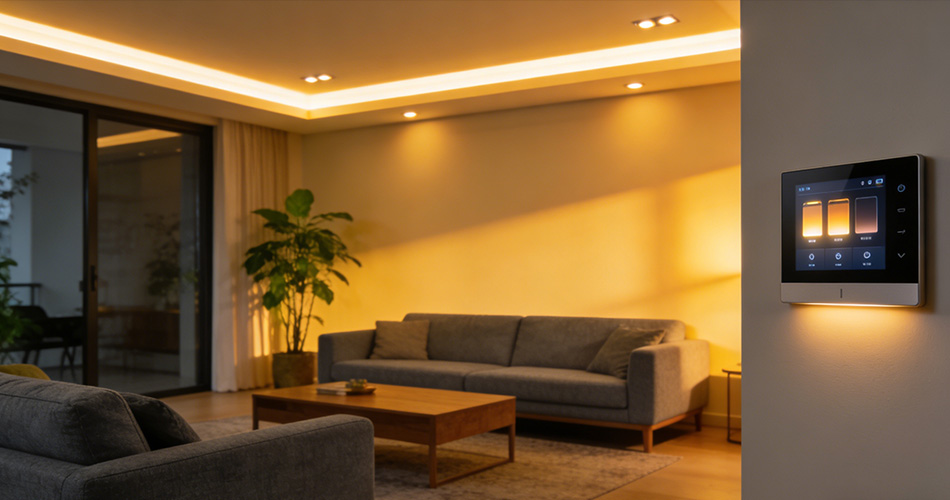
Automated lighting systems are defined by three core, universally applicable functionalities that deliver their key value:
First, occupancy and motion sensing. As the foundational feature, occupancy sensors detect human or equipment presence in specific zones. When a zone is unoccupied, the system dims lights to a low-power standby mode or turns them off entirely; upon detecting motion, it instantly restores optimal illumination. This functionality is critical in high-traffic, variable-occupancy spaces such as office corridors, retail fitting rooms, and warehouse aisles.
Second, natural light harvesting. Integrated ambient light sensors measure the intensity of natural light from windows, skylights, or other openings, then adjust artificial lighting accordingly. On bright days, the system reduces artificial light output to maintain consistent brightness levels, leveraging free renewable light to cut energy use. This not only saves costs but also creates a more comfortable environment by reducing glare and balancing light distribution.
Third, centralized and programmable control. Automated lighting systems feature a central control platform—either on-site or cloud-based—that allows facility managers to monitor and adjust lighting across the entire facility or individual zones. This enables the creation of custom lighting profiles (e.g., "business hours" or "maintenance mode") and provides real-time visibility into system performance, simplifying troubleshooting and optimization.
The versatility of automated lighting systems makes them applicable to a wide range of facility types, with tailored benefits for each sector:
In commercial office buildings, automated lighting systems enhance workspace flexibility and employee well-being. Occupancy sensors in meeting rooms and open workspaces ensure lights are only on when spaces are in use, while natural light harvesting creates balanced illumination for focused work. For hybrid work models, the systems adapt to variable occupancy patterns, ensuring energy efficiency without compromising comfort for in-office staff.
Retail environments leverage automated lighting to boost customer experience and operational efficiency. Lighting in product zones adjusts to foot traffic—brightening during peak hours to highlight merchandise and dimming during lulls to save energy. Natural light harvesting maintains consistent product visibility and color accuracy, ensuring merchandise is displayed at its best regardless of external light conditions.
Healthcare facilities rely on automated lighting to support patient recovery and medical procedures. In patient rooms, the systems adjust lighting to align with circadian rhythms—bright, cool light during the day to promote alertness and warm, dim light at night to aid sleep. In treatment rooms, automated lighting ensures precise illumination for medical tasks, while sensors in corridors and waiting areas reduce energy waste during low-occupancy periods.
Industrial plants and manufacturing facilities use automated lighting to balance safety and efficiency. Motion sensors trigger lighting only in active work zones, avoiding the waste of illuminating entire factories during off-peak hours. The systems can also sync with production schedules, increasing illumination during peak shifts and dimming during maintenance periods, ensuring optimal visibility for workers while cutting energy costs.
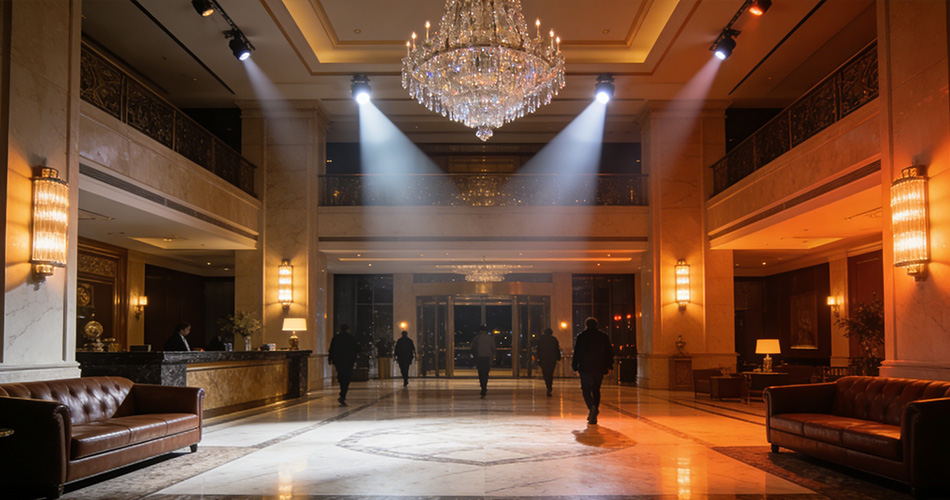
Beyond energy savings, automated lighting systems deliver tangible benefits that enhance facility performance and bottom-line results:
Significant energy and cost reduction is the primary driver. Studies show that automated lighting systems reduce lighting-related energy consumption by 30-50% compared to traditional setups. For a 50,000-square-foot office building, this translates to annual energy savings of over $15,000, making the investment in automation highly cost-effective.
Reduced maintenance overhead is another critical benefit. By minimizing unnecessary lighting operation, automated systems extend the lifespan of bulbs and fixtures, reducing the frequency of replacements and maintenance calls. Centralized monitoring also allows facility managers to identify faulty fixtures early, addressing issues before they impact operations.
Enhanced safety and compliance are additional value drivers. Automated lighting ensures consistent illumination in high-risk areas such as stairwells, loading docks, and industrial walkways, reducing the risk of slips, trips, and falls. The systems also simplify compliance with energy efficiency regulations (such as LEED or local building codes), helping organizations meet sustainability targets and avoid penalties.
Improved user comfort and productivity. By adapting to natural light conditions and occupancy patterns, automated lighting systems create more comfortable environments. In offices, this reduces eye strain and improves employee focus; in retail spaces, it enhances the shopping experience; in healthcare facilities, it supports patient recovery—all contributing to better outcomes for facility users.
The adoption of automated lighting systems is accelerating globally, fueled by three key industry trends:
First, growing global focus on sustainability. Governments and businesses worldwide are setting ambitious carbon reduction goals, making energy-efficient technologies like automated lighting a priority. Many regions also offer energy efficiency incentives or tax credits, lowering the barrier to implementation for organizations of all sizes.
Second, the expansion of smart building infrastructure. As more facilities adopt building management systems (BMS) and IoT technology, automated lighting systems are increasingly integrated into these ecosystems. This integration enables holistic facility optimization, with lighting syncing with HVAC, security, and access control systems to further enhance energy efficiency and operational agility.
Third, advancements in affordable, wireless technology. The declining cost of wireless sensors, controllers, and cloud-based management platforms has made automated lighting accessible to small and medium-sized businesses, not just large enterprises. Wireless systems also simplify retrofits, allowing existing facilities to upgrade to automation without extensive rewiring or disruption.
In conclusion, automated lighting systems are a transformative technology for modern facility management, delivering energy efficiency, operational flexibility, and enhanced user comfort across diverse sectors. By replacing static, manual lighting setups with responsive, data-driven systems, organizations can reduce costs, meet sustainability goals, and create more user-centric environments. As sustainability initiatives and smart building adoption continue to grow, automated lighting systems will remain a critical component of efficient, future-proof facilities. For businesses and institutions looking to optimize their operations and reduce their environmental footprint, investing in automated lighting systems is a strategic and cost-effective choice.


)
)
)
)

+86 15899791249

+86 755 2955 3313


Address: Huafeng No.1 Science and Technology Park, Sanwei, Bao'an District, Shenzhen, Guangdong, China.
