

Time:2026-01-07
Bluetooth Low Energy (BLE) is rapidly becoming a cornerstone of modern wireless communication. Unlike traditional Bluetooth technology, which can be power-hungry and less efficient, BLE offers a low-energy solution for connecting a wide array of devices over short distances. With its low power consumption, fast communication speed, and ability to support a variety of applications, BLE is shaping the future of connectivity, especially in industries such as lighting, IoT (Internet of Things), and asset tracking. This article delves into how BLE is revolutionizing wireless connectivity, focusing on applications like Bluetooth lighting control systems, BLE network commissioning tools, BLE beacon positioning applications, and BLE gateway system integration.
Bluetooth Low Energy (BLE) is a wireless communication technology designed for short-range data transfer with minimal power consumption. While traditional Bluetooth technology was designed for continuous streaming and high power consumption, BLE was developed to cater to applications requiring intermittent data transmission with significantly reduced power usage.
BLE is capable of operating for months or even years on a small coin cell battery, making it an ideal choice for IoT devices, wearables, smart lighting, and other battery-powered applications. Its efficiency and wide range of use cases make BLE a transformative technology in the wireless communication space.
One of the most impactful applications of BLE is in Bluetooth lighting control systems. Traditional lighting systems often require complex wiring and high-power consumption. With BLE-enabled lighting systems, users can control their lights wirelessly using smartphones or dedicated apps, all while maintaining energy efficiency. This technology allows for more flexible lighting setups, greater convenience, and improved energy management.
Bluetooth lighting control systems powered by BLE can be seamlessly integrated into homes, offices, or industrial spaces. These systems enable features such as dimming, color changing, and even automated scheduling based on time of day or occupancy. The low power consumption of BLE ensures that the lighting system remains energy-efficient, offering long battery life for smart lighting components like sensors and controllers.
Setting up and maintaining a BLE network requires specific tools and techniques to ensure efficient communication between devices. BLE network commissioning tools play a crucial role in simplifying the setup process and ensuring that the network operates as expected.
These tools are designed to help network administrators or technicians easily deploy BLE devices and ensure proper communication across the network. They can be used for troubleshooting, signal strength testing, and ensuring optimal performance during the installation phase. In industrial or commercial environments, BLE network commissioning tools help ensure that the entire system is ready for use, saving time and reducing setup errors.
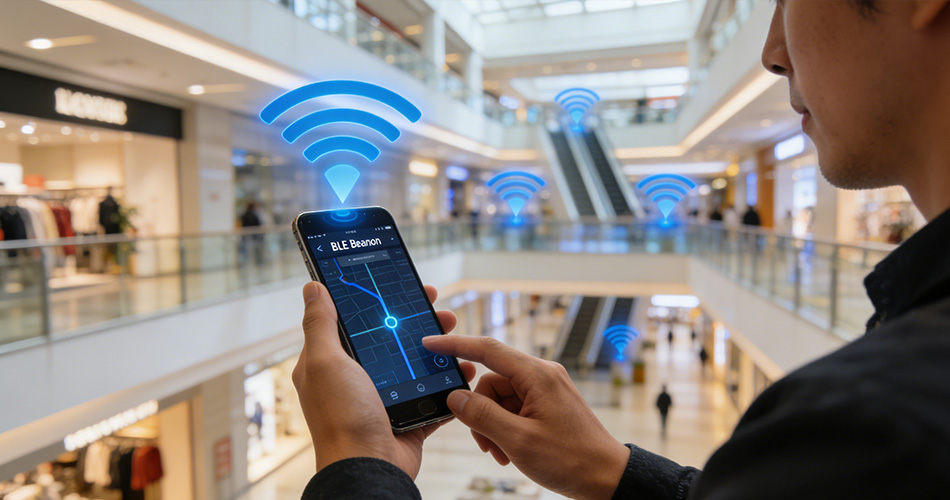
One of the most innovative uses of BLE technology is in BLE beacon positioning applications. Beacons are small, battery-powered devices that broadcast signals at regular intervals. By leveraging these signals, BLE-enabled devices (such as smartphones or tablets) can determine their proximity to a beacon and use this information for location-based services.
In retail, healthcare, and industrial applications, BLE beacon positioning is used for asset tracking, indoor navigation, and customer engagement. For example, in a shopping mall, BLE beacons can guide customers to their desired store or notify them of promotions when they are near specific products. In warehouses, BLE beacons are used for real-time tracking of inventory, streamlining operations, and improving the efficiency of supply chain management.
BLE gateway system integration enables BLE devices to communicate with cloud-based systems or other networks. Since BLE operates on short-range communication, BLE gateways act as bridges, extending the range of communication and allowing data to be transferred from BLE devices to cloud platforms for further analysis and storage.
This integration is essential for large-scale IoT deployments where BLE devices are distributed over a wide area. For instance, in a smart building or industrial IoT system, BLE gateways allow sensors and actuators to send real-time data to centralized systems for monitoring, automation, and decision-making. With the help of cloud computing, data from BLE devices can be analyzed to generate insights that drive operational improvements, predictive maintenance, and enhanced user experiences.
BLE technology brings numerous benefits to businesses, industries, and consumers. Some of the key advantages include:
Low Power Consumption: One of the biggest advantages of BLE is its ability to maintain connectivity with minimal power use, extending the battery life of devices and reducing the need for frequent replacements.
Scalability: BLE systems can easily scale to support a wide range of devices, making it an ideal solution for large-scale IoT networks.
Interoperability: With standardized BLE protocols, devices from different manufacturers can communicate with each other seamlessly, ensuring that users can build custom solutions with off-the-shelf components.
Security: BLE incorporates strong encryption protocols, ensuring that data transmitted over the network remains secure and protected against unauthorized access.
The versatility and efficiency of BLE technology have made it an essential component of modern wireless connectivity solutions. Whether powering Bluetooth lighting control systems, enabling BLE beacon positioning applications, or simplifying network setup with BLE network commissioning tools, BLE is shaping the future of connectivity in a wide variety of industries.
As more devices become interconnected and the demand for smarter, energy-efficient systems grows, BLE will continue to play a central role in driving the evolution of wireless communication. Embracing BLE technology opens up new possibilities for innovation and efficiency, creating smarter environments, improving user experiences, and optimizing business operations.
BLE (Bluetooth Low Energy) is a wireless communication standard designed for low power consumption and short-range data transfer. Unlike traditional Bluetooth, which is optimized for continuous streaming and higher power usage, BLE is designed for intermittent communication, making it ideal for devices that need to operate for long periods on small batteries, such as IoT sensors and wearables.
Bluetooth lighting control systems use BLE technology to enable wireless communication between smart lights, sensors, and controllers. Users can control the lighting via smartphones or dedicated apps, adjusting brightness, color, or scheduling lighting events. The low power consumption of BLE ensures long battery life for devices within the system, making it an energy-efficient choice for smart lighting.
BLE network commissioning tools are specialized devices or software that help in the setup, testing, and optimization of BLE networks. These tools are crucial for ensuring that BLE devices communicate effectively and reliably, especially in large installations. They assist with network configuration, signal testing, and troubleshooting, ensuring that the BLE network performs optimally.
BLE beacon positioning is used in a variety of applications, such as indoor navigation, asset tracking, and proximity-based services. In retail, BLE beacons can guide customers to products or send promotions when they are near specific areas. In warehouses, BLE beacons enable real-time tracking of inventory, streamlining supply chain management.
BLE gateway system integration connects BLE devices to other networks or cloud-based platforms. Since BLE has a short communication range, gateways act as intermediaries, allowing data from BLE devices to be transmitted over longer distances. This integration enables centralized monitoring, automation, and data analysis in large-scale IoT environments, providing businesses with valuable insights for optimization.


)
)
)
)

+86 15899791249

+86 755 2955 3313


Address: Huafeng No.1 Science and Technology Park, Sanwei, Bao'an District, Shenzhen, Guangdong, China.
