

Time:2025-12-10
Many commercial and institutional facilities rely on suspended ceiling tiles for their aesthetic and functional benefits, but older lighting systems with outdated or non-existent sensors often fail to meet modern energy efficiency and user comfort needs. Retrofitting existing ceiling tile environments with advanced lighting sensors is a cost-effective way to upgrade to automated lighting systems, but it requires specialized ceiling tile lighting sensor retrofit procedures to avoid damaging ceiling structures, ensure sensor performance, and minimize operational disruption. For facility managers, electrical contractors, and building owners, following standardized ceiling tile lighting sensor retrofit procedures is critical to achieving seamless upgrades that deliver immediate energy savings and long-term operational value.
Retrofitting lighting sensors in ceiling tile environments differs from new construction, as it involves working with existing ceiling grids, tiles, and electrical infrastructure. Unlike new installations, retrofits must navigate constraints such as limited access to wiring, fragile ceiling tiles, and the need to preserve existing building aesthetics. Without specialized ceiling tile lighting sensor retrofit procedures, contractors risk cracking tiles, damaging grid systems, or installing sensors that misalign with existing lighting fixtures—all of which can compromise system performance and increase project costs.
Additionally, older facilities may have outdated electrical systems that are incompatible with modern smart sensors. Ceiling tile lighting sensor retrofit procedures address these compatibility challenges, ensuring that new sensors integrate seamlessly with existing lighting controls and building management systems (BMS). This specialized approach also minimizes downtime, a key priority for facilities like offices, hospitals, and retail stores that cannot afford extended disruptions to daily operations.
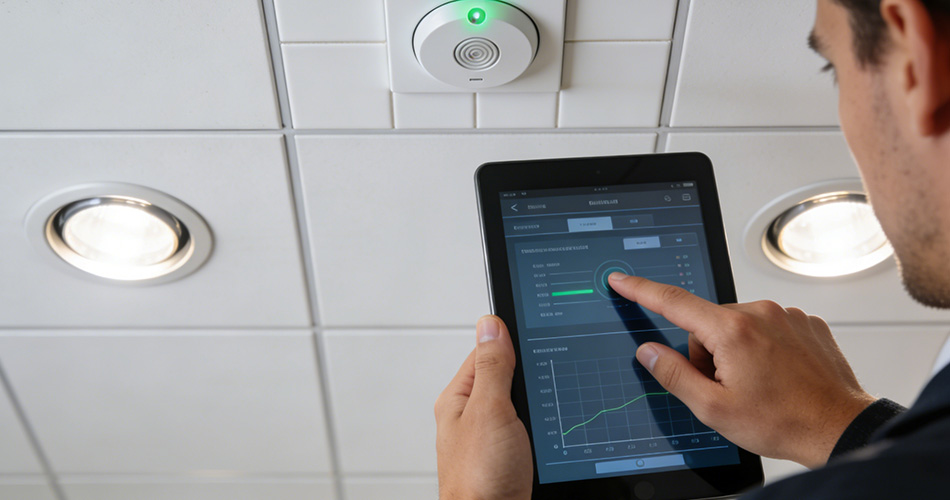
Effective ceiling tile lighting sensor retrofit procedures begin with thorough pre-retrofit preparation, which sets the stage for efficient and error-free installation:
First, conduct a comprehensive facility audit. This involves assessing the existing ceiling tile type (e.g., mineral fiber, gypsum, metal), grid system dimensions, and current lighting setup. Auditors should also document electrical wiring routes, voltage requirements, and compatibility with smart sensors. This audit helps identify potential challenges—such as fragile tiles or outdated wiring—and ensures that retrofitted sensors will work with the facility’s existing infrastructure.
Second, select compatible sensors and mounting solutions. Choose sensors designed for ceiling tile environments, ensuring they fit within the tile dimensions and weight capacity. For example, low-profile sensors are ideal for shallow ceiling cavities, while lightweight models prevent tile sagging. It’s also critical to verify compatibility with existing lighting controls or BMS to avoid integration issues post-retrofit.
Third, plan for minimal disruption. Schedule the retrofit during off-peak hours (e.g., nights, weekends) for facilities with high daytime occupancy. Prepare temporary lighting solutions for areas undergoing retrofit to maintain safety and functionality. Communicate the retrofit timeline with facility staff or tenants to manage expectations and minimize inconvenience.
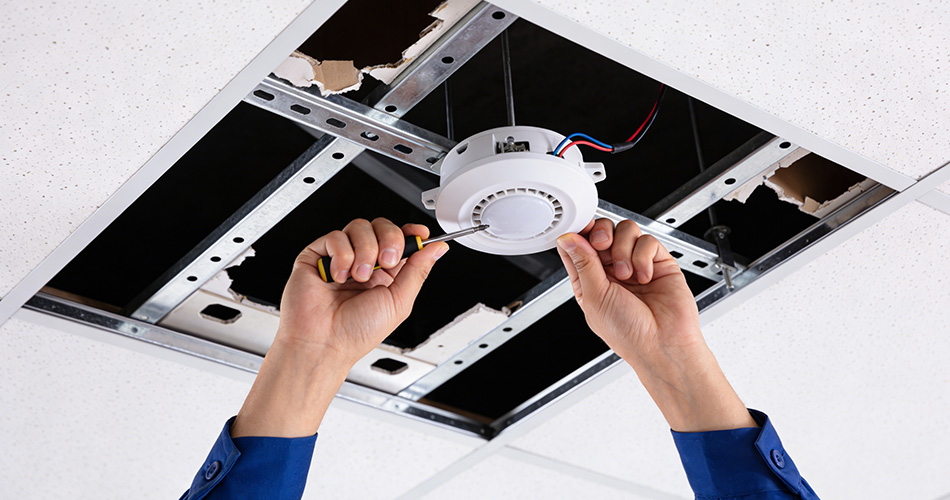
Standard ceiling tile lighting sensor retrofit procedures follow a structured, four-step process to ensure safety, precision, and performance:
Step 1: Safe removal of existing components. Begin by turning off power to the target lighting circuit at the main breaker to eliminate electrical hazards. Carefully remove the ceiling tile where the sensor will be installed, using a tile lifter to avoid cracking or damaging adjacent tiles. If replacing outdated sensors, disconnect and remove the old device, taking note of wiring connections for reference.
Step 2: Wiring and infrastructure preparation. Run new wiring (if needed) from the existing lighting fixture or control panel to the sensor location, routing it through the ceiling grid to avoid pinching or damaging wires. Use cable clips to secure wiring to grid members, keeping it clear of ceiling tile edges to prevent interference during tile reinstallation. For wireless sensors, skip wiring steps but ensure the sensor has adequate battery power or access to a power source.
Step 3: Sensor installation and tile modification (if required). If the sensor requires a cutout in the ceiling tile, use a template provided by the manufacturer to mark the tile, then cut carefully with a utility knife or tile cutter—taking care to avoid tile breakage. Mount the sensor to the ceiling grid using compatible brackets (designed for ceiling tile environments) or secure it directly to the tile (if the tile can support the weight). Connect the sensor wiring to the existing electrical system, following the manufacturer’s instructions and local electrical codes.
Step 4: Testing and calibration. Reinstall the ceiling tile, ensuring it fits securely in the grid. Restore power to the circuit and test the sensor’s functionality—checking occupancy detection, ambient light sensing, and integration with lighting controls. Calibrate the sensor to match the facility’s needs, adjusting detection range, sensitivity, and response time to avoid false triggers or missed detections. Conduct a final inspection to ensure the tile is undamaged, the sensor is properly aligned, and the lighting system operates as intended.
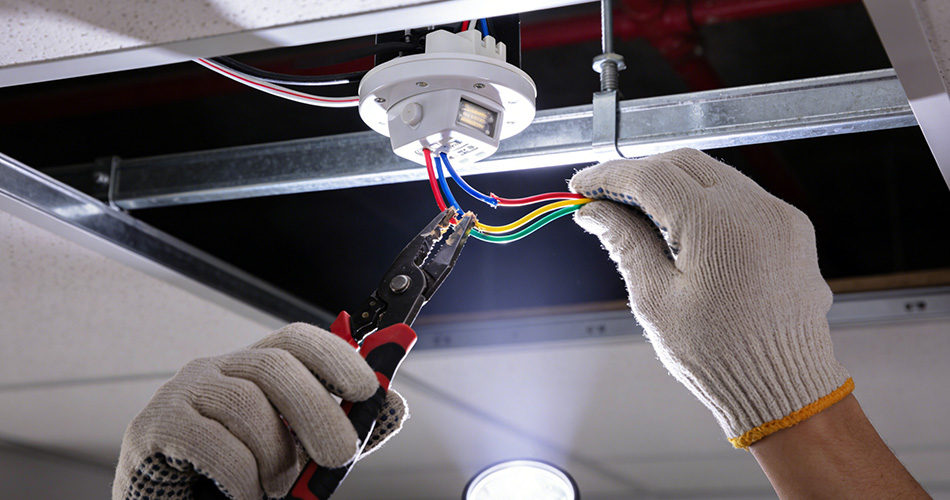
Ceiling tile lighting sensor retrofit procedures can be tailored to meet the unique requirements of different facility types, ensuring optimal performance and minimal disruption:
Commercial office buildings: Prioritize quick, low-disruption retrofits by using wireless sensors to avoid extensive wiring. Focus on retrofitting open workspaces and meeting rooms first, where occupancy varies frequently. During calibration, adjust sensor sensitivity to avoid detecting minor movements (e.g., HVAC air flow) that could trigger unnecessary lighting changes.
Healthcare facilities: Follow strict sterile protocols during retrofits, using antimicrobial sensors and avoiding tile modifications that could compromise air quality. Retrofit patient rooms during patient transfers to minimize disruption, and ensure sensors are positioned to avoid interfering with medical equipment. Calibrate sensors to support circadian lighting needs, with ambient light sensing that adjusts to natural light without disrupting patient comfort.
Retail environments: Use flexible retrofit procedures that accommodate frequent store layout changes. Choose sensors with adjustable detection ranges to adapt to shifting product displays and foot traffic patterns. Minimize tile modifications by using surface-mounted sensors where possible, and schedule retrofits during closed hours to avoid disrupting customers.
Educational institutions: Retrofit classrooms and lecture halls during school breaks to avoid disrupting classes. Use durable sensors designed to withstand high-traffic environments, and position them to cover entire classroom areas without missing corner seats. Calibrate sensors to sync with class schedules, ensuring lighting turns on automatically before classes and off after dismissal.
To maximize the success of ceiling tile lighting sensor retrofit procedures, follow these critical best practices:
First, adhere to local building and electrical codes. Ensure all wiring and installation steps comply with regional regulations to avoid safety hazards and potential fines. Work with licensed electrical contractors to handle wiring tasks, especially in older facilities with complex electrical systems.
Second, prioritize quality over speed. Rushing through tile removal or sensor installation can lead to damage or poor performance. Take time to calibrate sensors carefully, as proper calibration is key to avoiding false triggers and ensuring energy savings.
Third, document the retrofit process. Keep records of sensor locations, wiring routes, and calibration settings for future maintenance. This documentation simplifies troubleshooting and makes it easier to expand the automated lighting system later.
Fourth, train facility staff post-retrofit. Educate staff on how to operate and maintain the new sensors, including adjusting settings, replacing batteries (for wireless models), and reporting issues. Proper training ensures the system operates optimally over time.
As automated lighting technology evolves, ceiling tile lighting sensor retrofit procedures are becoming more efficient and user-friendly:
One trend is the rise of plug-and-play sensors. Manufacturers are developing sensors that require no wiring or tile modifications, simply plugging into existing lighting fixtures or ceiling grid ports. These sensors streamline retrofit procedures, reducing installation time and disruption.
Another trend is AI-powered retrofit planning tools. These tools use facility blueprints and sensor data to create customized retrofit plans, identifying the optimal sensor locations and wiring routes before the project begins. This reduces errors and ensures retrofits are tailored to the facility’s unique layout.
Finally, sustainable retrofit solutions. Retrofitting with energy-efficient sensors and recycled-material mounting components aligns with green building standards, helping facilities reduce their carbon footprint while achieving energy savings. These sustainable retrofits also qualify for energy efficiency incentives in many regions.
In conclusion, ceiling tile lighting sensor retrofit procedures are essential for upgrading older facilities to automated lighting systems without compromising ceiling integrity or operational continuity. By following structured pre-retrofit preparation, step-by-step installation, and facility-specific adaptations, organizations can achieve seamless upgrades that deliver energy savings, improved user comfort, and long-term operational value. As plug-and-play technology and AI planning tools advance, retrofitting ceiling tile environments will become even more accessible and efficient. For facility managers looking to modernize their lighting systems while minimizing disruption and cost, adhering to standardized ceiling tile lighting sensor retrofit procedures is a strategic and effective approach.


)
)
)
)

+86 15899791249

+86 755 2955 3313


Address: Huafeng No.1 Science and Technology Park, Sanwei, Bao'an District, Shenzhen, Guangdong, China.
