

Time:2025-10-23
Emergency lighting is only valuable when it works at the moment people need it most.
In commercial buildings, emergency lights are often installed across corridors, stairwells, parking areas, warehouses, schools, hospitals, offices, and large public spaces. But for facility teams, checking every emergency light manually can be slow, repetitive, and easy to miss.
That is why more building operators are looking at a centralized emergency lighting monitoring system.
Instead of relying only on manual inspection, centralized monitoring helps facility managers check device status, battery condition, test results, fault alarms, and maintenance records from one platform.
An emergency lighting monitoring system is a digital system used to monitor emergency lights, exit signs, batteries, and related control devices in commercial or industrial buildings.
A centralized system usually connects emergency lighting devices to a management platform through controllers, communication modules, gateways, or a networked control system.
Its main purpose is simple:
To help facility teams know whether emergency lighting devices are ready, faulty, disconnected, under maintenance, or in need of inspection.
For large buildings or multi-site properties, this can make emergency lighting maintenance more visible, organized, and easier to manage.
Many buildings still depend on manual inspection.
A technician walks through the building, checks each emergency light, records the result, and reports problems afterward. This method can work for small sites, but it becomes difficult as the building size grows.
Common problems include:
Emergency lights are installed in many different areas
Some devices are hard to access
Battery problems may not be found in time
Test records may be incomplete or scattered
Faults are often discovered only during inspection
Multi-building maintenance is difficult to manage consistently
For facility managers, the challenge is not only whether emergency lights are installed. The bigger question is whether every emergency lighting device is working properly when needed.
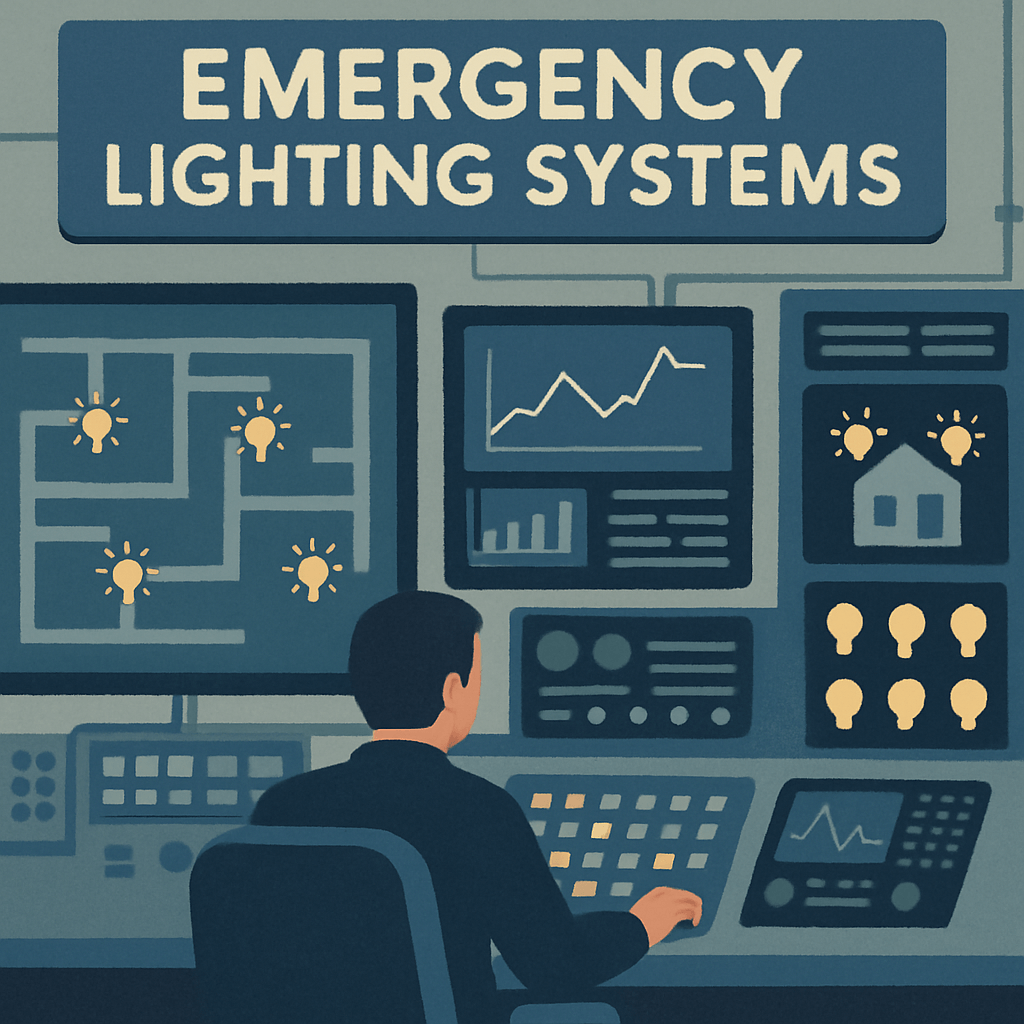
A good centralized emergency lighting monitoring system should help facility teams move from reactive maintenance to more visible and proactive management.
Automatic testing allows the system to perform scheduled function tests or duration tests without requiring technicians to check every device manually.
This can reduce repetitive inspection work and help maintenance teams identify problems faster.
For large commercial buildings, automatic testing is especially useful because emergency lighting devices are often spread across different floors, rooms, corridors, staircases, and parking areas.
Fault alerts are one of the most important functions of centralized emergency lighting monitoring.
The system can help detect issues such as:
Battery fault
Lamp fault
Charging fault
Communication failure
Device offline
Test failure
Abnormal operating status
Instead of waiting for the next manual inspection, facility teams can receive alerts and take action earlier.
Battery condition is critical for emergency lighting performance.
Even if the emergency light looks normal during daily operation, the battery may fail during a power outage if it has not been properly tested or maintained.
Centralized battery monitoring helps facility teams check battery-related status more efficiently and identify devices that may require replacement or maintenance.
Paper records and scattered spreadsheets can create problems during maintenance review or safety inspection.
A centralized emergency lighting monitoring system can help store digital records such as:
Test results
Fault history
Maintenance actions
Device status
Inspection logs
Replacement records
These records make it easier for facility managers to review system performance, organize maintenance work, and prepare documentation when needed.
For schools, hospitals, retail chains, office buildings, industrial facilities, and property groups, emergency lighting may be distributed across multiple buildings or locations.
Centralized remote monitoring allows maintenance teams to check system status from one platform instead of visiting every site only to discover basic fault information.
This is especially useful for organizations that manage multiple facilities with limited maintenance staff.
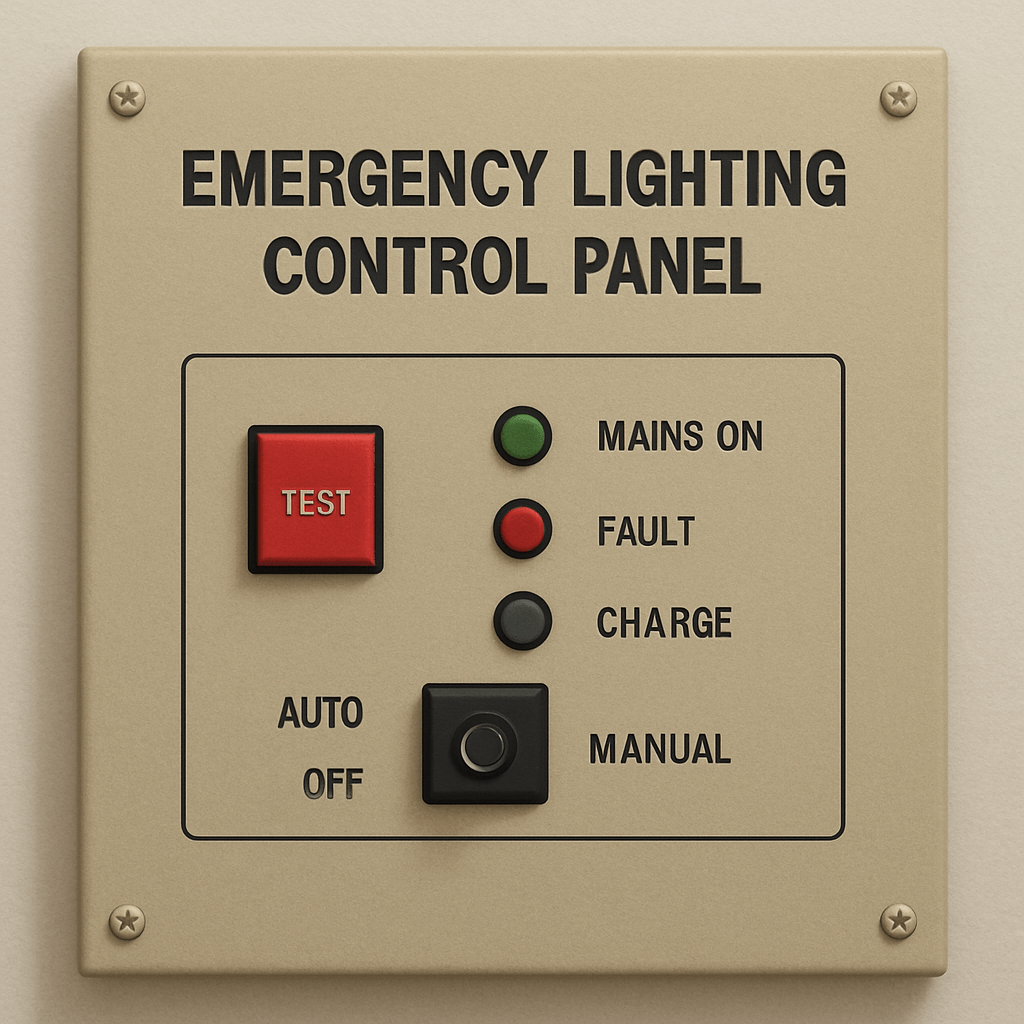
Standalone self-testing emergency lights can perform local tests, but the information usually stays at the device level. Facility teams may still need to check each device one by one.
Centralized monitoring provides a more connected approach.
Item | Standalone Testing | Centralized Monitoring |
Fault visibility | Local indicator | Platform alerts |
Test records | Manual or limited | Digital records |
Maintenance workload | Higher | Lower |
Multi-building management | Difficult | Easier |
Audit preparation | Paper-based | Report export |
For small projects, standalone self-testing may be enough. But for larger commercial buildings, centralized emergency lighting monitoring can reduce blind spots and improve maintenance efficiency.
A centralized emergency lighting monitoring system usually includes several key parts.
Component | Main Function |
Emergency lighting fixtures | Provide backup illumination during power failure |
Emergency lighting control module | Collects device status and test information |
Battery and charging monitoring | Helps detect battery or charging problems |
Gateway or communication device | Sends device data to the management platform |
Management platform | Displays status, alarms, records, and reports |
Maintenance interface | Helps facility teams check faults and manage service actions |
The exact system design depends on the building type, communication method, emergency lighting layout, and maintenance requirements.
Centralized emergency lighting monitoring is especially suitable for buildings where emergency lights are widely distributed or difficult to inspect manually.
Typical applications include:
Hospitals and healthcare buildings
Schools and universities
Shopping malls and retail properties
Warehouses and logistics centers
Office buildings
Hotels
Parking garages
Industrial facilities
Public buildings
Multi-site commercial properties
In these spaces, the value is not only safety. It also helps reduce maintenance workload, improve visibility, and make emergency lighting management more consistent.
Before choosing an emergency lighting monitoring system, facility managers should check:
Device compatibility
Automatic testing capability
Fault alert functions
Battery and fixture status monitoring
Report export options
Scalability for large or multi-site buildings
Platform usability
Integration potential with BMS or IoT platforms
A good system should make emergency lighting easier to monitor, test, and maintain — not more complicated.
An emergency lighting monitoring system is used to monitor emergency lights, batteries, test results, faults, and maintenance records through a centralized platform.
The system collects status and test data from emergency lighting devices and sends the information to a management platform. Facility teams can then view faults, test results, and device status centrally.
Self-testing emergency lights test themselves locally, while centralized monitoring allows facility teams to view test results, faults, and maintenance records from one platform.
Yes. Automatic testing, fault alerts, and digital records can reduce repetitive manual checks and help maintenance teams focus on devices that need attention.
Small buildings may only need standalone self-testing emergency lights. Centralized monitoring is more valuable for larger buildings, complex facilities, or multi-site properties.
Depending on the system design, it may detect battery faults, lamp faults, charging problems, communication failure, offline devices, and test failures.
Digital records help facility teams review test history, track maintenance actions, organize inspection information, and manage long-term emergency lighting performance.
Emergency lighting maintenance should not rely only on manual checks and scattered records.
For commercial buildings, centralized emergency lighting monitoring helps facility teams automate testing, detect faults faster, track battery and fixture status, and keep better maintenance records.
A well-designed system gives building operators a simple but important answer:
Are the emergency lights ready when they are needed?


)
)
)
)

+86 15899791249

+86 755 2955 3313


Address: Huafeng No.1 Science and Technology Park, Sanwei, Bao'an District, Shenzhen, Guangdong, China.
