

Time:2025-11-12
In the competitive landscape of commercial operations, every expense line item demands careful scrutiny—especially lighting, a critical component that impacts both operational efficiency and bottom-line profitability. A comprehensive commercial lighting cost analysis comparison report is not just a document; it’s a strategic tool that helps businesses cut unnecessary spending, optimize energy use, and make informed decisions when upgrading or installing lighting systems. For facility managers, business owners, and procurement teams, understanding the true cost of different lighting solutions goes beyond upfront pricing—it requires evaluating long-term operational, maintenance, and energy costs. This article breaks down the key elements of a commercial lighting cost analysis comparison report and why it’s indispensable for modern businesses.
Many businesses make the mistake of choosing lighting solutions based solely on initial purchase price, overlooking the total cost of ownership (TCO) that defines true value over time. A commercial lighting cost analysis comparison report addresses this gap by systematically comparing costs across different lighting technologies—from traditional fluorescent and incandescent fixtures to modern smart lighting systems. It quantifies variables like energy consumption, maintenance frequency, bulb lifespan, and even indirect costs such as downtime during replacements or reduced productivity from poor lighting quality.
For commercial spaces like warehouses, offices, hospitals, and retail stores, lighting can account for 20-40% of total energy bills. A well-executed commercial lighting cost analysis comparison report reveals how switching to energy-efficient smart lighting can cut these costs by 30-60% annually, offsetting higher upfront investments within months. Additionally, the report helps businesses align lighting choices with sustainability goals, as energy-efficient systems reduce carbon footprints—a factor increasingly valued by customers, investors, and regulatory bodies.
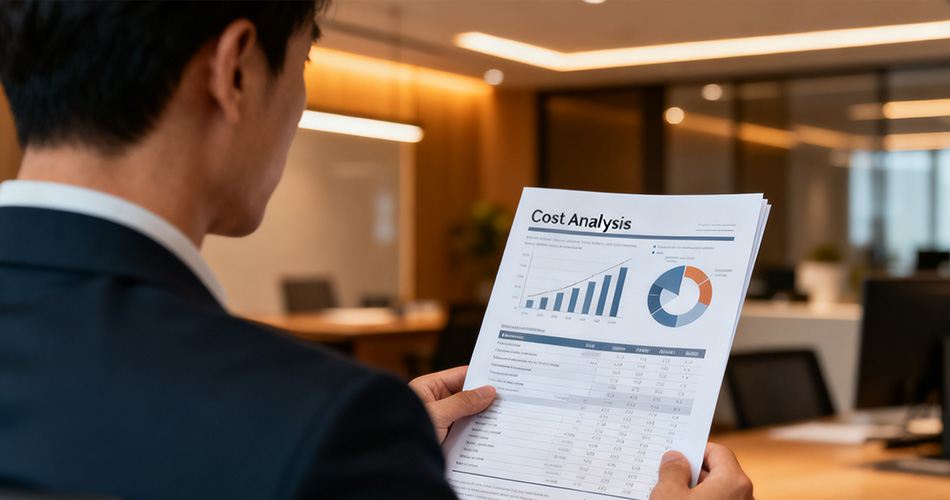
The first section of any commercial lighting cost analysis comparison report focuses on upfront expenses, including fixtures, installation, and any necessary infrastructure upgrades. Traditional lighting systems (e.g., fluorescent tubes) often have lower initial costs, but this advantage fades when paired with long-term expenses. Smart lighting solutions, which include sensors, controllers, and gateways, may have higher upfront pricing, but they eliminate the need for costly retrofits later and integrate seamlessly with building management systems. The report compares these costs across different scales—from small office spaces to large industrial warehouses—showing how bulk purchases or modular smart systems can reduce initial outlays for larger projects.
Energy consumption is the single largest ongoing cost for commercial lighting, making it a cornerstone of the commercial lighting cost analysis comparison report. Traditional incandescent bulbs convert only 5-10% of energy into light, with the rest wasted as heat. Fluorescent fixtures are more efficient but still lag behind LED-based smart lighting, which uses 75% less energy and lasts 25 times longer. The report includes real-world energy use data: for example, a 10,000-square-foot warehouse using traditional lighting might spend \(15,000 annually on energy, while a smart LED system could reduce that to \)4,500. It also factors in variables like occupancy sensors and daylight harvesting—features of smart systems that automatically adjust lighting based on activity or natural light, further slashing energy costs.
Maintenance is another hidden cost that the commercial lighting cost analysis comparison report brings to light. Traditional lighting fixtures require frequent bulb replacements, labor for maintenance, and downtime that disrupts operations. Incandescent bulbs last roughly 1,000 hours, while fluorescent tubes last 10,000 hours—compared to 50,000+ hours for LED smart lights. The report calculates annual maintenance costs by factoring in bulb lifespan, labor rates, and replacement frequency. For a hospital or 24/7 warehouse, this can translate to savings of \(2,000-\)5,000 annually, as smart systems require minimal upkeep and often include remote monitoring to predict maintenance needs before failures occur.

A commercial lighting cost analysis comparison report is only valuable if it drives action. Businesses should use the report to:
Prioritize upgrades based on ROI: Identify spaces with the highest lighting costs (e.g., warehouses with outdated fixtures) for immediate savings.
Negotiate with suppliers: Use cost comparisons to secure better pricing on smart lighting systems.
Secure budget approval: Present data-backed TCO projections to stakeholders to justify upfront investments in energy-efficient solutions.
Track long-term savings: Revisit the report annually to measure actual cost reductions against projections and adjust strategies as needed.
In an era where cost efficiency and sustainability are non-negotiable, a commercial lighting cost analysis comparison report is more than a financial tool—it’s a roadmap to smarter, more responsible business operations. By looking beyond initial prices and evaluating the full lifecycle costs of lighting solutions, businesses can reduce expenses, enhance operational efficiency, and position themselves as leaders in sustainable practice. Whether upgrading an existing space or planning a new commercial project, investing in a comprehensive commercial lighting cost analysis comparison report is a decision that pays dividends for years to come.
Related news
How Smart Lighting Solutions Reduce Energy Costs | LumiEasy
Ceiling Mounted Sensor for Smart Industrial Lighting Control | LumiEasy
Lighting Control Powerpack for Smart Industrial Systems
Industrial Smart Lighting for Hazardous Areas: Compliance & Intelligent Applications
Linear Smart Sensor Solutions for Smart Infrastructure | LumiEasy


)
)
)
)

+86 15899791249

+86 755 2955 3313


Address: Huafeng No.1 Science and Technology Park, Sanwei, Bao'an District, Shenzhen, Guangdong, China.
