

Time:2025-11-17
Commercial smart lighting has evolved from a niche energy-saving tool to a core driver of customer experience, operational efficiency, and sustainability for small-to-mid-size businesses (SMBs). Unlike enterprise-grade systems designed for large campuses, commercial solutions prioritize affordability, modularity, and quick deployment—while delivering tangible ROI through reduced energy costs, enhanced ambiance, and data-driven space optimization. This guide explores 2025’s defining trends, industry-specific applications, and practical implementation strategies, leveraging open standards and real-world use cases to help SMBs unlock the full potential of smart lighting.
For SMBs, commercial smart lighting delivers three non-negotiable benefits that align with bottom-line goals:
Energy Efficiency at Scale: 2025 industry data confirms commercial smart lighting reduces energy consumption by 40-60% compared to traditional systems, thanks to occupancy sensing, daylight harvesting, and automated scheduling . For retail stores or offices operating 12+ hours daily, this translates to 30-50% lower monthly utility bills—often recouping hardware costs within 18-24 months.
Experience-Driven Ambiance: Lighting shapes customer perception and employee productivity. Commercial smart systems enable dynamic scene adjustments (e.g., "morning productivity" cool light for offices, "evening ambiance" warm tones for cafes) and zoned dimming to highlight merchandise, guide foot traffic, or create intimate seating areas .
Low-Cost Scalability: Modular design allows SMBs to start small (e.g., a single retail floor) and expand incrementally. Wireless deployment eliminates the need for rewiring, while cloud-based management enables remote control via mobile or web interfaces—critical for multi-location businesses like restaurant chains or boutique hotels.
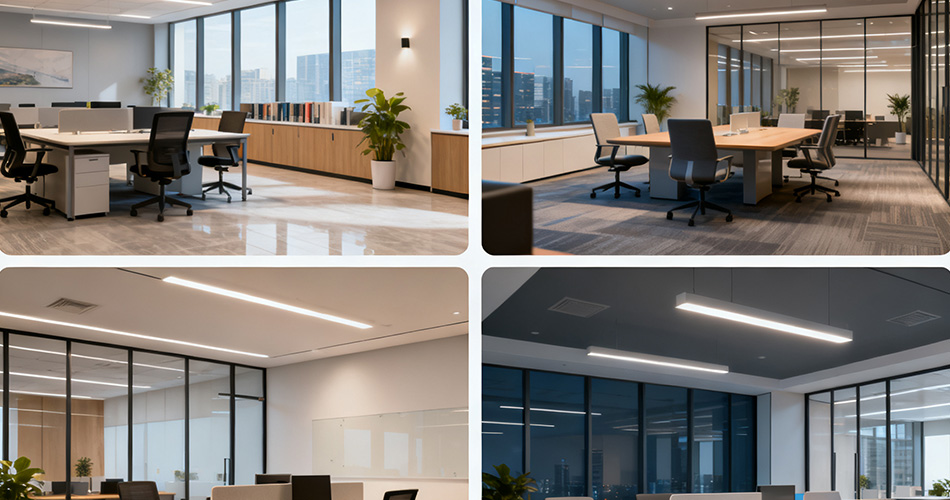
The adoption of Matter (the cross-vendor smart building standard) has revolutionized commercial smart lighting by enabling seamless interoperability across brands and devices . SMBs no longer face vendor lock-in: a Matter-enabled smart switch can control fixtures from different manufacturers, while integrating with other IoT tools (thermostats, security cameras) via Apple HomeKit, Google Home, or Amazon Alexa. Key benefits for commercial users include:
Simplified setup: "Scan-and-connect" deployment reduces installation time by 50%.
Unified control: Manage lighting, HVAC, and audio through a single dashboard (critical for retail or hospitality ).
Future-proofing: Matter’s IPv6 foundation supports emerging technologies like AI-driven occupancy prediction.
Commercial smart lighting systems now serve as data hubs, collecting occupancy patterns, energy use, and space utilization metrics to inform business decisions . For example:
Retailers use foot traffic data from lighting sensors to optimize product placement and staffing.
Coworking spaces leverage occupancy analytics to adjust membership pricing or expand high-demand zones.
Hotels sync lighting data with booking systems to pre-configure room ambiance for arriving guests.
As "green operations" become a competitive differentiator, commercial smart lighting helps SMBs meet ESG goals through:
Automated energy reduction (aligning with global carbon emission targets).
LED lifecycle optimization (extending fixture lifespan by 2-3x, reducing e-waste ).
Carbon footprint tracking: Built-in reporting tools quantify emissions savings for customer transparency or certification (e.g., LEED, B Corp).
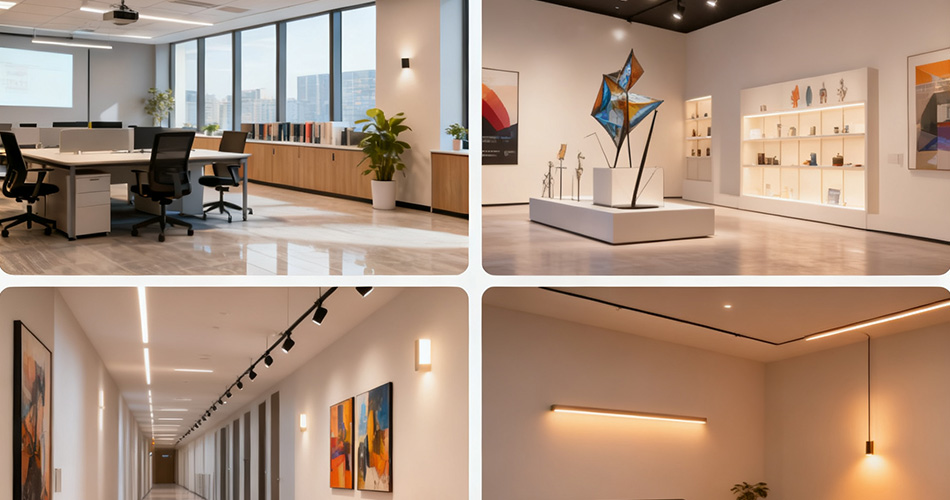
Dynamic Merchandise Highlighting: Zoned dimming and color tuning draw attention to seasonal products (e.g., bright cool light for activewear, warm tones for luxury goods) . Nike’s Shanghai flagship store uses this to create "creation zones" with customizable lighting that aligns with brand aesthetics .
Energy Optimization: Lights automatically dim in stockrooms or low-traffic aisles, while syncing with store hours to eliminate after-hours waste.
Customer Journey Enhancement: Motion sensors trigger subtle lighting changes to guide shoppers from entry to checkout, reducing decision fatigue.
Circadian Rhythm Lighting: Adjusts color temperature throughout the day (cool 5000K in the morning, warm 2700K in the evening) to boost productivity and employee well-being .
Hotdesk Flexibility: Employees save lighting preferences to their profiles, with automatic adjustments when they occupy a workspace.
Meeting Room Automation: Lighting syncs with calendar tools (e.g., Microsoft 365) to switch to "presentation mode" (focused task lighting) or "collaboration mode" (even, warm illumination) .
Table-Specific Control: Diners or staff adjust lighting via mobile apps to create intimate or lively table settings—no need for physical dimmers.
Emergency Response: Integrates with security systems to illuminate evacuation routes during power outages or alarms .
Brand Alignment: Lighting scenes reflect brand identity (e.g., industrial chic for breweries, soft ambient light for spas) and adapt to events (private dinners, live music nights).
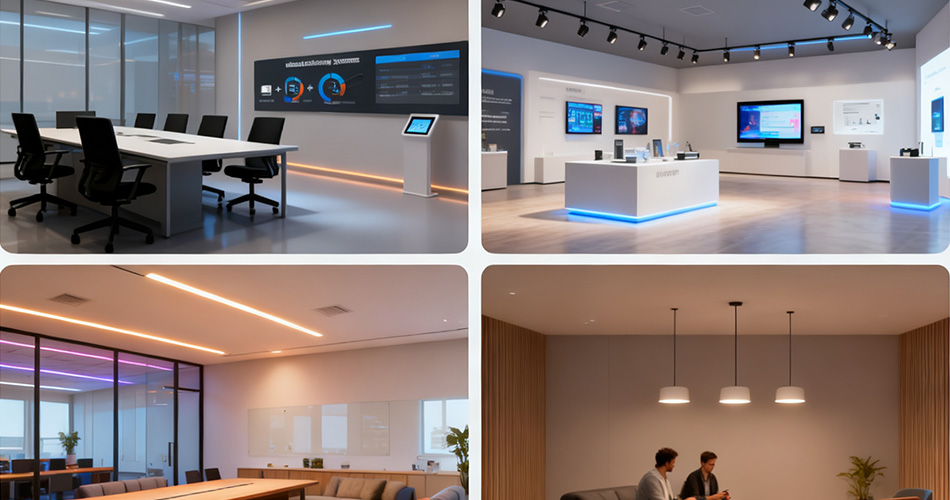
Start with high-impact areas (e.g., retail sales floors, office workspaces) rather than full-building deployment. Conduct a energy audit to identify waste hotspots (e.g., 24/7 lit storage rooms).
Opt for wireless systems (Zigbee 3.0, BLE Mesh, or Wi-Fi 6) to avoid rewiring costs. Prioritize Matter-enabled devices for flexibility—look for certifications like "Matter over Thread" or "Matter over Wi-Fi" .
Select platforms with intuitive dashboards for remote control, scheduling, and reporting. Ensure compatibility with existing tools (e.g., POS systems for retail, booking software for hotels).
Roll out in 2-3 phases (e.g., Phase 1: Sales floor; Phase 2: Back office) to minimize disruption. Train staff on basic controls (scene selection, troubleshooting) to maximize adoption.
Cost vs. Value: Avoid over-investing in unnecessary features (e.g., advanced AI analytics) if your primary goal is energy savings. Start with core functionality and upgrade as needs evolve.
Vendor Support: Choose providers offering 24/7 technical support—critical for SMBs without dedicated IT teams.
Compliance: Ensure systems meet local electrical codes and energy efficiency standards (e.g., ENERGY STAR, DLC) to qualify for rebates or tax incentives .
Commercial smart lighting is no longer a luxury for large enterprises—it’s a practical, cost-effective solution that empowers SMBs to compete through better customer experiences, lower operating costs, and sustainable operations. By embracing 2025 trends like Matter interoperability, AIoT data integration, and ESG-focused design, small-to-mid-size businesses can transform lighting from a routine expense into a strategic asset. Whether you’re a boutique retailer, a growing office, or a neighborhood restaurant, commercial smart lighting adapts to your unique needs—delivering immediate ROI and long-term resilience in an increasingly competitive market.


)
)
)
)

+86 15899791249

+86 755 2955 3313


Address: Huafeng No.1 Science and Technology Park, Sanwei, Bao'an District, Shenzhen, Guangdong, China.
