

Time:2025-11-17
Commercial smart lighting control systems have become indispensable for modern businesses, bridging the gap between energy efficiency, operational agility, and user experience across retail stores, offices, hospitality venues, and small-to-mid-sized commercial spaces. Unlike enterprise-grade solutions focused on large-scale campus integration, commercial systems prioritize modularity, ease of deployment, and cost-effectiveness—while retaining core smart capabilities that drive tangible business value. This guide explores the foundational components, key functionalities, and practical deployment strategies of commercial smart lighting control systems, emphasizing open standards, cross-scenario adaptability, and actionable insights for businesses of all sizes.
Commercial smart lighting control systems leverage a flexible, scalable architecture tailored to the dynamic needs of diverse commercial spaces:
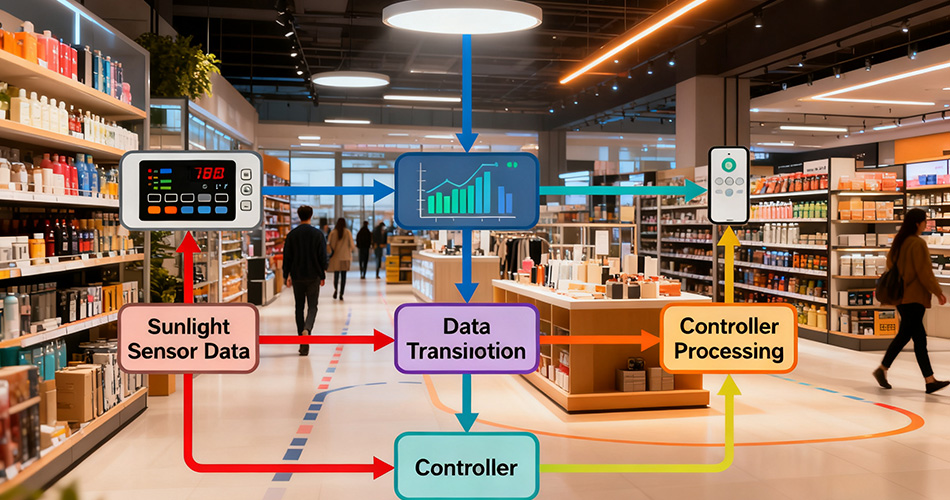
Distributed Modular Structure: Comprises three core units—input devices (occupancy sensors, daylight detectors, wall panels), output modules (smart dimmers, relays), and a central controller (cloud-based or on-premise). This modularity allows businesses to start small (e.g., a single retail floor) and expand incrementally, adding components without overhauling existing infrastructure . Each unit operates independently while communicating seamlessly, ensuring system stability even if individual components require maintenance.
Cloud-Native Management: Most commercial systems adopt cloud-based platforms for remote monitoring and control, enabling facility managers to adjust lighting schedules, track energy use, and troubleshoot issues via web or mobile interfaces. This eliminates the need for on-site servers, reducing upfront costs and simplifying management for multi-location businesses (e.g., restaurant chains, boutique hotels).
Edge Computing for Real-Time Responsiveness: Critical functions like occupancy-based dimming or emergency lighting triggers are processed locally at the edge, minimizing latency and ensuring reliable performance even during temporary internet outages. This hybrid cloud-edge approach balances centralized oversight with on-the-ground agility, a key requirement for high-traffic commercial environments.
Interoperability is a defining feature of modern commercial smart lighting control systems, ensuring seamless integration with existing infrastructure and future upgrades:
Fixture & Protocol Compatibility: Adheres to open industry standards (DALI-2, 0-10V, DMX512) to support dimmable LEDs, emergency lighting, and specialty fixtures (retail track lights, office panel lights). This flexibility allows businesses to retain legacy fixtures or mix brands, avoiding vendor lock-in . Compatibility with Matter, the cross-vendor smart building protocol, further enhances interoperability, enabling lighting systems to connect with smart thermostats, security cameras, and other IoT devices across Apple HomeKit, Google Home, and Amazon Alexa ecosystems .
Small-Scale BMS Integration: Syncs with compact building management systems (BMS) commonly used in commercial spaces, aligning lighting with HVAC operations (e.g., dimming lights in unoccupied zones while adjusting temperature) to maximize overall energy savings. Unlike enterprise systems, commercial solutions prioritize simplified API integrations that require minimal IT resources to implement .
User Device Integration: Supports control via intuitive interfaces—wall-mounted touch panels (low-voltage for safety), mobile apps, and voice commands—catering to both staff (e.g., restaurant servers adjusting dining room lighting) and customers (e.g., hotel guests customizing room ambiance).
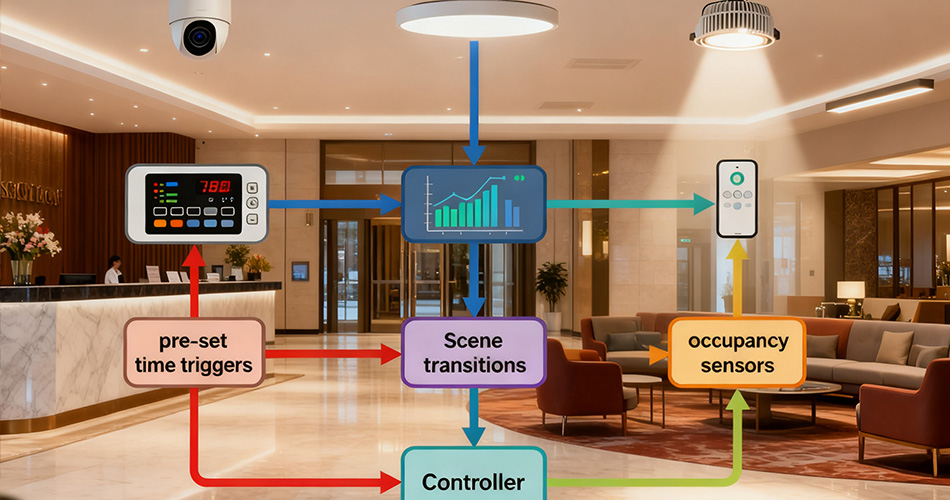
Commercial smart lighting control systems rely on protocols optimized for scalability, energy efficiency, and ease of installation:
Wireless Protocols (Zigbee 3.0, BLE Mesh): Dominant in commercial deployments for their low power consumption and ability to support large-scale sensor networks. Zigbee 3.0 enables multi-hop communication, extending coverage across warehouses or open-plan offices without additional wiring, while BLE Mesh facilitates seamless smartphone integration for quick setup . Both protocols support Matter, ensuring future-proof connectivity as the smart building ecosystem evolves.
Wi-Fi 6/6E: Ideal for commercial spaces requiring high-data throughput, such as retail stores with interactive lighting displays or offices with video analytics integration. Wi-Fi 6/6E reduces congestion and latency, enabling real-time adjustments to lighting scenes based on customer traffic or meeting schedules .
Power over Ethernet (PoE): Gaining traction in commercial settings for its ability to deliver power and data over a single Ethernet cable. PoE simplifies installation in new constructions or retrofits, reducing wiring costs and enabling centralized power management—critical for spaces like co-working offices or multi-tenant buildings .
Thread: Emerging as a low-latency, reliable option for commercial IoT networks, supporting thousands of devices with self-healing capabilities. Thread is particularly well-suited for large commercial spaces (e.g., shopping malls) where consistent connectivity across zones is essential .
Commercial smart lighting control systems deliver functionality beyond basic on/off control, addressing key business priorities like energy savings, user experience, and operational efficiency:
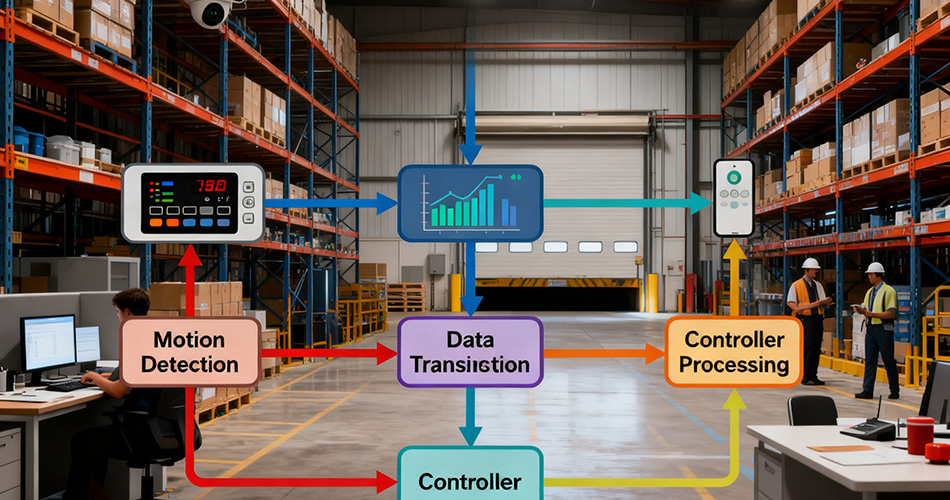
Adaptive Lighting Control: Combines occupancy sensing and daylight harvesting to automate lighting adjustments. For example, retail stores use motion sensors to brighten product displays when customers approach and dim background lighting during off-peak hours, while offices leverage daylight detectors to reduce artificial illumination when natural light is sufficient—cutting energy use by 30% or more . AI-enhanced systems take this further, using self-learning models to predict occupancy patterns (e.g., peak hours in a café) and pre-adjust lighting for optimal comfort and efficiency .
Scene & Schedule Management: Enables pre-programmed lighting scenes tailored to commercial activities—e.g., "store opening" (bright, energetic lighting), "conference mode" (focused task lighting), or "night security" (low-intensity perimeter lighting). Schedules can be set to align with operational hours, automatically shutting down non-essential lighting after closing to eliminate waste .
Energy Monitoring & Reporting: Tracks real-time energy consumption and generates customizable reports, helping businesses identify cost-saving opportunities (e.g., over-illuminated storage areas) and quantify sustainability gains for ESG compliance. Some systems integrate with utility management tools to optimize for time-of-use pricing, further reducing bills .
Maintenance & Reliability Features: Extends Light source lifespan by 2-4 times through soft-start/soft-stop technology and voltage stabilization, reducing replacement costs and downtime . Remote diagnostics alert facility managers to faulty fixtures or sensor malfunctions, enabling proactive maintenance and minimizing disruptions to business operations.
Phased Rollout: Start with high-impact areas (e.g., a retail store’s sales floor, an office’s open workspace) to test functionality and demonstrate ROI before expanding to the entire facility. This approach reduces risk and allows staff to adapt to the new system gradually .
User-Centric Design: Involve end-users (employees, tenants, customers) in the planning process to ensure controls are intuitive and meet their needs. For example, hotel guests may prefer voice-activated room lighting, while warehouse staff benefit from hands-free motion sensors .
Vendor Neutrality: Select systems based on open standards rather than proprietary technology, ensuring flexibility to add new components or switch providers as business needs change. Prioritize vendors that offer ongoing software updates and technical support .
Compliance & Safety: Ensure the system meets local electrical codes and safety standards (e.g., low-voltage controls to prevent shocks) and aligns with energy efficiency regulations (ENERGY STAR, DLC) to qualify for rebates or incentives .
Commercial smart lighting control systems empower businesses to transform lighting from a routine utility into a strategic asset. By combining modular architecture, open interoperability, and user-centric functionality, these systems deliver immediate benefits—reduced energy costs, improved user experience, simplified maintenance—while supporting long-term sustainability and scalability. Whether deployed in a small café, a mid-sized office, or a multi-location retail chain, commercial smart lighting control systems adapt to diverse business needs, proving that intelligent lighting isn’t just for large enterprises. For businesses looking to enhance efficiency, agility, and competitiveness, investing in a commercial smart lighting control system is a practical, future-proof decision.


)
)
)
)

+86 15899791249

+86 755 2955 3313


Address: Huafeng No.1 Science and Technology Park, Sanwei, Bao'an District, Shenzhen, Guangdong, China.
