

Time:2025-11-17
Commercial smart lighting control systems are defined by their technical framework—one that prioritizes interoperability, scalability, and seamless integration with commercial environments. Unlike consumer-grade solutions, these systems require technical specifications tailored to the demands of large spaces, diverse user needs, and complex operational workflows. This guide outlines the core technical specifications of commercial smart lighting control systems, focusing on architecture, communication protocols, functionality, and compliance—without delving into restrictive product parameters. It serves as a roadmap for businesses evaluating solutions that balance performance, reliability, and future-proofing.
Commercial smart lighting control systems rely on a modular, layered architecture to support spaces ranging from small offices to multi-building campuses. This design ensures flexibility and easy expansion:
Perception Layer: Includes occupancy sensors, daylight sensors, and user input devices (e.g., wall panels, mobile apps). These components collect real-time data (occupancy status, ambient light levels) to trigger lighting adjustments, with technical emphasis on low-power operation and consistent data transmission.
Network Layer: Acts as the backbone for data flow, supporting wired and wireless connectivity. Key technical attributes include self-healing capabilities (to maintain connectivity in large spaces) and bandwidth optimization (to avoid interference with other building systems).
Application Layer: Hosts the system’s core logic, including automation rules, scheduling, and analytics. It features a scalable software infrastructure that can manage 100 to 100,000+ fixtures, with cloud-based or on-premise deployment options based on security and latency needs.
Integration Layer: Enables connectivity with third-party systems (BMS, HVAC, IoT platforms) via open APIs. This layer ensures commercial smart lighting control systems work as part of a unified building ecosystem, rather than standalone tools.
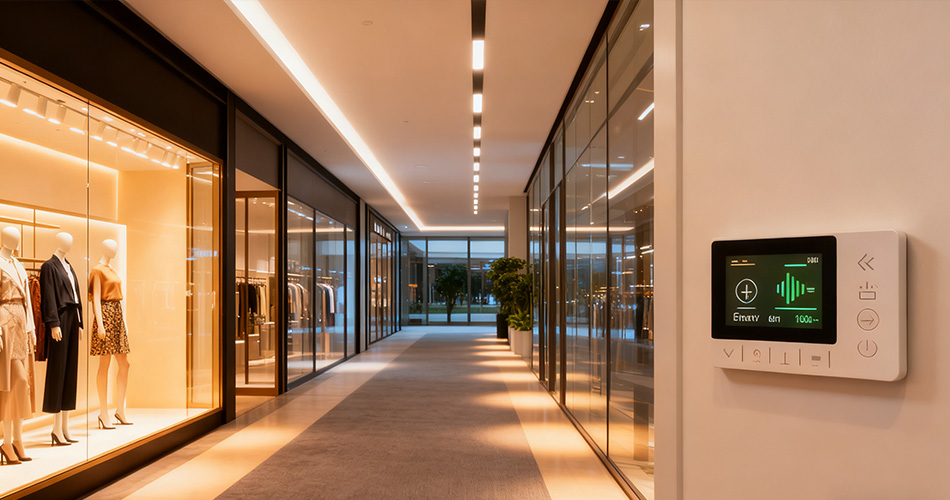
The choice of communication protocol is a critical technical specification, dictating how components interact and integrate with existing infrastructure:
Zigbee 3.0/BLE Mesh: Ideal for wireless commercial deployments, these protocols support multi-hop communication (extending range across large spaces) and low power consumption. They are widely adopted for compatibility with sensors, controllers, and gateways, with native support for Matter (the cross-vendor smart home/building standard).
Wi-Fi 6/6E: Suited for high-data applications like video analytics or real-time monitoring, Wi-Fi 6/6E offers increased bandwidth and reduced latency. It is often used in retail or hospitality settings where lighting integrates with customer-facing technologies (e.g., interactive displays).
Ethernet (TCP/IP): Reserved for wired backbone components (e.g., central controllers, gateways) that require stable, high-speed connectivity. Technical specifications prioritize PoE (Power over Ethernet) support, allowing controllers to draw power and data from a single cable for simplified installation.
LonWorks/BACnet: Industry-standard protocols for integration with building management systems (BMS). These ensure commercial smart lighting control systems can share data (energy use, occupancy status) with HVAC and security systems, enabling holistic building optimization.
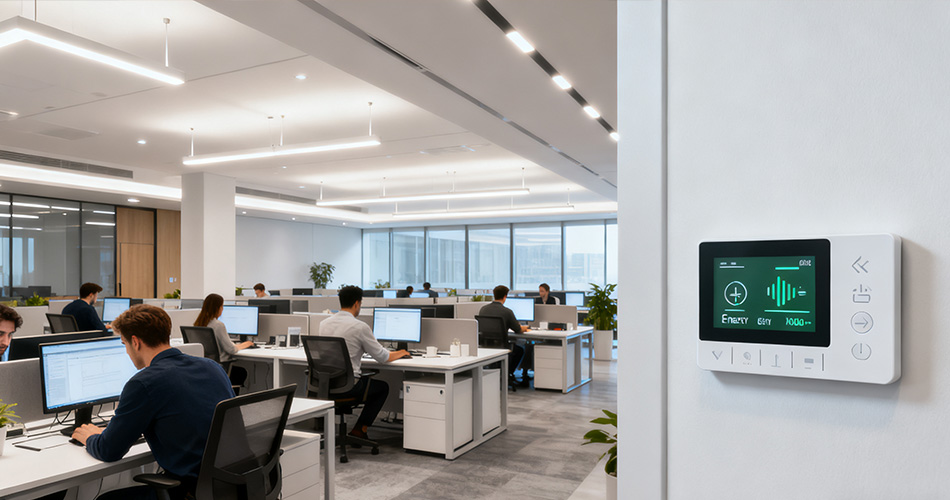
Commercial smart lighting control systems must deliver technical capabilities that align with commercial operational needs:
Automation Logic: Supports rule-based programming (e.g., “dim lights to 40% when occupancy is low” or “sync with sunrise/sunset for daylight harvesting”). Technical specifications include support for conditional triggers (time, occupancy, ambient light) and nested rules for complex workflows.
Centralized Management: Features a web-based or cloud dashboard with real-time monitoring of lighting status, energy use, and system health. Technical attributes include role-based access control (RBAC) to restrict user permissions (e.g., facility managers vs. end-users) and batch configuration tools for multi-zone adjustments.
Data Analytics & Reporting: Captures and processes data on energy consumption, occupancy patterns, and fixture performance. Specifications include customizable reporting templates (daily/weekly energy use, savings tracking) and exportable data formats (CSV, PDF) for ESG compliance and operational audits.
User Control Options: Offers multiple interfaces for end-users and administrators, including wall-mounted touch panels (weather-resistant for industrial/hospitality use), mobile apps (cross-platform compatibility), and voice control integration (with Amazon Alexa, Google Workspace, or Microsoft Teams).
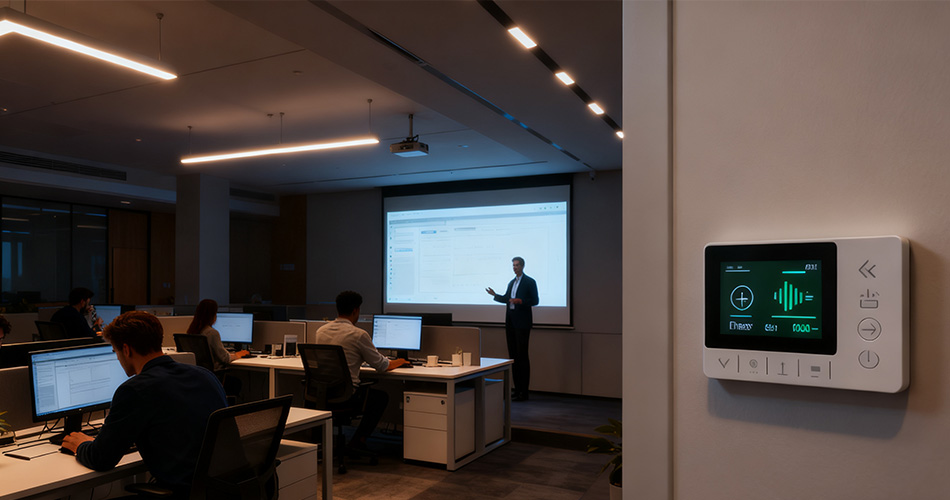
A key technical requirement for commercial smart lighting control systems is the ability to work with diverse hardware and software:
Fixture Compatibility: Supports dimmable LED fixtures, emergency lighting, and specialty fixtures (e.g., high-bay industrial lights, retail track lighting) via standard interfaces (0-10V, DALI-2, DMX512). This ensures businesses can retain existing fixtures or mix and match brands without compatibility issues.
Third-Party Integration: Complies with open standards (Matter, OSGi) and provides APIs for integration with BMS platforms (Siemens, Honeywell), IoT ecosystems (Azure IoT, AWS IoT), and energy management tools. Technical specifications include secure data transmission (HTTPS, MQTT) to protect operational data.
Scalability: Designed to scale from a single floor to multi-site operations without hardware overhauls. This is achieved via modular controllers and cloud-based management that can add new fixtures or locations with minimal configuration.
Commercial smart lighting control systems must withstand the demands of commercial environments, with technical specifications that ensure reliability:
Operating Conditions: Supports a wide temperature range (typically -20°C to 55°C) and humidity tolerance (10-90% non-condensing) to function in industrial warehouses, outdoor canopies, and climate-controlled offices.
Durability: Controllers and sensors feature ruggedized designs for high-traffic or harsh environments (e.g., dust-resistant enclosures for manufacturing facilities, water-resistant ratings for hospitality outdoor spaces).
Redundancy & Fail-Safe: Includes backup power support (UPS compatibility) and fail-safe modes (e.g., lights default to 100% brightness during system outages) to maintain safety and functionality in critical spaces like hospitals or data centers.
Commercial systems must meet global technical standards for safety, security, and energy efficiency:
Safety Certifications: Complies with IEC 60950 (IT equipment safety), UL 8750 (lighting controls), and local electrical codes (NEC in the US, IEC 60364 in the EU) to ensure safe installation and operation.
Cybersecurity: Implements encryption (AES-256) for data in transit and at rest, regular firmware updates, and secure authentication (two-factor, OAuth 2.0) to prevent unauthorized access. Compliance with ISO 27001 (information security) is a key specification for enterprise-grade solutions.
Energy Efficiency Standards: Aligns with ENERGY STAR, DLC (DesignLights Consortium), and EU ErP Directive requirements, ensuring the control system maximizes energy savings without compromising performance.
Commercial smart lighting control systems’ technical specifications are defined by their ability to adapt to commercial needs—scalability for large spaces, interoperability with existing infrastructure, and resilience for diverse environments. By focusing on layered architecture, open communication protocols, and compliance with global standards, these systems deliver reliable, future-proof solutions that support operational efficiency and sustainability. When evaluating options, businesses should prioritize specifications that align with their space size, integration requirements, and industry-specific demands—ensuring the system not only meets current needs but can evolve with technological advancements.


)
)
)
)

+86 15899791249

+86 755 2955 3313


Address: Huafeng No.1 Science and Technology Park, Sanwei, Bao'an District, Shenzhen, Guangdong, China.
