

Time:2025-11-14
For businesses navigating rising energy prices and strict ESG mandates, commercial smart lighting energy savings have become a non-negotiable priority. Unlike traditional lighting upgrades that deliver one-time efficiency gains, commercial smart lighting leverages automation, data analytics, and connectivity to unlock ongoing energy savings—typically 30-70% compared to conventional systems. These savings extend beyond reduced utility bills, supporting carbon reduction goals, improving operational efficiency, and enhancing ROI for commercial spaces across industries. This article dives into the core drivers of commercial smart lighting energy savings, industry-specific implementation strategies, and how to quantify and maximize these gains for long-term value.
Commercial smart lighting outperforms traditional systems by addressing the root causes of energy waste—over-illumination, inefficient scheduling, and poor alignment with occupancy patterns. Three key features drive its unmatched energy-saving potential:
One of the largest sources of lighting energy waste in commercial spaces is lighting unoccupied areas—whether empty office cubicles, unused warehouse aisles, or after-hours retail floors. Commercial smart lighting solves this with built-in occupancy or motion sensors that automatically turn lights on when spaces are in use and off (or dim to 10-20% brightness) when vacant. For 24/7 operations like data centers or hospitals, this translates to targeted energy use: high-traffic zones stay illuminated, while storage areas or staff break rooms conserve energy during lulls. In offices, occupancy sensing alone reduces lighting energy use by 25-40%, as lights adjust to hybrid work patterns and fluctuating foot traffic.
Daylight harvesting is a cornerstone of commercial smart lighting energy savings, leveraging natural light to reduce artificial illumination needs. Smart sensors measure ambient light levels in real time, dimming or turning off fixtures when sunlight is sufficient—whether through windows, skylights, or glass walls. This feature is particularly impactful for spaces with abundant natural light, such as open-plan offices, retail storefronts, and educational campuses. For example, a 10,000-square-foot retail space with large windows can cut lighting energy use by 30-45% during daytime hours, with the smart system seamlessly adjusting as sunlight shifts throughout the day. Unlike basic photosensors that offer binary on/off control, commercial smart lighting uses gradual dimming to maintain consistent brightness, avoiding harsh transitions and preserving user comfort.
Commercial smart lighting energy savings are further amplified by dynamic dimming and customizable scheduling. Facility managers can set lighting levels based on specific tasks: brighter light (70-100% intensity) for focused work in offices or manufacturing lines, and softer light (30-50% intensity) for common areas or retail fitting rooms. Scheduling tools allow for pre-set lighting rules aligned with operational hours—e.g., brightening lobbies 15 minutes before opening, dimming conference rooms during lunch breaks, and shutting down non-essential lighting after closing. For multi-tenant buildings or distributed operations, cloud-based scheduling enables centralized control across locations, ensuring no space is over-illuminated outside of planned hours. Advanced systems even use AI to learn usage patterns, refining schedules over time to maximize savings without compromising functionality.
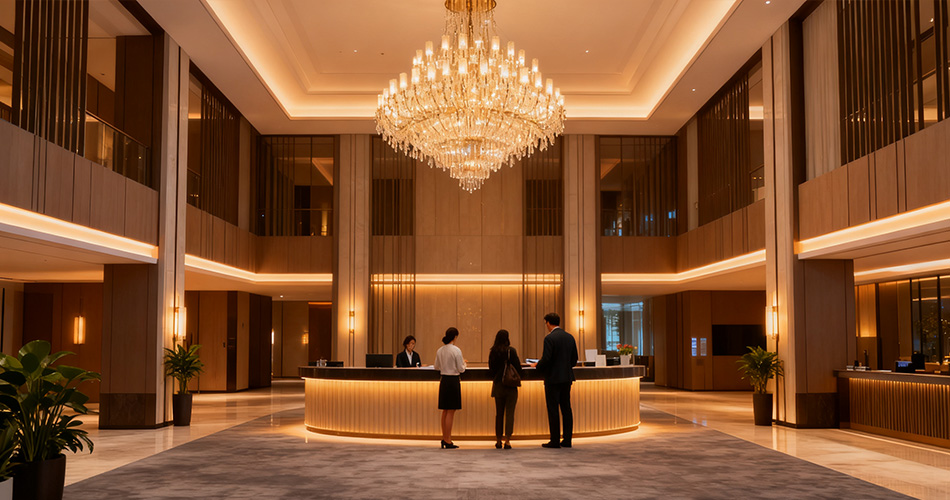
Commercial smart lighting energy savings vary by sector, as each industry has unique lighting needs and operational patterns. Tailoring strategies to these specifics ensures optimal efficiency:
Task-Specific Dimming: Equip workstations with individual dimming controls, allowing employees to adjust brightness to their preferences while the system enforces minimum energy thresholds.
Meeting Room Automation: Integrate lighting with calendar systems—lights brighten automatically for scheduled meetings and dim/turn off when rooms are unused, cutting energy waste in underutilized spaces.
Circadian Rhythm Alignment: Use color-temperature adjustments (cool light for morning focus, warm light for afternoons) to maintain productivity while reducing overall intensity during non-peak hours.
Impact: A 50,000-square-foot corporate office implementing these strategies typically achieves 40-55% lighting energy savings, translating to $12,000-$18,000 in annual utility cost reductions.
High-Bay Lighting Optimization: Replace energy-hungry metal halide fixtures with smart LEDs, paired with motion sensors that brighten high-traffic zones (loading docks, assembly lines) and dim storage areas.
Zone-Based Control: Divide facilities into zones based on usage frequency, setting different brightness levels for 24/7 operation zones vs. occasional-use areas (e.g., maintenance closets).
Peak Demand Management: Program lighting to reduce intensity during utility peak hours (typically 4-7 PM), avoiding demand charges that inflate energy bills.
Impact: Industrial spaces often see 50-70% lighting energy savings, with large warehouses saving \(20,000-\)35,000 annually on energy costs.
Display-Focused Dimming: Direct brighter light to merchandise displays while dimming background areas, balancing customer engagement with energy savings.
Time-Based Brightness Shifts: Brighten storefronts and entrances during peak shopping hours (e.g., weekends, evenings) and reduce intensity during slow periods.
Guest Room Automation: In hotels, link lighting to key cards—lights automatically turn off when guests leave the room, and dim to energy-saving levels when rooms are unoccupied.
Impact: Retail stores typically achieve 35-50% lighting energy savings, while hotels see 30-45% reductions, with boutique chains saving $3,000-$6,000 per location annually.
Clinical Area Precision: Maintain strict brightness standards for exam rooms and operating theaters while using motion sensors to dim corridors, waiting areas, and storage spaces during low-occupancy periods.
Emergency Lighting Integration: Ensure backup lighting meets regulatory requirements while using smart controls to minimize energy use during normal operations.
Patient Room Customization: Allow nurses to adjust lighting for patient care (e.g., brightening for examinations, dimming for rest) with the system limiting maximum intensity to energy-efficient levels.
Impact: Hospitals and clinics achieve 30-40% lighting energy savings, critical for 24/7 operations with high baseline energy use.
To validate ROI and ESG compliance, businesses must accurately measure commercial smart lighting energy savings using a rigorous framework:
Collect 12-24 months of pre-retrofit lighting energy data from utility bills, smart meters, or building management systems (BMS).
Normalize data to account for variables like occupancy changes, weather (daylight availability), and operational hours, ensuring savings are attributed solely to the smart lighting upgrade.
Leverage built-in smart lighting analytics platforms to monitor energy use by zone, fixture type, and time of day.
Use circuit-level sub-meters to isolate lighting energy from other systems (HVAC, plug loads), ensuring precise savings calculations.
Align measurement with global standards like IPMVP (International Performance Measurement and Verification Protocol) or ASHRAE Guideline 14 for audit-ready results.
Conduct annual verification to ensure savings remain consistent, adjusting system settings as needed (e.g., updating schedules for changed operational hours).
Regular System Calibration: Schedule quarterly checks of sensors and controls to ensure accuracy—dirty motion sensors or misaligned daylight sensors can reduce savings by 10-15%.
Employee & Staff Training: Educate teams on using smart lighting features (e.g., manual overrides, personalized controls) to avoid unnecessary energy use (e.g., leaving lights on in vacant rooms).
Integration with Other Systems: Connect smart lighting to HVAC and BMS, creating a unified efficiency ecosystem—for example, dimming lights when HVAC systems are at peak load to reduce overall energy demand.
Software Updates: Keep smart lighting platforms updated to access new energy-saving features (e.g., AI-driven scheduling, demand-response integration) and ensure system efficiency.
Commercial smart lighting energy savings are not just a one-time upgrade—they are a sustainable, scalable solution for reducing operational costs and environmental impact. By leveraging occupancy sensing, daylight harvesting, and dynamic control, businesses across industries can achieve 30-70% lighting energy savings, with payback periods typically ranging from 1-3 years. Tailoring strategies to sector-specific needs, quantifying savings rigorously, and maintaining systems proactively ensures these gains endure long-term. In an era where energy efficiency and sustainability are critical to business success, commercial smart lighting is a strategic investment that delivers immediate financial returns and long-term ESG value.
Would you like to create a custom energy savings calculator for your specific commercial space (e.g., warehouse, office) or a step-by-step implementation checklist to maximize your commercial smart lighting energy savings?
Related news
How Smart Lighting Solutions Reduce Energy Costs | LumiEasy
Commercial Lighting Cost Analysis Comparison Report: A Guide to Smart Investments for Businesses
Commercial Smart Lighting Energy Savings: Proven Strategies to Cut Costs & Boost Sustainability
Industrial Warehouse Smart Lighting: Comprehensive Solutions & Best Practices
Industrial Smart Lighting Solutions for Factories and Warehouses


)
)
)
)

+86 15899791249

+86 755 2955 3313


Address: Huafeng No.1 Science and Technology Park, Sanwei, Bao'an District, Shenzhen, Guangdong, China.
