

Time:2025-11-14
Commercial smart lighting has transcended its role as a mere energy-saving tool to become a cornerstone of business innovation, shaping how organizations optimize spaces, engage stakeholders, and build sustainable operations. In an era defined by digital transformation and evolving workplace expectations, commercial smart lighting is no longer optional—it’s a strategic asset that drives operational agility, enhances user experiences, and strengthens competitive positioning. This article explores the latest trends reshaping commercial smart lighting, its evolving role across industries, and how forward-thinking businesses leverage it to gain a edge in today’s dynamic market.
The commercial smart lighting landscape is evolving rapidly, fueled by advancements in AI, IoT connectivity, and sustainability. Three key trends are defining its future:
Modern commercial smart lighting systems now integrate artificial intelligence to move beyond reactive automation toward predictive, user-centric control. AI algorithms analyze data from occupancy sensors, user preferences, and even external factors (e.g., weather, business calendars) to anticipate lighting needs. For example, in hybrid offices, commercial smart lighting can predict peak occupancy hours based on meeting schedules and pre-adjust brightness/color temperature to match task requirements—bright, cool light for morning brainstorming sessions and warm, dimmer light for afternoon collaboration. In retail, AI-driven systems learn customer traffic patterns to highlight high-demand merchandise zones with targeted lighting, while adjusting background illumination to reduce energy waste. This level of personalization not only improves user satisfaction but also maximizes efficiency by eliminating unnecessary adjustments.
Commercial smart lighting has become a central node in the broader IoT ecosystem, connecting seamlessly with building management systems (BMS), HVAC, security, and even employee/customer devices. This integration creates a unified data network where lighting data fuels cross-system optimization: occupancy sensors in commercial smart lighting can trigger HVAC adjustments to reduce energy use in vacant zones, or sync with security cameras to brighten areas during unusual after-hours activity. For multi-site businesses, cloud-based IoT platforms enable centralized control of lighting across locations, with real-time data dashboards that provide insights into space utilization, energy consumption, and system performance. This synergy transforms commercial smart lighting from an isolated system into a data hub that drives holistic operational efficiency.
As ESG (Environmental, Social, Governance) goals become a business imperative, commercial smart lighting is evolving to support circular economy principles and net-zero targets. Beyond energy efficiency, modern solutions prioritize sustainable design: modular fixtures that allow component replacement (reducing waste), recyclable materials, and energy harvesting technologies (e.g., solar-powered sensors) that minimize reliance on grid power. Additionally, commercial smart lighting systems now include advanced carbon tracking features, quantifying emissions reductions and simplifying ESG reporting. Many manufacturers also offer take-back programs for end-of-life fixtures, ensuring responsible disposal and material reuse. This focus on sustainability not only reduces environmental impact but also enhances brand reputation among eco-conscious customers and investors.
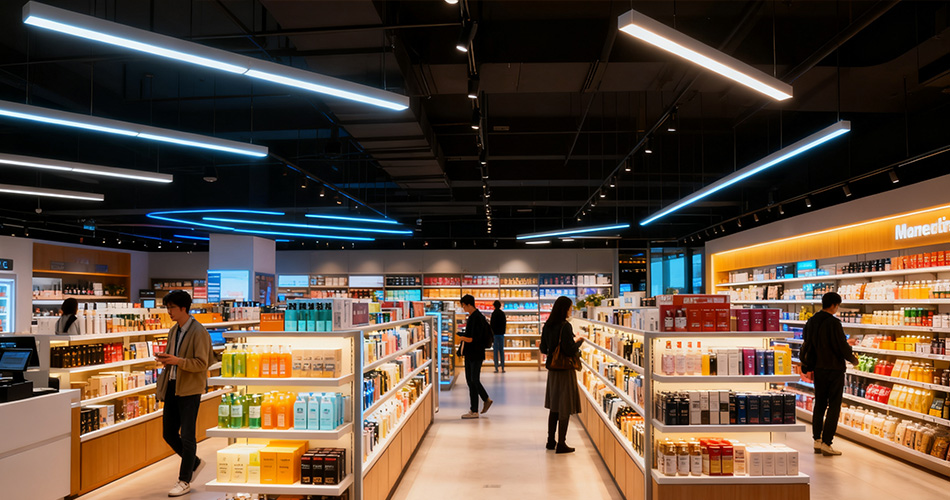
Commercial smart lighting’s versatility continues to expand, with industry-specific use cases that address emerging business needs:
The rise of hybrid work has redefined office design, and commercial smart lighting is critical to creating adaptable, productive environments:
Space Utilization Insights: Sensors in commercial smart lighting track which workstations, meeting rooms, and collaboration zones are most used, helping businesses optimize floor plans (e.g., reducing underutilized private offices).
Personalized Workstation Lighting: Employees can save lighting preferences (brightness, color temperature) to their profiles, with the system automatically adjusting when they log in—whether at a fixed desk or hotdesk.
Wellness-Centric Design: Circadian rhythm lighting mimics natural light cycles, helping remote and in-office workers maintain healthy sleep patterns and focus, even in spaces with limited natural light.
Retailers are using commercial smart lighting to create memorable, data-driven customer experiences:
Dynamic Ambiance Matching: Lighting adjusts to align with brand themes, seasons, or promotions—e.g., warm, festive tones during holidays or bright, energetic light for summer sales.
Interactive Lighting Displays: Smart fixtures respond to customer movement (e.g., illuminating product details when a shopper pauses nearby) or mobile app interactions (e.g., triggering personalized lighting for loyalty program members).
Energy-Efficient Visual Merchandising: LED-based commercial smart lighting delivers high-quality color rendering to showcase products accurately, while dimming and scheduling reduce energy use during off-peak hours.
Industrial facilities are leveraging commercial smart lighting to enhance safety, efficiency, and connectivity:
Zone-Based Safety Lighting: Lighting brightens automatically in high-risk areas (e.g., machinery zones, loading docks) when workers are present, and syncs with alarm systems to highlight evacuation routes during emergencies.
Predictive Maintenance Integration: Commercial smart lighting sensors detect temperature changes or vibration near equipment, sending data to maintenance teams to prevent failures—minimizing downtime.
Energy Load Balancing: The system adjusts lighting intensity during peak production hours to reduce strain on the electrical grid, lowering utility costs and avoiding demand charges.
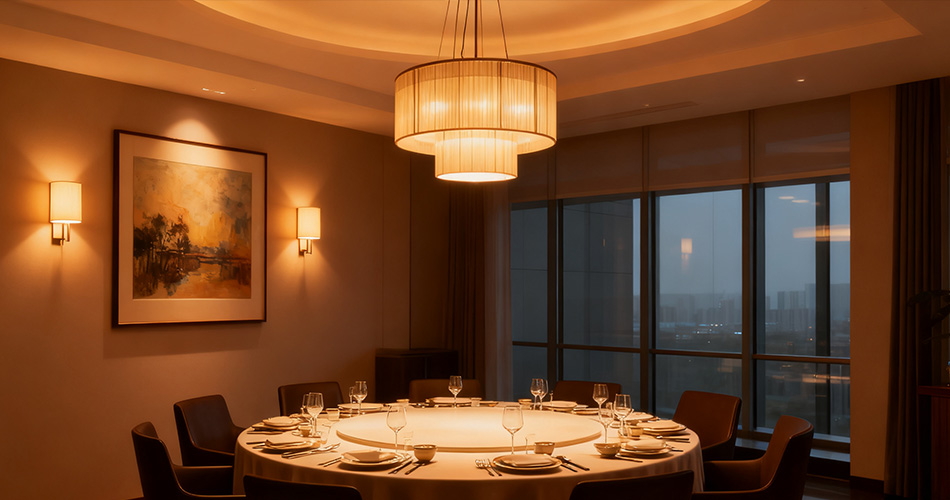
Hotels and resorts are using commercial smart lighting to balance luxury with sustainability:
Guest-Centric Room Control: Visitors can adjust lighting via voice commands, mobile apps, or in-room panels, with the system automatically reducing energy use when rooms are unoccupied.
Public Space Optimization: Lighting in lobbies, restaurants, and pools adapts to occupancy and time of day—dimming during quiet hours to save energy without compromising ambiance.
Green Certification Support: Commercial smart lighting’s energy savings and sustainability features help hospitality businesses qualify for LEED, Green Key, or other eco-certifications, attracting environmentally conscious guests.
Beyond operational efficiency, commercial smart lighting delivers tangible competitive advantages:
Data-Driven Decision Making: The system generates actionable insights into space utilization, energy use, and user behavior, helping businesses make informed decisions about facility upgrades, staffing, and resource allocation.
Cost Optimization: By reducing energy and maintenance costs (often by 30-70%), commercial smart lighting frees up capital for core business investments—from product innovation to employee development.
Brand Differentiation: Sustainable, user-centric commercial smart lighting enhances brand reputation, appealing to customers, employees, and investors who prioritize environmental responsibility and experience.
Future-Proofing: Modular, IoT-connected commercial smart lighting systems are designed to adapt to new technologies (e.g., AI advancements, smart city integration) and changing business needs, avoiding costly overhauls.
Commercial smart lighting is no longer just about illumination—it’s a strategic tool that empowers businesses to operate more intelligently, engage stakeholders more effectively, and build sustainable, resilient operations. As trends like AI personalization, IoT integration, and circular design reshape the industry, commercial smart lighting will continue to be a key driver of competitive advantage for modern businesses. Whether optimizing hybrid workspaces, creating immersive retail experiences, or enhancing industrial safety, commercial smart lighting delivers value that extends far beyond energy savings. For organizations looking to thrive in a digital, sustainable future, investing in commercial smart lighting is not just a choice—it’s a necessity to stay agile, efficient, and relevant in an increasingly competitive market.


)
)
)
)

+86 15899791249

+86 755 2955 3313


Address: Huafeng No.1 Science and Technology Park, Sanwei, Bao'an District, Shenzhen, Guangdong, China.
