

Time:2025-12-16
The proliferation of smart lighting systems has brought unprecedented energy efficiency and user convenience, but it has also introduced a critical challenge: compatibility fragmentation across different hardware brands and software ecosystems. A cross platform lighting control mobile application emerges as a transformative solution, breaking down silos between disparate lighting systems and enabling unified management via a single, user-friendly mobile interface. Whether for homeowners juggling multiple smart lighting brands, facility managers overseeing commercial complexes with mixed lighting infrastructure, or educators managing campus-wide illumination, this application redefines how users interact with and control smart lighting. This article explores the core value, application scenarios, implementation strategies, and future trends of cross platform lighting control mobile applications, highlighting their role as the central hub for modern smart lighting management.
Traditional smart lighting control often suffers from "ecosystem lock-in"—lighting systems from different manufacturers typically require proprietary mobile apps, forcing users to switch between multiple applications to manage their entire lighting infrastructure. This fragmentation creates significant inefficiencies: a homeowner with brand A’s living room lights and brand B’s outdoor lighting must toggle between two apps to adjust brightness; a facility manager overseeing a mall with lighting systems from three vendors needs to learn and operate three separate platforms, increasing operational complexity and training costs.
Beyond inconvenience, compatibility issues hinder the full potential of smart lighting. Without a unified control hub, it is difficult to implement coordinated lighting scenarios (e.g., synchronized dimming across a commercial lobby and adjacent corridors) or integrate lighting with other smart systems (e.g., HVAC, security). A cross platform lighting control mobile application addresses these gaps by supporting multiple communication protocols (e.g., Wi-Fi, Bluetooth, Zigbee) and integrating with diverse lighting brands, creating a seamless management experience that unlocks the synergistic value of smart lighting.
A high-quality cross platform lighting control mobile application delivers four key benefits that transform smart lighting management:
First, unified control across multiple ecosystems. The most significant advantage is the ability to manage lighting systems from different brands and protocols via a single interface. Users can adjust brightness, set color temperatures, and create custom lighting scenes for all connected lights—whether they are from leading smart home brands or industrial lighting manufacturers—without switching apps. This unified control simplifies operation for both individual users and large-scale facility managers.
Second, flexible remote and scenario-based control. Cross platform lighting control mobile applications enable remote management, allowing users to adjust lighting from anywhere with an internet connection. Facility managers can monitor and control lighting in multiple buildings from a single device, while homeowners can turn on outdoor lights before arriving home. Additionally, users can create and save custom scenarios (e.g., "office meeting mode," "campus night study mode") and activate them with a single tap, ensuring consistent lighting experiences across spaces.
Third,refinement user permission management. For commercial and public spaces, these applications offer granular permission control, allowing administrators to assign different access levels to users. For example, a mall manager can grant store owners control over their in-store lighting while retaining oversight of common area illumination; a school administrator can allow teachers to adjust classroom lighting but restrict access to corridor and auditorium controls. This flexibility balances autonomy and centralized management.
Fourth, seamless integration with broader smart ecosystems. Beyond lighting, cross platform lighting control mobile applications integrate with other smart systems such as HVAC, security cameras, and building management systems (BMS). For example, the app can trigger lighting adjustments when a security camera detects motion, or sync lighting brightness with HVAC settings to optimize energy efficiency. This integration transforms lighting control into a cornerstone of holistic smart building management.
These applications excel in environments with diverse lighting infrastructure, delivering targeted value across residential, commercial, educational, and mixed-use sectors:
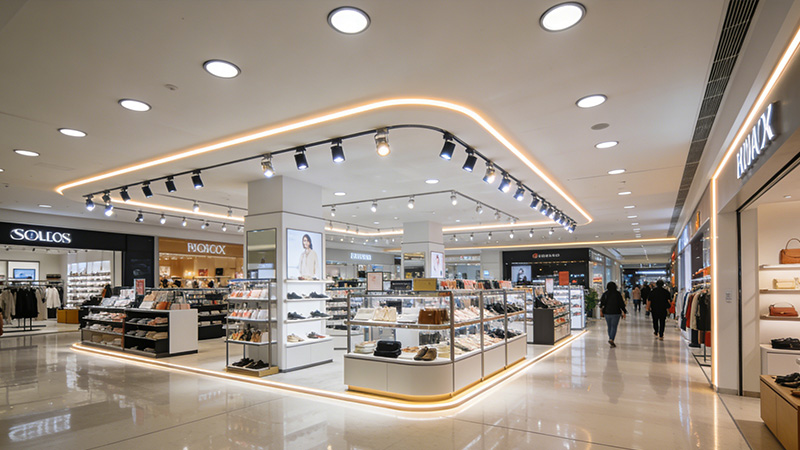
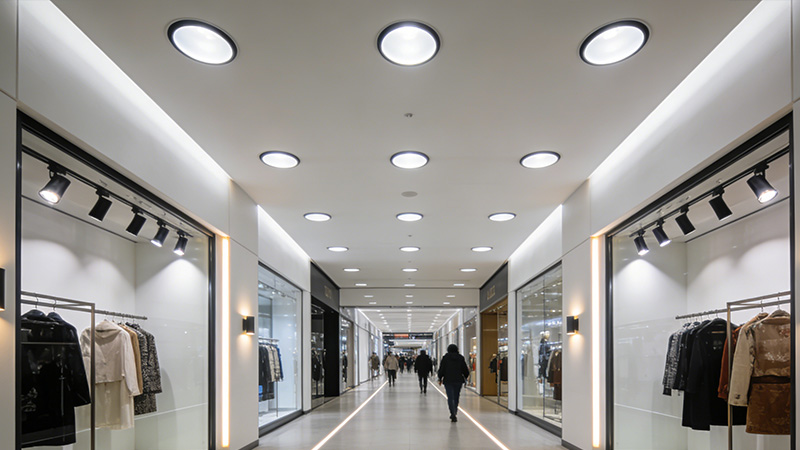
Mixed-use commercial complexes (malls, business parks): These spaces typically feature lighting systems from multiple vendors—retail store lighting, common area illumination, and office lighting. A cross platform lighting control mobile application allows facility managers to oversee all lighting from a single dashboard, create coordinated scenarios for events (e.g., holiday lighting displays), and grant store tenants customized control. This unified management reduces operational costs and ensures consistent lighting experiences for visitors.
smart campus environments: Universities and K-12 schools often have a mix of legacy and modern lighting systems across classrooms, libraries, auditoriums, and outdoor spaces. A cross platform lighting control mobile application enables administrators to manage campus-wide lighting, set schedule-based controls (e.g., turning off classroom lights after school hours), and allow teachers to adjust lighting for different teaching activities (e.g., project-based learning, exams). Remote access also allows staff to address lighting issues without on-site visits.
Remote and hybrid workspaces: Co-working spaces and remote office hubs with flexible seating use diverse lighting systems to accommodate different work styles. A cross platform lighting control mobile application allows users to personalize lighting settings for their workstations via their own devices, while managers can monitor energy usage and ensure lighting is turned off in unoccupied zones. The app also supports scenario controls (e.g., "focus work mode," "team collaboration mode") to enhance productivity.
High-end residential communities: Luxury apartments and gated communities often feature a mix of public area lighting and private home lighting from different brands. A cross platform lighting control mobile application allows homeowners to manage their in-home lighting while giving property managers control over common areas (e.g., lobbies, parking garages, walkways). Residents can also access community lighting controls (e.g., requesting brightened walkway lights via the app) to enhance safety and convenience.
To maximize the value of a cross platform lighting control mobile application, follow these strategic implementation guidelines:
First, verify protocol and brand compatibility. Before deployment, ensure the application supports all lighting protocols and brands in the existing infrastructure (e.g., Zigbee for smart home lights, DALI for commercial lighting). Conduct compatibility testing with all connected devices to avoid integration issues and ensure seamless control.
Second, prioritize user experience and interface design. Choose an application with an intuitive, user-friendly interface that minimizes training requirements. For large-scale facilities, opt for a dashboard with data visualization features (e.g., energy usage charts, lighting status indicators) to enhance oversight. For residential users, ensure the app offers simple scenario creation and one-tap controls.
Third, enhance security and data privacy. Cross platform applications handle sensitive data (e.g., user locations, building occupancy patterns), so prioritize security features such as end-to-end encryption, secure authentication (e.g., two-factor authentication), and regular software updates. For commercial applications, ensure compliance with data privacy regulations (e.g., GDPR, CCPA) to protect user and organizational data.
Fourth, plan for scalability and future expansion. Select an application that can scale with growing lighting infrastructure—whether adding new buildings, integrating new lighting brands, or supporting more users. Cloud-based applications are ideal for scalability, as they eliminate hardware limitations and allow for easy updates to support new features and protocols.
As smart lighting and IoT technology advance, cross platform lighting control mobile applications are evolving to deliver even greater intelligence and convenience:
One trend is AI-driven personalized lighting. Future applications will use artificial intelligence to analyze user behavior and preferences, automatically adjusting lighting settings to match individual needs. For example, the app can learn a user’s preferred color temperature for morning work and adjust connected lights accordingly, or recommend energy-saving scenarios based on occupancy patterns.
Another trend is voice and gesture control integration. Applications will support voice commands via virtual assistants (e.g., Alexa, Google Assistant) and gesture control via mobile device cameras, enabling hands-free lighting management. This is particularly valuable in commercial settings (e.g., warehouses where workers have their hands full) or residential environments (e.g., when entering a room with groceries).
Finally, predictive maintenance and energy analytics. Advanced applications will integrate with lighting sensors to monitor device health, predicting maintenance needs (e.g., bulb replacements) before failures occur. They will also offer detailed energy analytics, helping users identify energy-saving opportunities and track progress toward sustainability goals.
In conclusion, a cross platform lighting control mobile application is a critical enabler of seamless, efficient smart lighting management, addressing the compatibility fragmentation that plagues traditional systems. By delivering unified control, flexible scenario management, and seamless integration with broader smart ecosystems, these applications transform lighting control for residential, commercial, and public sectors. Through strategic implementation and adherence to best practices, organizations and users can maximize the value of their smart lighting infrastructure. As AI and IoT technology advance, cross platform lighting control mobile applications will become even more intelligent and user-centric, solidifying their role as the central hub for future smart lighting management. For anyone investing in diverse smart lighting systems, prioritizing a cross platform lighting control mobile application is a strategic choice that delivers long-term convenience, efficiency, and value.


)
)
)
)

+86 15899791249

+86 755 2955 3313


Address: Huafeng No.1 Science and Technology Park, Sanwei, Bao'an District, Shenzhen, Guangdong, China.
