

Time:2025-12-19
Modern multi-building complexes—such as commercial parks, technology campuses, integrated education hubs, and industrial zones—face unique management challenges: diverse building functions (offices, laboratories, retail, dormitories), scattered spatial distribution, and the need to balance independent building operations with overall complex synergy. Traditional multi-building control relies on centralized systems, where a single control center manages all buildings, leading to risks like single-point failures, delayed data transmission, and poor adaptability to individual building needs. Distributed multi building control gateways emerge as a transformative solution, deploying independent control gateways in each building while establishing inter-gateway communication networks. This architecture enables localized autonomous control of individual buildings and seamless collaborative management of the entire complex, redefining the efficiency and reliability of multi-building smart operations. For facility managers of large complexes, urban planners, and smart building developers, distributed multi building control gateways are a cornerstone of building flexible, efficient, and resilient smart multi-building environments. This article explores the core value, scenario-specific applications, implementation guidelines, and future trends of these gateways, highlighting their pivotal role in optimizing multi-building management.
Centralized control systems have long been a bottleneck for multi-building complex operations. A single central controller managing dozens of buildings faces inevitable risks: if the central system malfunctions, all building control functions (including lighting, HVAC, and security) may collapse, causing operational chaos. Data transmission between distant buildings and the central center is prone to delays or interruptions, especially in large-scale complexes spanning several square kilometers, leading to inefficient real-time adjustments. Additionally, centralized systems adopt a one-size-fits-all management model, failing to adapt to the unique needs of different buildings—for example, a laboratory requiring precise temperature and lighting control cannot be flexibly adjusted under a unified central schedule.
Beyond operational risks and inefficiencies, centralized control increases maintenance difficulty and costs. Troubleshooting the central system requires extensive time to locate faults across the entire complex, while upgrades or modifications to the system often require shutting down the entire control network, disrupting normal building operations. Distributed multi building control gateways address these gaps by delegating localized control to individual building gateways and maintaining efficient inter-gateway collaboration, achieving a balance between independent operation and overall synergy.

Distributed multi building control gateways deliver four key benefits that elevate multi-building management beyond centralized systems:
First, enhanced system reliability and fault isolation. Each building is equipped with an independent control gateway, enabling autonomous management of its internal systems (lighting, HVAC, security). If one gateway malfunctions, only the corresponding building is affected, and other buildings continue to operate normally—avoiding the cascading failure risk of centralized systems. For example, a fault in the gateway of a commercial park’s retail building will not impact the office buildings’ lighting and temperature control, ensuring continuous operation of the complex.
Second, real-time localized control and flexible adaptation. Each distributed gateway can be tailored to the specific needs of its building, supporting personalized scheduling and control strategies. A laboratory building’s gateway can prioritize precise lighting and temperature control linked to experimental schedules, while a retail building’s gateway focuses on lighting ambiance adjustments aligned with business hours and customer flow. This localization ensures that each building’s unique operational requirements are met, improving user comfort and operational efficiency.
Third, efficient inter-gateway collaboration and global synergy. While supporting localized control, distributed gateways establish a secure communication network to realize overall complex collaboration. For example, during peak hours in a commercial park, gateways of office buildings and parking lots can collaborate to adjust lighting and ventilation in parking areas based on office commuter flow; in a technology campus, gateways of R&D buildings and canteens can sync schedules to ensure optimal service during meal breaks. This collaboration achieves global optimization while maintaining local flexibility.
Fourth, simplified maintenance and scalable expansion. Maintenance work can be performed on individual building gateways without affecting the entire complex, reducing downtime and operational disruptions. When the complex expands (e.g., adding new buildings), new gateways can be easily integrated into the existing distributed network without overhauling the entire control system. This scalability significantly reduces long-term operation and expansion costs for large multi-building complexes.
Distributed multi building control gateways are tailored to diverse multi-building scenarios, delivering targeted value across commercial, technological, educational, and industrial complexes:
Commercial mixed-use parks (office, retail, hotel): These complexes have diverse building functions with distinct operational needs. Distributed gateways enable office buildings to adopt work-schedule-based lighting and HVAC control, retail buildings to adjust lighting ambiance based on customer flow, and hotels to prioritize guest comfort with personalized room lighting control. Gateways collaborate to sync parking lot lighting with office and retail peak hours, optimizing traffic flow and energy use.
Technology campuses (R&D buildings, laboratories, pilot plants): Precision and reliability are critical for these facilities. Distributed gateways in R&D buildings and laboratories support precise control of lighting, temperature, and humidity linked to experimental processes, with independent fault isolation to avoid disrupting ongoing experiments. Gateways of pilot plants collaborate with R&D buildings to ensure consistent environmental conditions for scaling up experiments, enhancing research efficiency.
Integrated education hubs (classroom buildings, dormitories, libraries, stadiums): These hubs have varied user groups and activity patterns. Distributed gateways enable classroom buildings to adopt class-schedule-based lighting control, dormitories to prioritize safety with pathway lighting schedules, and libraries to adjust lighting based on study hours. Gateways collaborate during campus events (e.g., sports meets, graduation ceremonies) to activate unified event-mode lighting across stadiums, squares, and pathways.
Industrial parks (production workshops, warehouses, office buildings): Industrial complexes require strict control over production environments and energy use. Distributed gateways in production workshops adjust lighting and ventilation based on production shifts, while warehouse gateways sync lighting with inventory management activities (e.g., brightening during loading/unloading). Gateways collaborate to optimize overall park energy use, prioritizing renewable energy allocation to high-demand buildings during peak production hours.
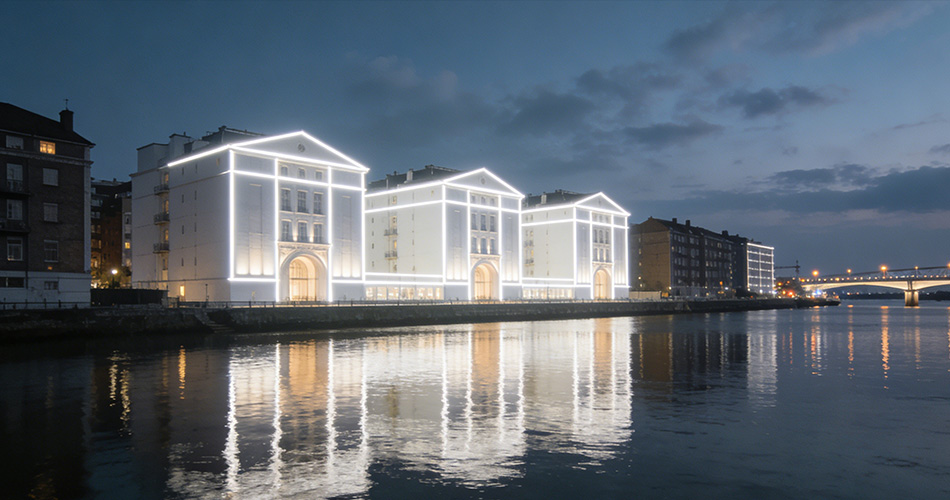
To maximize the value of distributed multi building control gateways, follow these strategic implementation guidelines:
First, conduct a comprehensive multi-building needs assessment. Before deployment, analyze the unique operational requirements, system configurations, and collaboration needs of each building in the complex. For example, prioritize precision control for laboratory buildings and energy efficiency for office buildings. This assessment ensures that each gateway is configured to meet specific building needs while supporting inter-gateway collaboration.
Second, ensure standardized communication protocols and compatibility. Select gateways that support industry-standard communication protocols (e.g., BACnet, Modbus, MQTT) to ensure seamless data exchange between gateways and compatibility with existing building systems (lighting, HVAC, security). Standardization enables flexible collaboration and future system upgrades without compatibility issues.
Third, establish robust data security and access control. Deploy secure communication networks (e.g., encrypted VPNs) between distributed gateways to protect data transmission. Implement hierarchical permission management, granting building managers access to their respective gateway controls and reserving global management permissions for complex administrators. This ensures data security and prevents unauthorized adjustments.
Fourth, implement phased deployment and iterative optimization. For large-scale complexes, adopt a phased deployment approach—starting with core buildings (e.g., main office buildings, key production workshops) to test gateway performance and collaboration. Use operational data from deployed gateways to optimize configurations for subsequent buildings, ensuring the system meets overall complex needs while minimizing deployment risks.
As smart building and IoT technologies advance, distributed multi building control gateways are evolving toward greater intelligence and integration:
One trend is AI-driven predictive control and optimization. Future gateways will integrate artificial intelligence to analyze historical operational data (energy use, occupancy, environmental conditions) of each building, predicting needs and adjusting controls proactively. For example, a gateway in an office building may predict increased occupancy during a project deadline and adjust lighting and HVAC in advance, while collaborating with other building gateways to optimize overall energy use.
Another trend is integration with renewable energy and energy storage systems. Distributed gateways will link with building-level solar panels, wind energy devices, and battery storage systems, optimizing renewable energy allocation across the complex. For example, gateways of buildings with surplus solar energy can collaborate to supply power to energy-intensive buildings, reducing grid reliance and carbon emissions.
Finally, enhanced digital twin integration. Gateways will sync with digital twin models of the multi-building complex, enabling real-time visualization of each building’s operational status. Administrators can monitor and adjust building controls via the digital twin interface, while simulating different operational scenarios (e.g., extreme weather, peak occupancy) to optimize gateway configurations and collaboration strategies.
In conclusion, distributed multi building control gateways are a transformative solution for managing modern multi-building complexes, balancing localized flexibility with global synergy while enhancing system reliability and operational efficiency. By addressing the limitations of centralized control systems, these gateways deliver targeted value across commercial, technological, educational, and industrial complexes. Through strategic implementation focused on needs assessment, standardization, security, and phased deployment, organizations can unlock the full potential of this technology. As AI and digital twin technologies advance, distributed multi building control gateways will become even more intelligent and integrated, solidifying their role as a core component of smart multi-building environments. For any organization investing in large-scale multi-building development, prioritizing distributed multi building control gateways is a strategic choice that delivers long-term operational value, reliability, and sustainability.


)
)
)
)

+86 15899791249

+86 755 2955 3313


Address: Huafeng No.1 Science and Technology Park, Sanwei, Bao'an District, Shenzhen, Guangdong, China.
