

Time:2025-10-14
Ensuring that your emergency power systems are up to code is crucial for safety and operational efficiency. When it comes to emergency powerpacks, understanding duration requirements and compliance testing is essential. This article will guide you through the key components of emergency powerpack duration requirements and the importance of 90-minute compliance testing.
Emergency powerpacks are critical in providing backup power during outages, ensuring that essential systems continue to operate without interruption. The duration requirement of these powerpacks is a key factor in their effectiveness.
Duration requirements refer to the minimum amount of time an emergency powerpack must supply power during an outage. This ensures that critical systems remain operational until normal power is restored or alternate solutions are implemented.
The duration of an emergency power supply determines how long critical systems can function during an outage. Insufficient duration can lead to system failures, potential safety hazards, and even loss of life in critical environments like hospitals.
Compliance testing ensures that emergency powerpacks meet the required standards and can operate for the necessary duration. The 90-minute compliance test is a standard procedure to verify this capability.
The 90-minute compliance test involves running the emergency powerpack continuously for 90 minutes to confirm it can sustain power during an outage. This test is crucial for verifying that the powerpack meets regulatory and safety standards.
Conducting a 90-minute compliance test ensures that your powerpack can handle real-world scenarios. It validates the reliability of the powerpack, providing peace of mind that your systems will remain operational during an emergency.
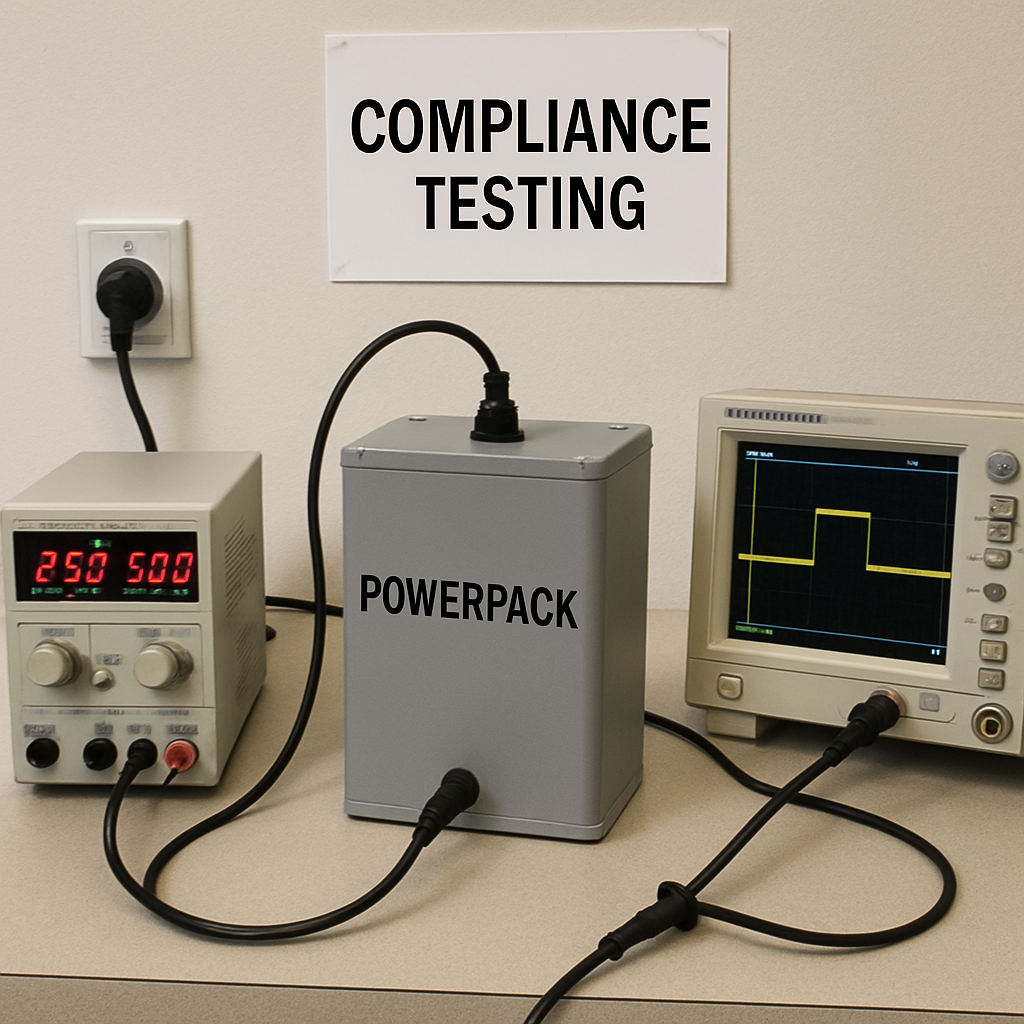
Testing your emergency powerpack for compliance involves several key steps. Here’s a simplified guide to ensure your powerpack meets the 90-minute duration requirement.
Before starting the test, ensure that all systems connected to the powerpack are ready for testing. This includes checking connections, ensuring adequate fuel supply (if applicable), and verifying that the powerpack is in good condition.
Start the emergency powerpack and switch the load from the main power supply to the powerpack. This simulates an actual power outage and begins the 90-minute test.
During the test, closely monitor the powerpack’s performance. Check for any signs of strain, overheating, or other issues. Document any anomalies for further investigation.
After the test, evaluate the performance data. Ensure that the powerpack maintained stable power output throughout the 90 minutes. Address any identified issues promptly to ensure compliance and readiness.

Understanding the regulatory standards for emergency powerpacks is vital for compliance and safety. These standards ensure that powerpacks provide reliable backup power when needed.
Several organizations provide guidelines for emergency power supply systems. These include the National Fire Protection Association (NFPA) and the International Electrotechnical Commission (IEC). Familiarize yourself with these standards to ensure your powerpack meets all necessary requirements.
Compliance with these standards ensures that your powerpack is capable of supporting critical systems during an emergency. It mitigates risks and enhances the safety of occupants in environments relying on continuous power.
Meeting the duration requirements for emergency powerpacks can be challenging. Understanding these challenges can help you better prepare and address potential issues.
Aging Equipment: Older powerpacks may not meet current duration requirements, necessitating upgrades or replacements.
Maintenance Issues: Inadequate maintenance can lead to reduced efficiency and reliability.
Load Changes: Increases in power demand can affect the duration a powerpack can sustain.
Regular maintenance, upgrades, and thorough testing can help overcome these challenges. Ensure that your powerpack is well-maintained and tested regularly to meet duration requirements.
Emergency powerpack duration requirements and 90-minute compliance testing are critical components of a reliable emergency power supply system. By understanding these requirements and conducting regular compliance tests, you ensure that your systems remain operational during outages, safeguarding both safety and efficiency.
By adhering to regulatory standards and addressing common challenges, you can maintain a robust emergency power system ready to meet the demands of any situation. Investing in the reliability of your powerpack through compliance testing not only ensures operational continuity but also provides peace of mind in critical environments.


)
)
)
)

+86 15899791249

+86 755 2955 3313


Address: Huafeng No.1 Science and Technology Park, Sanwei, Bao'an District, Shenzhen, Guangdong, China.
