

Time:2025-12-25
As smart lighting systems become increasingly prevalent in residential, commercial, and industrial environments, the security of wireless communication has emerged as a critical concern. RF (Radio Frequency) lighting control protocols, which enable wireless connectivity between lighting devices and controllers, are vulnerable to cyber threats such as signal interception, data tampering, and unauthorized access. Encrypted RF lighting control protocols, designed to encode communication signals and verify device identities, have become the cornerstone of secure smart lighting deployments. Unlike unencrypted RF protocols that expose lighting systems to malicious attacks, encrypted solutions ensure the confidentiality, integrity, and authenticity of control signals and user data. For lighting system designers, facility managers, and homeowners, adopting encrypted RF lighting control protocols is essential to protect privacy, prevent operational disruptions, and maintain the trustworthiness of smart lighting ecosystems. This article explores the core value, key application scenarios, implementation guidelines, and future trends of encrypted RF lighting control protocols, highlighting their indispensable role in securing modern smart lighting systems.
Unencrypted RF lighting control protocols pose significant security risks that can compromise the functionality and privacy of smart lighting systems. The most prominent risk is signal interception and tampering—attackers can easily capture unencrypted RF signals, decode control commands, and manipulate lighting devices maliciously. For instance, in commercial buildings, unauthorized individuals could hijack lighting control signals to turn off emergency lights or disrupt business operations. In residential settings, attackers might intercept signals to infer occupancy patterns, violating homeowner privacy.
Another critical flaw is the lack of identity authentication. Unencrypted protocols fail to verify the legitimacy of devices accessing the lighting network, allowing attackers to connect fake controllers and issue fraudulent commands. This can lead to more severe consequences in critical environments, such as healthcare facilities where lighting conditions directly impact medical procedures. Additionally, unencrypted protocols are prone to covert channel attacks, where attackers exploit subtle variations in lighting signals to transmit sensitive data secretly, bypassing traditional network security measures. These vulnerabilities highlight the urgent need for encrypted RF lighting control protocols to address the security gaps of unencrypted solutions.
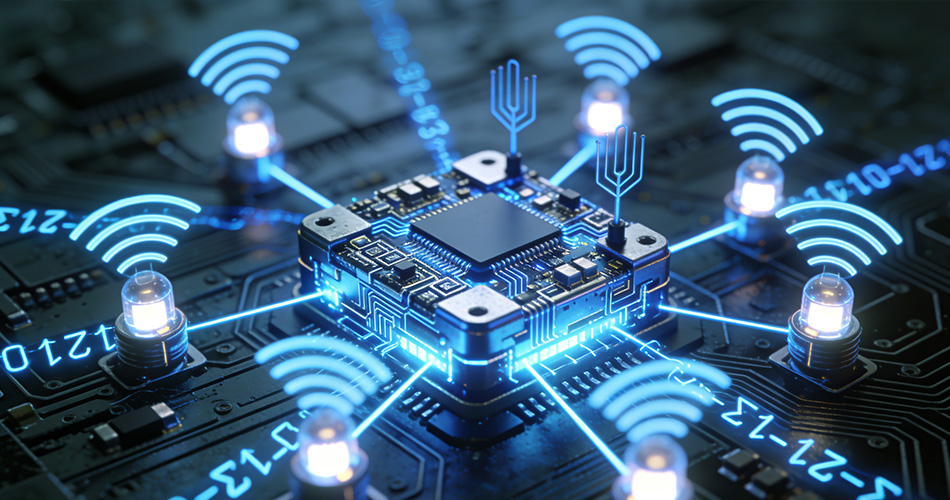
Encrypted RF lighting control protocols deliver three key security and reliability advantages that underpin secure smart lighting operations:
- Confidentiality of communication signals: By adopting advanced encryption algorithms (such as AES-128), encrypted RF lighting control protocols encode all control signals and data transmissions. This ensures that even if RF signals are intercepted, attackers cannot decode the content, preventing unauthorized access to lighting commands and user data. For example, encrypted protocols protect the privacy of homeowners by ensuring that lighting adjustment records and occupancy information remain inaccessible to third parties.
- Integrity and authenticity verification: These protocols incorporate integrity checks and identity authentication mechanisms to ensure that control signals are not tampered with during transmission and that only authorized devices can access the lighting network. Digital signatures and dynamic key rotation technologies further enhance security by verifying the legitimacy of senders and preventing replay attacks—where attackers reuse captured signals to manipulate the system.
- Compatibility with multi-ecosystem integration: Leading encrypted RF lighting control protocols, such as Matter and Zigbee Light Link (ZLL), support cross-brand and cross-protocol interoperability. This allows secure integration of lighting devices with other smart home or building systems (such as security cameras and HVAC) without compromising security. The standardized encryption framework ensures consistent security performance across diverse devices, simplifying system deployment and management.
Encrypted RF lighting control protocols are particularly critical in environments where security, privacy, and operational reliability are paramount:
- High-end commercial and hospitality buildings: Luxury hotels, office towers, and shopping malls rely on smart lighting to create ambient experiences and manage energy efficiency. Encrypted RF lighting control protocols prevent malicious tampering with lighting systems, ensuring consistent customer experiences and avoiding disruptions to business operations. They also protect sensitive data, such as lighting usage patterns that reflect business hours and customer flow.
- Residential smart homes: In smart homes, encrypted protocols safeguard homeowner privacy by preventing attackers from intercepting lighting control signals to infer occupancy or daily routines. They also ensure that only authorized users (via smartphones or voice assistants) can adjust lighting, preventing unauthorized access to the home’s smart ecosystem. Compatibility with mainstream smart home platforms (such as Apple HomeKit and Google Home) further enhances user convenience while maintaining security.
- Healthcare facilities: Hospitals and clinics require precise and secure lighting control to support medical procedures, such as surgical suites and patient recovery rooms. Encrypted RF lighting control protocols ensure that lighting commands are not tampered with, preventing sudden changes in illumination that could compromise patient safety. They also protect sensitive medical data that may be integrated with lighting systems for patient monitoring.
- Industrial manufacturing facilities: Industrial lighting systems often integrate with automation and safety systems. Encrypted protocols prevent unauthorized modification of lighting conditions in production areas, ensuring that workers have adequate illumination to maintain safety and productivity. They also protect the integrity of data transmitted between lighting devices and industrial control systems, avoiding production disruptions caused by cyberattacks.
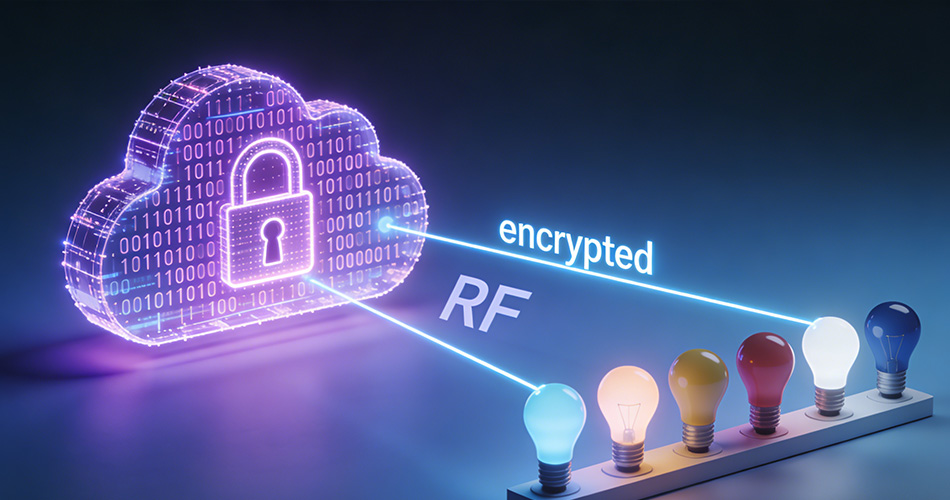
To maximize the security benefits of encrypted RF lighting control protocols, follow these practical implementation guidelines:
- Select standardized and widely adopted protocols: Choose encrypted RF lighting control protocols with established industry standards, such as Matter or Zigbee Light Link. These protocols have undergone rigorous security testing and benefit from ongoing updates to address emerging threats. Avoid proprietary unencrypted protocols that lack third-party security validation.
- Implement robust key management practices: Establish secure key generation, distribution, and rotation processes. Use unique encryption keys for each lighting network and update keys regularly to minimize the risk of key compromise. Ensure that keys are stored securely on controllers and devices, avoiding plaintext storage or weak encryption for key management.
- Enable secure firmware updates: Regularly update the firmware of lighting devices and controllers to patch security vulnerabilities. Use encrypted channels for firmware updates to prevent attackers from injecting malicious code. Implement automatic update notifications to ensure that all devices remain protected with the latest security enhancements.
- Conduct regular security testing: Perform periodic security assessments of the lighting system, including penetration testing and vulnerability scanning. Test the resilience of encrypted protocols against common attacks, such as signal jamming and interception. Address any identified vulnerabilities promptly to maintain the system’s security posture.
Driven by the growing complexity of smart lighting ecosystems and evolving cyber threats, encrypted RF lighting control protocols are evolving toward greater intelligence and integration:
- AI-enhanced security monitoring: Future protocols will integrate artificial intelligence (AI) algorithms to detect abnormal communication patterns in real time. AI can identify potential attacks, such as unusual encryption key usage or unauthorized device connection attempts, and trigger automatic countermeasures (such as temporary network isolation) to prevent security breaches.
- Wider adoption of Matter protocol: The Matter standard, which unifies cross-brand smart device communication, will become the dominant encrypted RF lighting control protocol. Its open, standardized framework will simplify system integration while ensuring consistent security across diverse devices, accelerating the adoption of secure smart lighting in residential and commercial environments.
- Integration with edge computing: Encrypted protocols will leverage edge computing to process encryption and authentication locally, reducing latency and enhancing real-time security. This integration will enable lighting systems to maintain secure operations even when cloud connectivity is interrupted, improving reliability in critical environments.
In conclusion, encrypted RF lighting control protocols are essential for securing modern smart lighting ecosystems, addressing the security vulnerabilities of unencrypted solutions. Their ability to ensure confidential, authentic, and tamper-proof communication makes them indispensable in commercial, residential, healthcare, and industrial applications. By selecting standardized protocols, implementing robust key management, and conducting regular security testing, organizations and homeowners can fully leverage the security benefits of these protocols. As AI and standardized protocols like Matter advance, encrypted RF lighting control protocols will become even more intelligent and integrated, playing a pivotal role in the safe and reliable development of the smart lighting industry. For anyone involved in the design, deployment, or management of smart lighting systems, prioritizing encrypted RF lighting control protocols is a strategic choice to protect privacy, ensure operational stability, and build trust in smart technologies.


)
)
)
)

+86 15899791249

+86 755 2955 3313


Address: Huafeng No.1 Science and Technology Park, Sanwei, Bao'an District, Shenzhen, Guangdong, China.
