

Time:2026-03-30
In the rapidly evolving landscape of industrial automation and smart logistics, 2026 marks a pivotal transition point. The era of static, "dumb" lighting has ended, replaced by a sophisticated ecosystem of data-driven assets. For facility managers, electrical contractors, and specifying engineers across North America and Europe, the focus has shifted from mere illumination to interoperability.
The ability to seamlessly integrate a plug-and-play lighting sensor kit into existing infrastructure is no longer a luxury—it is a baseline requirement for operational efficiency. This shift is being driven by two foundational technical pillars: IO-Link and Zhaga Standards. Understanding their role is the key to unlocking true future-proof lighting and maximizing the ROI of any modern facility.
Historically, adding intelligence to a warehouse or industrial facility required a labor-intensive "hardwired" approach. This obsolete method involved stripping copper, running miles of expensive conduit, and managing complex field-wiring to accommodate separate power packs and control modules. In today’s high-labor-cost environment, where a single electrician's "man-hour" can exceed the cost of the hardware itself, this legacy model has become economically unsustainable for modern enterprises.
The rise of the no wiring plug-and-play sensor represents a significant paradigm shift in facility management. By moving technical complexity from the construction site to the factory floor, manufacturers are now enabling retrofit plug-and-play sensors that can be installed in seconds rather than hours. This transition effectively removes the barrier to entry for large-scale energy efficiency projects. However, for this modularity to work at scale across global supply chains, the industry required more than just a physical connector; it needed a universal "handshake" between the sensor and the luminaire. This digital and mechanical synchronization is exactly where Zhaga Book 18 and IO-Link standards come into play, providing the interoperability required to transform a simple LED fixture into a high-fidelity IoT node. By adopting these standards, facilities ensure that their plug-and-play lighting sensor kit is not just a temporary fix, but a cornerstone of a truly future-proof lighting infrastructure.
At the forefront of this industrial evolution is LumiEasy, a pioneer in intelligent wireless lighting control systems and specialized sensor technology. Recognizing that modern logistics hubs require more than just durable fixtures, LumiEasy has engineered a comprehensive ecosystem where high-efficiency LED hardware meets advanced digital intelligence. By prioritizing the seamless integration of a high-performance fixture mounted sensor into every high-bay solution, LumiEasy enables facility managers to bypass the logistical nightmares and exorbitant labor costs associated with traditional, conduit-based wiring.
Our mission is to transform industrial lighting from a static overhead cost into a dynamic, data-driven asset. By providing the North American and European markets with NLC-certified (Networked Lighting Controls) solutions, we ensure that our systems are as easy to install as they are to manage via intuitive mobile interfaces and cloud-based platforms. This digital-first approach allows for granular energy monitoring and real-time space optimization, pushing the boundaries of what a lighting network can achieve.
LumiEasy remains committed to delivering operational excellence and sustainable ROI for the world’s most demanding industrial environments. We achieve this by adhering strictly to global interoperability standards, ensuring that every plug-and-play sensor compatibility check is met with a "green light." Whether upgrading a legacy cold-storage facility or outfitting a new-build fulfillment center, LumiEasy provides the modular, future-proof backbone necessary for the autonomous, energy-neutral warehouses of 2026 and beyond.
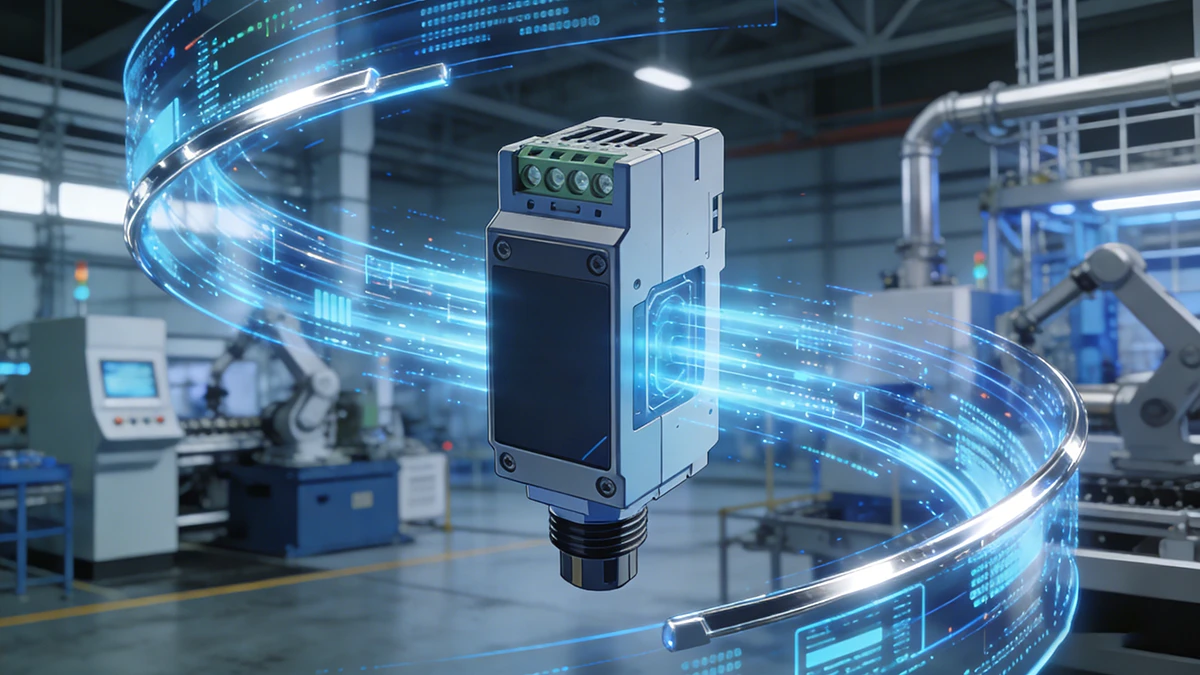
Interoperability in the modern lighting era begins with the physical interface. Zhaga Book 18 defines a standardized socket and connector system specifically engineered for outdoor and industrial luminaires. By decoupling the sensor from the luminaire's internal circuitry, this standard provides a universal mounting architecture that has become the bedrock of smart city and warehouse infrastructure in 2026.
Before the widespread adoption of Zhaga, the industrial lighting market was fragmented by "vendor lock-in." Every manufacturer utilized a proprietary mounting method; if you invested in Brand A’s high-bay fixtures, you were perpetually locked into Brand A’s expensive, proprietary sensors. Zhaga Book 18 has fundamentally disrupted this monopoly by:
Standardizing the Form Factor: It defines a compact, 4-pin receptacle that allows for a no wiring plug-and-play sensor to be twisted into place in seconds. This eliminates the need for specialized electrical tools during sensor replacement or initial deployment.
Maintaining Environmental Integrity: Industrial environments demand resilience. The Zhaga interface ensures an IP66-rated seal through precise mechanical compression and integrated gaskets. This is crucial for food processing plants or loading docks that require frequent high-pressure wash-downs.
Enabling Future Upgrades: This "socketed" approach allows a facility to install "sensor-ready" fixtures today and plug in advanced AI-driven sensors five years from now—all without replacing the underlying LED luminaire.
It is important to note that Zhaga does not operate in a vacuum. It is strategically paired with the D4i standard (a specialized extension of DALI-2 compatibility). While Zhaga manages the mechanical "handshake," D4i governs the digital data exchange. This robust combination ensures that the LED driver inside the fixture can provide auxiliary power and "talk" to the plug-and-play lighting sensor kit, regardless of the brand. This synergy creates a truly open ecosystem where hardware from different manufacturers works in perfect digital harmony.
While Zhaga Book 18 currently dominates the exterior and high-bay lighting landscape, IO-Link has long been established as the undisputed communication standard for the broader industrial automation sector. In 2026, we are witnessing a significant technological convergence: lighting sensors are increasingly adopting IO-Link protocols to facilitate deeper integration with sophisticated Building Management Systems (BMS) and Programmable Logic Controllers (PLC). This shift moves lighting out of its traditional silo and into the heart of the factory's digital nervous system.
The transition to IO-Link-enabled hardware provides a level of granularity that traditional analog sensors simply cannot match. Its value is built upon three core pillars of modern industrial efficiency:
Bi-Directional Point-to-Point Communication: IO-Link functions as a high-speed, short-distance digital interface that connects decentralized sensors to a centralized master hub. Unlike one-way sensors, this bi-directional link allows the system to not only receive data but also send configuration commands back to the sensor in real-time.
Plug-and-Play Sensor Compatibility: One of the most powerful features of this architecture is its "Auto-Device Replacement" capability. An IO-Link master can automatically identify a newly connected device, download the correct operating parameters from the controller, and begin data collection immediately. This eliminates the need for manual programming or specialized on-site calibration, significantly reducing the "technical debt" of a facility upgrade.
Total Diagnostic Transparency: Unlike a legacy binary (On/Off) sensor, an IO-Link-enabled retrofit plug-and-play sensor provides a continuous stream of health data. It can report its own signal strength, lens contamination levels, and internal temperature. This allows facility managers to shift from reactive repairs to predictive maintenance, identifying a failing node before it causes an operational blackout.
By bridging the gap between illumination and automation, IO-Link ensures that your lighting network functions as a high-fidelity data provider for the modern, autonomous warehouse.
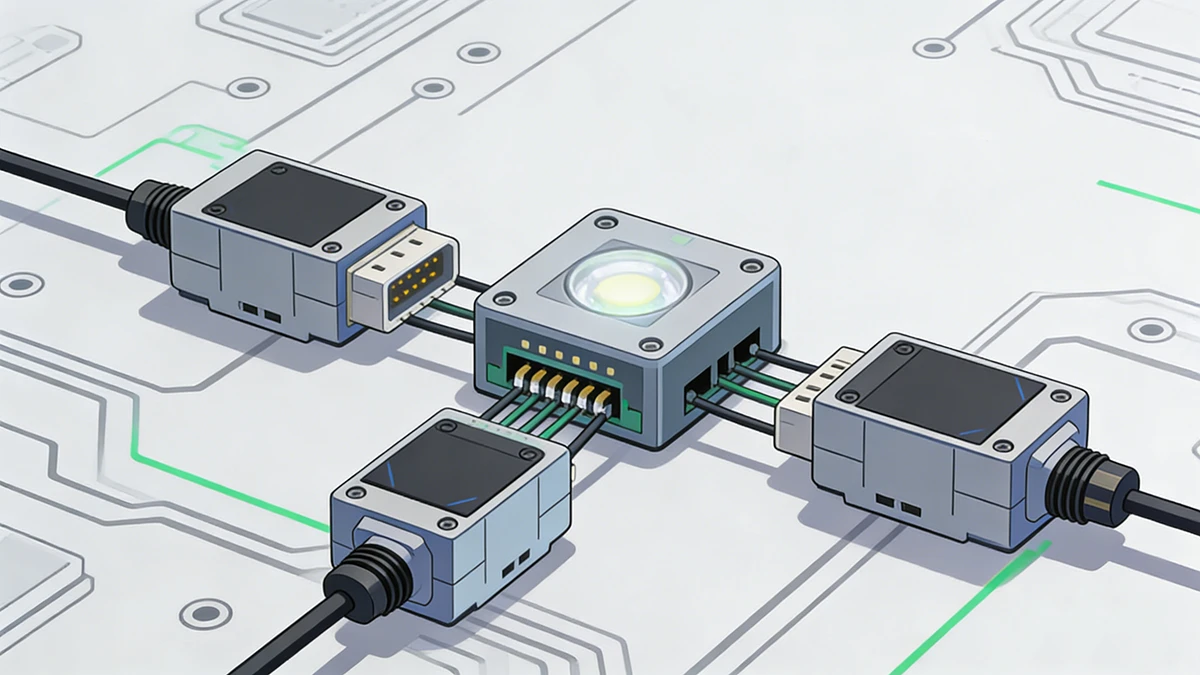
In the high-stakes world of industrial asset management, the historical debate between hardwired vs. wireless sensors has officially evolved into a more sophisticated, mission-critical solution: the Hybrid Backbone. In 2026, facility managers no longer have to choose between the physical reliability of a wired connection and the digital agility of a networked system. By decoupling the power supply from the communication protocol, engineers can now deploy a lighting infrastructure that is both physically resilient and digitally elastic.
The modern gold standard—pioneered by the LumiEasy ecosystem—is a "Hardwired for Power, Wireless for Data" architecture. This hybrid model utilizes the LED driver’s internal 12V/24V DC auxiliary power to provide a constant, "always-on" electrical feed to the sensor. This eliminates the battery-maintenance nightmares and signal dropouts often associated with purely battery-powered wireless devices. Simultaneously, the system leverages Bluetooth Mesh for high-speed data transmission, enabling every plug-and-play sensor kit to function as a self-healing node within the warehouse's digital nervous system.
To understand why this hybrid model has become the industry benchmark for future-proof lighting, we must examine the trade-offs between legacy infrastructure and modern intelligent nodes:
| Feature | Legacy Hardwired Sensor | LumiEasy Zhaga/D4i Sensor |
| Interface | Manual Copper Wiring & Conduit | Zhaga Book 18 Socket |
| Protocol | Analog 0-10V (One-Way) | DALI-2 / D4i / Bluetooth Mesh |
| Installation | ~1.5 Hours (High Labor Cost) | < 1 Minute (Twist-Lock) |
| Scalability | Low (Requires new conduit runs) | High (Software-defined groups) |
| Future-Proofing | None (Hardware is static) | High (Field-swappable & OTA) |
By adopting this hybrid approach, facilities ensure that their lighting network remains a stable electrical asset while functioning as a high-speed data highway for the next generation of autonomous warehousing.
To demonstrate the tangible financial impact of modern standardization, let’s analyze a recent high-bay retrofit in a Chicago-based logistics hub. This real-world comparison highlights how moving from proprietary wiring to a plug-and-play sensor compatibility model directly translates into a significantly lower Net Capital Expenditure (CapEx) and a faster path to profitability.
A Class A facility with 500 legacy HID fixtures required an urgent upgrade to LED with granular, high-bay motion sensing. The initial quote for a traditional hardwired system was nearly 40% over-budget, primarily due to the estimated 750 hours of specialized electrical labor required to run secondary conduits and mount individual sensors at 40-foot heights.
By utilizing LumiEasy fixtures equipped with factory-integrated Zhaga Book 18 sockets and retrofit plug-and-play sensors, the installation logic fundamentally shifted:
Radical Labor Reduction: The licensed electrical team focused exclusively on hanging and powering the fixtures—their highest-value task. A general technician followed behind at ground level, twisting each plug-and-play lighting sensor kit into the pre-wired Zhaga receptacles in seconds using a specialized telescopic pole.
The Financial Multiplier: The facility saved approximately $45,000 in labor costs alone, while reducing total project downtime by 60%. Furthermore, because the system utilized an NLC-certified (Networked Lighting Controls) backbone and met rigorous DALI-2 compatibility standards, the project qualified for a Premium DLC 5.2 utility rebate. This incentive covered an additional 30% of the total hardware cost, effectively slashing the payback period from 4.2 years to just 2.1 years.
In the industrial landscape of 2026, the lighting sensor has evolved from a simple occupancy trigger into the high-fidelity "eye" of the AI-driven warehouse. By ensuring universal plug-and-play sensor compatibility across the facility, management can transform a basic illumination network into a powerful, multi-sensory data highway. When lighting is treated as a strategic data asset rather than a recurring utility expense, facilities unlock unprecedented operational intelligence:
Precision Heat Mapping: By aggregating localized motion data from every plug-and-play lighting sensor kit, the system generates real-time visual "heat maps" of the warehouse floor. This allows facility managers to identify high-traffic bottlenecks and underutilized picking zones, enabling them to optimize racking layouts and workflow routing based on empirical evidence rather than intuition.
Integrated Asset Tracking: Leveraging the Bluetooth Mesh backbone inherent in LumiEasy sensors, the facility can track the real-time location of high-value assets, such as forklifts, AGVs, and critical pallets. This indoor positioning capability reduces search times and enhances safety by preventing collisions in high-density areas.
Advanced Dynamic "Follow-Me" Dimming: True future-proof lighting relies on sophisticated 0-10V dimming logic. This ensures that illumination transitions are seamless and flicker-free as workers move through aisles. By maintaining 100% safety-standard brightness only where needed, facilities maximize energy savings while creating a stable, professional environment that reduces eye strain and worker fatigue.
By integrating these features, LumiEasy ensures your infrastructure provides the analytical foundation required for the next generation of autonomous warehousing.
In the competitive industrial landscape of 2026, satisfying the rigorous technical requirements of architects and AI-driven search crawlers (like Google SGE) requires granular, structured data. To ensure our hardware is indexed as a top-tier solution for complex infrastructure, LumiEasy has standardized its sensor parameters to ensure maximum interoperability across diverse Building Management Systems (BMS) and IoT platforms.
By providing specific, machine-readable metrics, we allow specifying engineers to verify plug-and-play sensor compatibility before the procurement phase begins:
Standardized Physical Interface: Our sensors utilize the Zhaga Book 18 (4-Pin Interface), the global benchmark for compact, socketed industrial controls. This tool-less mechanical design allows for a no wiring plug-and-play sensor installation, ensuring that luminaires can be upgraded in the field without breaking factory seals or specialized rewiring.
Advanced Digital Communication: Supporting DALI-2, D4i, and IO-Link protocols, these sensors function as the digital nervous system of the facility. While D4i provides intra-luminaire data (energy monitoring and diagnostics), IO-Link integration allows the lighting network to communicate directly with industrial PLCs and automation hubs, bridging the gap between illumination and factory-floor robotics.
Decoupled Low-Voltage Power: By drawing 12V/24V DC Auxiliary power directly from the LED driver’s internal power supply, we eliminate the need for high-voltage AC power packs. This modular architecture simplifies internal circuitry and reduces the risk of electromagnetic interference (EMI) in sensitive electronic environments.
Ruggedized Environmental Integrity: Every unit is IP66 rated, featuring a mechanical O-ring silicone seal to withstand high-pressure washdowns and dust-tight zones. Furthermore, our specialized microwave logic remains stable in extreme cold storage (down to -40°C/-40°F) and high-heat manufacturing zones (up to +50°C).
Global Regulatory Compliance: To maximize financial returns, our sensors meet DLC 5.2 Premium and NLC (Networked Lighting Controls) Certification standards, ensuring eligibility for the highest tier of utility rebates. Adherence to UL 1310 (Class 2) ensures the safety and reliability required for Tier-1 industrial insurance compliance.
Yes. This is the core benefit of the Zhaga-D4i ecosystem. Because LumiEasy adheres to the DALI-2 and D4i digital protocols, any Zhaga-certified plug-and-play lighting sensor kit from another manufacturer should technically communicate with our D4i drivers. However, we recommend using LumiEasy sensors to unlock advanced analytics and proprietary interference-rejection algorithms.
Yes. Most IO-Link Masters allow you to configure each port as either a digital input, digital output, or an IO-Link communication channel. This flexibility ensures plug-and-play sensor compatibility across a mix of legacy and modern industrial hardware.
While the DLC (DesignLights Consortium) does not strictly require the "Zhaga" brand name, it does require Networked Lighting Controls (NLC) capabilities for Premium listings. Using Zhaga Book 18 sockets with D4i sensors is the most reliable way to meet these requirements and maximize your utility rebates.
Future-proofing. Traditional internal wiring requires opening the fixture to replace a sensor, which can void warranties and compromise the IP65/IP66 seal. Zhaga Book 18 allows for an external no wiring plug-and-play sensor swap, making maintenance and technology upgrades 10 times faster.
The savings come from Reduced Downtime and Lower Maintenance TCO. In a commercial retrofit, labor is usually 50-60% of the cost. By using a plug-and-play lighting sensor kit, you cut installation time by 65%. Over 10 years, the ability to swap a failed sensor without an electrician saves thousands in recurring "man-hour" expenses.


)
)
)
)

+86 15899791249

+86 755 2955 3313


Address: Huafeng No.1 Science and Technology Park, Sanwei, Bao'an District, Shenzhen, Guangdong, China.
