

Time:2025-12-16
For large enterprises with sprawling facilities, multiple branch locations, and complex lighting infrastructure, managing illumination systems efficiently has long been a daunting challenge. Fragmented control, limited visibility into energy usage, and delayed response to maintenance issues often lead to inflated operational costs and compromised operational efficiency. Enterprise lighting management app dashboards emerge as a pivotal solution, consolidating real-time lighting data, centralized control, and actionable insights into a single, intuitive interface. Designed specifically for enterprise-scale needs, these dashboards empower facility managers and operations teams to make data-driven decisions, optimize energy consumption, and streamline lighting system maintenance. This article explores the core value, enterprise-specific applications, implementation strategies, and future trends of enterprise lighting management app dashboards, highlighting their role as a cornerstone of modern enterprise facility management.
Enterprises face unique lighting management hurdles that go beyond the scope of residential or small commercial systems. Large manufacturing plants, multi-site corporate headquarters, and distributed retail chains often operate thousands of lighting fixtures across diverse environments—from high-bay factory floors to office lobbies and remote warehouse facilities. Traditional lighting management methods, such as manual inspections or siloed control systems, fail to provide the visibility and agility needed to manage these complex setups effectively.
Key pain points include: limited real-time visibility into lighting status across multiple locations, making it difficult to identify faulty fixtures or energy waste; lack of centralized control, forcing teams to manage each site’s lighting separately and increasing operational overhead; and inability to analyze historical energy data to identify optimization opportunities. Enterprise lighting management app dashboards address these gaps by aggregating data from all connected lighting systems, providing a holistic view of performance, and enabling remote, centralized control—transforming lighting management from a reactive task to a proactive, strategic function.
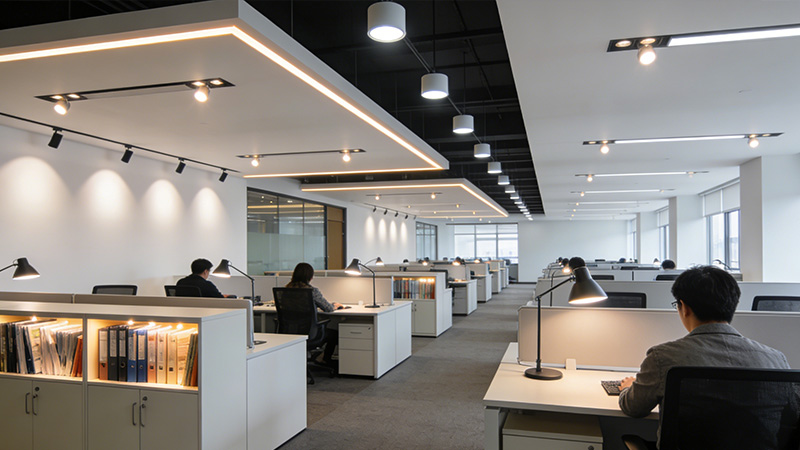
Enterprise lighting management app dashboards deliver four critical, enterprise-focused benefits that drive operational efficiency and cost savings:
First, centralized visibility and control across multi-site operations. The most impactful feature of these dashboards is their ability to aggregate data from all enterprise locations into a single interface. Facility managers can monitor lighting status (on/off, brightness, energy usage) for every fixture, floor, or site in real time. They can also execute centralized commands—such as adjusting lighting schedules for all branch offices during holiday periods or dimming high-bay lights in unoccupied factory zones—eliminating the need for on-site interventions and streamlining operations.
Second, data-driven energy optimization. Enterprise lighting management app dashboards integrate with energy metering systems to track real-time and historical energy consumption by location, zone, or fixture type. Interactive charts and reports visualize energy usage trends, peak consumption periods, and potential savings opportunities. For example, a dashboard might highlight that a particular factory’s night-shift lighting uses 30% more energy than industry benchmarks, enabling managers to adjust schedules or upgrade fixtures to reduce costs. This data-driven approach helps enterprises meet sustainability goals and reduce utility expenses.
Third, proactive maintenance and fault alerting. Dashboards continuously monitor lighting system health, detecting faults such as flickering lights, unresponsive fixtures, or abnormal energy usage. When issues are identified, the system sends instant alerts to facility teams via the app, complete with location details and recommended actions. This proactive approach reduces downtime—critical for high-productivity environments like manufacturing plants—and eliminates the need for time-consuming manual inspections. Over time, dashboards also generate maintenance trends, helping teams schedule preventive maintenance and extend fixture lifespans.
Fourth, compliance and reporting capabilities. Enterprises often need to comply with energy efficiency regulations (e.g., ISO 50001, local energy codes) and report on sustainability metrics. Enterprise lighting management app dashboards automate the generation of compliance reports, aggregating energy usage data, savings metrics, and maintenance records into standardized formats. This simplifies compliance processes, reduces administrative burden, and provides transparent documentation for stakeholders or auditors.
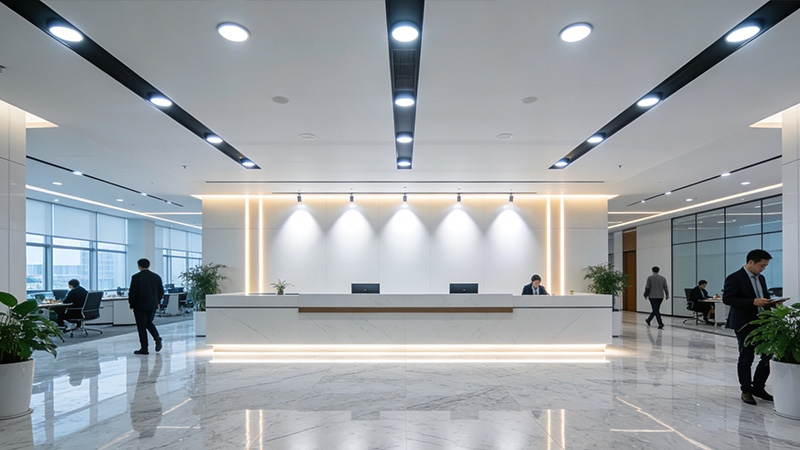
Enterprise lighting management app dashboards excel in complex, large-scale environments, delivering targeted value across key enterprise sectors:
Large manufacturing facilities & industrial plants: High-bay lighting in factories and plants is critical for worker safety and productivity. Dashboards enable managers to monitor lighting in production zones, storage areas, and assembly lines in real time. They can adjust lighting based on production schedules—brightening during active shifts and dimming during cleanup or downtime—to save energy. Fault alerts ensure that faulty fixtures in critical production zones are repaired immediately, avoiding disruptions to operations. Energy reports also help plant managers identify opportunities to integrate lighting with renewable energy sources (e.g., solar) for further savings.
Multi-site corporate headquarters & office campuses: Enterprises with distributed office locations use dashboards to standardize lighting across all sites. Managers can set uniform lighting schedules (e.g., 8 AM–6 PM) for all branch offices, adjust brightness based on occupancy data, and monitor energy usage by department. For example, a dashboard might show that the marketing department’s lighting is consistently left on after hours, enabling managers to implement automated shutoffs or employee awareness programs. Dashboards also integrate with office HVAC systems, syncing lighting and temperature controls to optimize comfort and efficiency.
Enterprise data centers: Data centers require 24/7 lighting for maintenance staff but must minimize energy usage to reduce operational costs. Dashboards monitor lighting in server rooms, maintenance corridors, and control centers, ensuring that lights are only on when staff are present. Energy reports track lighting-related energy consumption as part of the data center’s overall energy footprint, helping managers meet strict efficiency targets. Fault alerts for emergency lighting systems are critical for compliance with safety regulations, ensuring that backup lighting is always functional.
Distributed retail and hospitality chains: Enterprise retail brands with hundreds of stores use dashboards to standardize lighting across locations, ensuring consistent brand ambiance while controlling costs. Managers can adjust in-store lighting schedules based on store hours, dim lights in non-selling areas (e.g., stockrooms) during peak hours, and monitor energy usage by store. For hospitality chains, dashboards manage lighting in hotels, resorts, and conference centers, enabling centralized control of guest areas, back-of-house facilities, and outdoor spaces. Alerts for faulty lighting in guest rooms help maintain customer satisfaction and reduce maintenance response times.
To maximize the value of enterprise lighting management app dashboards, enterprises should follow these strategic implementation guidelines:
First, align dashboard features with enterprise goals. Define clear objectives—such as reducing energy costs by 20%, improving maintenance efficiency, or achieving compliance with sustainability standards—before selecting a dashboard solution. Ensure that the dashboard supports the specific metrics and controls needed to meet these goals (e.g., multi-site data aggregation, custom report generation, integration with enterprise resource planning (ERP) systems).
Second, prioritize seamless integration with existing systems. Enterprise lighting management app dashboards should integrate with existing lighting controls, energy metering systems, BMS, and ERP platforms. This ensures that data flows seamlessly between systems, eliminating silos and enabling holistic facility management. Verify compatibility with industry-standard protocols (e.g., DALI, BACnet) and enterprise-grade wireless networks (e.g., LoRaWAN, Wi-Fi 6) to support large-scale deployments.
Third, ensure scalability and user-centric design. Select a dashboard that can scale with the enterprise’s growth—whether adding new locations, integrating new lighting technologies, or supporting more users. The interface should be intuitive and customizable, allowing different user roles (e.g., global facility managers, local site supervisors) to access relevant data and controls. For example, global managers might need a high-level overview of all sites, while local supervisors require detailed data for their specific location.
Fourth, invest in user training and change management. Even the most advanced dashboard will fail to deliver value if users are not properly trained. Provide comprehensive training for facility teams, operations staff, and other stakeholders to ensure they can effectively use the dashboard’s features—from real-time monitoring and alert response to report generation. Implement change management strategies to encourage adoption, such as highlighting early success stories (e.g., energy savings at a pilot site).
As enterprise facility management becomes more data-driven and intelligent, enterprise lighting management app dashboards are evolving to deliver even greater value:
One trend is AI-powered predictive analytics. Future dashboards will use artificial intelligence to analyze historical lighting and energy data, predicting energy usage patterns, maintenance needs, and optimization opportunities. For example, a dashboard might predict that a group of factory lighting fixtures will fail within the next 30 days, enabling proactive replacement before downtime occurs. AI will also recommend personalized energy-saving strategies based on site-specific usage patterns.
Another trend is integration with digital twins. Dashboards will be integrated with digital twin technology, creating virtual replicas of enterprise facilities. Users can visualize lighting status, energy usage, and faults in the digital twin, enabling more intuitive monitoring and control. This integration also supports scenario planning—such as simulating the energy impact of upgrading to LED fixtures or adjusting lighting schedules—before implementing changes in the physical environment.
Finally, enhanced sustainability and ESG reporting. As enterprises prioritize environmental, social, and governance (ESG) goals, dashboards will offer advanced sustainability reporting features. They will track lighting-related carbon emissions, renewable energy integration, and energy savings, generating detailed ESG reports that align with global standards (e.g., GRI, SASB). This helps enterprises demonstrate their commitment to sustainability to investors, customers, and regulators.
In conclusion, enterprise lighting management app dashboards are a critical tool for modern enterprises, transforming lighting management from a reactive, fragmented task to a proactive, data-driven function. By delivering centralized visibility, energy optimization, proactive maintenance, and compliance support, these dashboards drive operational efficiency, reduce costs, and support sustainability goals across complex, multi-site operations. Through strategic implementation and alignment with enterprise objectives, organizations can maximize the value of their lighting infrastructure. As AI, digital twin, and ESG reporting technologies advance, enterprise lighting management app dashboards will become even more intelligent and integral to holistic enterprise facility management. For enterprises looking to optimize their lighting systems at scale, investing in a robust enterprise lighting management app dashboard is a strategic choice that delivers long-term operational and financial value.


)
)
)
)

+86 15899791249

+86 755 2955 3313


Address: Huafeng No.1 Science and Technology Park, Sanwei, Bao'an District, Shenzhen, Guangdong, China.
