

Time:2025-11-19
High bay smart lighting has become a game-changer for warehouse energy efficiency, combining high-efficiency LED technology with intelligent control systems to cut unnecessary energy consumption. Designed for tall-ceiling warehouses (typically 4.5m+), these solutions address the core pain points of traditional lighting—constant full-power operation, uneven illumination, and inefficient energy use—while maintaining safe and productive working conditions. This guide explores how smart high bay lighting delivers tangible energy savings, key implementation strategies, and industry-proven results without excessive technical parameters.
Smart high bay lighting achieves significant energy savings through two complementary layers: foundational LED efficiency and intelligent control optimization.
Compared to traditional lighting (e.g., metal halide, high-pressure sodium lamps), LED-based high bay lights convert over 90% of electrical energy into visible light, minimizing heat waste—a stark contrast to traditional fixtures that waste most energy as heat .
The inherent low energy consumption of LEDs, paired with long lifespans (reducing replacement frequency), lays the groundwork for baseline energy savings of 50-70% even without smart controls .
High-efficiency LED designs (e.g., ErP A-class rated products) ensure maximum light output with minimal power input, avoiding over-illumination in large warehouse spaces.
Smart controls transform baseline efficiency into exceptional savings by aligning lighting use with actual warehouse activity, adding 20-30% additional energy reduction on top of LED improvements:
Occupancy/Motion Sensing: Lights automatically brighten when personnel, forklifts, or equipment enter a zone and dim/turn off when the area is vacant. Advanced microwave sensors cover wide ranges (up to 20m) to adapt to warehouse aisle layouts, eliminating "always-on" waste in low-traffic areas .
Daylight Harvesting: Sensors detect natural light from skylights or windows, adjusting artificial lighting brightness accordingly. For example, dimming lights by 30-50% during sunny hours reduces reliance on electrical illumination without compromising visibility .
Task-Adaptive Dimming: Lights adjust brightness based on operational needs—full brightness for sorting/picking zones, reduced brightness for storage-only areas, and minimal standby light for overnight security. This avoids uniform high-power operation across the entire warehouse .
Scheduled Control: Cloud-based platforms enable pre-set lighting schedules (e.g., full power during peak shifts, low-power during off-peak hours) to match warehouse operating hours, preventing energy waste during idle periods.
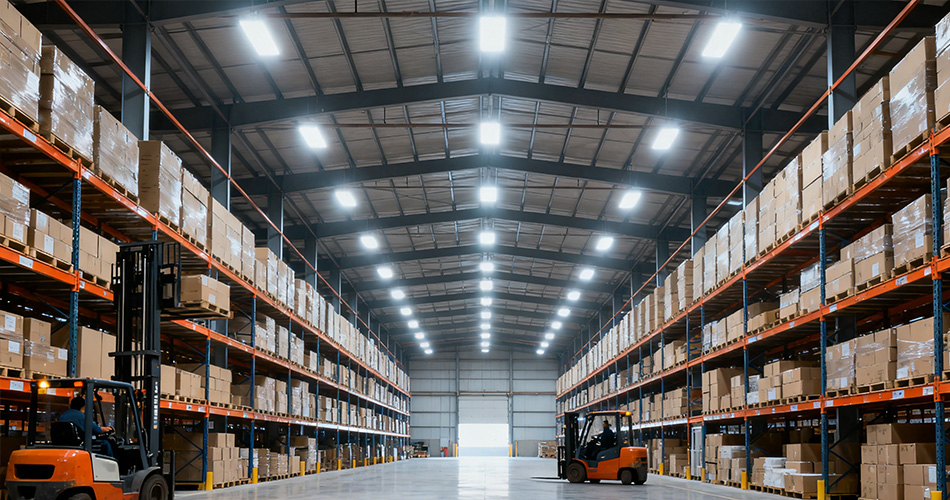
The most effective high bay warehouse lighting systems integrate simple yet powerful intelligent features to maximize efficiency:
Microwave Sensors: Preferred for warehouses due to their long detection range and ability to penetrate dust or fog, ensuring reliable activation for moving equipment (forklifts) and personnel. Unlike infrared sensors, they avoid false triggers and adapt to large open spaces .
Combined Environmental Sensors: Some systems pair motion detection with ambient light sensors to synchronize occupancy and daylight data, achieving precise brightness adjustments that balance energy savings and visibility.
Zhaga Standard Interfaces: Allow easy integration of sensors or control modules into high bay fixtures without complex wiring, enabling warehouses to upgrade existing LED high bays to smart systems incrementally .
Wireless Connectivity: 5G, LoRa, or Bluetooth-enabled fixtures connect to centralized cloud platforms, supporting remote monitoring and adjustment. This eliminates the need for on-site manual control, ensuring optimal settings are maintained across large warehouses.
Smooth Dimming Capabilities: Lights adjust brightness in gradual increments (rather than on/off switching) to avoid sudden illumination changes, while reducing energy use proportional to brightness levels.
Surge Protection: Some high-end models include surge protection to prevent energy waste from electrical fluctuations, extending fixture lifespan and maintaining consistent efficiency .
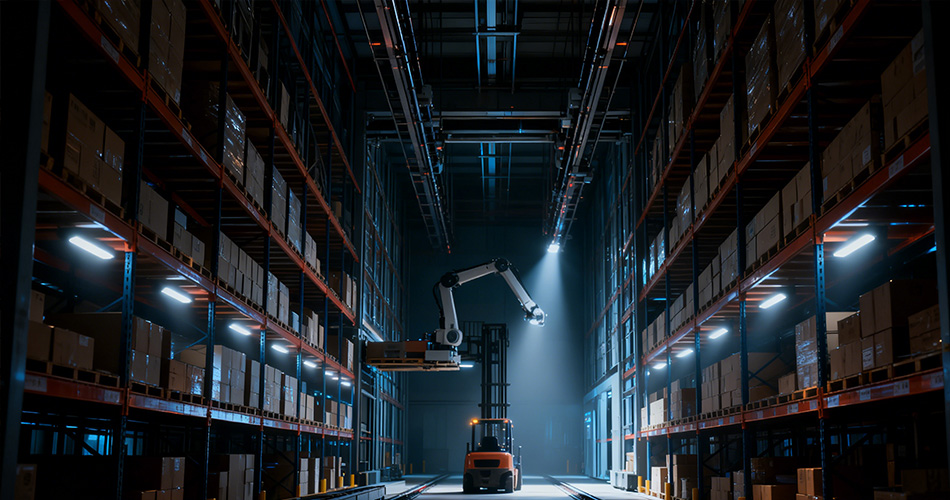
Real-world warehouse implementations demonstrate the tangible impact of smart high bay lighting:
A large spare parts warehouse adopted microwave-sensor enabled smart high bay lights, replacing outdated metal halide fixtures. The system automatically dims lights to 30% brightness when no activity is detected and fully illuminates only when personnel or forklifts are present.
Result: 79% energy savings compared to the original system, with brightness improving by 20% in active zones. The warehouse reduced annual electricity costs by tens of thousands of yuan while enhancing sorting efficiency .
A regional distribution center with skylights installed smart high bay lights integrated with daylight sensors. The system adjusts artificial lighting based on real-time natural light levels, complementing rather than competing with sunlight.
Result: 65% energy savings versus traditional LED high bays without smart controls. Peak energy use during midday (when natural light is abundant) dropped by 40% .
A 10,000㎡ logistics warehouse implemented cloud-managed smart high bay lighting, with schedules tailored to three-shift operations. Lights operate at 100% during picking shifts, 50% during inventory checks, and 20% for overnight security.
Result: 70% energy savings compared to constant-on traditional lighting, with minimal maintenance costs due to long-lasting LED fixtures (50,000+ hours lifespan) .
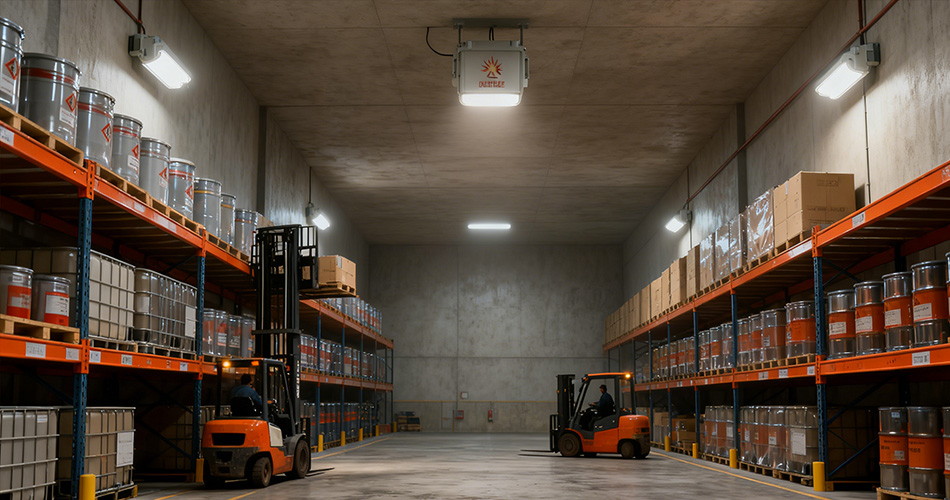
To maximize energy savings with smart high bay lighting, focus on alignment with warehouse operations and minimal complexity:
For large open warehouses: Choose microwave sensors with wide detection ranges to cover aisles and storage bays effectively.
For busy picking zones: Opt for fast-response sensors that quickly adjust brightness as personnel/equipment move through the space.
For warehouses with skylights: Select systems with daylight harvesting capabilities to leverage natural light.
If your warehouse has fixed shifts: Prioritize scheduled control to automate brightness changes across different operating periods.
If activity is irregular (e.g., mixed picking/storage): Combine motion sensing with dimming to adapt to real-time use.
For multi-zone warehouses: Use zone-specific controls to avoid illuminating unused areas (e.g., back-of-house storage) when front-of-house is active.
Choose fixtures designed for warehouse conditions: Dust resistance (critical for dry goods or bulk storage), corrosion resistance (for cold storage or humid environments), and robust construction to withstand forklift vibrations .
Opt for low-maintenance designs (e.g., sealed LED modules) to reduce downtime and replacement costs, as frequent fixture changes can offset energy savings.
Select cloud-based systems that support remote monitoring, allowing you to track energy use, adjust settings, and identify inefficiencies (e.g., a zone with unusually high energy consumption) without on-site visits.
Ensure compatibility with existing warehouse management systems (WMS) for seamless integration—some advanced systems can sync lighting with inventory movement data (e.g., illuminating specific aisles when a picking order is generated).
Smart high bay lighting delivers holistic benefits that extend beyond reduced electricity bills:
Cost Reduction: Lower energy costs (typically 50-79% savings) combined with long fixture lifespans and minimal maintenance cut overall lighting-related expenses by 40-60% .
Productivity Enhancement: Uniform, adjustable illumination eliminates dark corners and glare, improving picking accuracy and reducing operator fatigue. Brighter active zones and dimmed inactive areas create a more comfortable working environment .
Sustainability Compliance: Reduced energy use lowers carbon footprints, helping warehouses meet corporate sustainability goals and regulatory requirements (e.g., ErP energy efficiency standards) .
Operational Visibility: Cloud-based data analytics provide insights into lighting use patterns, enabling further optimization (e.g., adjusting sensor sensitivity or schedules based on actual activity data).
Smart high bay lighting is a high-impact, low-complexity solution for warehouse energy savings, combining LED efficiency with intelligent controls to eliminate wasteful illumination. By prioritizing sensor suitability, aligning controls with operational rhythms, and selecting durable, adaptable fixtures, warehouses can achieve significant energy reductions while enhancing safety and productivity. From small spare parts facilities to large distribution centers, the technology has proven to deliver consistent, measurable results—making it a strategic investment for cost-conscious and sustainability-focused operations.


)
)
)
)

+86 15899791249

+86 755 2955 3313


Address: Huafeng No.1 Science and Technology Park, Sanwei, Bao'an District, Shenzhen, Guangdong, China.
