

Time:2025-11-18
Industrial smart lighting redefines safety and efficiency in hazardous environments by integrating IECEx-certified explosion-proof design with IoT-driven intelligence. Beyond mere illumination, these systems deliver remote controllability, data-driven insights, and seamless safety integration—all while adhering to the global IECEx framework recognized across 60+ countries. This guide aligns smart lighting capabilities with IECEx compliance requirements, focusing on industrial application scenarios, compliance principles, and practical value without excessive technical parameters.
Industrial smart lighting for hazardous areas must balance innovation with uncompromising safety, built on two non-negotiable foundations:
All intelligent components (sensors, communication modules, controllers) are fully integrated into IECEx-certified Explosion-Proof structures, avoiding modifications that could compromise explosion-proof integrity . Common design approaches include:
Flameproof enclosures ("d") housing IoT chips and wireless communication modules.
Intrinsically safe ("i") sensor systems that limit electrical energy to non-ignitable levels, ideal for portable and confined space lighting.
Composite protection (e.g., "de" design) combining explosion-proof shells with enhanced safety for smart components .
Smart features comply with IEC 60079 series standards, including updated requirements for LED optical radiation safety in explosive environments .
The entire system (fixture + smart modules) must hold valid IECEx Certificate of Conformity (CoC) issued by accredited bodies (e.g., TUV SUD, UL) . Certification covers both explosion-proof performance and intelligent functions, ensuring cross-border recognition.
Smart modules (e.g., 5G/NB-IoT/LoRa communication units) carry IECEx marks aligned with hazard zone classifications, avoiding non-certified retrofits that violate regulatory requirements .
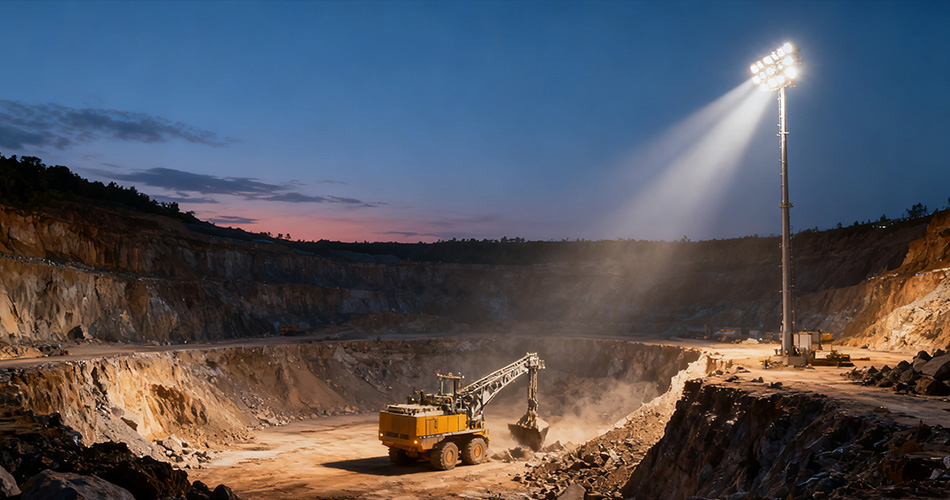
Smart technology adds value without sacrificing safety, focusing on operational efficiency and risk reduction in industrial settings:
Cloud-based platforms enable centralized management of lighting across global hazardous sites—adjusting brightness, activating emergency modes, or scheduling operations from remote dashboards . Critical for inaccessible areas (offshore platforms, underground mines) where on-site adjustments pose safety risks.
Real-time status tracking alerts maintenance teams to faulty fixtures, reducing unplanned downtime and minimizing manual inspections in high-risk zones.
Integrated sensors (occupancy, environmental conditions) transform lighting into a "safety data hub," feeding insights to industrial control systems . Examples include:
Personnel presence detection to optimize illumination and support location tracking in mines or chemical plants.
Ambient condition monitoring (e.g., dust density, gas concentrations) that triggers alerts or automatic lighting adjustments to maintain visibility and safety.
Energy usage analytics identify optimization opportunities (e.g., dimming in low-traffic areas), cutting costs while complying with IECEx’s low-heat requirements.
Smart lighting syncs with industrial safety systems to guide evacuation during incidents: automatically illuminating escape routes, switching to high-visibility modes, or activating directional beacons . Some systems integrate personnel directional awareness to enhance coordination in chaotic environments .
Backup power activation is automated, ensuring continuous illumination during outages—critical for hazardous area safety protocols and IECEx emergency lighting requirements.
AI-driven diagnostics analyze fixture performance data to predict failures before they occur, eliminating reactive maintenance in dangerous environments . This extends system lifespan and aligns with IECEx’s emphasis on reliable, low-maintenance design.
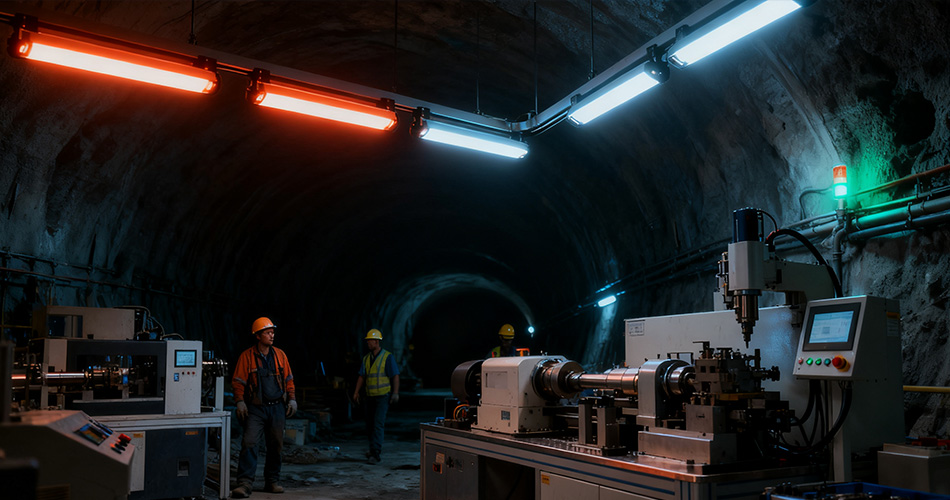
The global recognition of IECEx makes smart Explosion-Proof lighting indispensable for multinational industrial sectors:
Offshore platforms use corrosion-resistant smart lighting with wireless connectivity for remote control, reducing personnel exposure to height and confined space risks .
Cross-border pipelines (e.g., transcontinental gas pipelines) deploy smart lighting with leak detection integration, syncing data with pipeline monitoring systems to mitigate hazards .
Underground mines utilize smart lighting with personnel tracking and environmental sensing—acting as both illumination sources and safety beacons . These systems integrate with surveillance to fill coverage gaps in dark tunnels.
Dust-rich processing facilities use smart fixtures that adjust brightness based on particle density, ensuring visibility while preventing ignition of airborne dust clouds .
Overseas hydropower, thermal, and wind energy projects use IECEx-certified smart lighting to meet local safety requirements while maintaining global operational consistency .
Fuel storage areas (coal yards, gas tanks) deploy motion-sensing smart lighting to avoid unnecessary illumination, reducing energy use without compromising safety.
Smart lighting in mixing/reaction zones syncs with process control systems: dimming during maintenance, brightening during critical operations, and triggering alerts for abnormal conditions .
Confined space inspections use portable, intrinsically safe smart lighting with wireless data transmission, supporting real-time monitoring from outside high-risk areas .
Selecting IECEx-certified smart lighting requires prioritizing safety, compatibility, and practical value:
Ensure the entire system (fixture + smart modules) holds a current IECEx CoC, covering both explosion-proof performance and intelligent functions. Avoid products with separate certifications for lighting and smart components.
Confirm alignment with hazard type (gas/dust) and zone classification (e.g., CAT 1 for Zone 0/20, CAT 2 for Zone 1/21).
For remote sites: Prioritize cloud connectivity and remote control to reduce on-site visits.
For high-risk areas: Focus on emergency response integration and real-time hazard sensing.
For maintenance-heavy environments: Select predictive maintenance features to minimize downtime.
Choose smart lighting built to withstand industrial conditions: corrosion resistance for offshore/chemical facilities, dust tightness for mines, and extreme temperature tolerance for arctic/desert operations .
Opt for durable, low-maintenance designs (e.g., robust LED sources) to reduce servicing frequency in hazardous zones.
Select smart lighting compatible with existing industrial infrastructure (SCADA, building management systems, emergency response platforms). IECEx’s standardized design ensures seamless integration across global facilities .
Beyond compliance, intelligent Explosion-Proof lighting delivers strategic advantages for industrial operations:
Enhanced Safety: Reduces human exposure to hazards via remote operation and real-time risk monitoring, aligning with IECEx’s safety-first mandate.
Global Operational Consistency: Enables uniform safety standards and smart control across multinational facilities, simplifying training and procurement.
Operational Efficiency: Cuts energy costs and maintenance downtime through data-driven optimization, extending system lifespan.
Market Access: Facilitates entry into international markets by meeting global IECEx requirements, avoiding costly recertification for regional sales.
IECEx-certified industrial smart lighting represents the next evolution of hazardous area safety—marrying global compliance with intelligent functionality to transform high-risk operations. By prioritizing certified smart components, aligning features with industrial needs, and leveraging data-driven insights, businesses can enhance safety, reduce costs, and streamline management across global facilities. From oil rigs and mines to chemical plants and power stations, IECEx-certified smart lighting is more than illumination—it’s a critical tool for safe, efficient, and future-ready industrial operations.


)
)
)
)

+86 15899791249

+86 755 2955 3313


Address: Huafeng No.1 Science and Technology Park, Sanwei, Bao'an District, Shenzhen, Guangdong, China.
