

Time:2025-12-30
In the evolving landscape of smart indoor environments, indoor lighting sensor has emerged as a pivotal link connecting illumination systems with human needs and smart building ecosystems. Beyond basic on/off control, modern indoor lighting sensor integrates ambient light perception, occupancy detection, and environmental data collection to enable dynamic, personalized, and energy-efficient lighting solutions. Unlike traditional lighting controls that operate in isolation, indoor lighting sensor acts as a "neural node" to coordinate with HVAC, security, and health-monitoring systems, creating a unified and human-centric indoor environment. For interior designers, facility managers, and smart home enthusiasts, understanding the full potential of indoor lighting sensor is essential to unlocking the value of intelligent illumination—enhancing user comfort, optimizing energy usage, and elevating the overall quality of indoor spaces. This article explores the core capabilities, innovative application scenarios, implementation strategies, and future developments of indoor lighting sensor, highlighting its role in shaping the next generation of smart indoor experiences.
Traditional indoor lighting systems, lacking advanced sensing capabilities, fail to meet the demands of modern human-centric and energy-efficient indoor environments. Conventional manual switches or simple timer controls rely entirely on human intervention or fixed schedules, leading to energy waste—for instance, lights left on in unoccupied rooms or excessive illumination when natural light is sufficient. These systems also cannot adapt to individual user preferences, providing a one-size-fits-all lighting experience that may cause discomfort in scenarios requiring specific illumination, such as reading, working, or resting.
Another critical shortcoming is the lack of synergy with other indoor systems. Traditional lighting operates independently of HVAC, security, or other smart devices, missing opportunities to optimize overall indoor comfort and efficiency. For example, lighting cannot automatically adjust when the air conditioner is turned on, or coordinate with security systems to illuminate escape routes during emergencies. Additionally, early basic sensors (if any) only offer single-dimensional detection, unable to collect comprehensive environmental data to support data-driven lighting optimization. These limitations underscore the necessity of advanced indoor lighting sensor to bridge the gap between lighting systems and intelligent indoor ecosystems.
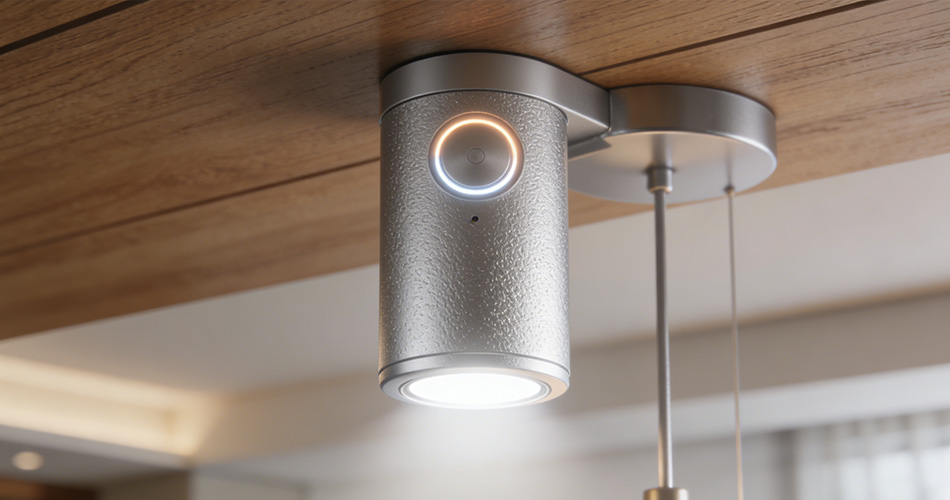
Modern indoor lighting sensor transcends basic detection functions, boasting four core capabilities that redefine intelligent illumination:
- Multi-dimensional environmental perception: Advanced indoor lighting sensor can simultaneously detect ambient light intensity, color temperature, occupancy status, and even subtle changes in human activity. This comprehensive data collection enables precise adjustment of lighting parameters—for example, dimming artificial lights when natural light is abundant, or increasing brightness when detecting focused work behavior, ensuring optimal illumination at all times.
- Seamless multi-system coordination: As a key node in smart building networks, indoor lighting sensor integrates seamlessly with HVAC, security cameras, smart curtains, and even health-monitoring devices. For instance, it can trigger the HVAC system to adjust temperature while optimizing lighting, or activate emergency lighting and guide paths when the security system detects a hazard, enhancing overall indoor safety and comfort.
- Personalized lighting adaptation: By learning user behavior patterns and preferences, indoor lighting sensor can deliver tailored lighting experiences. It can remember an individual’s preferred brightness and color temperature for different activities (such as reading or relaxing) and automatically apply these settings when the user enters the space. This personalization caters to diverse user needs, improving satisfaction and well-being.
- Data-driven energy optimization: Indoor lighting sensor collects and analyzes lighting usage data, identifying energy-wasting patterns and providing insights for optimization. Facility managers can use this data to adjust lighting schedules, refine sensor parameters, and reduce unnecessary energy consumption. Studies show that smart lighting systems equipped with advanced indoor lighting sensor can reduce lighting energy use by 30-40% compared to traditional systems.
Indoor lighting sensor excels in scenarios requiring personalized, coordinated, and efficient illumination, delivering unique value across residential, commercial, healthcare, and creative sectors:
- Smart Senior Care Spaces: In senior living facilities or home care environments, indoor lighting sensor enhances safety and comfort for the elderly. It detects slow movements to avoid sudden lighting changes, maintains sufficient brightness in corridors and bathrooms to prevent falls, and adjusts color temperature to align with circadian rhythms—boosting sleep quality and reducing fatigue. It can also link with emergency call systems, brightening escape routes when an emergency is triggered.
- Creative Studios (Photography, Design): Creative studios require precise lighting control to match artistic needs. Indoor lighting sensor detects ambient light changes and adjusts artificial lighting to maintain consistent brightness and color accuracy, ensuring the quality of photos, designs, or artworks. It can also store multiple scene modes (such as "product shooting mode" or "sketching mode") for quick switching, improving work efficiency.
- Shared Office and Co-Working Spaces: Shared workspaces have dynamic user flows and diverse activity needs. Indoor lighting sensor detects occupancy in individual workstations, meeting rooms, or relaxation zones, activating lighting only when needed. It adjusts lighting intensity based on the number of users and coordinates with air conditioning to optimize the environment. For remote workers, it can sync with personal devices to apply preferred lighting settings, enhancing work comfort.
- Indoor Greenhouses and Plant Nurseries: Beyond human-centric lighting, indoor lighting sensor plays a key role in plant growth environments. It detects light intensity and spectral distribution, adjusting LED grow lights to match the specific needs of different plants (such as germination, growth, or flowering). This precise control promotes plant growth, reduces energy waste, and supports sustainable indoor agriculture.
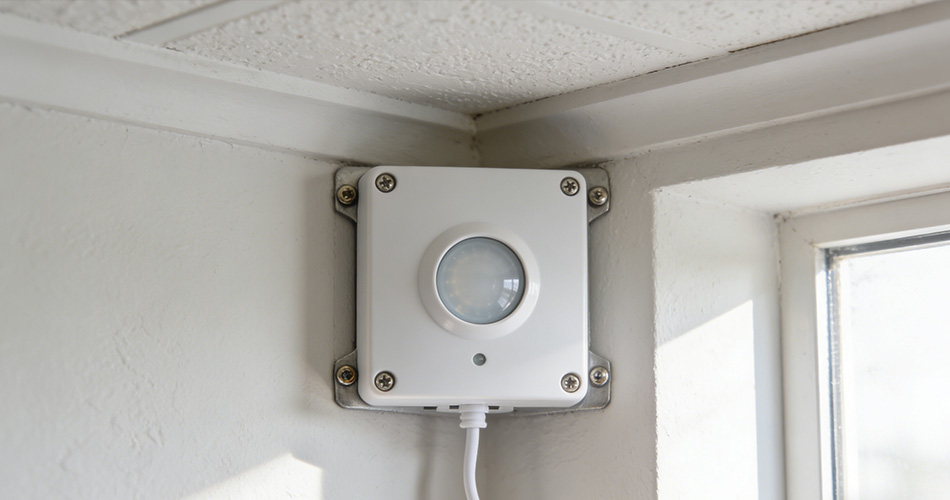
To fully leverage the value of indoor lighting sensor and ensure the stability of smart lighting systems, the following implementation strategies should be adopted:
- Scenario-oriented sensor selection: Choose indoor lighting sensor types based on specific space needs. For senior care spaces, prioritize sensors with high sensitivity to slow movements; for creative studios, select sensors with spectral detection capabilities; for shared offices, opt for sensors integrating occupancy and ambient light detection. Avoid generic selection to ensure sensor performance matches scenario requirements.
- Optimize sensor placement and network layout: Install sensors in locations with unobstructed detection—such as ceiling centers or high walls—to avoid blind spots. In large spaces, adopt a zoned layout and ensure seamless communication between sensors to support coordinated control. Integrate sensors into a unified smart building network using mainstream protocols (such as Matter or BACnet) for stable data transmission.
- Program personalized scene modes: Collaborate with users to define common activities and program corresponding lighting scenes. For example, set "sleep mode" with warm, dim lighting for bedrooms, and "focus mode" with high-brightness, cool lighting for workspaces. Test and refine these modes based on user feedback to ensure they meet actual needs.
- Strengthen data security and privacy protection: For sensors with occupancy detection or image-sensing functions, encrypt collected data to prevent leakage. Comply with data protection regulations (such as GDPR) and avoid collecting unnecessary user information. Regularly update sensor firmware to fix security vulnerabilities and ensure system safety.
Driven by AI, IoT, and sustainable technology advancements, indoor lighting sensor is evolving toward intelligence, integration, and eco-friendliness:
- AIoT-enabled intelligent prediction: Future indoor lighting sensor will integrate AI and IoT technologies to predict user needs and environmental changes. For example, it can forecast occupancy patterns based on historical data, pre-adjusting lighting to create a comfortable environment before users enter the space. It can also predict natural light changes to optimize artificial lighting in advance.
- Integration with health monitoring systems: Sensors will link with wearable devices or health monitors to adjust lighting based on real-time physiological data. For instance, if a user’s eye fatigue is detected, the sensor will reduce brightness and adjust color temperature to relieve strain; if sleep quality is poor, it will optimize evening lighting to regulate circadian rhythms.
- Low-carbon and energy-harvesting designs: Indoor lighting sensor will adopt more energy-efficient components and integrate energy-harvesting technologies (such as solar or kinetic energy) to reduce reliance on grid power. This aligns with global carbon neutrality goals, making smart lighting systems more sustainable.
- Open-platform and modular development: Industry standards for indoor lighting sensor will become more unified, promoting interoperability between different brands and devices. Modular designs will allow users to add functions (such as air quality detection or sound sensing) as needed, improving system flexibility and cost-effectiveness.
In conclusion, indoor lighting sensor is more than a detection device—it is a core enabler of human-centric smart indoor environments. By addressing the shortcomings of traditional lighting systems (isolation, lack of personalization, energy waste), it realizes seamless coordination between lighting and multiple indoor systems, delivering personalized and efficient illumination experiences. Its innovative applications in senior care, creative studios, and indoor agriculture expand the boundaries of intelligent lighting. Through scenario-oriented selection, optimized layout, and personalized programming, users can fully unlock its value to create comfortable, energy-saving, and safe indoor spaces. As AI and health technologies advance, indoor lighting sensor will play an increasingly critical role in promoting the development of sustainable and human-centric smart buildings. For anyone involved in smart indoor environment design and management, prioritizing indoor lighting sensor is a strategic choice to enhance space value, improve user experience, and achieve long-term sustainability goals.


)
)
)
)

+86 15899791249

+86 755 2955 3313


Address: Huafeng No.1 Science and Technology Park, Sanwei, Bao'an District, Shenzhen, Guangdong, China.
