

Time:2026-01-04
Indoor lighting is a fundamental component of daily life and work, influencing energy consumption, user comfort, and even productivity. With the global push for sustainability and smart living, traditional indoor lighting control methods—such as manual switches or fixed timers—have become outdated due to their inefficiency and inflexibility. Indoor PIR lighting sensor, which integrates passive infrared (PIR) motion detection with lighting control capabilities, emerges as a game-changing solution. By automatically detecting human occupancy and adjusting lighting status in real time, indoor PIR lighting sensor bridges the gap between energy conservation and human-centric illumination needs. For homeowners, facility managers, and interior designers, understanding the value and application of indoor PIR lighting sensor is crucial to building efficient, comfortable, and smart indoor environments. This article explores the core advantages, targeted application scenarios, implementation guidelines, and future trends of indoor PIR lighting sensor, highlighting its pivotal role in optimizing indoor lighting systems.
Traditional indoor lighting control relies heavily on human intervention or rigid scheduling, leading to significant energy waste and compromised user experience. A primary limitation is the inability to respond to real-time occupancy changes: lights are often left on in unoccupied rooms (such as empty bedrooms, corridors, or meeting rooms) for hours, with studies showing that unnecessary indoor lighting accounts for 25-35% of total building energy consumption. Fixed timers, another common solution, lack adaptability—they may turn off lights prematurely during extended activities or remain on during unexpected room vacancies.
Another critical flaw is the failure to coordinate with natural light and user behavior. Conventional lighting systems provide uniform brightness regardless of natural light intensity, resulting in overly bright spaces on sunny days or dim areas on cloudy days, which strains users’ eyes. Additionally, they cannot adapt to diverse user needs—for example, bright lighting required for reading vs. soft lighting for relaxation. These limitations not only increase operational costs but also fail to meet the demand for personalized, comfortable indoor environments. Indoor PIR lighting sensor addresses these pain points by automating lighting control based on real-time occupancy and environmental conditions.
Indoor PIR lighting sensor redefines indoor lighting control with four key advantages, tailored to the needs of modern indoor spaces:
- Occupancy-driven precise lighting control: The core advantage of indoor PIR lighting sensor lies in its ability to detect human motion and activate/deactivate lighting accordingly. When a user enters a room, the sensor triggers the light to turn on; when the room is unoccupied for a preset period, it automatically turns the light off. This eliminates energy waste from idle lighting and ensures lighting is only supplied when needed, reducing lighting energy consumption by 30-40% on average.
- Seamless coordination with natural light: Advanced indoor PIR lighting sensor integrates ambient light detection, allowing it to adjust lighting brightness based on natural light intensity. For example, it dims artificial lighting when sunlight is abundant (such as near windows) and increases brightness in dimly lit areas, maintaining a consistent and comfortable illumination level. This synergy between artificial and natural light further enhances energy efficiency and visual comfort.
- Enhanced user convenience and experience: Indoor PIR lighting sensor eliminates the need for manual light switching, providing a hassle-free experience—especially in high-traffic areas (such as corridors, stairwells, or bathrooms) where users may have their hands full. It also supports personalized settings, such as adjusting the auto-off delay to match user activity duration (e.g., longer delays for study rooms, shorter delays for corridors), catering to diverse usage needs.
- Easy integration with smart indoor ecosystems: As a key component of smart homes and buildings, indoor PIR lighting sensor seamlessly integrates with other smart devices and systems. It can link with smart curtains (to adjust natural light intake), HVAC systems (to coordinate energy usage), or mobile apps (for remote monitoring and setting adjustments). This integration creates a unified, intelligent indoor environment that enhances overall living and working efficiency.
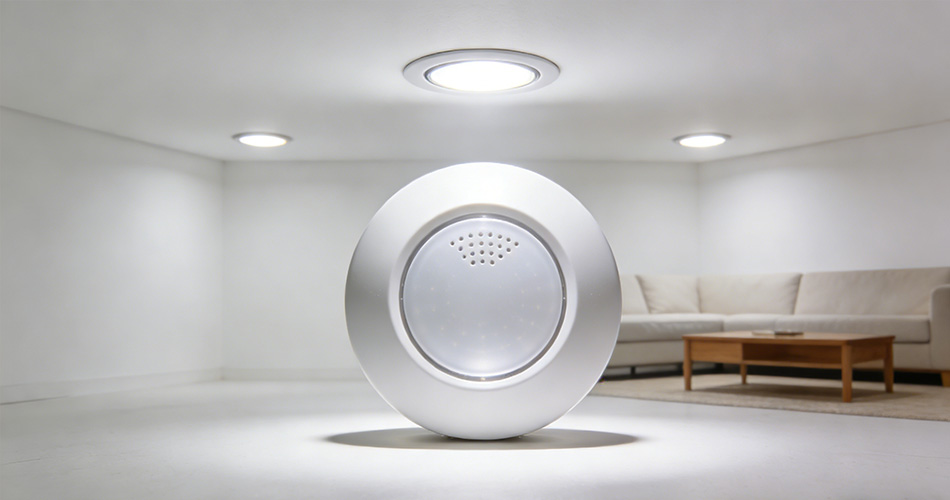
Indoor PIR lighting sensor delivers unique value in scenarios where energy efficiency, user convenience, and personalized lighting are prioritized, covering residential, commercial, and healthcare sectors:
- Smart Residential Spaces (Bedrooms, Corridors, Bathrooms): In homes, indoor PIR lighting sensor optimizes lighting in high-traffic and occasional-use areas. For example, it activates corridor lights when someone walks at night (avoiding the need for manual switching in the dark) and turns off bathroom lights after occupancy ends. In bedrooms, it can be set to dim gradually as users prepare for sleep, enhancing sleep comfort.
- Open-Plan Office Lighting Zones: Open offices with multiple workstations benefit from indoor PIR lighting sensor’s zoned control. It turns on lights only for occupied workstations, dimming or turning off lights in unoccupied areas. It also coordinates with natural light, adjusting brightness near windows to maintain consistent illumination, reducing energy waste while improving employee productivity.
- Hotel Rooms and Lobbies: Hotels use indoor PIR lighting sensor to enhance guest experience and energy efficiency. In guest rooms, sensors activate lights when guests enter and turn them off when the room is vacant (e.g., when guests leave for meals or sightseeing). In lobbies, they adjust lighting brightness based on foot traffic—brightening during peak check-in/check-out times and dimming during quiet periods.
- Elderly Care Facilities and Nursing Homes: For elderly residents with limited mobility, indoor PIR lighting sensor provides safe and convenient lighting. It ensures corridor, bathroom, and bedroom lights turn on automatically when residents move, reducing the risk of falls in dark areas. The sensor’s gentle brightness adjustment also avoids glare, protecting the elderly’s eyesight.
To fully leverage the value of indoor PIR lighting sensor and ensure optimal performance, follow these scenario-specific implementation guidelines:
- Scenario-oriented sensor selection: Choose indoor PIR lighting sensor types based on space characteristics. For narrow corridors or stairwells, select sensors with a narrow detection angle to avoid false triggers from adjacent areas; for large open spaces (such as offices or lobbies), opt for sensors with a wider detection range and ambient light sensing capabilities. Prioritize sensors with adjustable settings (e.g., auto-off delay, sensitivity) for flexibility.
- Optimize sensor placement and calibration: Install sensors in unobstructed locations (such as ceiling centers or high walls) to ensure full detection coverage without blind spots. Avoid placing sensors near heat sources (e.g., vents, radiators) or direct sunlight, which may cause false triggers. Calibrate the auto-off delay and sensitivity based on space usage—for example, set a 10-15 minute delay for study rooms and 2-5 minutes for corridors.
- Integrate with existing lighting and smart systems: Ensure indoor PIR lighting sensor is compatible with the existing lighting system (e.g., LED fixtures, dimmers) and smart home/building protocols (e.g., Matter, Zigbee). Connect sensors to a centralized control system or mobile app for remote monitoring and setting adjustments. For commercial spaces, integrate with building management systems (BMS) to track energy consumption and optimize lighting strategies.
- Consider user habits and accessibility: Program sensor settings to align with user behavior patterns. For example, in residential spaces, adjust sensitivity to avoid triggering lights from pet movements (if applicable). Provide simple manual override options for special cases (e.g., extended activities that require continuous lighting). Ensure the system is easy to understand and operate for all users, including the elderly or children.
Driven by advancements in smart technology, energy conservation goals, and human-centric design, indoor PIR lighting sensor is evolving toward greater intelligence and personalization:
- AI-driven adaptive lighting control: Future indoor PIR lighting sensor will integrate AI algorithms to learn user behavior patterns (e.g., daily activity schedules, preferred lighting brightness) and adjust settings automatically. For example, it can predict when a user will enter a room and pre-activate the preferred lighting mode, enhancing user experience.
- Integration with health and circadian lighting: Sensors will link with circadian lighting systems to adjust lighting color temperature and intensity throughout the day, aligning with human biological rhythms. For example, they provide cool, bright light in the morning to boost alertness and warm, dim light in the evening to promote sleep, supporting user health.
- Low-power and energy-harvesting designs: Advances in energy-harvesting technology (e.g., converting indoor light, vibration, or heat into electricity) will enable battery-free indoor PIR lighting sensor. This eliminates the need for wiring or battery replacements, simplifying installation and reducing maintenance costs, especially in older buildings.
- Cloud-based remote management and data analytics: Smart indoor PIR lighting sensor will support cloud connectivity, allowing users to monitor lighting status, energy consumption, and sensor performance remotely via mobile apps or web dashboards. Facility managers can use data analytics to identify energy-saving opportunities and optimize lighting strategies for large-scale buildings.
In conclusion, indoor PIR lighting sensor is a transformative solution for modern indoor lighting control, addressing the energy waste and inflexibility of traditional methods. Its ability to deliver occupancy-driven lighting, coordinate with natural light, and integrate with smart ecosystems makes it indispensable for residential, commercial, and healthcare indoor spaces. By following scientific implementation guidelines—including scenario-oriented selection, optimized placement, and system integration—users can fully leverage the value of indoor PIR lighting sensor to create energy-efficient, comfortable, and intelligent indoor environments. As AI and health-focused lighting technologies advance, indoor PIR lighting sensor will become even more intelligent and personalized, playing a crucial role in promoting sustainable and human-centric smart living. For anyone involved in indoor environment design or management, prioritizing indoor PIR lighting sensor is a strategic choice to enhance space value, improve user experience, and achieve energy conservation goals.


)
)
)
)

+86 15899791249

+86 755 2955 3313


Address: Huafeng No.1 Science and Technology Park, Sanwei, Bao'an District, Shenzhen, Guangdong, China.
