

Time:2025-11-20
Industrial smart lighting has evolved into a core pillar of Industry 4.0, integrating rugged environmental resilience (led by IP65-certified protection), AI-driven intelligence, and seamless industrial connectivity to redefine efficiency, safety, and sustainability across diverse industrial sectors. Beyond illumination, these systems act as "digital nodes" in smart factories, linking production, energy, and safety ecosystems—with IP65 industrial smart lighting remaining the gold standard for harsh environment applications. This guide expands the scope while retaining proven IP65 strengths, covering emerging industrial trends and end-to-end implementation.
Multi-Level Environmental Adaptation: From IP65 dustproof/waterproof (ideal for workshops, warehouses, and outdoor zones) to IP69K high-pressure washdown (for food processing, heavy manufacturing), industrial smart lighting is engineered to withstand dust, moisture, temperature extremes (-40℃ to 90℃), and chemical exposure. IP65 variants remain the most versatile, balancing protection and cost-effectiveness for 70% of industrial scenarios.
Mechanical & Operational Durability: IK10+ impact resistance (against forklifts, debris) and anti-vibration design (for machinery floors, mining) ensure longevity. MTBF exceeding 180,000 hours, paired with hot-swap modules, guarantees 24/7 reliability for continuous-production processes (e.g., semiconductor fabs, offshore rigs).
Hazardous Area Compatibility: For explosive zones (chemical plants, oil refineries), ATEX/IECEx-certified smart lighting complements IP65 fixtures in peripheral areas, creating layered safety protection.
Dynamic Demand Response: Sensors (radar, laser, ambient light) analyze real-time activity to adjust brightness (150-2200 lux) and spectral output—dimming to 20-30% standby in idle zones, brightening for personnel/equipment, and tuning color temperature (2700K-6500K) for tasks (e.g., 5000K for precision engineering, 3500K for quality inspection). IP65 industrial smart lighting excels here, maintaining sensor accuracy in dusty/humid conditions.
Predictive Maintenance & Anomaly Detection: Embedded sensors monitor fixture temperature, power draw, and seal integrity (critical for IP65 compliance), transmitting data to cloud/edge platforms. AI algorithms predict failures (e.g., moisture ingress, driver degradation) 2-4 weeks early, cutting unplanned downtime by 60%.
Automated Scene Control: Pre-set lighting scenarios synced with production schedules—e.g., "setup mode" (low brightness) for machine preparation, "full-production mode" (max illumination) for assembly lines, and "maintenance mode" (targeted task lighting) for repairs.
Dual-Mode Networking: 5G/4G LTE for low-latency control (smart factories, AGV navigation) and LoRaWAN for long-range, low-power communication (remote pipelines, mining camps). Industrial smart lighting integrates with PLCs, SCADA, MES, WMS, and digital twin platforms (Siemens, Dassault, AWS Industrial) for unified operations.
Edge-to-Cloud Data Flow: On-board edge computing enables real-time decisions (emergency lighting activation, load balancing) in network-constrained environments, while cloud dashboards provide centralized monitoring, energy analytics, and remote configuration.
Cross-System Synergy: Sync with safety systems (auto-brighten escape routes during alarms), energy microgrids (prioritize renewable power), and asset tracking (illuminate zones with tagged equipment) to create interconnected industrial ecosystems.
Energy Savings: 60-80% reduction in energy use vs. traditional metal halide/fluorescent fixtures, driven by LED efficiency (135+ lm/W) and smart controls. IP65 industrial smart lighting adds further savings via reduced maintenance (50-70% lower parts/labor costs) and longer service life (2-3x vs. standard lighting).
Carbon Footprint Reduction: Alignment with net-zero goals (EU Net Zero Industry Act, China’s "Dual Carbon" policy) via energy savings, recyclable modular design, and renewable energy integration (solar/wind microgrids).
Circular Economy Design: Removable, repairable components (drivers, sensors) reduce waste, while firmware updates extend functionality without full system replacement.
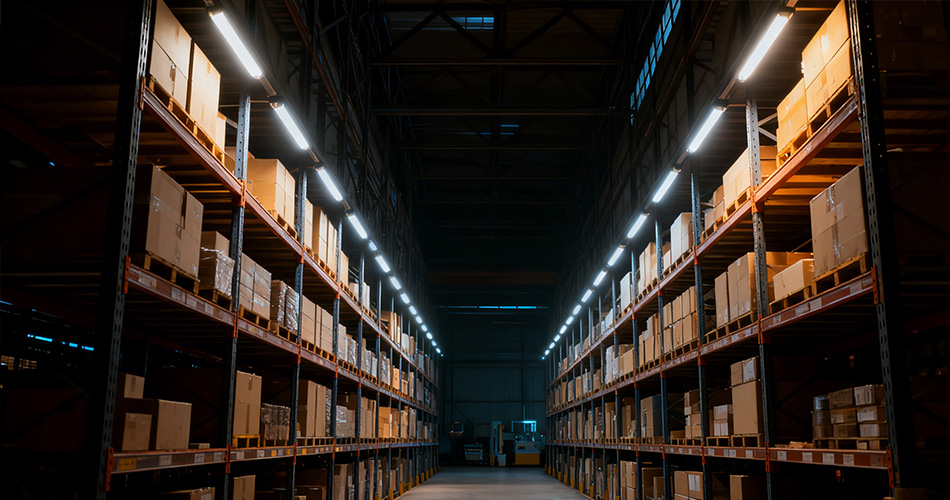
Challenge: High vibration, dust, variable task requirements, and 24/7 production.
Solution: Modular industrial smart lighting (80-200W) with IP65 protection for general areas, IP69K for washdown zones, and ESD-safe variants for electronics assembly. Radar-laser sensors distinguish workers from machinery, adjusting response times.
Key Synergies: MES integration to sync lighting with production batches; anti-glare optics to reduce operator fatigue; digital twin simulation for optimal fixture placement.
Results: 65-75% energy savings, 25% improvement in task efficiency, compliance with IATF 16949/IEC 60598.
Challenge: Ultra-clean environments (ISO Class 1-5), static sensitivity, and low-vibration requirements.
Solution: Low-particulate industrial smart lighting (50-120W) with IP65 sealing (to prevent particle ingress), ESD-safe design (<100V), and flicker-free operation (<0.5% flicker) for micro-assembly.
Key Synergies: Cleanroom monitoring system integration (adjust lighting based on particle count); spectral tuning (400-700nm full spectrum) for wafer inspection.
Results: 30% improvement in defect detection, 70% energy savings vs. fluorescent fixtures, compliance with SEMI S2/S8.
Challenge: High traffic (forklifts, AGVs), dust, large open spaces, and shift-based operations.
Solution: High-bay IP65 industrial smart lighting (150-220W) with wide beam angles (110°) and 25m motion detection range. Portable battery-powered IP65 variants for temporary storage zones.
Key Synergies: WMS/AGV integration (pre-activate lighting corridors); battery backup (180 minutes) for power outages; daylight harvesting for skylit warehouses.
Results: 70-80% energy savings, 30% faster picking times, compliance with ISO 8995-1/OSHA 1910.307.
Challenge: Hygiene requirements, extreme temperatures (-35℃ to 45℃), and frequent washdowns.
Solution: Hygienic industrial smart lighting—IP69K for washdown zones, IP65 for dry storage—with 316L stainless steel housings, Ecolab-certified chemical resistance, and anti-frost optics for cold storage.
Key Synergies: UV-C disinfection integration (activated during non-production hours); occupancy sensors that ignore conveyor belt movement; low-temperature startup (-40℃).
Results: FDA/FSMA compliance, 65-70% energy savings, 40% reduction in cleaning time.
Challenge: Outdoor exposure, dust, high temperature, and remote locations.
Solution: Weather-resistant IP65 industrial smart lighting (120-250W) with wind-load resistance (up to 120km/h) and solar panel compatibility. High-temperature variants (up to 90℃) for steel mill furnaces.
Key Synergies: Microgrid integration (shift to solar/wind power); remote monitoring via LoRaWAN; emergency lighting for power plant safety zones.
Results: 75% energy savings vs. halogen lamps, 85% reduction in maintenance visits, compliance with API RP 540/ISO 2811-1.
Challenge: Corrosive dust, humidity, and proximity to explosive zones.
Solution: ATEX/IECEx-certified smart lighting for high-risk zones, paired with corrosion-resistant IP65 industrial smart lighting (polyurethane coatings) for peripheral areas.
Key Synergies: Gas detection system integration (dim/shut down in hazardous conditions); wireless LoRa connectivity to eliminate wired risks.
Results: Zero explosion-related incidents, 60% energy savings, compliance with OSHA 1910.119.
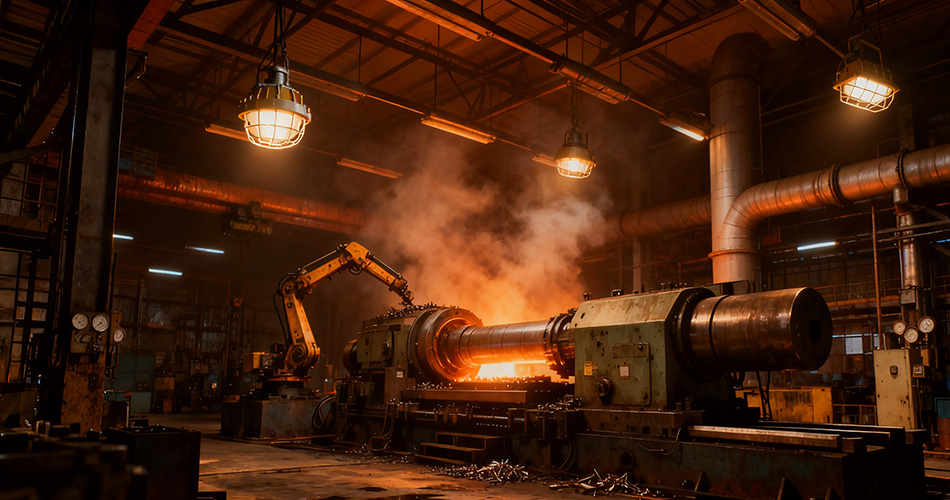
Multi-Parameter Monitoring: Industrial smart lighting acts as "environmental hubs," combining motion, temperature, humidity, dust, and gas sensors to transmit holistic data to industrial IoT platforms—reducing hardware costs by 30%.
Predictive Analytics 2.0: Machine learning models analyze historical activity (shift patterns, equipment schedules) to predict future lighting needs, cutting energy waste by an additional 10-15%.
Autonomous Adaptation: Fixtures self-adjust sensitivity, brightness, and connectivity mode based on real-time environmental conditions (e.g., switch to LoRa in dusty zones with poor 5G signal).
Virtual Optimization: 3D digital twins simulate industrial smart lighting placement, coverage, and energy use before installation—reducing implementation errors by 40% and cutting commissioning time by 25%.
Real-Time Sync: Fixture performance data (illumination levels, energy use, sensor readings) is synced to digital twins, enabling remote adjustments and scenario testing (e.g., "what-if" analysis for new production lines).
Off-Grid Capability: Solar-assisted industrial smart lighting for remote sites (mining camps, pipeline stations) reduces grid dependency by 20-25%. Kinetic energy harvesting (from machinery vibrations) supplements power in high-vibration zones.
Load Balancing: Integration with industrial microgrids to shift lighting power draw during peak grid hours, avoiding utility surcharges and supporting grid stability.
Biological Rhythm Alignment: Tunable color temperature (2700K-6500K) syncs with shift schedules—cool white (5000K) for morning/afternoon shifts to boost alertness, warm white (3000K) for night shifts to reduce fatigue.
Task-Specific Spectral Tuning: UV-C for disinfection, high-R9 (≥85) for color matching (automotive paint shops), and narrow-band lighting for semiconductor wafer inspection.
Industrial Environment Profiling: Map zones by dust/moisture levels, temperature, vibration, and regulatory requirements—prioritize IP65 for general harsh areas, IP69K for washdown, and ATEX/IECEx for hazardous zones.
Regulatory & Rebate Alignment: Verify compliance with region-specific standards (UL 1598A, IEC 60598-2-1, GB 7000.1) and industry requirements (ISO 22000, SEMI S2/S8). Secure pre-approval for energy rebates (US DOE Better Buildings, EU Horizon Europe).
TCO & ROI Analysis: Factor in energy savings (kWh × utility rate), maintenance costs (reduced by 50-70%), rebates, and productivity gains. Typical payback: 12-24 months for high-usage facilities, 24-36 months for remote sites.
Power & Lumen Output: 150-250W (high-bay, 8m+ ceilings), 80-120W (low-bay, 4-8m), 30-60W (task lighting). Prioritize lm/W ≥ 135 for efficiency.
Connectivity: 5G (smart factories), LoRaWAN (remote sites), wired Ethernet (critical zones).
Specialized Features: ESD-safe (electronics), UV-C (food/pharma), anti-glare (transportation hubs), low-temperature startup (cold storage).
Preventive Maintenance: Bi-annual seal integrity checks (IP65/IP69K compliance), annual sensor calibration, and firmware updates. Use cloud alerts to schedule maintenance during planned downtime.
Performance Tuning: Adjust sensor sensitivity, brightness thresholds, and scene controls based on real-world usage—e.g., increase detection range in busy warehouses, reduce standby brightness in low-traffic zones.
Scalability & Upgrades: Choose modular industrial smart lighting that supports daisy-chaining and add-on sensors (e.g., gas detectors, vibration monitors) to adapt to evolving industrial needs.
Deployment: 600 ESD-safe industrial smart lighting fixtures (IP65-sealed) with flicker-free operation and digital twin optimization.
Results: 25% improvement in wafer inspection accuracy, 70% energy savings vs. fluorescent fixtures, compliance with SEMI S2/S8.
Deployment: 1,200 modular IP65 industrial smart lighting fixtures with MES integration and anti-glare optics.
Results: 72% energy savings ($280,000 annual), 25% reduction in assembly errors, compliance with IATF 16949.
Deployment: 3,000 solar-assisted IP65 industrial smart lighting fixtures for outdoor arrays and maintenance zones.
Results: 75% energy savings, 85% reduction in maintenance visits, compliance with ISO 2811-1.
Deployment: 800 hygienic industrial smart lighting fixtures (IP65/IP69K) with UV-C disinfection and cold-storage compatibility.
Results: FDA compliance, 68% energy savings, 35% reduction in cleaning time.
Operational Excellence: 15-30% improvement in task efficiency, 30-40% reduction in workplace accidents, and 60% less unplanned downtime.
Cost Leadership: 60-80% energy savings, 50-70% lower maintenance costs, and eligibility for global industrial rebates.
Sustainability & Compliance: 70-80% carbon emission reduction, alignment with net-zero goals, and full compliance with industry-specific regulatory standards.
Digital Transformation Enabler: Acts as a "digital backbone" for smart factories, enabling integration with AI, IoT, and digital twin technologies—future-proofing industrial facilities for Industry 4.0.
Scalability & Flexibility: Modular design adapts to new production lines, expanded facilities, and emerging industrial trends (e.g., autonomous vehicles, AI-powered quality control).
Industrial smart lighting—with IP65 industrial smart lighting as its rugged workhorse—has transcended traditional illumination to become a critical enabler of modern industrial transformation. By merging environmental resilience, AI intelligence, and seamless connectivity, these systems deliver tangible value across manufacturing, logistics, energy, and hazardous sectors. From semiconductor fabs to solar plants, from food processing to offshore rigs, industrial smart lighting empowers enterprises to achieve operational excellence, reduce costs, and meet sustainability goals—solidifying its role as an indispensable investment for Industry 4.0-ready organizations.


)
)
)
)

+86 15899791249

+86 755 2955 3313


Address: Huafeng No.1 Science and Technology Park, Sanwei, Bao'an District, Shenzhen, Guangdong, China.
