

Time:2025-12-15
Lighting sensor false triggers—unintended activation of lights by non-target factors—pose a persistent challenge to smart lighting systems, undermining energy efficiency, user comfort, and operational reliability. From residential porch lights triggered by passing squirrels to commercial warehouse lights activated by machinery vibration, these inaccuracies are widespread across residential, commercial, and public environments. As smart lighting adoption expands, addressing lighting sensor false triggers has become a critical priority for facility managers, homeowners, and urban planners. This article delves into the root causes of lighting sensor false triggers, explores practical solutions to mitigate them, and outlines optimization strategies for different scenarios, empowering users to maximize the reliability and efficiency of their lighting systems.
Lighting sensor false triggers are not isolated incidents but a common issue driven by the complexity of real-world environments. Unlike controlled indoor settings, outdoor and semi-outdoor spaces—where lighting sensors are most widely used—are filled with variable factors that can confuse sensor detection. These false triggers have far-reaching impacts beyond mere annoyance:
Energy waste is the most direct consequence. Studies show that lighting sensor false triggers can increase energy consumption by 25-40% in commercial buildings, as lights remain on unnecessarily for hours. For municipalities managing public lighting systems (e.g., streetlights, park lights), the cumulative energy waste from false triggers places a significant burden on public budgets. In residential settings, frequent false activation of outdoor security lights disrupts neighbors’ sleep and inflates household electricity bills.
Beyond energy costs, lighting sensor false triggers compromise user experience and safety. In industrial facilities, false triggers may desensitize workers to lighting cues, reducing awareness of genuine safety alerts. In public parks, lights activated by wind-blown debris may create a false sense of occupancy, leading to security gaps when genuine human activity goes undetected. For smart home users, the frustration of constantly adjusting sensors or manually turning off lights erodes confidence in automated lighting systems.

Understanding the root causes of lighting sensor false triggers is essential to developing effective mitigation strategies. The primary causes can be categorized into four key areas:
First, environmental interference. Natural elements such as wind-blown debris (leaves, branches), wildlife (birds, rodents, pets), and weather conditions (heavy rain, snowfall, fog) are the most common triggers. For example, infrared motion sensors—widely used in lighting systems—can mistake the heat signature of a passing cat or warm air currents for human activity. Ambient light sensors may be fooled by sudden changes in sunlight caused by cloud movement, triggering unnecessary lighting activation.
Second, improper sensor installation. Poor placement—such as mounting sensors near heat sources (air conditioners, vents), reflective surfaces (windows, metal walls), or high-traffic non-human areas (air duct openings, machinery)—is a major contributor to false triggers. Incorrect angling, such as pointing a sensor toward a busy street or a tree with moving branches, also leads to unintended activations. In many cases, lighting sensor false triggers stem not from faulty equipment but from suboptimal installation practices.
Third, sensor aging and degradation. Over time, lighting sensors lose detection precision due to component wear, dust accumulation, or lens fogging. Aging infrared sensors may become overly sensitive to minor temperature changes, while ambient light sensors may develop calibration drift, leading to inaccurate light level detection. Without regular maintenance, even high-quality sensors will eventually start generating false triggers.
Fourth, mismatched sensor type and scenario. Using the wrong sensor technology for a specific environment is a common mistake. For example, installing a passive infrared (PIR) sensor—designed for detecting human heat signatures—in a industrial setting with frequent machinery vibration will result in constant false triggers. Similarly, using a high-sensitivity motion sensor in a windy outdoor space without proper filtering will lead to frequent activations from non-human movement.
Addressing lighting sensor false triggers requires a targeted approach, combining proper sensor selection, installation optimization, and environmental adaptation. Below are four proven solutions:
First, select the right sensor type for the scenario. Match sensor technology to the environment’s unique characteristics. For outdoor spaces with frequent wildlife activity, choose microwave motion sensors that can distinguish between small animals and humans based on movement pattern and size. For industrial settings with vibration, opt for dual-technology sensors (combining PIR and microwave) that require both heat and motion detection to activate lights. For indoor spaces with stable conditions, basic PIR sensors or ambient light sensors will suffice, reducing the risk of false triggers.
Second, optimize sensor installation and placement. Follow best practices to minimize environmental interference: mount sensors at least 8-10 feet above the ground to avoid pet and small animal detection; angle sensors downward to focus on target areas (e.g., walkways, doorways) and away from wind-blown vegetation, reflective surfaces, and heat sources; use protective shields (e.g., anti-glare covers, weather shields) to block direct sunlight, rain, or dust. For large spaces, divide the area into zones and use multiple low-sensitivity sensors instead of one high-sensitivity sensor, reducing the risk of false triggers.
Third, implement basic sensitivity and timing adjustments. Most modern lighting sensors offer adjustable sensitivity and auto-off timing, which are simple yet effective tools to reduce false triggers. For outdoor spaces, lower the sensor sensitivity to ignore small movements and set a shorter auto-off delay (30-60 seconds) to minimize energy waste from accidental activations. For indoor spaces like offices, set a longer auto-off delay (5-10 minutes) to avoid frequent on/off cycling while maintaining energy efficiency. Test and fine-tune these settings based on real-world conditions.
Fourth, establish regular maintenance and calibration. Schedule quarterly inspections to clean sensor lenses, check for physical damage, and recalibrate detection settings. Remove dust, dirt, or insect nests that may block or distort sensor detection. For aging sensors, replace components (e.g., lenses, calibration modules) or upgrade to newer models to restore precision. In harsh environments (coastal areas, industrial zones), increase maintenance frequency to account for faster component degradation.
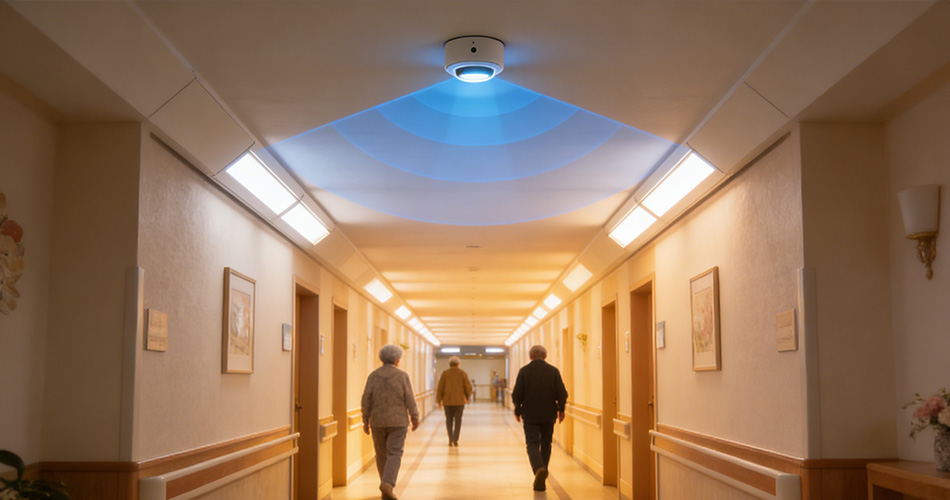
Different environments face unique challenges with lighting sensor false triggers, requiring tailored optimization strategies:
Underground parking garages: These spaces suffer from false triggers due to vehicle movement, air duct airflow, and high humidity. Solution: Install dual-technology (PIR + microwave) sensors set to detect only human-sized objects, mount sensors away from air vents and traffic lanes, and use humidity-resistant sensor enclosures. Adjust auto-off timing to 2-3 minutes to balance energy efficiency and safety.
OutdoorLeisure Square and parks: Wind-blown debris, wildlife, and fluctuating weather conditions are the main triggers. Solution: Use microwave sensors with adjustable size detection (set to ignore objects smaller than 30cm), install protective wind shields, and pair sensors with ambient light sensors to ensure activation only during low-light conditions. Set sensitivity to low-moderate and auto-off delay to 1 minute.
Small commercial stores (cafés, convenience stores): False triggers come from passing pedestrians, shopping cart movement, and air conditioning airflow. Solution: Install PIR sensors with narrow detection angles focused on store entrances and customer areas, avoid mounting near doorways with heavy foot traffic outside, and set sensitivity to moderate. Use "dwell time" settings to activate lights only when customers remain in the store for more than 10 seconds.
Residential backyards and patios: Pets, squirrels, and wind-blown branches are the primary causes. Solution: Choose pet-immune PIR sensors that ignore animals under 25kg, mount sensors at least 2 meters high, and angle them to avoid detecting areas with dense vegetation. Set auto-off delay to 30 seconds and use remote controls to override settings when needed.
As smart lighting technology advances, new innovations are emerging to further reduce lighting sensor false triggers:
One trend is AI-powered intelligent detection. Modern lighting sensors integrate artificial intelligence to learn and recognize patterns of genuine human activity, automatically filtering out non-target triggers (e.g., wildlife, debris). These AI-enabled sensors adapt to changing environmental conditions over time, continuously improving detection accuracy.
Another trend is IoT integration for cross-verification. Sensors are now connecting to other smart devices (e.g., security cameras, door sensors) to confirm occupancy before activating lights. For example, a motion sensor can cross-reference data from a security camera to verify if movement is caused by a human, eliminating false triggers from non-human sources.
Finally, self-calibrating sensors. New sensor models feature automatic calibration capabilities, adjusting detection settings in real time based on environmental changes (e.g., sunrise/sunset, seasonal foliage growth). This reduces the need for manual maintenance and ensures consistent performance year-round.
In conclusion, lighting sensor false triggers are a solvable challenge that requires a combination of proper sensor selection, installation optimization, and regular maintenance. By understanding the root causes and implementing scenario-specific solutions, users can significantly reduce false triggers, minimizing energy waste and enhancing the reliability of smart lighting systems. As AI and IoT technologies advance, the accuracy of lighting sensors will continue to improve, making false triggers a thing of the past. For anyone investing in smart lighting, prioritizing strategies to mitigate lighting sensor false triggers is a strategic choice that delivers long-term energy savings, user satisfaction, and operational efficiency.


)
)
)
)

+86 15899791249

+86 755 2955 3313


Address: Huafeng No.1 Science and Technology Park, Sanwei, Bao'an District, Shenzhen, Guangdong, China.
