

Time:2026-05-19
Commercial facility design is changing fast. Modern offices now use hybrid work models. At the same time, companies must follow strict energy laws. Because of these changes, building automation is no longer optional. It is now a standard requirement.
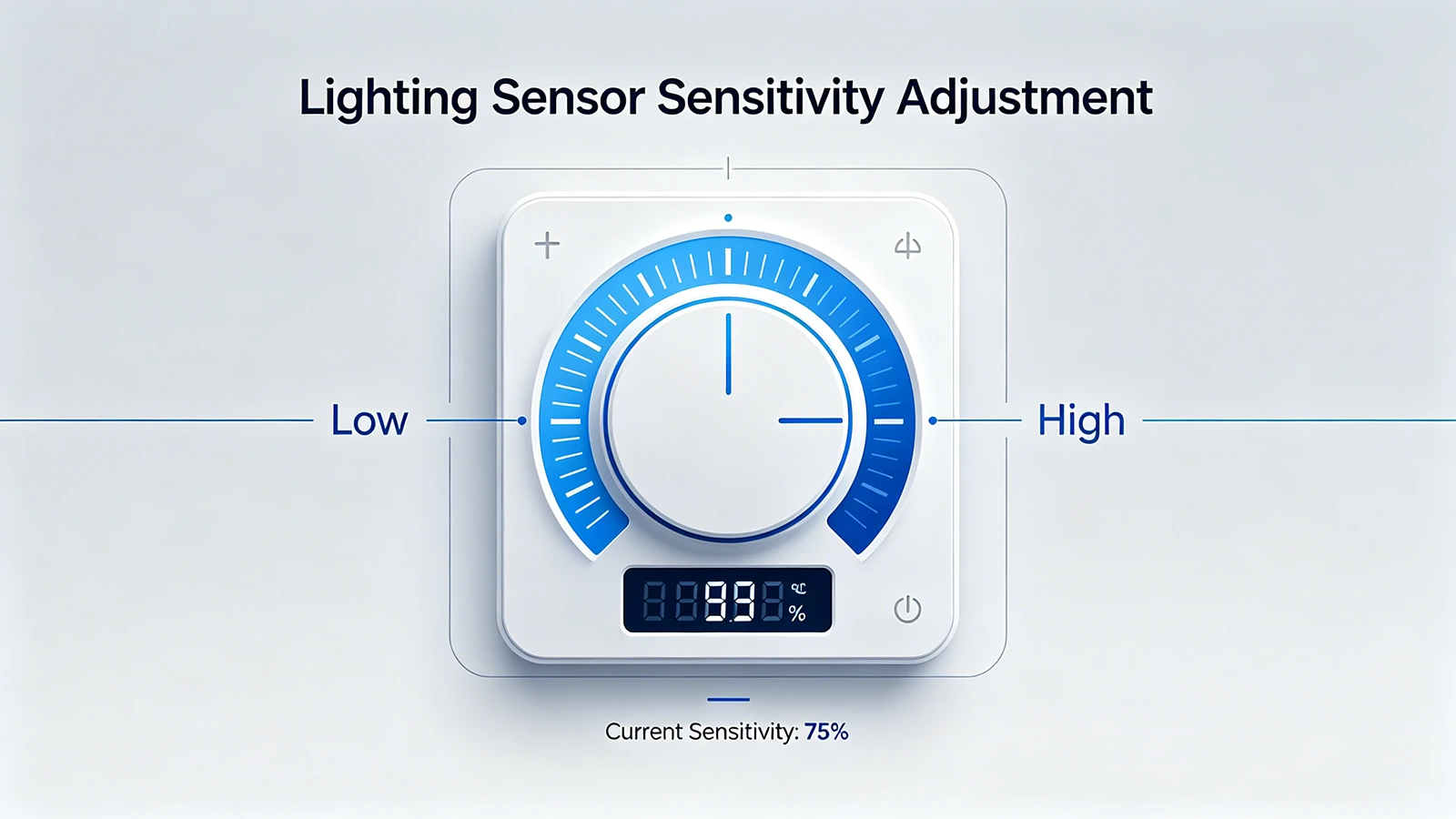
However, installing a smart lighting system is only your first step. The real challenge emerges over time. You must maintain and fine-tune the system network over time.Among all maintenance tasks, lighting sensor sensitivity adjustment is the most critical. It directly affects your power bills and your team's workload. Poorly configured sensors cause constant false triggers and tenant complaints. They also result in substantial energy waste.
By upgrading to modern wireless systems, facility teams can change these settings safely from the floor. This clean workflow removes the need for ladders, avoids tenant disruption, and cuts field labor costs.
Building operators must look closely at the problems caused by wrong sensor setups. When a sensor leaves the factory, it uses a default setting. This preset is built for an average room. However, modern commercial spaces are rarely average.
When sensor detection levels are too high, the lights react to non-human movement. Shifting air from HVAC vents can trigger the system. Moving shadows from trees or small pests can also turn the lights to full brightness. These false triggers ruin the financial payback of an office lighting retrofit. They keep your utility bills unnecessarily high.
On the other hand, setting detection levels too low creates safety hazards. Workers might walk down dark warehouse aisles or enter dim stairwells. If the sensor fails to see them quickly, they are left in the dark.
This problem leads to immediate complaints. An energy manager must then send a technician to fix the issue. This creates a costly cycle of reactive maintenance calls.
Historically, managing a lighting control system required heavy physical labor. In older systems, adjusting a sensor was a slow process. A technician had to climb a high ladder, open a plastic cover, and turn a tiny dial with a screwdriver.
Imagine a facility with 500 sensors across a 100,000-square-foot warehouse. If the ceilings are 30 feet high, physical adjustments become a logistical nightmare. The cost of the work order increases fast. You are not just paying for the technician's time. You also have to rent expensive scissor lifts and block active production zones. This downtime slows down your core business.
By using modern BLE commissioning tools, field crews can handle a lighting sensor sensitivity adjustment wirelessly. Technicians can stand safely on the ground. They connect to the sensor using secure radio signals and update the settings via a tablet in seconds. This modern workflow simplifies building operations and protects your budget.
For a facility network to run at peak efficiency, individual devices cannot work alone. They must connect directly to a robust web of NLC certified lighting (Networked Lighting Control).
Through bluetooth mesh commissioning, every sensor, switch, and lamp becomes an intelligent node. When an installer updates a sensor via a smartphone, those new rules copy across multiple devices instantly.
Wireless Grouping: You can link a single motion sensor to twenty different light fixtures without wires.
Easy Re-Grouping: If an office layout changes, you can adjust the sensor boundaries using software. There is no need to route new low-voltage wiring through the ceiling.
Dual-Tech Logic: You can combine heat detection with sound detection. This ensures the central controller only reacts to real human presence.
This clean digital approach ensures your iot lighting control cloud receives accurate data.
The benefits of remote lighting sensor sensitivity adjustment change based on your facility type.
Severe environmental factors are inherent to high-bay storage hubs. Over time, dust buildup on a lens can lower a sensor's range.
With a wireless network, an energy manager can boost sensor sensitivity remotely. You can adjust an entire aisle from your desk to fix dust issues. This proactive step keeps the space safe and delays physical cleaning rounds.
Modern hybrid offices require quiet and comfort. If a sensor turns the lights off while an employee is sitting still during a video call, productivity drops.
Using wireless tools, building managers can extend hold-times easily. You can raise motion sensitivity thresholds for specific desks. This ensures total comfort without changing the settings in nearby hallways.
Cold storage zones present an extremely unforgiving environment for hardware. Constant temperature changes create thick condensation. This moisture can easily damage standard sensors.
By deploying rugged sensors with a high linear smart sensor ip rating, you protect the internal parts from water. Furthermore, because adjustments happen wirelessly, technicians never break the waterproof factory seals to fix settings.
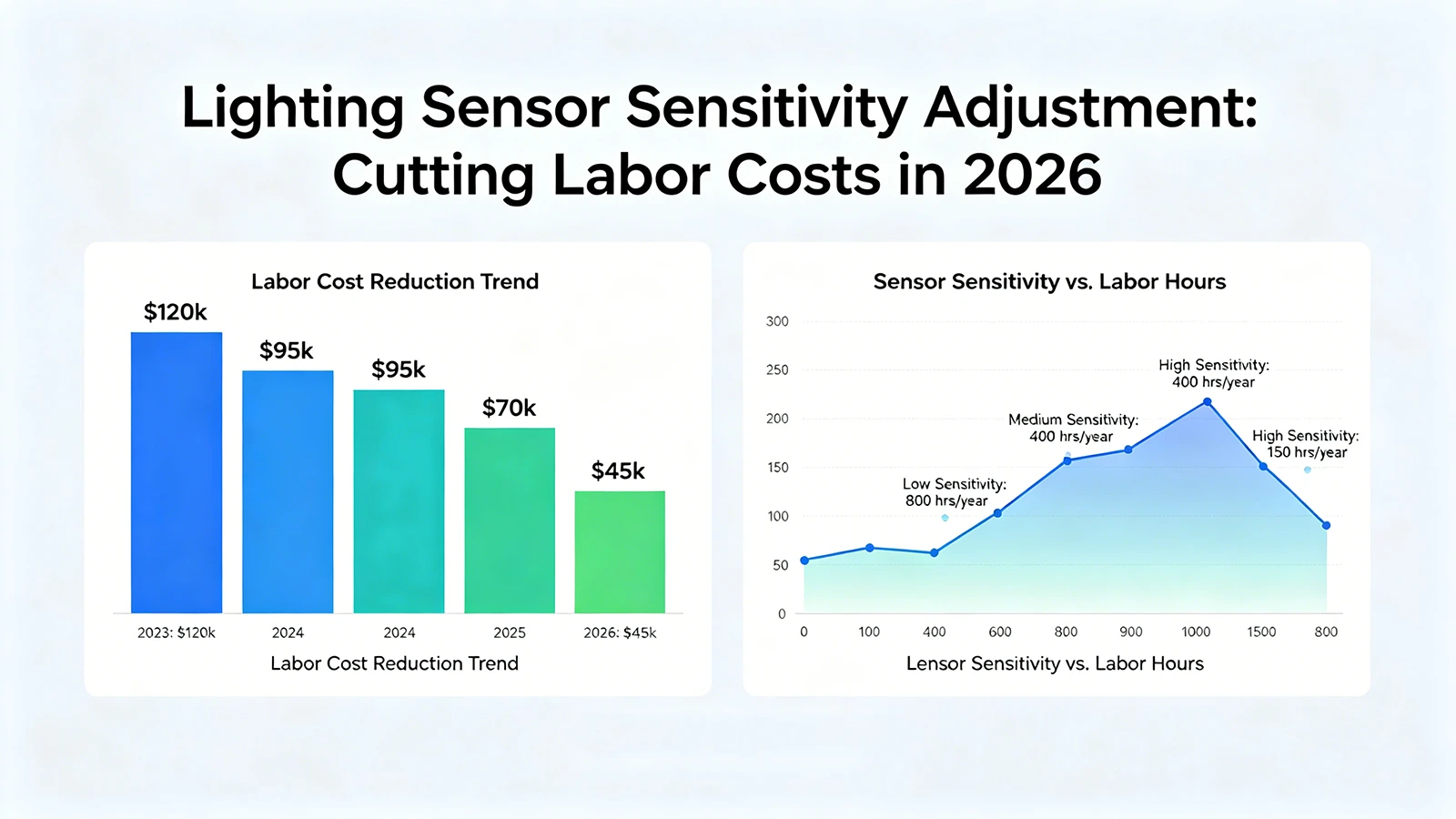
When building owners calculate the payback of an office lighting retrofit, they often look only at the power bill. While energy savings are huge, the drop in maintenance labor is just as valuable.
| Operational Fact | Old Manual Sensor Networks | Modern Wireless Mesh Networks |
| Tools Needed | Heavy ladders, lifts, screwdrivers | Mobile smartphone or tablet |
| Time Per Node | 15 to 30 minutes per fixture | Less than 10 seconds via software |
| Business Downtime | High (must block off rooms or aisles) | Zero (changes happen in the background) |
| Adjustment Precision | Approximate (coarse mechanical dials) | Exact (precise percentage targets) |
By moving to an advanced wireless lighting control system, corporate networks save thousands of dollars on maintenance calls. This makes wireless hardware upgrades the best option for a forward-thinking manager.
Commercial building trends now point toward total data integration. The humble light sensor has become the primary nervous system of the property. Modern sensors track more than basic occupancy. They gather rich space-use data, monitor ambient daylight, and feed real-time metrics to central dashboards.
Ensuring precise lighting sensor sensitivity adjustment protects your entire data pipeline. Clean sensor inputs allow your central controller to run advanced software routines. This keeps your facility efficient, compliant, and ready for tomorrow.
A: Yes. Our BLE commissioning tools talk to the sensors using local Bluetooth signals. You can perform a full lighting sensor sensitivity adjustment in concrete basements or deep warehouses without cell service or Wi-Fi.
A: LumiEasy sensors use smart digital filtering. If an air conditioning vent causes minor background movement, you can use our app to adjust the threshold. This tells the device to ignore the vent but remain responsive to human heat.
A: LumiEasy hardware is optimized for wireless NLC certified lighting and Bluetooth Mesh. However, we offer specialized power packs. These allow our wireless sensors to act as a central controller upgrade for legacy wired packs during a commercial lighting retrofit.
A: For spaces where employees sit still, we recommend setting the initial sensitivity to 80% with a 15-minute hold time. If lights turn off too early, an energy manager can use our lumieasy tools to increase the sensitivity in 5% steps until it is perfect.


)
)
)
)

+86 15899791249

+86 755 2955 3313


Address: Huafeng No.1 Science and Technology Park, Sanwei, Bao'an District, Shenzhen, Guangdong, China.
