

Time:2026-04-08
In 2026, the global building market has reached a clear consensus: the best technology is the kind you cannot see. We call this the era of "hidden technology." Whether you are walking through the lobby of high-end hotels, working in a modern open-plan office, or browsing luxury shops, the aesthetic is the same—clean, straight, and continuous lines of light.
For years, the biggest enemy of this minimalist look was the sensor. Old, bulky sensors looked like a bump or a "pimple" on a smooth light fixture, ruining the architectural vision. That is why the industry is moving rapidly toward linear smart sensors. These slim devices keep your lights looking sharp while adding the massive power of Networked Lighting Controls (NLC).
For light makers and builders, the goal is simple but vital: add smart sensors into narrow lights without breaking the design. At the same time, they need a way to cut the high cost of manual labor in Western markets.
The main goal of a linear smart sensor is its physical shape. In the past, designers had to choose between a smart building and a beautiful building. Standard "dome" sensors were too wide for the slim aluminum profiles that are popular today.
A "slim design" is more than just a look—it is a must-have for modern lights. By making linear smart sensor dimensions very small—often as narrow as 15mm to 18mm—we can hide them inside the light itself.
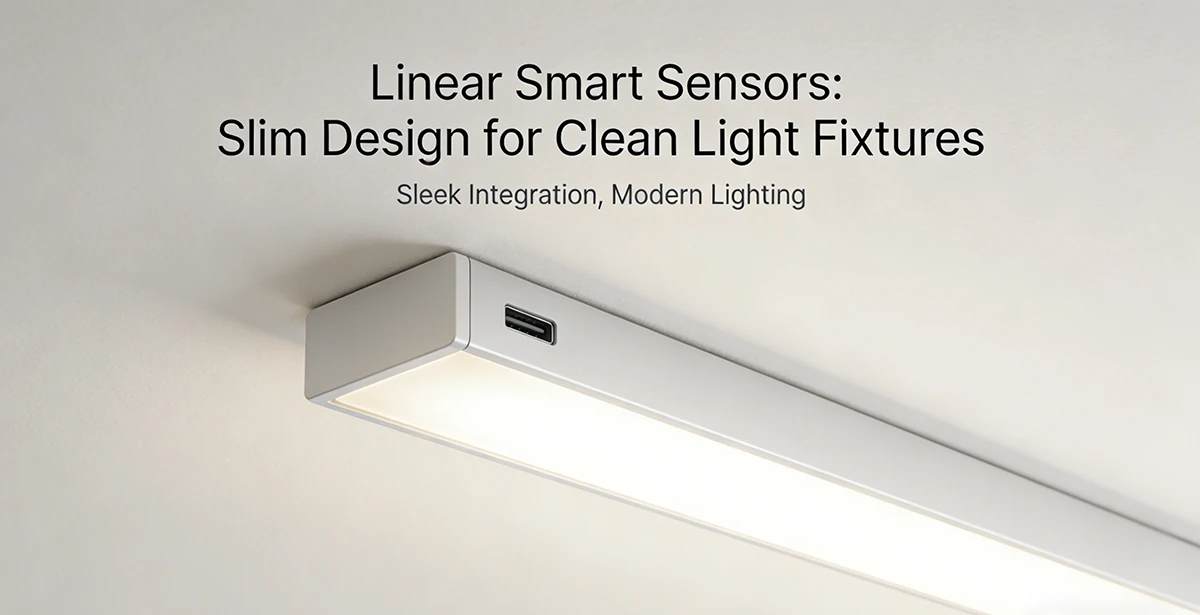
This is what we call seamless fixture integration. It means the sensor becomes a natural part of the light fixture’s body. It is no longer an extra plastic box stuck on the outside with visible wires. When the sensor is built-in, the light fixture maintains its clean "architectural" feel. This allows architects to specify smart controls in high-visibility areas where they previously refused to use sensors due to their ugly appearance.
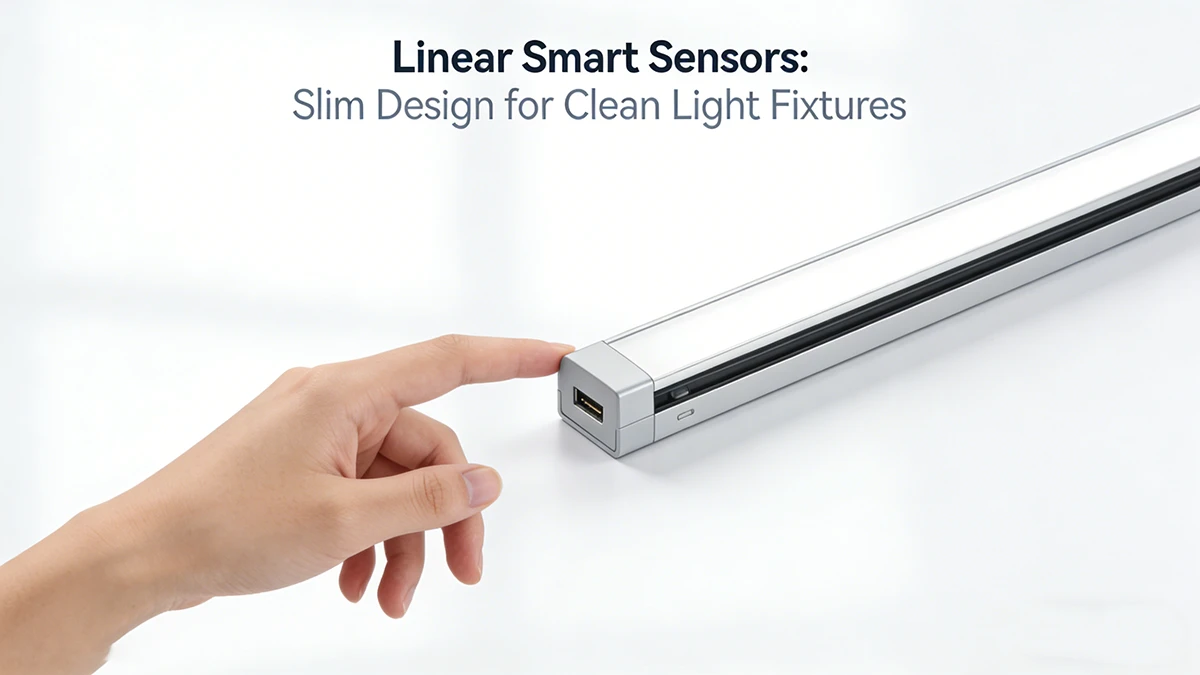
In 2026, being flexible with your hardware is the key to winning projects. Engineers must check linear smart sensor dimensions long before the first fixture is built to make sure everything fits the narrow housing.
Most high-power linear sensors are now made to fit inside standard light tracks, such as the common 35mm or 50mm wide profiles.
Length: Usually between 40mm and 80mm. This length allows enough room for the high-gain antenna and the infrared lens without being too long to fit between LED boards.
Width: Made specifically for slim tracks, staying within the 12mm–18mm range.
Depth: The profile is kept very low. This is critical because if a sensor is too tall, it will block the light from the LEDs, creating dark spots or shadows on the diffuser lens.
For a recessed linear lighting sensor, the challenge is even greater. The sensor must stay perfectly level with the ceiling line. LumiEasy sensors use simple "snap-in" clips that grip the edge of the aluminum extrusion. This keeps the sensor flush and hidden.
Even though it is tucked away, the engineering ensures it still has a clear "view" of the room. This allows the internal digital lens to catch any movement the moment someone enters the space, ensuring the lights react instantly.
A common myth in the lighting world is that a slim sensor has a weak range. Some think that because the lens is small, the coverage must be small too. In 2026, that is simply not true. The linear sensor detection pattern is now much better thanks to new digital chips and microwave "Doppler" technology.
Since linear lights are mostly used in long hallways and office aisles, the sensor is tuned to focus on these specific areas rather than a wide, wasteful circle.
Side detection: The sensor is wide enough to catch someone walking in from a side door or stepping out of an elevator.
Lengthwise detection: This is where linear sensors shine. The detection reaches far ahead down the hall. This ensures the lights turn on well before you get there, creating a "path of light" that feels natural and safe.
No false triggers: We have all seen lights that turn on because of a breeze. New LumiEasy sensors use digital masking to ignore wind from air vents or vibration from nearby machines.
Lights in modern shops and industrial warehouses work hard. They face dust, humidity, and long hours. A sensor’s IP rating and how easy it is to install will decide your total ROI (Return on Investment).
Whether it is a dusty warehouse or a damp parking garage, the linear smart sensor IP rating is a deal-breaker. Most LumiEasy linear sensors are rated IP65 or IP66. We use ultrasonic welding and special silicone seals to keep out dust and water. This protects the delicate 12V/24V DC parts inside, ensuring the sensor lasts as long as the LEDs—usually 50,000 to 100,000 hours.
In the US and European markets, the cost of a licensed electrician is at an all-time high. We redesigned linear smart sensor installation to beat these high costs.
Plug-and-Play: We stopped using complex, dangerous high-voltage wiring. Instead, we use simple 4-pin low-voltage connectors.
Factory Ready: We help light makers build sensors into the fixtures before they ship. This means when the light arrives at the job site, the worker only has to hang it and plug it in. There is no "on-site" sensor wiring required.
Easy Manuals: We know that paper manuals get lost on construction sites. Every LumiEasy unit has a permanent QR code printed on the side. A technician can scan it to see the linear smart sensor manual, wiring diagrams, and setup videos on their phone in seconds.
These ultra-slim sensors transcend the basic function of illumination control. In 2026, they serve as a distributed sensory network for the modern built environment. By integrating into a Bluetooth Mesh or DALI-2 ecosystem, they harvest high-fidelity data streams vital for Enterprise-Level Smart Building analytics.
By monitoring occupancy frequency and dwell times, facility managers can implement data-driven resource allocation. For instance, if analytics confirm a corridor remained unoccupied during a shift, maintenance teams can bypass that zone. This shift from static schedules to occupancy-based maintenance significantly enhances operational efficiency and reduces overhead.
Daylight Harvesting has evolved from an optional feature to a global regulatory standard. These integrated sensors continuously measure ambient photometric levels from architectural glazing. They instruct the LED drivers to execute linear dimming curves as natural light increases. This automated adjustment yields an additional 20% to 30% reduction in aggregate energy consumption beyond standard occupancy-based savings.
Within commercial retail environments, these sensors track macro consumer movement vectors. This telemetry is used to generate comprehensive Heat Maps, visualizing where customers linger most. Retail strategists leverage this empirical data to optimize floor layouts, ensuring high-margin merchandise is positioned within verified high-traffic "hot zones."
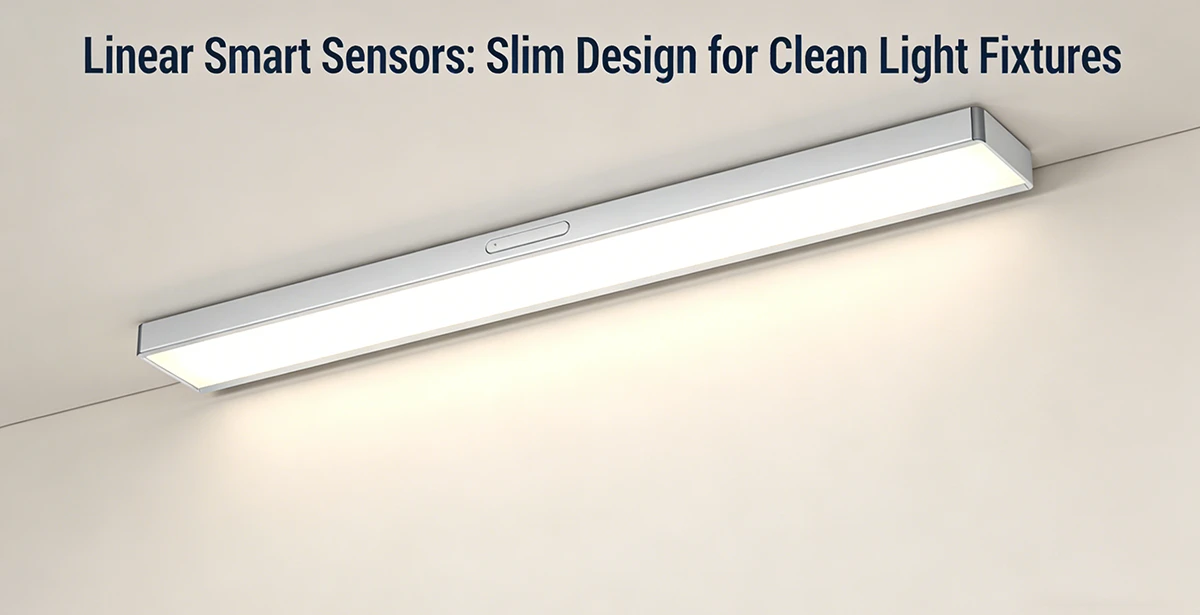
As modern design stays focused on clean, smooth lines, the linear smart sensor is the best way to mix high-end style with high-tech function. By focusing on a slim design, LumiEasy makes sure the "brains" of the building stay hidden while they work.
For lighting pros, moving to integrated sensors is no longer an option—it is the new standard for 2026. By choosing the right dimensions, IP ratings, and NLC features, you make sure your project is ready for a data-driven world.
CTA: Want to add smart tech to your lights without ruining the design? Contact our team today for an easy integration plan. Let us show you how we cut install time from 90 minutes to 60 seconds.
The slim design allows us to build sensors into the light at the factory. This means no extra boxes, no extra conduit, and no extra wiring on-site. It turns a long, expensive installation into a simple "click-in" task. In big projects, this can cut your labor costs by up to 65%.
Most LumiEasy linear sensors use low-voltage 12V/24V DC input. They get their power directly from the light's LED driver. This makes them safer and easier to handle. They work perfectly with 0-10V Dimming, DALI-2, or Bluetooth Mesh to match any smart building system.
Yes! Even though they are small, they work as powerful IoT hubs. They track how people use a space, create heat maps for managers, and monitor energy use in real-time. This data helps the building run better, reduces carbon footprints, and saves significant money every month.
Absolutely. Through the linear smart sensor manual or a simple smartphone app, you can adjust the sensitivity, the "hold time" (how long the light stays on), and the dimming levels. This allows you to customize the sensor for a quiet office or a busy warehouse aisle without changing the hardware.
Related news
2025 NLC System Certification Requirements & Linear Sensor Guide | LumiEasy
Linear Microwave Smart Sensor Type B
Linear Microwave Smart Sensor Type D


)
)
)
)

+86 15899791249

+86 755 2955 3313


Address: Huafeng No.1 Science and Technology Park, Sanwei, Bao'an District, Shenzhen, Guangdong, China.
