

Time:2025-12-25
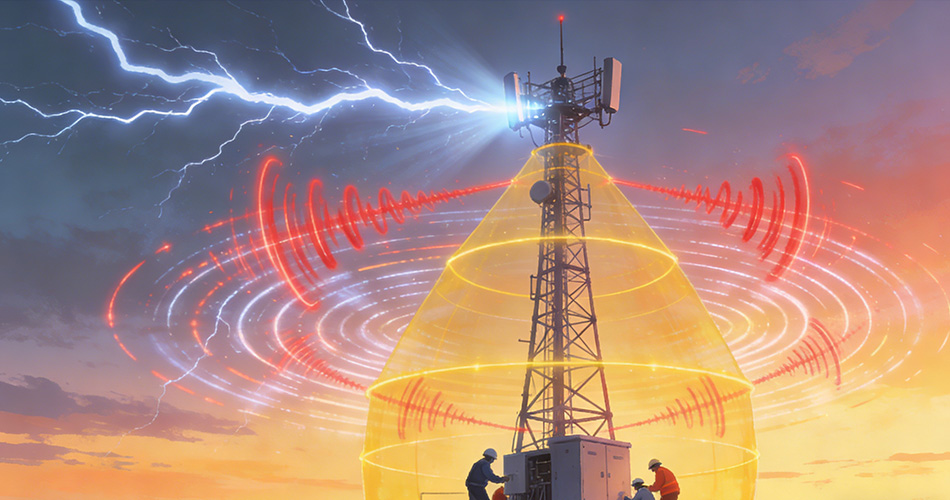
In the era of widespread digital transformation, remote electronic systems have become the backbone of industries such as smart grid, industrial automation, and precision agriculture. However, the increasingly congested radio frequency (RF) spectrum and the proliferation of high-power RF devices have made long-range RF interference a major threat to system stability. Long range RF interference immunity, defined as the ability of electronic systems to resist the adverse effects of distant RF interference sources while maintaining normal functionality, has emerged as a critical performance indicator for remote electronic systems. Unlike basic anti-interference technologies that only address short-range interference, long range RF interference immunity focuses on mitigating the impact of far-field RF signals, ensuring reliable data transmission and operation in complex electromagnetic environments. For system designers, facility operators, and industry decision-makers, prioritizing long range RF interference immunity is essential to avoid operational disruptions, data loss, and safety risks. This article explores the core value, cross-industry applications, implementation guidelines, and future trends of long range RF interference immunity, highlighting its indispensable role in safeguarding modern remote electronic systems.
Traditional remote electronic systems lack effective long range RF interference immunity, leading to severe operational challenges in complex electromagnetic environments. Most conventional systems adopt basic filtering or shielding technologies that are ineffective against distant high-power RF interference sources, such as communication base stations, radar systems, and industrial transmitters. This ineffectiveness results in a range of issues, including signal distortion, increased data error rates, and even complete communication interrupt. For example, in smart grid remote monitoring systems, long-range RF interference can cause incorrect reading of power consumption data, affecting load scheduling and grid stability.
Another critical drawback is the lack of adaptive anti-interference capabilities. Traditional systems use fixed anti-interference parameters that cannot adjust to changes in the electromagnetic environment. When the type or intensity of long-range RF interference changes, the system’s anti-interference performance degrades significantly, leading to unpredictable operational risks. In industrial automation remote control systems, such degradation can cause misoperation of production equipment, resulting in product quality issues and safety hazards. Additionally, the integration of multiple wireless protocols in modern remote systems increases their susceptibility to long-range RF interference, as different protocols may share overlapping frequency bands. These pain points highlight the urgent need for enhanced long range RF interference immunity in modern remote electronic systems.

Long range RF interference immunity delivers three key advantages that ensure the stable operation of remote electronic systems in complex electromagnetic environments:
- Reliable long-distance data transmission: By effectively suppressing distant RF interference signals, long range RF interference immunity ensures the integrity and accuracy of data transmitted between remote devices and control centers. This reliability is critical for applications that require real-time and accurate data, such as precision agriculture’s remote sensor networks and oil and gas pipeline monitoring systems. Even in areas with dense RF interference sources, systems with strong long range RF interference immunity can maintain stable data transmission, avoiding costly operational disruptions.
- Enhanced system operational stability: Long range RF interference immunity prevents interference-induced malfunctions, such as false alarms, device shutdowns, and incorrect command execution. In critical infrastructure systems, such as smart grids and transportation signal control systems, this stability is directly related to public safety and economic security. For example, in railway remote dispatching systems, strong long range RF interference immunity ensures that train control signals are not disrupted by distant RF sources, preventing accidents.
- Adaptability to dynamic electromagnetic environments: Advanced long range RF interference immunity technologies, such as adaptive filtering and frequency hopping, enable systems to adjust their anti-interference strategies in real time according to changes in the electromagnetic environment. This adaptability allows systems to maintain optimal performance even as new RF interference sources emerge or existing ones change intensity. For mobile remote systems, such as drones and remote sensing vehicles, this capability is particularly valuable as they move through diverse electromagnetic environments.
Long range RF interference immunity plays a vital role in various industries that rely on remote electronic systems, delivering targeted value in critical applications:
- Smart grid remote monitoring and control: Smart grids require long-distance communication between numerous remote terminals, such as smart meters and substation monitors, and control centers. Long range RF interference immunity ensures that power consumption data, equipment status information, and control commands are transmitted reliably, even in areas with strong RF interference from communication base stations and industrial equipment. This reliability supports efficient grid management, load balancing, and rapid response to power outages.
- Industrial IoT (IIoT) remote automation: In large-scale industrial parks and manufacturing facilities, IIoT systems rely on remote communication to connect sensors, controllers, and actuators. Long range RF interference immunity prevents interference from industrial transmitters, welding equipment, and other high-power devices, ensuring the smooth operation of automated production lines. For example, in remote robotic welding systems, it ensures that control signals are not disrupted, maintaining welding precision and production efficiency.
- UAV remote sensing and surveying: Drones used for aerial surveying, agricultural monitoring, and infrastructure inspection operate in diverse electromagnetic environments. Long range RF interference immunity ensures that the remote control signals and data transmission between the drone and ground station are not affected by distant radar, satellite, or communication signals. This ensures flight safety and the accuracy of collected data, which is critical for applications such as disaster assessment and crop yield estimation.
- Marine and coastal remote monitoring: Marine remote monitoring systems, such as buoy sensors and coastal surveillance cameras, face complex RF interference from maritime communication, radar, and shipboard electronic equipment. Long range RF interference immunity ensures that environmental data, such as water temperature, wave height, and weather conditions, are transmitted reliably to coastal control centers. This supports maritime safety, environmental protection, and coastal disaster early warning.
To effectively enhance long range RF interference immunity in remote electronic systems, follow these scientific implementation guidelines:
- Optimize system design with anti-interference in mind: Incorporate long range RF interference immunity into the early stages of system design. Select appropriate communication frequencies and protocols that are less susceptible to long-range interference, such as spread spectrum communication technologies. Use high-quality RF components, such as low-noise amplifiers and high-selectivity filters, to improve the system’s ability to distinguish desired signals from interference.
- Adopt advanced anti-interference technologies: Implement adaptive anti-interference technologies, such as adaptive filtering, frequency hopping, and interference cancellation, to enhance the system’s adaptability to dynamic electromagnetic environments. These technologies can automatically detect and suppress long-range RF interference, ensuring stable operation without manual intervention. For critical systems, consider redundant communication paths to further improve reliability.
- Enhance physical shielding and grounding: Use effective shielding materials to enclose sensitive components and cables, preventing the penetration of long-range RF interference. Ensure proper grounding of the system to reduce the impact of interference-induced voltage spikes. For outdoor remote devices, design enclosures with electromagnetic shielding capabilities to protect internal electronics from external RF interference.
- Conduct rigorous testing and validation: Perform comprehensive testing of long range RF interference immunity in simulated and real-world electromagnetic environments. Use professional RF testing equipment to evaluate the system’s performance under various interference conditions, such as different frequencies, intensities, and distances of interference sources. Continuously optimize the system based on test results to ensure it meets the required anti-interference standards.
Driven by technological advancements and the growing complexity of electromagnetic environments, long range RF interference immunity is evolving toward greater intelligence and integration:
- AI-driven intelligent anti-interference: Future systems will integrate artificial intelligence (AI) algorithms to predict and identify long-range RF interference sources in real time. AI will enable systems to automatically adjust anti-interference strategies based on interference characteristics, improving the efficiency and accuracy of interference suppression. For example, AI can learn the frequency and intensity patterns of interference sources and proactively switch to less affected communication channels.
- Integration with 6G and advanced communication technologies: As 6G technology matures, long range RF interference immunity will be integrated with advanced communication features such as ultra-wideband and massive MIMO. This integration will enhance the system’s ability to resist long-range interference while supporting higher data rates and lower latency, meeting the needs of emerging applications such as autonomous vehicles and remote surgery.
- Standardization and certification systems: The industry will establish more comprehensive standards and certification systems for long range RF interference immunity, ensuring consistent performance across different products and applications. These standards will help manufacturers design and produce more reliable remote electronic systems and provide clear guidelines for users to select appropriate products based on their specific needs.
In conclusion, long range RF interference immunity is a critical factor in ensuring the stable and reliable operation of modern remote electronic systems. By addressing the pain points of traditional systems in complex electromagnetic environments, it delivers significant value across smart grids, industrial automation, UAV applications, and marine monitoring. Through scientific system design, advanced anti-interference technologies, and rigorous testing, organizations can effectively enhance the long range RF interference immunity of their remote systems. As AI and 6G technologies advance, long range RF interference immunity will become even more intelligent and integrated, playing an increasingly important role in supporting the digital transformation of various industries. For anyone involved in the design, deployment, or operation of remote electronic systems, prioritizing long range RF interference immunity is a strategic choice to ensure operational stability, safety, and competitiveness.


)
)
)
)

+86 15899791249

+86 755 2955 3313


Address: Huafeng No.1 Science and Technology Park, Sanwei, Bao'an District, Shenzhen, Guangdong, China.
