

Time:2025-12-31
Meeting rooms are essential hubs for collaboration, discussion, and decision-making in commercial buildings, co-working spaces, and corporate offices. However, a common inefficiency plagues these spaces: equipment and lighting often remain on for hours after meetings end, leading to massive energy waste and increased operational costs. Meeting room auto-off sensor technology, a specialized intelligent sensing solution, addresses this issue by automatically detecting unoccupied states and triggering the shutdown of lighting, HVAC, audio-visual (AV) equipment, and other devices. Beyond energy conservation, this technology simplifies facility management, enhances space utilization transparency, and supports sustainable building goals. For facility managers, office administrators, and sustainability officers, adopting meeting room auto-off sensor technology is a strategic step toward optimizing resource usage and creating more efficient work environments. This article explores the core value, targeted application scenarios, implementation guidelines, and future trends of meeting room auto-off sensor technology, highlighting its indispensable role in modern meeting space management.
Traditional meeting room management relies heavily on manual oversight or basic schedulin
g tools, which fail to address the problem of post-meeting energy waste effectively. A primary limitation is the lack of real-time occupancy monitoring: employees often forget to turn off lights, projectors, or air conditioners when leaving, and facility staff cannot patrol every room continuously to rectify this. Studies show that unoccupied meeting rooms with equipment left on account for 15-25% of total office energy consumption, a significant drain on resources.
Another critical flaw is the inefficiency of manual intervention. Even with regular patrols, staff may miss unoccupied rooms during peak hours, and the time spent checking and turning off devices adds to labor costs. Additionally, traditional scheduling systems do not sync with real occupancy status—reserved rooms may remain unused, with equipment running idle, while available rooms are overlooked due to outdated booking data. These limitations not only increase operational expenses but also hinder progress toward carbon neutrality goals. Meeting room auto-off sensor technology resolves these pain points by automating occupancy detection and device shutdown, transforming passive management into proactive optimization.
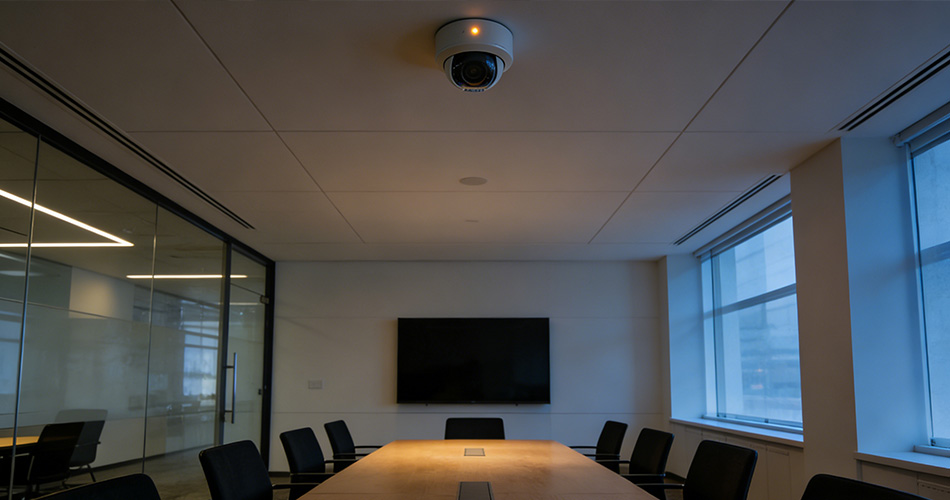
Meeting room auto-off sensor technology delivers four key advantages that redefine meeting room efficiency and sustainability:
- Intelligent energy conservation: By accurately detecting when a meeting room becomes unoccupied (through motion, acoustic, or infrared sensing), the technology automatically shuts off connected devices after a preset delay. This eliminates energy waste from idle equipment, reducing meeting room energy consumption by 30-40% on average. For large office buildings with dozens of meeting rooms, this translates to substantial cost savings and reduced carbon footprints.
- Seamless multi-device linkage: Unlike simple motion sensors that only control lighting, advanced meeting room auto-off sensor technology integrates with AV systems, HVAC, and power outlets. It can shut down projectors, screens, speakers, and air conditioners simultaneously, ensuring no device is left running. This integration also simplifies user experience—employees do not need to manually turn off multiple devices, reducing operational friction.
- Data-driven space management: The technology collects real-time data on meeting room occupancy duration, equipment usage, and energy consumption. Facility managers can use this data to identify underused rooms, adjust booking policies, and optimize room layout or equipment configuration. For example, if a small meeting room is rarely used, it can be repurposed into a collaboration pod, improving overall space utilization.
- Low-interference and reliable detection: Designed specifically for meeting scenarios, the sensors use multi-modal detection (e.g., combining motion and acoustic sensing) to avoid false triggers. They can distinguish between active meetings (with talking, movement) and temporary absences (e.g., a single attendee stepping out), ensuring devices are not turned off prematurely. This reliability ensures uninterrupted meeting experiences while maintaining energy efficiency.
Meeting room auto-off sensor technology excels in scenarios where energy efficiency, space management, and user convenience are prioritized, delivering unique value across various meeting room types:
- Small to Medium-Sized Conference Rooms: These are the most common meeting spaces, often used for team discussions or client meetings. Auto-off sensors ensure that lighting, AV equipment, and air conditioners are turned off immediately after the meeting ends, preventing long periods of idle energy use. The low-interference design avoids disrupting short breaks or brief absences during meetings.
- Video Conference Dedicated Rooms: Video conference rooms are equipped with high-power AV equipment (e.g., cameras, microphones, large screens) that consume significant energy when idle. Meeting room auto-off sensor technology detects the end of video conferences (via reduced motion, muted audio, or device status) and shuts down all AV equipment, reducing energy waste and extending device lifespan.
- Multi-Purpose Meeting Halls: Large meeting halls used for seminars, workshops, or company events often have complex lighting and HVAC systems. Auto-off sensors integrate with these systems to shut down zones progressively as attendees leave, ensuring energy is not wasted on unoccupied areas. Data on occupancy duration also helps optimize event scheduling and space allocation.
- Co-Working Space Meeting Rooms: Shared meeting rooms in co-working spaces have high turnover rates, making manual management impractical. Auto-off sensors automatically reset the room (turn off all devices) after each booking, ensuring a clean, energy-efficient space for the next user. They also provide occupancy data to co-working operators to adjust pricing or room availability based on demand.
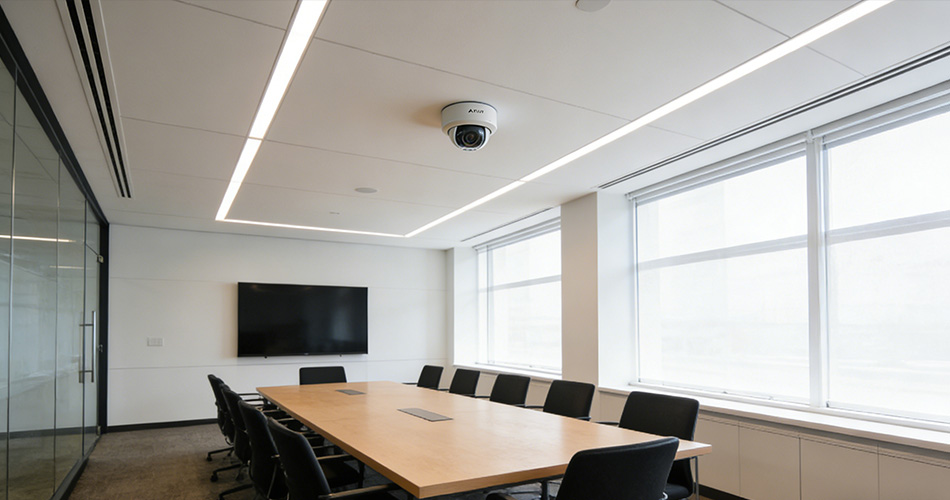
To maximize the effectiveness of meeting room auto-off sensor technology, follow these scenario-specific implementation guidelines:
- Select appropriate sensing technologies based on room characteristics: For small meeting rooms with few obstructions, motion sensors (PIR or microwave) are sufficient. For large or partitioned meeting halls, use multi-modal sensors (motion + acoustic) to ensure full coverage. For video conference rooms, integrate sensors with AV systems to detect device activity (e.g., screen on/off status) for more accurate occupancy.
- Optimize sensor placement and delay settings: Install sensors in central, unobstructed locations (e.g., ceiling centers) to cover the entire room. Adjust the auto-off delay based on meeting habits—use a 5-10 minute delay for standard meetings to account for temporary absences, and a shorter 2-3 minute delay for high-turnover co-working spaces. Avoid placing sensors near entryways to prevent false triggers from passing traffic.
- Integrate with existing meeting room management systems: Connect the auto-off sensors to the office’s booking software and building management system (BMS). This allows the sensor to sync with booking schedules—e.g., keeping devices on if a meeting is running late, or automatically turning them on before a scheduled booking. Integration with BMS also enables centralized monitoring of energy consumption across all meeting rooms.
- Ensure user transparency and ease of use: Install visual or audio indicators (e.g., a small LED light) to inform users that the auto-off system is active. Provide a manual override button for extended meetings or special cases (e.g., a presentation that runs overtime). Conduct employee training to explain how the system works, reducing resistance and ensuring proper use.
Driven by smart building advancements and sustainability goals, meeting room auto-off sensor technology is evolving toward greater intelligence and integration:
- AI-driven adaptive sensing: Future systems will use AI to learn meeting patterns (e.g., typical meeting durations, peak usage times) and adjust sensor sensitivity and delay settings dynamically. For example, during busy periods, the sensor will be more responsive to unoccupied states, while during quiet periods, it will extend the delay to avoid disruptions.
- IoT-enabled remote management: Sensors will support cloud-based remote monitoring, allowing facility managers to check real-time occupancy status, energy consumption, and sensor performance from a central dashboard. They can also receive alerts for malfunctions (e.g., a sensor failing to turn off devices), enabling proactive maintenance.
- Energy-harvesting and low-power design: Advances in energy-harvesting technology (e.g., converting indoor light or vibration into electricity) will enable battery-free sensor operation. This eliminates the need for wiring or battery replacements, simplifying installation and reducing maintenance costs, especially in older buildings where wiring is difficult.
- Integration with wellness and safety systems: Next-generation systems may integrate air quality or occupancy density sensors, linking auto-off functionality with health and safety protocols. For example, if occupancy density exceeds safety limits, the sensor can trigger an alert, or if air quality drops, it can adjust HVAC settings before shutting down the system.
In conclusion, meeting room auto-off sensor technology is a specialized, high-value solution for the unique inefficiencies of meeting room management, addressing energy waste, manual management burdens, and space underutilization. Its intelligent auto-off capabilities, multi-device integration, and data-driven insights make it indispensable for modern offices, co-working spaces, and commercial buildings. By following targeted implementation strategies—such as selecting appropriate sensing technologies and integrating with existing systems—facility managers can fully leverage this technology to reduce costs, enhance sustainability, and improve user experience. As AI and IoT technologies advance, meeting room auto-off sensor technology will become even more integral to intelligent building management, bridging the gap between energy efficiency and user convenience. For anyone involved in designing or managing office spaces, prioritizing this technology is a strategic choice to optimize resource usage, achieve sustainability goals, and create future-proof work environments.


)
)
)
)

+86 15899791249

+86 755 2955 3313


Address: Huafeng No.1 Science and Technology Park, Sanwei, Bao'an District, Shenzhen, Guangdong, China.
