

Time:2025-12-19
Modern multi-building complexes—ranging from commercial mixed-use developments and healthcare campuses to logistics hubs and cultural districts—require lighting systems that balance individual building needs with overall complex efficiency and safety. Traditional multi-building lighting management relies on decentralized, building-specific control systems, leading to fragmented illumination, inconsistent energy usage, and inefficient emergency response. Multi building lighting control emerges as a integrated solution, enabling centralized oversight and coordinated adjustment of lighting across all buildings in a complex while supporting personalized settings for each structure. This technology redefines how lighting is managed in large-scale developments, enhancing user comfort, reducing energy waste, and strengthening safety protocols. For facility managers, smart complex planners, and property administrators, multi building lighting control is a cornerstone of building sustainable, user-centric, and operationally efficient multi-building environments. This article explores the core value, scenario-specific applications, implementation guidelines, and future trends of multi building lighting control, highlighting its pivotal role in optimizing illumination across large-scale developments.
Decentralized lighting control systems—where each building in a complex operates its own independent lighting switches, timers, or basic controllers—create significant inefficiencies and risks for multi-building management. For example, a commercial complex with separate lighting systems for offices, retail stores, and parking garages may see lights left on in unoccupied retail spaces overnight while office buildings lack sufficient illumination for early-morning staff, leading to unnecessary energy waste and safety hazards. In emergency situations, such as a fire or power outage, decentralized systems cannot coordinate emergency lighting across all buildings, delaying evacuation and increasing risks for occupants.
Beyond energy and safety issues, decentralized control makes it impossible to implement consistent lighting standards or optimize energy use across the entire complex. Facility managers must manually monitor and adjust lighting in each building individually, consuming valuable time and labor resources. Additionally, these systems fail to adapt to dynamic changes in occupancy, weather, or complex-wide events—such as a concert or conference that draws crowds to multiple buildings simultaneously. Multi building lighting control addresses these gaps by unifying lighting management, enabling coordinated adjustments and data-driven optimization across the entire development.
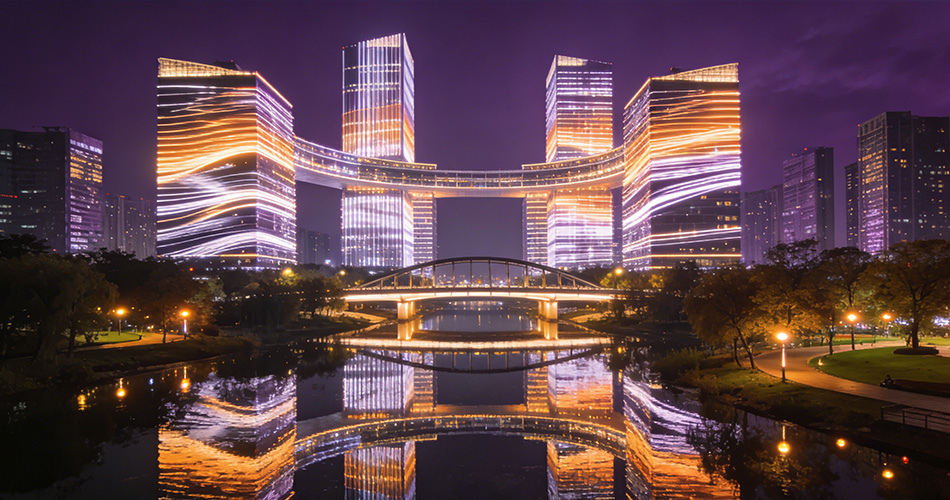
Multi building lighting control delivers four key benefits that elevate it beyond decentralized lighting management:
First, cross-building coordinated lighting scheduling. This system allows facility managers to set unified or building-specific lighting schedules aligned with complex-wide operations—such as syncing parking garage lighting with office building opening hours, or adjusting retail space illumination to match peak customer flow. For example, a healthcare campus can schedule bright, uniform lighting in outpatient buildings during consultation hours and dim, warm lighting in inpatient buildings during nighttime to support patient rest, all from a single control platform.
Second, centralized energy monitoring and optimization. Multi building lighting control collects real-time energy consumption data from every lighting fixture across all buildings, generating comprehensive reports on usage patterns, peak demand periods, and energy waste. Managers can use this data to identify inefficient lighting practices—such as over-illumination in unoccupied lobbies or outdated fixtures in warehouse buildings—and implement targeted optimizations. This unified approach can reduce overall lighting energy consumption by 30%-45%, cutting utility costs and supporting sustainability goals like carbon neutrality.
Third, scenario-based lighting synergy. Advanced multi building lighting control supports one-click activation of complex-wide lighting scenarios to match specific events or conditions. For example, a commercial complex can activate “event mode” to brighten lighting in plazas, parking areas, and retail corridors during a weekend sale; a logistics hub can trigger “night shift mode” to enhance illumination in sorting facilities and warehouse pathways while dimming non-essential office lighting. This scenario-based control ensures consistent, appropriate illumination across all relevant buildings, enhancing user experience and operational efficiency.
Fourth, agile emergency response and safety enhancement. During emergencies—such as fires, power outages, or security incidents—multi building lighting control enables simultaneous adjustment of lighting across the entire complex. For instance, it can activate emergency exit lighting in all buildings, brighten pathways to evacuation zones, and dim non-essential lighting to reduce confusion. Integration with security systems allows the system to brighten lighting in areas where motion sensors detect unusual activity, supporting security patrols and enhancing occupant safety.
Multi building lighting control is tailored to diverse multi-building scenarios, delivering targeted value across commercial, healthcare, logistics, and cultural sectors:
Commercial mixed-use complexes (office towers, retail malls, cinemas, hotels): These complexes have varied lighting needs based on occupancy and activity. Multi building lighting control syncs office lighting with work schedules, adjusts retail lighting based on customer foot traffic, and coordinates hotel and cinema lighting with event timelines. For example, it can dim office lighting after hours while brightening mall and cinema lighting to accommodate evening visitors, and sync parking garage lighting with peak arrival/departure times across all buildings.
Smart healthcare campuses (outpatient buildings, inpatient towers, operating rooms, research labs): Healthcare facilities require precise lighting for patient care and medical procedures. Multi building lighting control sets specialized lighting modes for each area—bright, color-neutral lighting in operating rooms, soft, warm lighting in patient wards, and task-specific lighting in research labs. It coordinates emergency lighting across all buildings during medical emergencies and adjusts pathway lighting to guide medical staff and patients efficiently.
Logistics and industrial parks (warehouses, sorting centers, office buildings, loading docks): These facilities rely on lighting to support 24/7 operations and ensure worker safety. Multi building lighting control adjusts lighting based on production shifts—brightening sorting centers and loading docks during active hours, dimming warehouses during low-activity periods, and turning off office lighting outside work hours. It integrates with inventory management systems to brighten specific warehouse zones during picking and packing activities, optimizing productivity.
Cultural and tourism complexes (museums, art galleries, hotels, outdoor exhibition areas): These spaces require lighting that balances ambiance, artifact protection, and visitor comfort. Multi building lighting control sets low-light, UV-filtered lighting in museums and galleries to protect exhibits, adjusts hotel lighting to match guest arrival times, and coordinates outdoor lighting to highlight landscape features and guide visitors. During cultural events or festivals, it activates unified lighting themes across all buildings to enhance the visitor experience.
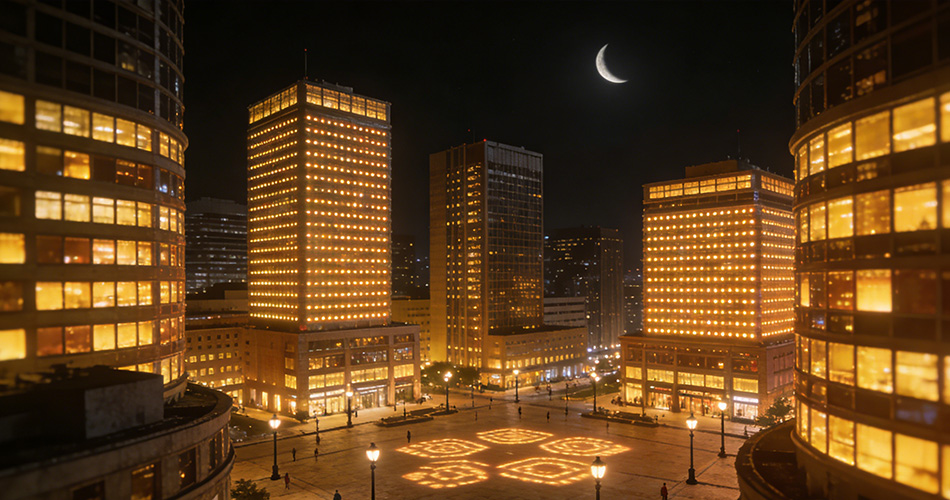
To maximize the value of multi building lighting control, follow these strategic implementation guidelines:
First, conduct a comprehensive multi-building lighting audit. Before deployment, map all lighting fixtures across the complex, analyze existing energy consumption, and identify building-specific lighting needs. For example, prioritize artifact-safe lighting for museums, high-brightness task lighting for logistics centers, and patient-centric lighting for healthcare facilities. This audit ensures the system is configured to meet both individual building requirements and complex-wide goals.
Second, ensure system compatibility and interoperability. Select a multi building lighting control solution that supports industry-standard protocols (e.g., DALI, Zigbee, BACnet) to integrate with existing lighting fixtures, sensors, and building management systems (BMS) across all buildings. Compatibility ensures seamless data exchange and avoids the need for costly replacement of existing equipment.
Third, establish hierarchical control permissions. Define user roles and permission levels to ensure secure, efficient management—for example, granting building managers access to adjust lighting in their respective buildings, while reserving complex-wide scenario activation and energy optimization permissions for senior facility staff. This prevents unauthorized adjustments and ensures accountability.
Fourth, implement phased deployment and user training. For large-scale complexes, adopt a phased deployment approach—starting with high-priority buildings (e.g., main office towers, emergency facilities) to test system performance and gather feedback. Provide comprehensive training for facility staff and building managers to ensure they can proficiently use the system’s features, from scheduling adjustments to emergency response.
As smart building and IoT technologies advance, multi building lighting control is evolving toward greater intelligence and integration:
One trend is AI-driven predictive lighting optimization. Future systems will use artificial intelligence to analyze historical data on occupancy, weather, and energy use across all buildings, predicting lighting needs and adjusting schedules proactively. For example, the system may predict increased visitor traffic at a cultural complex and adjust lighting in advance, or anticipate low natural light on overcast days and brighten indoor lighting across office buildings.
Another trend is integration with renewable energy and energy storage. Multi building lighting control will link with complex-wide solar panels, wind energy systems, and battery storage facilities, prioritizing renewable energy for lighting. The system will adjust lighting intensity or schedules based on renewable energy generation levels, reducing reliance on grid power and maximizing sustainability.
Finally, enhanced integration with digital twins. Systems will sync with digital twin models of the multi-building complex, enabling real-time visualization of lighting status across all buildings. Managers can monitor and adjust lighting via the digital twin interface, simulate different scenarios (e.g., emergency evacuations, large events), and optimize lighting strategies to improve efficiency and safety.
In conclusion, multi building lighting control is a transformative solution for managing illumination in modern large-scale developments, unifying decentralized lighting systems into a coordinated, efficient network. By delivering cross-building synergy, centralized energy optimization, scenario-based control, and agile emergency response, it enhances operational efficiency, user comfort, and safety across commercial, healthcare, logistics, and cultural complexes. Through strategic implementation focused on comprehensive audits, compatibility, permission management, and phased deployment, organizations can unlock the full potential of this technology. As AI and digital twin technologies advance, multi building lighting control will become even more intelligent and integrated, solidifying its role as a core component of smart multi-building environments. For any organization investing in large-scale multi-building development, prioritizing multi building lighting control is a strategic choice that delivers long-term energy savings, operational efficiency, and user satisfaction.


)
)
)
)

+86 15899791249

+86 755 2955 3313


Address: Huafeng No.1 Science and Technology Park, Sanwei, Bao'an District, Shenzhen, Guangdong, China.
