

Time:2025-12-17
Voice-controlled lighting has revolutionized the way users interact with smart environments, offering hands-free convenience and intuitive operation. However, traditional voice assistant lighting control systems are often limited to a single or a few major languages, creating barriers for multilingual users, global enterprises, and diverse communities. Multi language voice assistant lighting control emerges as a transformative solution, enabling users to manage lighting systems through voice commands in their native or preferred languages—from English and Spanish to Mandarin, Arabic, and beyond. This innovation not only eliminates language barriers but also enhances inclusivity, operational efficiency, and user experience across residential, commercial, and public spaces. For facility managers of global businesses, hoteliers catering to international guests, and developers of diverse communities, multi language voice assistant lighting control is a critical step toward building truly accessible smart environments. This article explores the core value, scenario-specific applications, implementation guidelines, and future trends of this technology, highlighting its role in redefining inclusive smart lighting management.
Traditional voice assistant lighting control systems, while convenient, fail to cater to the growing global demand for multilingual interaction. In an increasingly interconnected world, spaces like international hotels, multinational corporate offices, and multicultural neighborhoods serve users with diverse linguistic backgrounds. A system that only supports English, for example, would be inaccessible to non-English-speaking guests, employees, or residents—forcing them to rely on manual controls or third-party translations, which undermines the convenience of smart lighting.
The limitations extend beyond mere inconvenience. In commercial settings, language barriers can reduce operational efficiency: a hotel housekeeper who speaks only Portuguese may struggle to use an English-only voice system to adjust guest room lighting, slowing down cleaning processes. In public spaces like airports or museums, non-native speakers may be unable to use voice-controlled lighting to enhance their experience, creating a disjointed user journey. Multi language voice assistant lighting control addresses these gaps by prioritizing linguistic inclusivity, ensuring that all users can leverage the convenience of voice control regardless of their language proficiency.
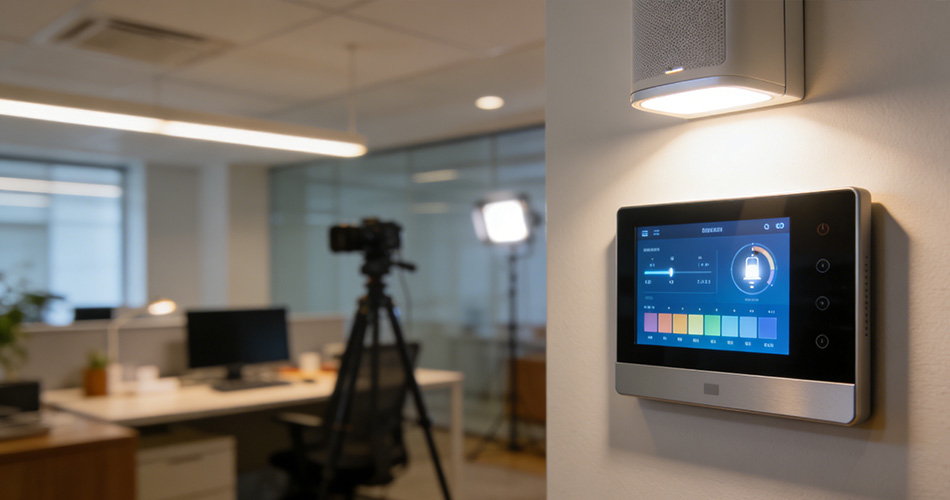
Multi language voice assistant lighting control delivers four key, inclusive benefits that elevate smart lighting management:
First, linguistic inclusivity for diverse user groups. The most impactful advantage is the ability to support multiple languages and dialects, eliminating barriers for non-native speakers, multilingual households, and global teams. Users can issue commands like "Turn on the living room lights" (English), "Enciende las luces de la sala" (Spanish), or "打开客厅的灯" (Mandarin) and receive consistent, accurate responses. This inclusivity ensures that smart lighting is accessible to a global audience, a critical consideration for businesses and communities with diverse linguistic demographics.
Second, seamless hands-free convenience across scenarios. Building on the core benefit of voice control, the multi-language capability enhances hands-free operation in dynamic environments. For example, a chef in an international restaurant kitchen can adjust kitchen lighting with voice commands in their native language while keeping their hands full with food preparation; a warehouse worker in a global logistics facility can control high-bay lighting via voice without pausing their tasks. This seamless convenience boosts productivity and safety in commercial and industrial settings.
Third, simplified global operational management. For multinational enterprises, hotels, and chain businesses, multi language voice assistant lighting control streamlines management across locations. Facility managers can standardize lighting control protocols while allowing local staff to use their native language, reducing training costs and operational errors. For example, a hotel chain with properties in Europe, Asia, and the Americas can deploy a single voice control system that supports local languages, ensuring consistent service quality while catering to regional needs.
Fourth, enhanced user experience and adoption. By speaking in their native language, users feel more comfortable and confident using smart lighting systems, increasing adoption rates. In residential settings, multilingual families can each control lighting in their preferred language, avoiding conflicts over system usage. In commercial spaces, international guests or customers are more likely to engage with smart lighting features if they can do so in a familiar language, enhancing their overall experience and perception of the brand.
This technology excels in diverse, multilingual environments, delivering targeted value across commercial, residential, and public sectors:
International hotels and resorts: Hotels catering to global guests use multi language voice assistant lighting control to enhance guest experience. Guests can adjust room lighting, set custom scenes (e.g., "bedtime mode," "work mode"), or request additional lighting via voice commands in their native language. Front desk staff can also use the system in multiple languages to assist guests remotely, ensuring personalized service regardless of linguistic differences. This inclusivity differentiates hotels in a competitive global market.
Multinational corporate offices and co-working spaces: Global enterprises with diverse workforces rely on this technology to streamline operations. Employees from different regions can control office lighting, meeting room illumination, and workspace ambiance in their native language, improving productivity and comfort. For example, a team with members from Japan, Brazil, and Germany can each adjust meeting room lighting via voice commands in Japanese, Portuguese, or German, fostering collaboration without linguistic barriers.
Multicultural residential communities: Neighborhoods with diverse ethnic and linguistic populations benefit from inclusive lighting control. Residents of all ages and language backgrounds can manage home lighting via voice, from elderly family members who speak only their native dialect to children learning multiple languages. This inclusivity strengthens community cohesion and ensures that all residents can fully leverage smart home technology.
International airports and public transit hubs: Airports and transit stations serve millions of international travelers annually. Multi language voice assistant lighting control allows travelers to adjust lighting in waiting areas, restrooms, or service zones via voice commands in their native language. For example, a traveler from Saudi Arabia can use Arabic voice commands to brighten a seating area, while a traveler from France can use French to dim lights for rest. This enhances the accessibility and user-friendliness of public spaces.
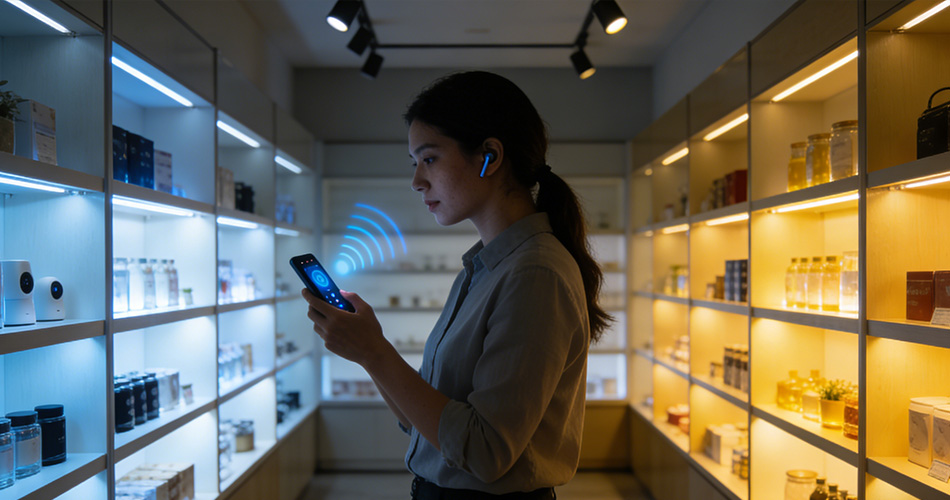
To maximize the value of multi language voice assistant lighting control, follow these strategic implementation guidelines:
First, prioritize language coverage aligned with user demographics. Conduct a thorough analysis of the target user group’s linguistic preferences (e.g., primary languages, dialects) before selecting a system. For example, a hotel in Dubai should prioritize Arabic and English, while a co-working space in Singapore should support English, Mandarin, Malay, and Tamil. Ensure the system offers accurate language recognition, including regional dialects, to avoid misinterpretation.
Second, ensure seamless integration with existing smart ecosystems. Verify that the multi language voice assistant lighting control system integrates with existing lighting fixtures, smart home/business platforms, and voice assistants (e.g., Amazon Alexa, Google Assistant, Baidu DuerOS). Compatibility with industry-standard protocols (e.g., Wi-Fi, Zigbee) ensures that the system works harmoniously with other smart devices, maintaining the overall functionality of the smart environment.
Third, focus on user-friendly setup and calibration. Choose a system with intuitive setup processes, allowing users to select their preferred language easily. For commercial settings, provide simple training materials in multiple languages to help staff familiarize themselves with the system. Regular calibration of voice recognition models ensures accuracy, especially for less common languages or dialects.
Fourth, prioritize privacy and data security. Voice control systems collect audio data, so select solutions with robust security features—such as end-to-end encryption, local data storage options, and clear data privacy policies. Ensure compliance with global data protection regulations (e.g., GDPR, CCPA) to protect user information, especially in cross-border commercial settings.
As voice recognition and smart lighting technology advance, multi language voice assistant lighting control is becoming more intelligent and inclusive:
One trend is real-time language translation and adaptation. Future systems will support real-time translation of voice commands, allowing users to communicate in any language while the system adapts to the lighting infrastructure’s default settings. For example, a user speaking French can issue a command that the system translates and executes, even if the underlying lighting control protocol is set to English.
Another trend is dialect and accent recognition enhancement. Systems will improve accuracy for regional dialects and accents, addressing a common limitation of current multi-language voice systems. For example, a system will distinguish between Mexican Spanish and Castilian Spanish, or between Cantonese and Mandarin, ensuring accurate command execution for users with specific linguistic nuances.
Finally, context-aware multi-language control. Advanced systems will use AI to understand the context of voice commands, adjusting lighting based on factors like time of day, user location, and activity—all in the user’s preferred language. For example, a user saying "Lights for reading" in German will trigger warm, focused lighting in their current location, while the same command in English will deliver the same personalized result.
In conclusion, multi language voice assistant lighting control is a critical innovation that redefines inclusivity and convenience in smart lighting management. By eliminating language barriers, it ensures that smart lighting is accessible to global users, enhances operational efficiency in international businesses, and strengthens community cohesion in diverse neighborhoods. Through strategic implementation aligned with user demographics and ecosystem compatibility, organizations and homeowners can unlock the full potential of this technology. As voice recognition and AI advance, multi language voice assistant lighting control will become even more intelligent and adaptive, solidifying its role as a cornerstone of inclusive smart environments. For anyone investing in global or diverse smart spaces, prioritizing multi language voice assistant lighting control is a strategic choice that delivers long-term inclusivity, user satisfaction, and operational value.


)
)
)
)

+86 15899791249

+86 755 2955 3313


Address: Huafeng No.1 Science and Technology Park, Sanwei, Bao'an District, Shenzhen, Guangdong, China.
