

Time:2025-12-03
In the era of smart commercial spaces, the demand for precise, flexible lighting control has never been higher. Multi zone wireless grouping control interfaces have emerged as a pivotal solution, empowering businesses to manage lighting across multiple designated areas seamlessly—without the constraints of wired infrastructure. This technology redefines how facility managers oversee lighting in large or complex spaces, balancing energy efficiency, user comfort, and operational agility. As commercial environments ranging from sprawling malls to multi-building campuses seek more intuitive control systems, these interfaces have become an indispensable tool for modern facility management.
At their essence, multi zone wireless grouping control interfaces enable users to partition a commercial space into distinct lighting zones and manage each group independently or in coordination—all through a wireless, user-friendly platform. Unlike traditional lighting systems that require manual adjustments for each fixture or rigid wired zoning, these interfaces eliminate the need for physical rewiring and allow for dynamic, on-the-fly changes to lighting groups. This flexibility is a game-changer for businesses that frequently reconfigure spaces, such as retail stores rearranging displays or conference centers hosting events of varying sizes.
One of the key advantages is simplified management at scale. For large commercial spaces—like shopping malls with dozens of stores, office parks with multiple buildings, or industrial facilities with separate production lines—managing lighting individually is time-consuming and inefficient. Multi zone wireless grouping control interfaces centralize control, letting facility managers adjust brightness, set schedules, or trigger lighting scenes for entire zones with a single action. For example, a mall manager can dim the lighting in common areas after store closing hours while keeping restroom and corridor lights at a safety level—all from a single dashboard.
Wireless connectivity further amplifies this value by enabling remote and mobile control. Facility managers no longer need to be on-site to adjust lighting; they can monitor and modify zones via a smartphone app, tablet, or cloud-based platform. This remote access ensures quick responses to unexpected changes—such as extending operating hours for a retail store or adjusting lighting for a last-minute meeting—while reducing the need for on-site maintenance visits. Additionally, the wireless design simplifies installation and retrofitting, making it easy to add new zones or reconfigure existing ones without disrupting daily operations.
Energy efficiency is another critical benefit. By allowing precise control over individual zones, these interfaces eliminate energy waste from lights left on in unoccupied areas. For instance, in an office building, a facility manager can set occupancy sensors to trigger lights in a conference room zone only when the space is in use, while keeping adjacent hallway lights at a low ambient level. Group-based scheduling also ensures that lighting aligns with operational hours—turning on zones gradually before opening and shutting them down sequentially after closing. This targeted approach can reduce energy consumption by 25-40% compared to traditional lighting systems, translating to significant cost savings over time.
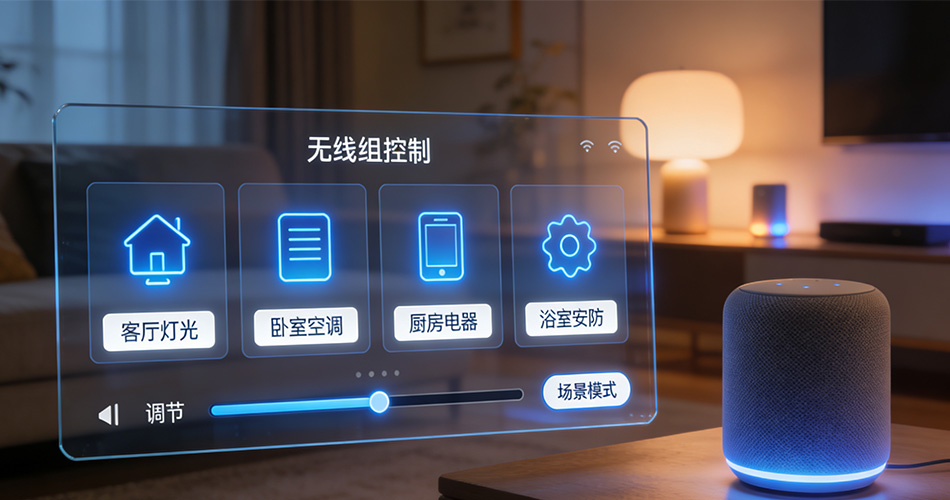
Multi zone wireless grouping control interfaces are versatile enough to address the unique lighting needs of diverse commercial sectors, each leveraging the technology’s zoning capabilities to enhance operations.
In retail environments, these interfaces are a boon for creating tailored shopping experiences. Stores can divide their space into zones for different product categories—such as apparel, electronics, and cosmetics—and adjust lighting to highlight merchandise effectively. For example, a clothing boutique might use warm, soft lighting in the formal wear zone and bright, cool lighting in the activewear section. During promotional events, managers can quickly dim non-promotional zones to draw attention to sale displays, all through the grouping interface. The ability to reconfigure zones without rewiring also supports seasonal rearrangements, such as setting up a holiday display area or expanding the footwear section during peak seasons.
Office campuses and multi-building complexes benefit from the centralized control of multi zone wireless grouping interfaces. Facility managers can create zones by building, floor, department, or room type (e.g., meeting rooms, open workspaces, break areas). This granular control allows for customized lighting settings that align with departmental needs—bright lighting for design teams that require detailed visibility, and softer lighting for call centers to reduce eye strain. Remote access is particularly valuable for campus-wide management, enabling managers to adjust lighting across multiple buildings from a single location and respond to requests from employees in real time.
Industrial facilities and manufacturing plants rely on these interfaces to balance safety, productivity, and energy efficiency. Large factories can be divided into zones based on production lines, storage areas, and administrative offices. Lighting in production zones can be set to high brightness to support precision work, while storage zones can use motion-triggered lighting to save energy when not in use. In hazardous areas, such as chemical storage rooms, zones can be configured to maintain consistent, safety-compliant lighting levels without manual intervention. The wireless design also eliminates the risk of wiring damage in harsh industrial environments, ensuring reliable performance.
Hospitality venues, including hotels and resorts, use multi zone wireless grouping control interfaces to create cohesive yet flexible guest experiences. Hotels can divide their property into zones such as lobbies, guest floors, restaurants, and event spaces. The lobby zone can feature dynamic lighting that shifts with the time of day—bright and welcoming in the morning, warm and inviting in the evening—while guest room zones allow individual control for guests via in-room interfaces. Event spaces can be divided into sub-zones to accommodate multiple functions simultaneously, with lighting adjusted to match the theme of each event (e.g., formal weddings vs. casual corporate gatherings). This versatility helps hotels adapt to changing guest needs while maintaining a consistent brand ambiance.
Educational institutions, from K-12 schools to universities, also find value in these interfaces. Campuses can be zoned by building, classroom type, auditoriums, and outdoor areas. Classrooms can have lighting settings tailored to different activities—bright for lectures, dim for video screenings—while auditoriums can use zone-based control to adjust lighting for stage performances or presentations. Outdoor zones, such as parking lots and walkways, can be set to activate at dusk and dim during low-traffic hours, enhancing safety while reducing energy use. The easy scalability of wireless grouping also supports campus expansions, allowing new buildings or wings to be integrated into the existing control system without major infrastructure upgrades.
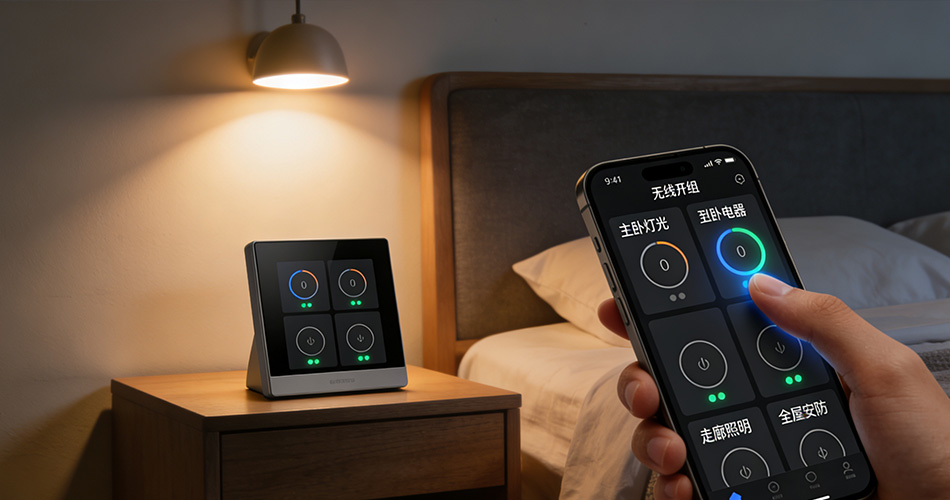
As smart building technology evolves, multi zone wireless grouping control interfaces are poised to become even more intelligent and integrated. One key trend is the integration of these interfaces with artificial intelligence (AI) and machine learning (ML) algorithms. AI-powered systems can analyze lighting usage patterns across zones to automatically optimize schedules, predict maintenance needs, and identify energy-saving opportunities. For example, an ML algorithm might learn that a particular office zone is only occupied on weekdays between 9 AM and 5 PM, and adjust the lighting schedule accordingly to avoid waste. This data-driven optimization ensures that the system adapts to the unique rhythms of each commercial space, maximizing efficiency without compromising functionality.
Interoperability with other smart building systems is another growing trend. Multi zone wireless grouping control interfaces are increasingly being integrated with heating, ventilation, and air conditioning (HVAC) systems, security cameras, and occupancy sensors. This integration creates a holistic facility management ecosystem where lighting works in tandem with other systems to enhance overall efficiency. For instance, if a security sensor detects motion in an unoccupied warehouse zone, the lighting interface can trigger the corresponding zone’s lights to turn on, while the HVAC system adjusts temperature settings to match occupancy. This seamless coordination reduces energy waste and improves operational responsiveness.
The rise of mobile and cloud-based control is also shaping the future of these interfaces. Modern systems offer intuitive mobile apps with user-friendly dashboards, allowing facility managers to monitor and adjust zones from anywhere with an internet connection. Cloud-based platforms provide real-time data analytics, giving managers insights into energy usage, zone occupancy, and system performance. This visibility enables proactive decision-making—such as identifying underutilized zones to adjust lighting schedules or addressing potential system issues before they cause downtime.
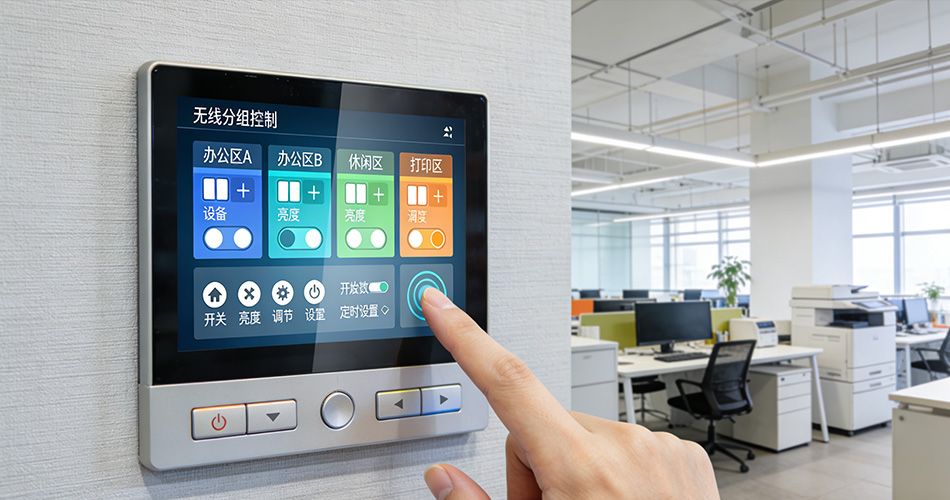
A key focus of modern multi zone wireless grouping control interfaces is user experience (UX) design. Manufacturers are prioritizing intuitive, easy-to-navigate interfaces that require minimal training for facility managers and end-users. This includes visual zoning maps that display the layout of the commercial space, color-coded zones for quick identification, and one-touch controls for common actions (e.g., “All Zones Off” or “Meeting Mode”). Accessibility features, such as adjustable font sizes and voice control, are also being integrated to ensure that all users can operate the system effectively.
Customization is another UX priority. Businesses can tailor the interface to their specific needs, creating custom lighting scenes, assigning user permissions (e.g., limiting certain staff to adjust specific zones), and setting up alerts for system events (e.g., a zone’s lights failing to turn off). This level of customization ensures that the system aligns with the unique operational workflows of each commercial space, rather than forcing businesses to adapt to a one-size-fits-all solution.
In conclusion, multi zone wireless grouping control interfaces are transforming how commercial spaces manage lighting, offering unprecedented flexibility, efficiency, and control. Their ability to partition spaces into manageable zones, enable remote and centralized management, and integrate with other smart building systems makes them a vital tool for modern businesses. From retail stores and office campuses to industrial facilities and hospitality venues, these interfaces are delivering tangible benefits—reducing energy costs, enhancing user comfort, and simplifying operational management. As technology advances, with AI integration, improved interoperability, and user-centric design, multi zone wireless grouping control interfaces will continue to be at the forefront of smart commercial lighting solutions, helping businesses future-proof their operations and create more efficient, adaptable spaces.


)
)
)
)

+86 15899791249

+86 755 2955 3313


Address: Huafeng No.1 Science and Technology Park, Sanwei, Bao'an District, Shenzhen, Guangdong, China.
