

Time:2025-10-17
Ceiling sensors are increasingly becoming a vital component in modern buildings. They offer innovative solutions for energy efficiency, security, and automation. A crucial aspect of these devices is understanding their detection patterns to maximize their effectiveness. In this article, we will delve into the intricacies of ceiling sensor detection patterns, explore different types of ceiling motion sensors, and provide insights on optimizing their usage.
Before diving into detection patterns, it is essential to comprehend what a ceiling sensor is. Ceiling sensors are devices installed on ceilings to detect motion, temperature changes, or other environmental factors. They are commonly used in offices, homes, and public buildings to automate lighting, security systems, and climate control.
Ceiling sensors come in various forms, each with unique capabilities and applications:
Infrared (IR) Sensors: Detects heat emitted by objects in motion.
Ultrasonic Sensors: Uses sound waves to identify movement.
Microwave Sensors: Emits microwaves and detects their reflection off moving objects.
Dual-Technology Sensors: Combines two or more sensing technologies for enhanced accuracy.
Each type of sensor has a different detection pattern, which is crucial for their application.
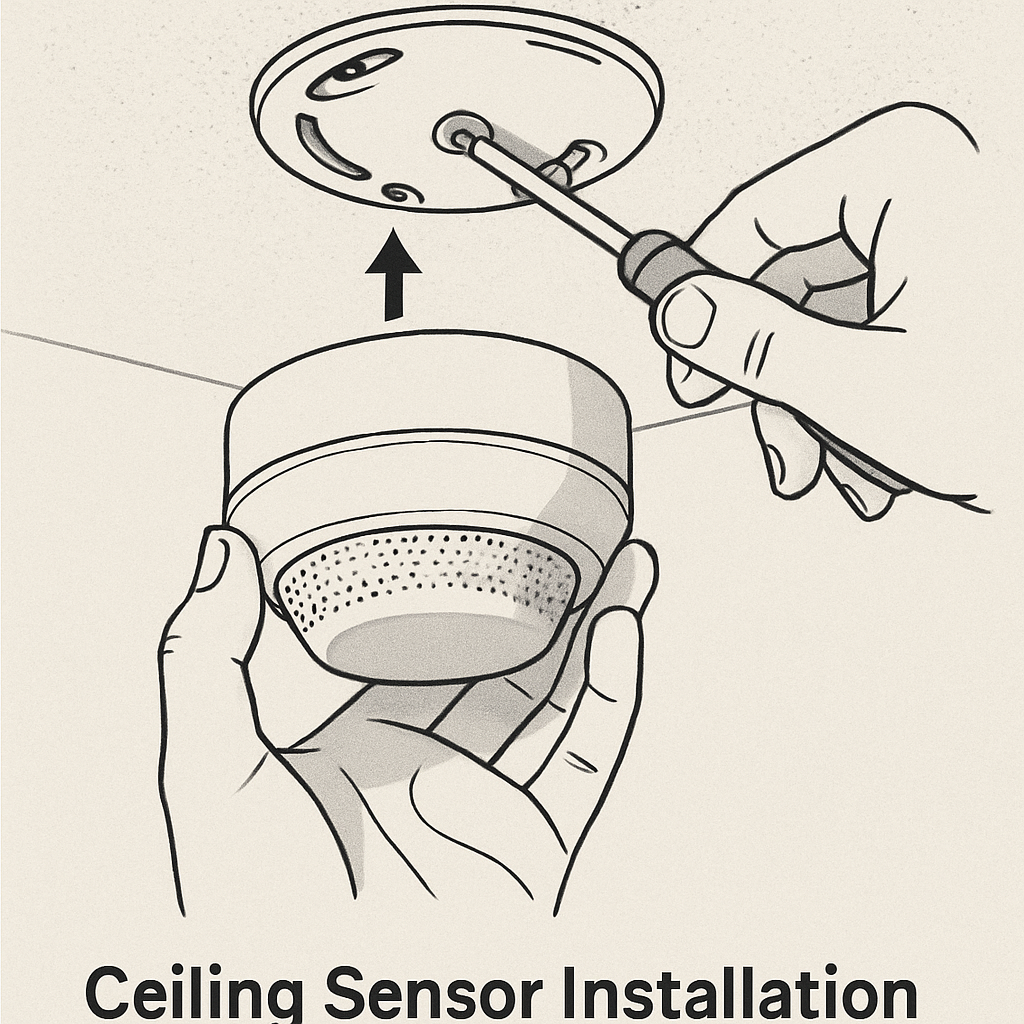
The detection pattern of a ceiling sensor refers to the area and shape that the sensor can effectively monitor. This pattern is influenced by the sensor's technology, placement, and the environment in which it is installed.
Understanding detection patterns is vital for several reasons:
Coverage: Ensures that the sensor can detect motion in the intended area.
Efficiency: Reduces false triggers and energy waste.
Security: Enhances security by ensuring no blind spots.
Several factors can affect the detection patterns of ceiling sensors:
Height of Installation: The higher the sensor is installed, the larger the area it can cover, but with reduced sensitivity.
Obstructions: Furniture, walls, and other objects can block or alter the detection pattern.
Sensor Type: Different technologies have distinct pattern shapes and sizes.
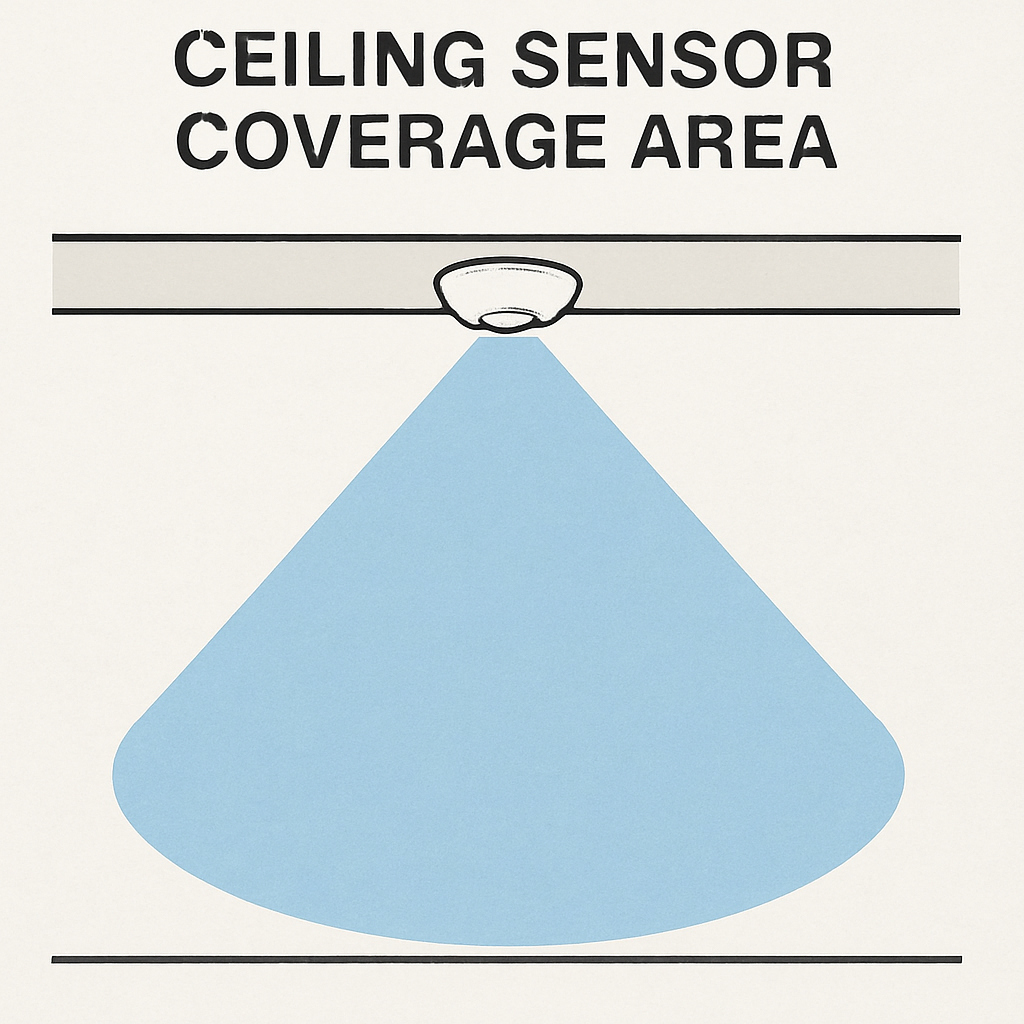
Let's explore how the detection patterns of various ceiling motion sensors work:
IR sensors are highly effective in detecting heat changes. Their detection pattern is typically cone-shaped, with a broad base on the floor and a point at the sensor. They are sensitive to body heat and are ideal for detecting human movement.
Ultrasonic sensors emit sound waves that bounce off objects and return to the sensor. Their detection pattern is generally wider and can cover more irregular spaces. They are excellent for detecting movement in cluttered environments.
Microwave sensors have a detection pattern similar to ultrasonic sensors but are less affected by obstacles. They can penetrate non-metallic objects, making them suitable for areas with partitions or light furniture.
These sensors combine multiple detection technologies, such as IR and microwave, to minimize false alarms and increase accuracy. The detection pattern of dual-technology sensors can be customized to suit specific needs.
To make the most out of your ceiling sensors, consider the following tips:
Avoid Obstacles: Ensure the sensor is not blocked by furniture or architectural features.
Height Considerations: Install sensors at the recommended height for optimal coverage.
Coverage Overlap: Use multiple sensors to cover large areas or complex spaces.
Cleanliness: Keep sensors clean and free from dust or debris that could interfere with their operation.
Regular Testing: Periodically test sensors to ensure they are functioning correctly.
Adjust Sensitivity: Depending on the environment, you may need to adjust the sensor's sensitivity to prevent false alarms.
Consider Environmental Changes: Be mindful of changes in the environment, such as new furniture or layout changes, that may affect sensor performance.
Ceiling sensors find applications in various settings, including:
In office environments, ceiling sensors can automate lighting and climate control, leading to significant energy savings and enhanced employee comfort.
In residential settings, ceiling sensors contribute to home automation systems, offering convenience and security by controlling lights, alarms, and other devices.
In public buildings like airports and shopping malls, ceiling sensors improve security and energy efficiency by monitoring large areas for movement and adjusting systems accordingly.
Ceiling sensors are a powerful tool for enhancing efficiency, security, and automation in various settings. Understanding the detection patterns of different types of ceiling motion sensors is crucial to optimizing their performance. By strategically placing sensors, maintaining them regularly, and adapting to environmental changes, you can maximize their effectiveness and reap the benefits of modern sensor technology.
Invest in ceiling sensors to transform your space into a smarter, more efficient environment. Whether you're looking to reduce energy consumption, increase security, or automate processes, ceiling sensors offer a versatile solution tailored to your needs.


)
)
)
)

+86 15899791249

+86 755 2955 3313


Address: Huafeng No.1 Science and Technology Park, Sanwei, Bao'an District, Shenzhen, Guangdong, China.
