

Time:2026-05-18
Commercial building operators face a double challenge in today's market. Energy rates continue to rise, and qualified maintenance labor is increasingly hard to find. To protect profit margins, facility managers are turning away from manual building management. Instead, they are looking toward automation.
At the center of this movement is a trusted technology that has been upgraded for the modern internet of things (IoT) era. Understanding the top passive infrared pir applications is no longer just a technical detail. It is now a primary strategy for reducing utility bills, streamlining operational maintenance, and hitting ESG compliance metrics.
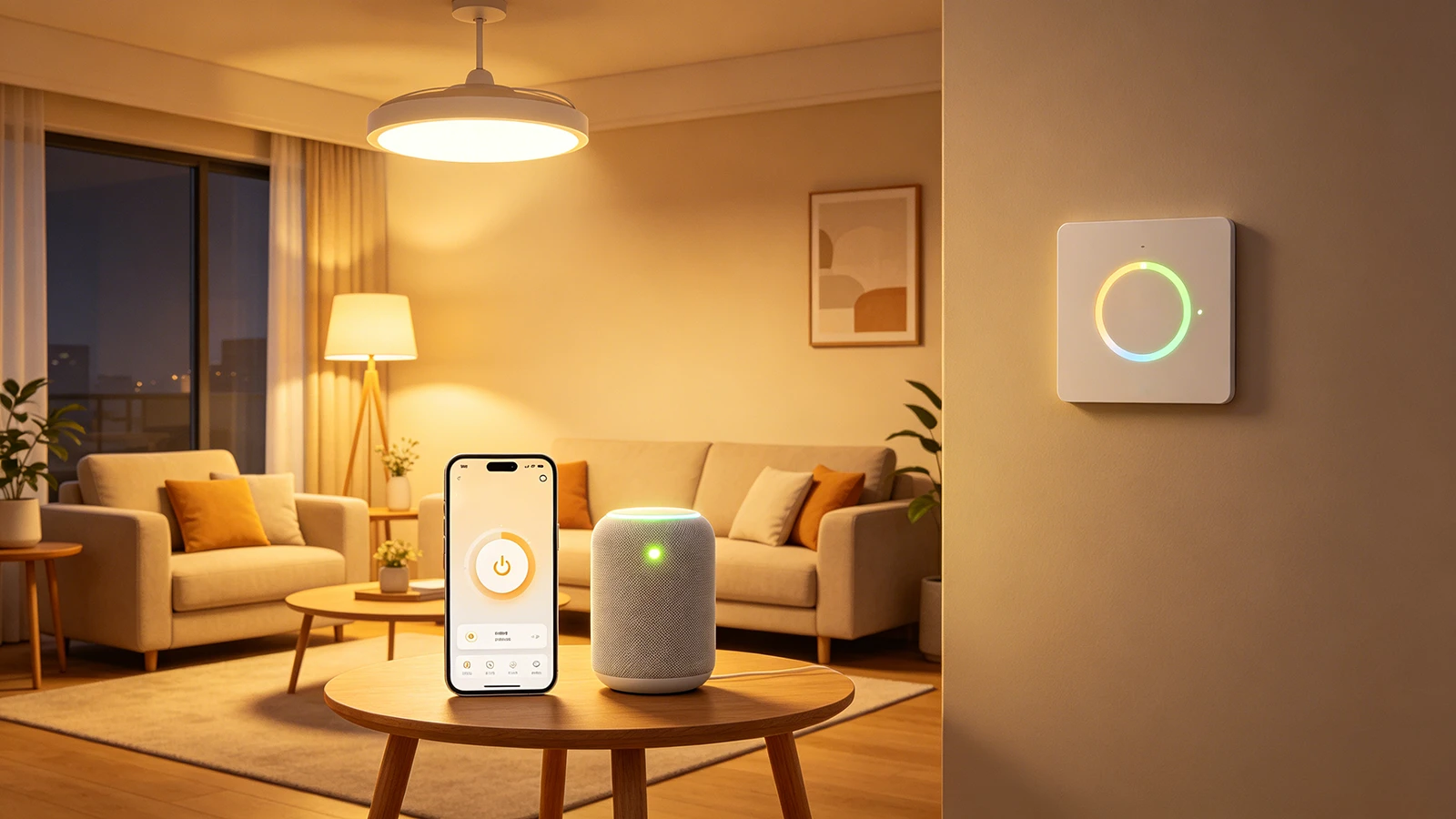
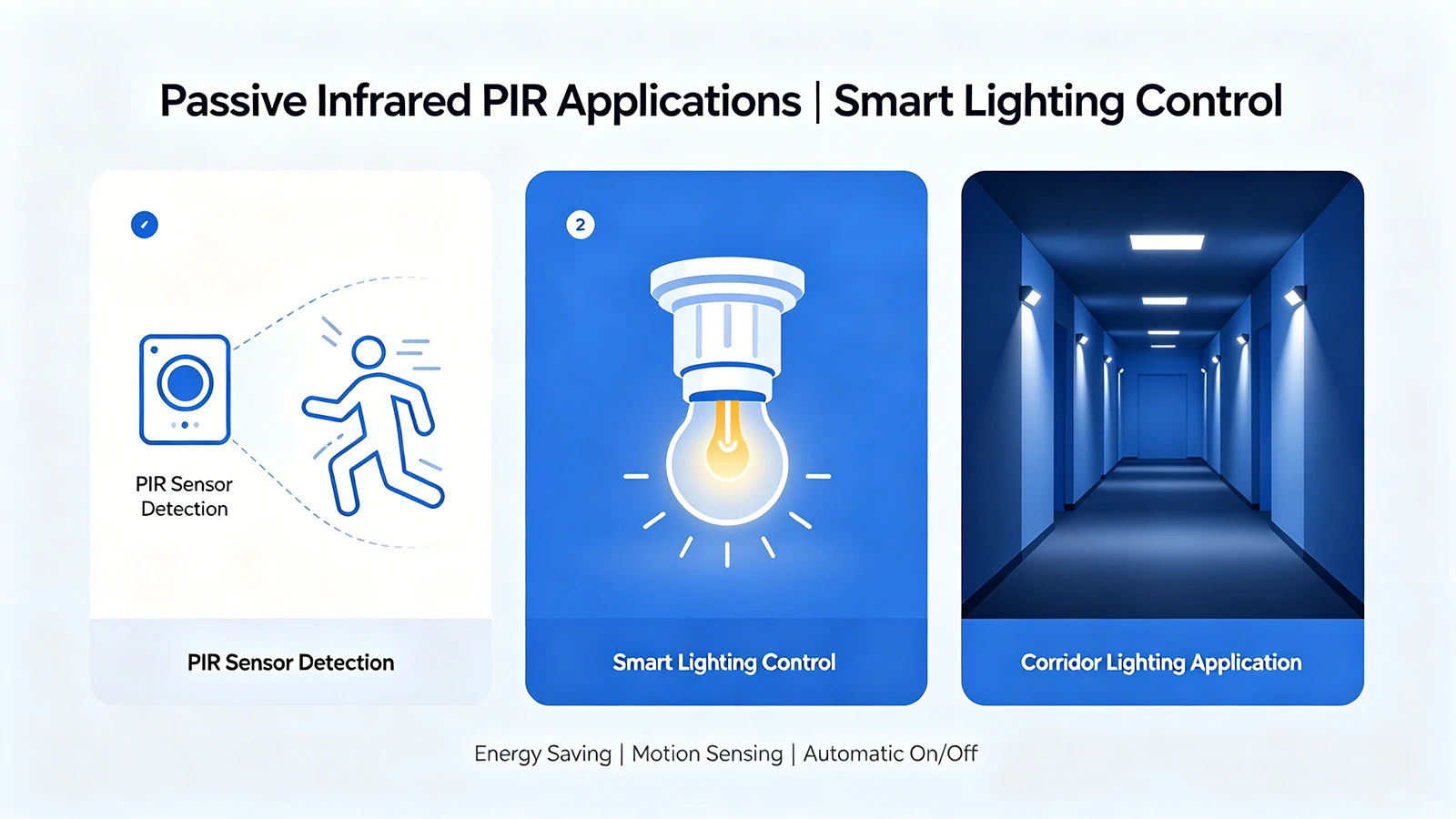
To understand the financial benefits of these installations, we must look at how modern PIR devices operate. A passive infrared sensor does not emit energy into a space. Instead, it measures the infrared light—or heat—radiating from objects within its field of view.
When a human body moves across the sensor's zones, the device detects the rapid change in thermal energy. It immediately triggers a response from the connected lighting control system.
In the past, facilities relied on strict time schedules to turn lights off at night. However, schedules do not account for late-night workers, varying shift patterns, or empty corridors during midday hours.
By utilizing advanced passive infrared pir applications, a building can operate dynamically. Lights, HVAC units, and security networks only run when a human presence is verified. This targeted approach removes waste without compromising user comfort.
The deployment of PIR technology varies significantly across different parts of an industrial or commercial facility. Here are the primary areas where these smart devices deliver the fastest return on investment.
Warehouses feature massive footprints with low occupant density. A worker on a forklift might only enter a specific storage aisle once every hour. Keeping thousands of square feet of high-bay LED fixtures illuminated 24/7 is a major source of energy waste.
Integrating PIR sensors directly into linear fixtures allows for localized control. As the forklift enters the aisle, the sensor alerts the central controller. The lights immediately ramp up from a 10% standby level to 100% brightness. Once the worker leaves, the zone smoothly dims back down. This single application can cut warehouse lighting bills by up to 70%.
Modern offices utilize flexible, hybrid schedules. On any given day, half of the conference rooms, quiet zones, and open cubicles may sit empty.
PIR sensors serve as the primary data points for zone lighting control. They ensure that empty meeting rooms do not sit fully illuminated for hours. Furthermore, these sensors can link directly to building management apps to provide live room-availability data to employees.
Public spaces require reliable safety lighting, but they experience highly irregular traffic. PIR sensors are perfect for these zones.
Stairwells can remain at a safe, low-energy dim level until a door opens. The sensor catches the thermal shift instantly, bringing the space to full visibility before the person even takes a step.
For a facility upgrade to achieve maximum efficiency, individual sensors cannot work in isolation. They must be integrated into a broader network of NLC certified lighting (Networked Lighting Control).
When you utilize a bluetooth mesh remote or network, every PIR sensor becomes an intelligent communication point. Instead of running miles of low-voltage wires back to a physical switchboard, professionals use wireless protocols.
By using standard ble commissioning tools, an installer can link a single PIR sensor to twenty different light fixtures wirelessly. If the office floor plan changes next year, you do not need to pull new wires. A technician simply uses lumieasy tools to re-group the sensors through software.
When an energy manager calculates the ROI of a smart building project, they often focus entirely on the electricity bill. However, the labor savings are frequently just as significant.
Consider a sensor that fails in a manufacturing facility with 30-foot ceilings. The cost of a cheap replacement sensor is small. The real expense comes from renting a scissor lift, shutting down production lines for safety, and paying an electrical technician for hours of troubleshooting.
Using ruggedized, high-quality smart devices from LumiEasy prevents these maintenance traps. When paired with professional wireless setups, you can check sensor health, battery levels, and detection settings from the floor using a mobile app. You no longer need to climb ladders just to change a basic setting.
An office lighting retrofit is the ideal time to implement advanced PIR networks. Older buildings are filled with untapped savings because their electrical layouts are outdated.
| Feature | Traditional Wired Setup | AI & PIR Wireless Mesh |
| Wiring Requirements | Heavy copper lines to central switches | Local constant power only |
| Commissioning Time | Days or weeks of physical tracing | Minutes via ble commissioning tools |
| Zone Flexibility | Hardwired and permanent | Fully adjustable via software app |
| Data Output | None | Real-time occupancy metrics |
By moving to wireless PIR integration, you reduce the material cost of copper wire and slash installation timelines. This keeps the disruption to daily business operations at an absolute minimum.
As commercial lighting trends move forward, the role of the PIR sensor will continue to expand. These devices are no longer simple off-and-on switches. They are the frontline sensors for global building intelligence.
By connecting PIR data to your iot lighting control cloud, facility directors can track true space utilization. You can see exactly which parts of your real estate are heavily used and which are neglected. This data provides the concrete proof needed for real estate resizing, precise HVAC scheduling, and comprehensive ESG reporting.
A: Cheap sensors often struggle with false triggers caused by shifting air currents or heating vents. However, professional units from LumiEasy utilize dual-technology filters and advanced logic. They ensure the central controller only reacts to true human movement, protecting the reliability of your smart lighting system.
A: Yes. By using our standard ble commissioning tools, an energy manager can change the hold-time or standby levels across an entire floor instantly. You do not need to touch the physical sensor to make adjustments.
A: All communication between our PIR sensors, wall switches, and the lighting control system uses high-level AES encryption. During the bluetooth mesh commissioning phase, a secure key is generated. This prevents unauthorized users from interfering with your building networks.
A: Yes, provided the sensor has the correct structural seals. LumiEasy offers ruggedized sensors with high IP ratings. These units are built to survive extreme weather on loading docks or parking structures without losing sensitivity.
Related new
Linear Microwave Smart Sensor Type B


)
)
)
)

+86 15899791249

+86 755 2955 3313


Address: Huafeng No.1 Science and Technology Park, Sanwei, Bao'an District, Shenzhen, Guangdong, China.
