

Time:2025-11-04
In the realm of commercial smart lighting, photocell dusk dawn operation stands as a fundamental feature that bridges automation, energy efficiency, and operational reliability. By detecting ambient light levels to trigger lights on at dusk and off at dawn, this functionality eliminates the need for manual intervention—critical for large-scale outdoor or semi-outdoor spaces like parking lots, warehouse yards, retail exteriors, and campus walkways. For businesses investing in smart lighting solutions, understanding how photocell dusk dawn operation works, its tailored applications, and optimization strategies is key to maximizing return on investment. This article explores the ins and outs of photocell dusk dawn operation and why it’s indispensable for modern commercial lighting systems.
Commercial environments demand lighting that is both efficient and dependable, and photocell dusk dawn operation delivers on both fronts. The primary benefit is energy savings: by aligning artificial lighting with natural light cycles, businesses avoid wasting electricity on lights left on during daylight hours or forgotten after dark. For a mid-sized retail store with outdoor signage and parking lot lighting, this can translate to a 30–40% reduction in monthly lighting energy costs.
Reliability is another cornerstone. Manual light control is prone to human error—staff may forget to turn on lights at dusk, leaving parking lots unsafe for customers and employees, or fail to switch them off at dawn, draining resources. Photocell dusk dawn operation eliminates these risks, ensuring consistent lighting when needed. Additionally, it reduces maintenance burdens: without the need for daily on/off checks, facility teams can focus on more critical tasks.
Safety and compliance are also enhanced. Many commercial spaces (such as industrial yards or school campuses) are required by local regulations to maintain adequate lighting during evening hours. photocell dusk dawn operation ensures compliance by automatically activating lights as dusk falls, preventing liability issues related to poor visibility.
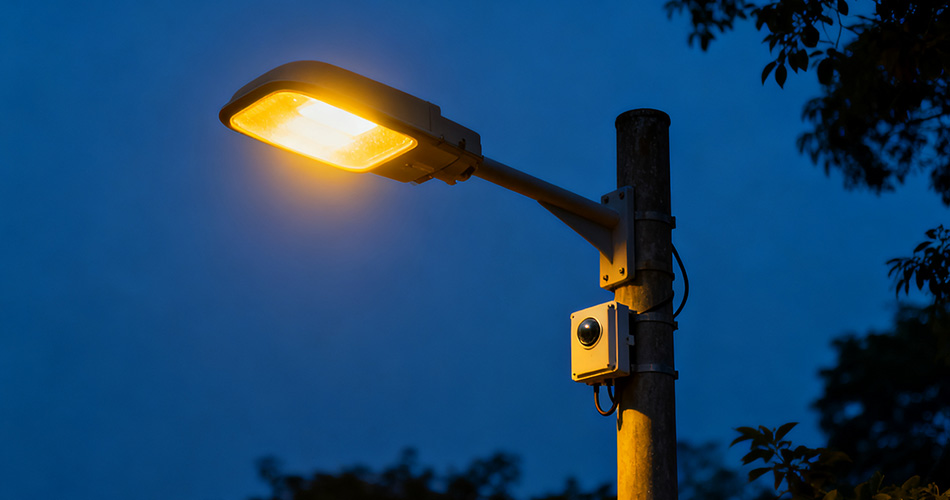
Different commercial spaces have unique lighting needs, and photocell dusk dawn operation can be adapted to suit each context:
For retail stores, visibility after dark directly impacts foot traffic and brand perception. Photocell dusk dawn operation ensures storefront lights and signage activate precisely as dusk sets in, highlighting merchandise and creating an inviting atmosphere. By turning off lights at dawn, it avoids unnecessary energy use while maintaining brand visibility during peak evening hours.
Warehouse yards and loading docks operate early mornings and late evenings, requiring reliable lighting for worker safety and efficient operations. Photocell dusk dawn operation triggers high-bay lights or floodlights at dusk, ensuring loading/unloading tasks can continue safely as natural light fades. It also turns lights off as dawn breaks, aligning with typical shift schedules and reducing energy waste during daytime operations.
Campus walkways, parking garages, and outdoor gathering spaces need consistent lighting to keep students, staff, or visitors safe. Photocell dusk dawn operation provides seamless coverage—activating path lights at dusk to prevent trips and falls, and deactivating them at dawn to save energy. It also avoids light pollution, a key consideration for campuses located in residential areas.

To ensure photocell dusk dawn operation delivers optimal results, businesses should focus on three key strategies:
Photocells rely on accurate light detection, so placement is critical. Install sensors away from reflective surfaces (like metal awnings) or direct light sources (such as nearby floodlights) that can skew readings. In areas with heavy tree cover or building shadows, choose photocells with adjustable sensitivity to avoid false triggers or delayed activation.
Pair photocell dusk dawn operation with other smart lighting components for enhanced functionality. For example, connect photocells to smart controllers to set “dimming transitions”—gradually brightening lights at dusk instead of switching them on full-blast, which reduces glare and energy use. Use gateways to monitor operation remotely, receiving alerts if a photocell malfunctions or if lights fail to activate/deactivate as expected.
Over time, dust, dirt, or weather damage can affect photocell performance. Schedule quarterly inspections to clean sensor lenses and check for physical wear. Seasonal calibration is also important: adjust sensitivity in winter (when dusk falls earlier) and summer (when days are longer) to ensure photocell dusk dawn operation aligns with changing light cycles.
While photocell dusk dawn operation is reliable, it can face challenges that businesses should anticipate:
- False Triggers: Cloudy afternoons or passing storms may cause lights to turn on prematurely. Solve this by setting a “delay” function (if available) that requires low light levels to persist for 5–10 minutes before activating lights.
- Seasonal Shifts: As daylight hours change, uncalibrated photocells may activate lights too early or too late. Use smart controllers to automate seasonal adjustments, or schedule manual checks twice a year (in spring and fall).
- Interference from Other Lights: Nearby streetlights or building lights can confuse photocells. Install sensors facing away from these sources, or choose models with directional detection capabilities.
Photocell dusk dawn operation is more than just a convenience feature—it’s a critical component of efficient, safe, and cost-effective commercial smart lighting systems. By automating light cycles based on natural light, it reduces energy waste, enhances safety, and minimizes maintenance efforts across diverse commercial spaces. When integrated with a comprehensive smart lighting solution—including controllers, gateways, and remote management tools—photocell dusk dawn operation becomes part of a cohesive ecosystem that adapts to business needs and environmental conditions.
For businesses looking to upgrade their commercial lighting, prioritizing photocell dusk dawn operation ensures a foundation of reliability and efficiency. The result is a lighting system that works in harmony with natural light, supports daily operations, and delivers long-term value for years to come.
.


)
)
)
)

+86 15899791249

+86 755 2955 3313


Address: Huafeng No.1 Science and Technology Park, Sanwei, Bao'an District, Shenzhen, Guangdong, China.
