

Time:2025-10-20
In today's rapidly evolving world, maintaining optimal indoor air quality is essential for health and comfort. Plenum rated sensors play a crucial role in monitoring and managing air quality in commercial buildings. But what makes these sensors special, and how do they ensure top-notch performance under various environmental conditions? This article delves into the importance of plenum rated sensors and the rigorous environmental performance testing they undergo.
Plenum rated sensors are specifically designed to be installed in the plenum spaces of buildings. A plenum space is the area used for air circulation for heating, ventilation, and air conditioning (HVAC) systems. These areas are often found between the structural ceiling and a drop-down ceiling or under a raised floor.
Plenum rated sensors are built to withstand the unique conditions present in these spaces, including fluctuating temperatures, humidity levels, and potential exposure to dust and other airborne particles. Their primary function is to measure and report on various air quality parameters, ensuring a safe and comfortable environment for building occupants.
The plenum rating indicates that the sensor meets specific safety and performance standards. It ensures that the materials used in the sensor's construction are non-combustible and do not emit toxic fumes if exposed to high temperatures or flames. This is crucial in preventing the spread of fire and ensuring the safety of building occupants.
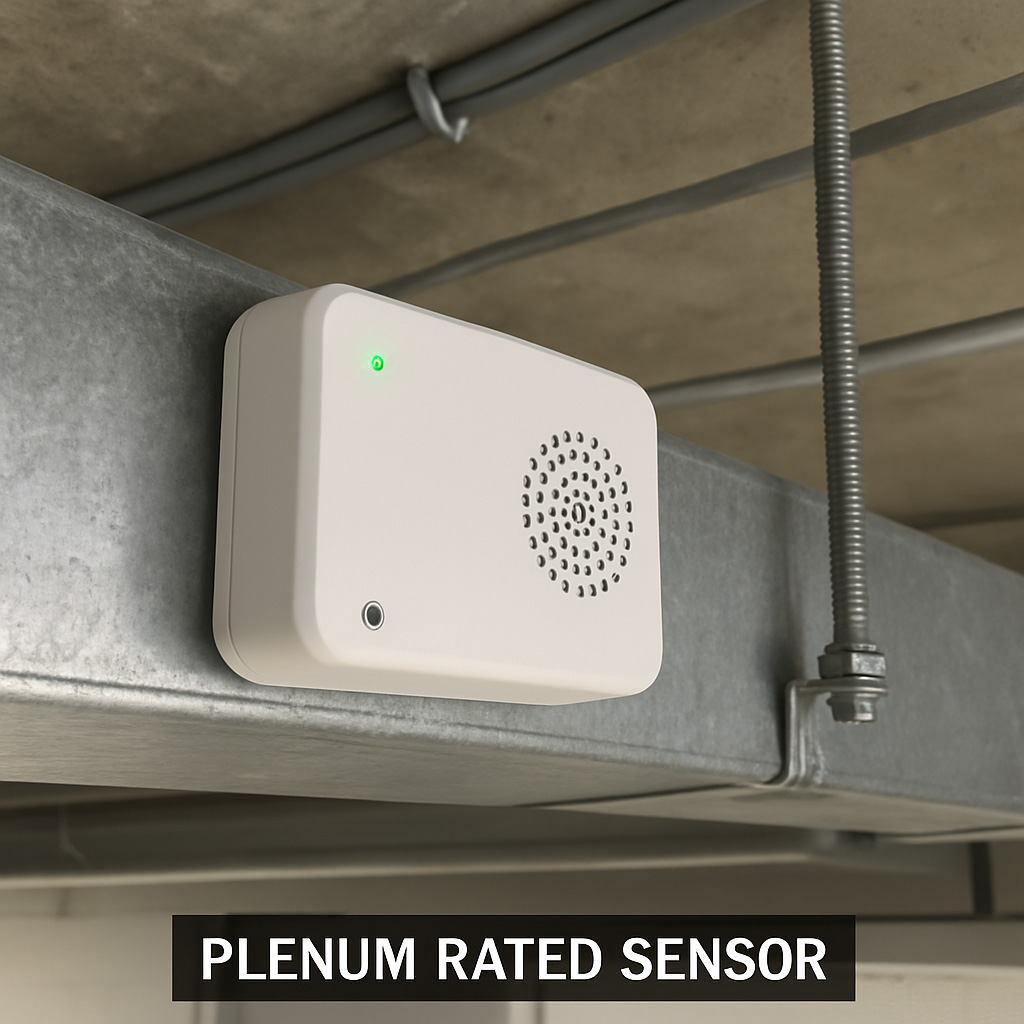
Plenum rated sensors are built to last. They are designed to function reliably in harsh environments, maintaining accuracy and performance over time. This durability ensures that building managers can depend on them for consistent air quality monitoring.
The materials used in plenum rated sensors are carefully selected to meet stringent safety standards. They are resistant to heat, moisture, and corrosion, which helps prolong the sensor's life and maintain its performance.
Plenum rated sensors are equipped with advanced technology to measure a wide range of air quality parameters, including temperature, humidity, carbon dioxide levels, and volatile organic compounds (VOCs). This comprehensive monitoring helps building managers maintain optimal indoor air quality.
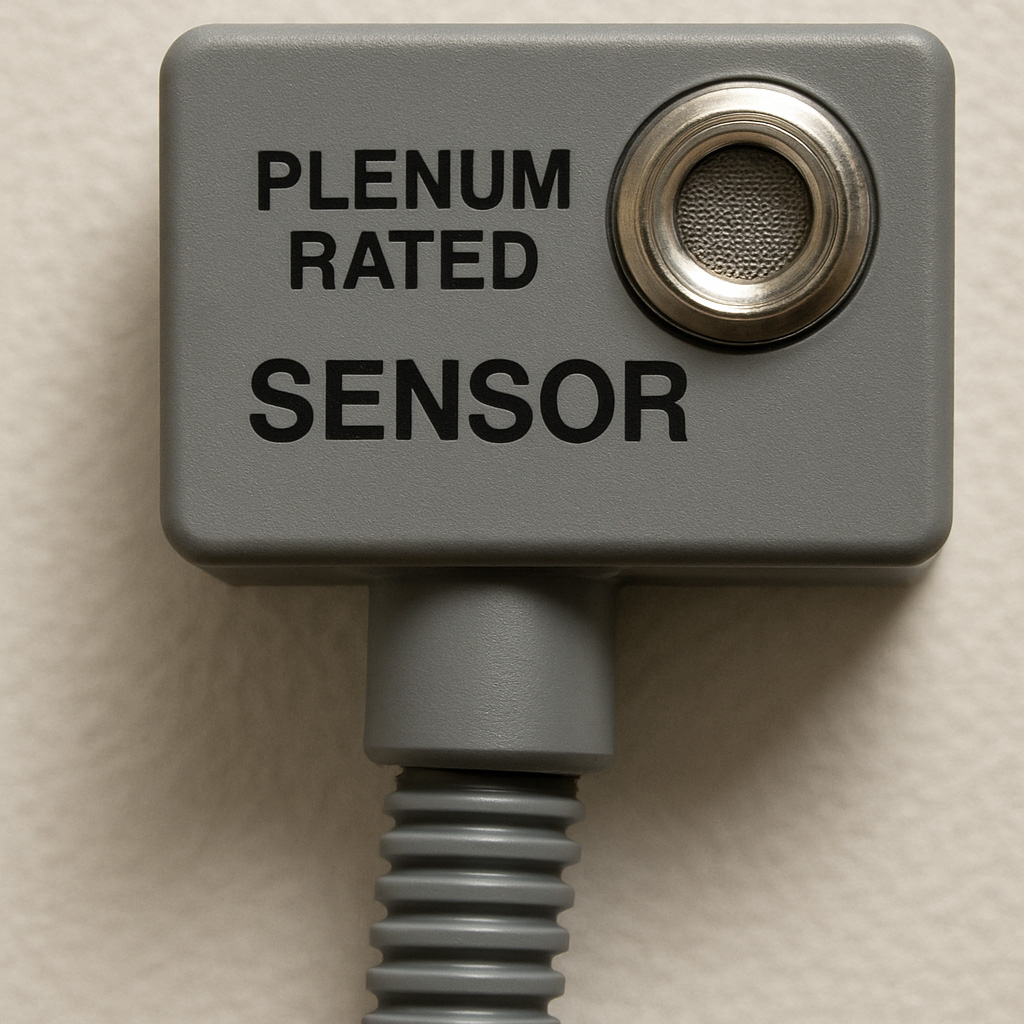
Environmental performance testing is a critical step in ensuring that plenum rated sensors meet the necessary safety and performance standards. These tests evaluate how well the sensors function under various environmental conditions, ensuring they deliver accurate and reliable data.
Temperature Testing: Plenum rated sensors must withstand a wide range of temperatures without compromising performance. Temperature testing assesses the sensor's ability to function accurately in both extreme heat and cold conditions.
Humidity Testing: High humidity levels can affect sensor performance. Humidity testing evaluates the sensor's ability to maintain accuracy and reliability in environments with fluctuating moisture levels.
Dust and Particle Testing: Plenum spaces can be prone to dust and other airborne particles. Sensors must be able to operate effectively in these conditions, so dust and particle testing is essential to ensure their reliability.
Vibration Testing: Buildings can experience vibrations from HVAC systems, foot traffic, or external factors like nearby construction. Vibration testing ensures that plenum rated sensors remain accurate and stable under such conditions.
By providing accurate and reliable air quality data, plenum rated sensors help building managers make informed decisions to improve indoor air quality. This can lead to healthier environments for occupants, reducing the risk of respiratory issues and other health problems related to poor air quality.
Accurate air quality monitoring allows HVAC systems to operate more efficiently. By adjusting heating, cooling, and ventilation based on real-time data, energy consumption can be reduced, leading to cost savings and a smaller environmental footprint.
Many building codes and regulations require the use of plenum rated sensors to ensure safety and performance standards are met. By implementing these sensors, building managers can ensure compliance and avoid potential fines or penalties.
Maintaining optimal indoor air quality contributes to a more comfortable environment for building occupants. This can lead to increased productivity and satisfaction among employees and tenants.
When selecting plenum rated sensors for your building, consider the following factors:
Sensor Accuracy: Ensure the sensors provide precise measurements for all relevant air quality parameters.
Ease of Installation: Choose sensors that are easy to install and maintain, minimizing disruption to building operations.
Compatibility: Ensure the sensors are compatible with your existing HVAC and building management systems.
Cost: Consider the initial cost and long-term savings from improved energy efficiency and reduced maintenance requirements.
Partnering with reputable manufacturers ensures that you receive high-quality plenum rated sensors that meet industry standards. Look for manufacturers with a proven track record of producing reliable and durable sensors.
Plenum rated sensors are essential for maintaining optimal indoor air quality in commercial buildings. Their robust construction and advanced capabilities make them ideal for use in challenging plenum environments. Through rigorous environmental performance testing, these sensors ensure accurate and reliable data, enabling building managers to create healthier and more comfortable spaces for occupants. By choosing the right plenum rated sensors and working with trusted manufacturers, you can enhance the safety, efficiency, and comfort of your building.


)
)
)
)

+86 15899791249

+86 755 2955 3313


Address: Huafeng No.1 Science and Technology Park, Sanwei, Bao'an District, Shenzhen, Guangdong, China.
