

Time:2025-12-25
As modern lighting systems evolve toward intelligence and user-centricity, the demand for flexible, hassle-free control solutions continues to rise. RF lighting remote control, leveraging radio frequency technology to enable wireless operation of lighting devices, has become a mainstream choice for residential, commercial, and public lighting management. Unlike traditional wired lighting controls or infrared remotes with line-of-sight limitations, RF lighting remote control offers long-distance operation, strong signal penetration, and multi-device synchronization, redefining the way people interact with lighting. For homeowners, business operators, and facility managers, adopting RF lighting remote control simplifies daily operations, improves energy efficiency, and enhances the overall lighting experience. This article explores the core advantages, diversified application scenarios, implementation guidelines, and future trends of RF lighting remote control, highlighting its pivotal role in modern lighting management ecosystems.
Traditional lighting control methods fail to meet the flexibility and convenience requirements of modern life and work environments. Wired lighting switches, the most conventional option, require users to be physically present at the switch location, causing inconvenience in large spaces such as villas, shopping malls, or office buildings. For example, in a multi-story home, homeowners may need to walk back and forth to turn off lights in unused rooms, wasting time and energy.
Infrared (IR) remote controls, another common traditional solution, have strict line-of-sight requirements and weak signal penetration. Obstacles such as walls, furniture, or curtains can block IR signals, making it impossible to control lighting from other rooms or behind barriers. Additionally, IR remotes typically support only single-device control, making it cumbersome to adjust multiple lighting fixtures simultaneously—such as adjusting all ambient lights in a living room at once. These limitations highlight the need for a more flexible and reliable control solution, and RF lighting remote control effectively addresses these pain points with its unique wireless advantages.
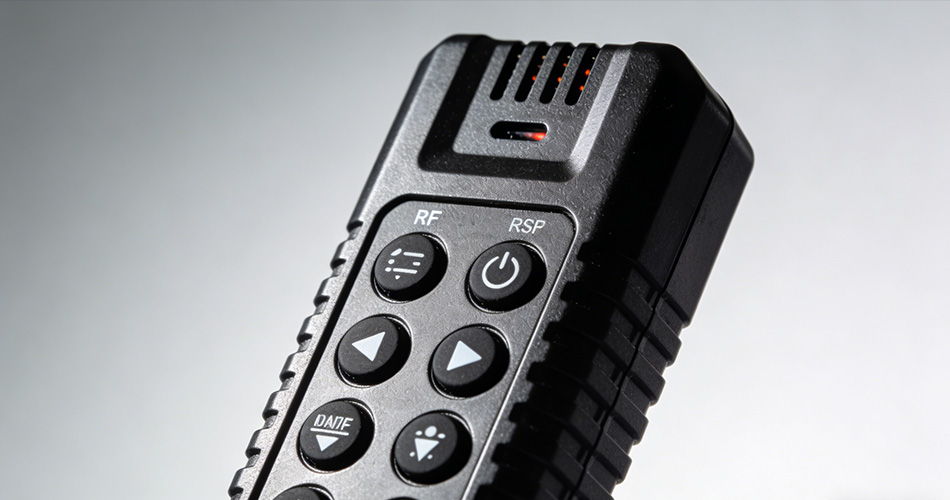
RF lighting remote control offers four key advantages that make it superior to traditional lighting control methods, delivering enhanced convenience and flexibility:
- Wireless convenience and no line-of-sight requirement: RF signals can penetrate walls, floors, and furniture, eliminating the line-of-sight limitation of IR remotes. Users can control lighting devices from any room in a home or building, or even from outdoor spaces adjacent to the property. For example, a homeowner can turn on the garage light from inside the house before pulling in, or a store manager can adjust the lighting in the back storage area from the front desk.
- Long-distance operation and strong signal stability: RF lighting remote control supports longer operation distances compared to IR remotes, typically ranging from tens to hundreds of meters depending on the frequency band. This makes it suitable for large-scale spaces such as warehouses, exhibition halls, or outdoor gardens. The stable RF signal also ensures consistent control performance, avoiding signal loss or delayed response common in other wireless technologies.
- Multi-device synchronization and group control: Advanced RF lighting remote control systems allow users to group multiple lighting fixtures and control them simultaneously with a single button press. For instance, in a restaurant, the manager can use one remote to switch all dining area lights to "dinner mode" (warm, dimmed lighting) or "cleaning mode" (bright, full lighting). This group control capability simplifies operation and ensures consistent lighting ambiance across large spaces.
- Low power consumption and easy installation: RF lighting remote control devices typically have low power consumption, with remote controls lasting for months or even years on a single battery. The wireless design also eliminates the need for complex wiring during installation, reducing installation costs and construction time. This makes it easy to upgrade existing lighting systems to RF remote control without extensive renovations.
RF lighting remote control is widely applicable in various environments where flexibility and convenience are prioritized, delivering targeted value across residential, commercial, public, and outdoor sectors:
- Residential outdoor spaces (gardens, patios, pools): Homeowners can use RF lighting remote control to manage outdoor lighting such as garden path lights, patio string lights, or poolside lights. They can turn on the lights before arriving home at night, adjust brightness for outdoor gatherings, or turn them off from indoors, enhancing convenience and security without the need to go outside.
- Smart retail stores (convenience stores, boutique shops): Retailers rely on lighting to highlight products and create a welcoming shopping environment. RF lighting remote control allows staff to quickly adjust lighting in different product zones—such as brightening clothing racks or dimming display cases—without moving between switches. During closing time, they can turn off all lights with one button, saving time and improving efficiency.
- Educational institutions (schools, libraries): In classrooms, lecture halls, or libraries, RF lighting remote control enables teachers or librarians to adjust lighting according to teaching or reading needs. For example, dimming lights during multimedia presentations or brightening lights for group discussions. The wireless control also avoids disrupting classes by eliminating the need to walk to wall switches.
- Temporary event venues (exhibition halls, wedding venues): Temporary venues require flexible lighting adjustments to adapt to different event stages. RF lighting remote control allows event organizers to quickly switch lighting scenes—such as "exhibition mode" for product displays or "ceremony mode" for weddings—without complex wiring or on-site adjustments. This flexibility enhances the event experience and simplifies setup and teardown.
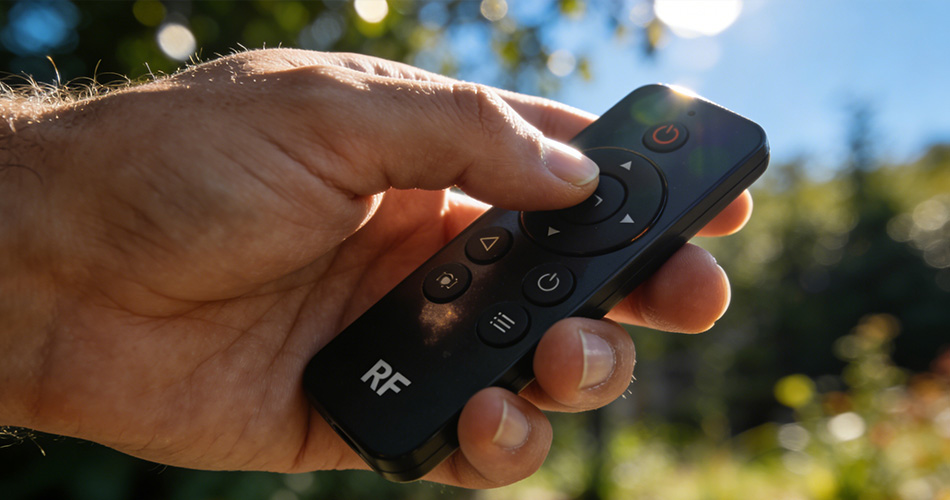
To maximize the performance and user experience of RF lighting remote control systems, follow these practical implementation guidelines:
- Select the appropriate RF frequency band: Choose an RF frequency band that matches the application scenario. Common frequency bands for RF lighting remote control include 433 MHz, 868 MHz, and 2.4 GHz. For large spaces or environments with many obstacles, select a lower frequency band (such as 433 MHz) for better penetration; for small residential spaces, 2.4 GHz is sufficient for stable control.
- Optimize signal coverage: Conduct a signal test in the target space to identify potential dead zones. Install signal repeaters if necessary to extend coverage, especially in large buildings or spaces with thick walls. Avoid placing RF receivers near metal objects or other electronic devices that may cause signal interference.
- Choose user-friendly remote control interfaces: Select remote controls with intuitive interfaces, clear button labels, and simple operation. For complex systems, consider remotes with LCD screens that display lighting status and scene options. For multi-user environments, choose remotes with customizable buttons to suit different user needs.
- Ensure reliable device pairing and security: Follow the manufacturer’s guidelines for device pairing to ensure stable communication between the remote control and lighting fixtures. Choose systems with basic security features such as unique device IDs to prevent unauthorized control. Regularly check for firmware updates to improve system stability and security.
Driven by technological advancements and evolving user needs, RF lighting remote control is evolving toward greater intelligence and integration:
- AI-powered adaptive control: Future RF lighting remote control systems will integrate AI algorithms to learn user behavior patterns. For example, the system can automatically adjust lighting brightness and color temperature based on the user’s daily routine or ambient light conditions, reducing the need for manual operation.
- Integration with voice control and smart assistants: RF lighting remote control will seamlessly integrate with voice assistants such as Amazon Alexa, Google Assistant, or Siri. Users can control lighting via voice commands in addition to remote buttons, enhancing convenience and accessibility for all age groups.
- Cross-system linkage with smart home ecosystems: RF lighting remote control systems will connect with other smart home devices such as security cameras, thermostats, and door locks. For example, turning on the lights automatically when the security system detects motion, or adjusting lighting in sync with the thermostat to create a comfortable living environment.
- Low-power and energy-saving advancements: Manufacturers will continue to improve the energy efficiency of RF lighting remote control devices, using advanced low-power chips and sleep modes to extend battery life. This aligns with global energy-saving trends and reduces environmental impact.
In conclusion, RF lighting remote control is a transformative solution that enhances the convenience and flexibility of modern lighting management, addressing the limitations of traditional control methods. Its wireless operation, strong signal penetration, multi-device control, and easy installation make it suitable for diverse applications across residential, commercial, educational, and event sectors. By following proper implementation guidelines, users can fully leverage the advantages of RF lighting remote control to simplify operations and improve the lighting experience. As AI and smart home technologies advance, RF lighting remote control will become even more intelligent and integrated, solidifying its role as a core component of modern lighting ecosystems. For anyone seeking to upgrade their lighting control system, prioritizing RF lighting remote control is a strategic choice to enhance convenience, flexibility, and overall user satisfaction.


)
)
)
)

+86 15899791249

+86 755 2955 3313


Address: Huafeng No.1 Science and Technology Park, Sanwei, Bao'an District, Shenzhen, Guangdong, China.
