

Time:2025-12-16
Traditional lighting control—relying on physical switches, fixed schedules, or isolated remote controls—has long failed to meet the dynamic needs of modern life and business operations. Whether it’s a homeowner struggling to turn off forgotten outdoor lights, a café owner unable to adjust in-store ambiance remotely, or a co-working space manager juggling diverse user lighting preferences, the inefficiency and inflexibility of conventional methods are glaring. The smart lighting control mobile app emerges as a game-changing solution, centralizing lighting management into a user-friendly, portable interface that enables remote control, personalized scene customization, and real-time energy monitoring. Designed for both individual users and small-to-medium enterprises (SMEs), this app redefines how people interact with lighting systems, blending convenience, energy efficiency, and personalized comfort. This article explores the core value, scenario-specific applications, implementation guidelines, and future trends of the smart lighting control mobile app, highlighting its role as a cornerstone of intuitive smart lighting management.
Traditional lighting control methods are plagued by inherent drawbacks that hinder adaptability and user experience. Physical switches restrict control to on-site operation, making it impossible to adjust lighting when away from the space—leading to wasted energy from forgotten lights or discomfort from improperly set illumination. Fixed scheduling systems lack flexibility, failing to adapt to unexpected changes in occupancy or usage patterns (e.g., a café staying open late for a private event). Isolated remote controls, meanwhile, are easily lost, limited to single-device control, and cannot integrate with other smart devices.
These limitations are amplified in modern dynamic environments. For SMEs like small retail stores or clinics, inefficient lighting control increases energy costs and undermines customer/patient experience. For homeowners, it reduces the convenience of smart homes and limits the potential of connected lighting fixtures. The smart lighting control mobile app addresses these gaps by putting comprehensive lighting management in the palm of the user’s hand, enabling remote access, real-time adjustments, and seamless integration with other smart systems—transforming lighting control from a passive task to an active, personalized experience.
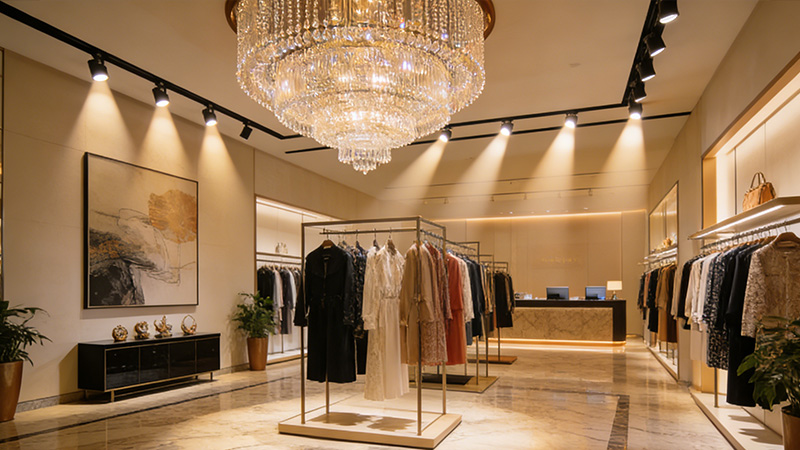
A high-quality smart lighting control mobile app delivers four key benefits that elevate lighting management for both personal and SME use:
First, intuitive remote control and real-time monitoring. The most fundamental advantage is the ability to adjust lighting from anywhere with an internet connection. Homeowners can turn on hallway lights before arriving home at night, while café owners can dim lights in the seating area from their office to create a cozier ambiance. The app also provides real-time status updates, allowing users to check if lights are on/off, monitor brightness levels, and receive alerts for异常 activity (e.g., a light left on for hours), reducing energy waste.
Second, personalized scene customization. Smart lighting control mobile apps enable users to create and save custom lighting scenes tailored to specific activities or moods. For example, homeowners can set a "movie night" scene that dims living room lights and adjusts color temperature to warm tones, or a "morning routine" scene that gradually brightens bedroom lights to mimic sunrise. For SMEs like yoga studios, managers can create a "class mode" scene that sets soft, cool lighting to enhance relaxation. These scenes can be activated with a single tap, ensuring consistent, hassle-free lighting experiences.
Third, data-driven energy efficiency. Beyond control, the app tracks and visualizes lighting-related energy consumption data—such as daily usage, peak hours, and energy savings from smart adjustments. Users can access interactive charts to identify energy-wasting habits (e.g., leaving lights on overnight) and make informed decisions to reduce utility costs. For small businesses operating on tight budgets, this data-driven insight is invaluable for optimizing operational expenses without compromising customer experience.
Fourth, seamless integration with smart ecosystems. The app acts as a hub for connecting lighting systems with other smart devices, such as smart speakers, motion sensors, thermostats, and security cameras. For instance, users can set up automation rules like "turn on entryway lights when the security camera detects motion" or "sync lighting brightness with thermostat settings to optimize comfort." This integration enhances the overall smart environment experience, creating a cohesive, interconnected system.
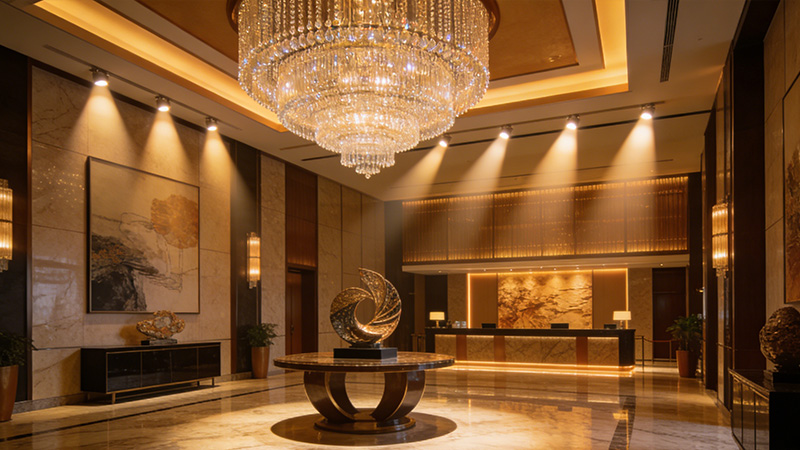
The smart lighting control mobile app excels in diverse, dynamic environments, delivering targeted value across residential, small commercial, and shared spaces:
Small retail and hospitality (cafés, boutique stores, bed-and-breakfasts): These businesses rely on lighting to create brand-specific ambiance and attract customers. The app allows owners to adjust in-store lighting remotely—dimming lights for evening service or brightening display areas to highlight products. Custom scenes like "morning rush" (bright, energetic lighting) and "evening unwind" (warm, soft lighting) can be activated automatically based on business hours. Energy monitoring also helps owners track usage and reduce operational costs.
Smart residential homes: Homeowners use the app to manage lighting throughout their living spaces, from bedrooms and kitchens to outdoor patios. Remote control eliminates the frustration of forgotten lights, while personalized scenes cater to different activities (e.g., "work from home" mode for home offices, "dinner party" mode for dining rooms). Integration with smart speakers enables voice control, adding another layer of convenience—ideal for hands-full moments like carrying groceries or cooking.
Shared and co-working spaces: Co-working hubs and shared offices serve diverse users with varying lighting preferences. The app allows individual users to personalize lighting at their workstations via their own devices, while managers can monitor energy usage and ensure lights are turned off in unoccupied zones. Custom scenes like "focus work" (cool, bright lighting) and "team collaboration" (warm, balanced lighting) enhance productivity and user satisfaction.
Small healthcare facilities (private clinics, dental offices): These spaces require precise lighting for patient care while maintaining a calm atmosphere. The app enables staff to adjust exam room lighting for procedures (bright, focused) and waiting room lighting for comfort (soft, warm). Remote access allows staff to prepare lighting before patients arrive, improving operational efficiency, and energy monitoring helps control healthcare facility costs.
To maximize the value of a smart lighting control mobile app, follow these strategic implementation guidelines:
First, prioritize user-friendly interface design. Choose an app with an intuitive, straightforward interface that requires minimal learning curve—critical for both homeowners and small business staff without technical expertise. Look for features like clear navigation menus, one-tap scene activation, and simple device pairing processes.
Second, ensure broad device compatibility. Verify that the app supports the lighting fixtures and protocols (e.g., Wi-Fi, Bluetooth, Zigbee) in your existing or planned setup. Compatibility with major smart lighting brands and third-party smart devices (e.g., Amazon Alexa, Google Home) ensures flexibility and avoids ecosystem lock-in.
Third, prioritize security and data privacy. The app may collect sensitive data (e.g., usage patterns, home/business layout). Choose solutions with robust security features like end-to-end encryption, secure user authentication (e.g., two-factor authentication), and regular software updates to protect against vulnerabilities. For businesses, ensure compliance with data privacy regulations (e.g., GDPR for EU-based operations).
Fourth, leverage automation and scheduling features. Take full advantage of the app’s automation capabilities to reduce manual intervention. Set up schedule-based rules (e.g., turn off outdoor lights at sunrise) or trigger-based rules (e.g., dim lights when motion is no longer detected). These features enhance convenience and ensure consistent energy efficiency.
As smart home and IoT technology advances, smart lighting control mobile apps are evolving to deliver even greater personalization and intelligence:
One trend is AI-powered personalized lighting. Future apps will use artificial intelligence to learn user behavior and preferences, automatically adjusting lighting settings. For example, the app might learn a user’s preferred morning lighting brightness and color temperature, or a café’s busy hour patterns, and adjust scenes proactively without manual input.
Another trend is enhanced voice and gesture control. Apps will deepen integration with virtual assistants and support gesture control via mobile device cameras, enabling hands-free operation. For example, users could wave their phone to dim lights or use voice commands to activate custom scenes—ideal for accessibility and convenience.
Finally, integration with energy-harvesting lighting systems. As sustainable lighting becomes more popular, apps will support energy-harvesting fixtures (e.g., solar-powered lights), providing real-time data on energy generation and usage. This integration helps users maximize the sustainability of their lighting systems and reduce reliance on grid power.
In conclusion, the smart lighting control mobile app is a transformative tool that redefines lighting management by blending convenience, personalization, and energy efficiency. Whether for homeowners seeking a more intuitive living environment or small businesses aiming to optimize ambiance and costs, this app delivers targeted value across diverse scenarios. Through strategic implementation—prioritizing usability, compatibility, and security—users can unlock the full potential of their smart lighting systems. As AI and IoT technology advance, the smart lighting control mobile app will become even more intelligent and integrated, solidifying its role as a central hub for modern smart environment management. For anyone investing in smart lighting, prioritizing a robust smart lighting control mobile app is a strategic choice that delivers long-term convenience, efficiency, and user satisfaction.


)
)
)
)

+86 15899791249

+86 755 2955 3313


Address: Huafeng No.1 Science and Technology Park, Sanwei, Bao'an District, Shenzhen, Guangdong, China.
