

Time:2025-12-18
In the era of smart building and digital transformation, lighting management has evolved from passive on-off control to proactive, data-driven scheduling. Smart lighting control scheduling stands out as a core technology that integrates time-based rules, environmental sensing, and user behavior analysis to optimize illumination automatically. Unlike traditional fixed scheduling or scenario-specific override functions (e.g., holiday adjustments), smart lighting control scheduling delivers full-cycle, adaptive management across daily operations, balancing energy efficiency, user comfort, and operational efficiency. For facility managers, building owners, and property administrators, mastering smart lighting control scheduling is key to unlocking the full potential of smart lighting systems, reducing operational costs, and creating user-centric environments. This article explores the core value, scenario-specific applications, implementation guidelines, and future trends of smart lighting control scheduling, highlighting its role as a cornerstone of modern illumination management.
Traditional lighting scheduling methods—such as manual timers, fixed-time switches, or basic programmable controllers—are inherently rigid and inefficient, failing to adapt to the dynamic needs of modern spaces. Fixed schedules set for “9 AM to 6 PM” ignore fluctuations in occupancy (e.g., empty meeting rooms during lunch breaks) or natural light (e.g., overcast afternoons requiring earlier illumination). Manual adjustments are time-consuming and error-prone, especially for large-scale buildings like office complexes or campuses, leading to unnecessary energy waste or compromised user comfort.
Beyond inefficiency, traditional scheduling lacks integration with other building systems, resulting in fragmented operations. For example, lighting schedules often operate independently of HVAC or security systems, missing opportunities to synergize energy use. In variable-use spaces like co-working hubs or event centers, fixed schedules cannot keep up with dynamic occupancy changes, leading to either dark, unsafe areas or wasted energy from lights left on in unoccupied zones. Smart lighting control scheduling addresses these gaps by leveraging automation, sensing, and data analysis to deliver precise, adaptive illumination that aligns with real-time needs.
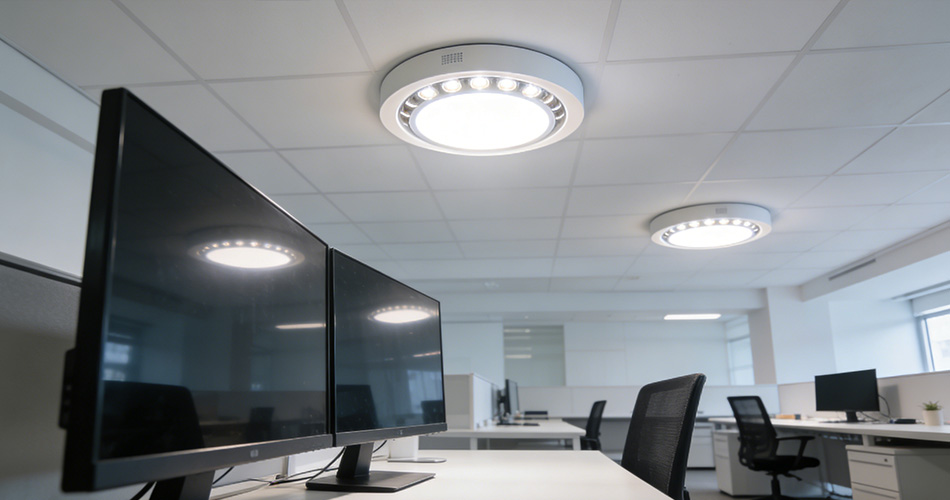
Smart lighting control scheduling delivers four transformative benefits that elevate it beyond traditional scheduling methods:
First, precision adaptive scheduling based on multiple triggers. Unlike fixed schedules that rely solely on time, smart lighting control scheduling integrates multiple triggers—time, occupancy, natural light, and user behavior—to adjust illumination dynamically. For example, an office lighting system can be set to “bright mode” during core work hours (9 AM–5 PM), dim to “energy-saving mode” during lunch breaks (12 PM–1 PM) when occupancy drops, and turn off automatically when motion sensors detect no activity for 15 minutes. This multi-trigger approach ensures lighting is only active when needed, optimizing energy use.
Second, data-driven energy efficiency and cost savings. Smart lighting control scheduling collects and analyzes data on lighting usage, occupancy patterns, and energy consumption to identify optimization opportunities. By eliminating “over-illumination” (lights on in empty spaces) and “under-illumination” (insufficient light during peak hours), it can reduce lighting energy consumption by 35%–50% compared to traditional scheduling. For large commercial buildings or campuses, these savings translate to significant utility cost reductions and carbon emission cuts, supporting sustainability goals.
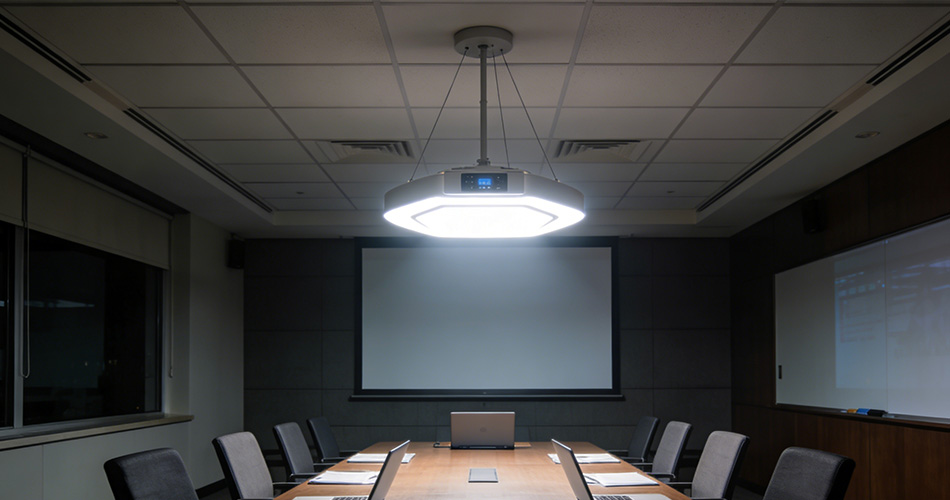
Third, personalized user experience and operational agility. Advanced smart lighting control scheduling allows for zone-specific and user-specific scheduling. For example, a co-working space can let individual users set personalized lighting schedules for their workstations via a mobile app, while facility managers maintain overarching energy rules. In multi-purpose spaces (e.g., conference rooms, auditoriums), scheduling can be linked to booking systems—activating “meeting mode” automatically when a room is reserved and turning off lights when the booking ends. This personalization enhances user satisfaction and operational flexibility.
Fourth, seamless integration with smart building ecosystems. Smart lighting control scheduling acts as a key component of building management systems (BMS), integrating with HVAC, security cameras, access control systems, and renewable energy sources. For instance, it can sync with HVAC systems to adjust lighting and temperature simultaneously based on occupancy, or integrate with solar panels to prioritize renewable energy for lighting during peak generation hours. This synergy breaks down system silos and improves the overall efficiency of smart buildings.
Smart lighting control scheduling adapts to diverse non-holiday scenarios, delivering targeted value across commercial, educational, industrial, and residential sectors:
Smart office buildings and business parks: Office environments have dynamic occupancy patterns (e.g., peak hours, lunch breaks, after-hours work). Smart lighting control scheduling adjusts illumination based on work schedules—brightening during core hours, dimming during low-occupancy periods, and turning off in unoccupied zones. It can also link to meeting room booking systems, activating lighting only for reserved rooms and adjusting brightness based on meeting type (e.g., presentation mode for client meetings, collaborative mode for team discussions).
Smart campuses: Campuses have complex lighting needs across classrooms, libraries, dormitories, and outdoor pathways. Smart lighting control scheduling aligns with academic schedules—activating bright lighting in classrooms during lectures, dimming in libraries for study sessions, and reducing outdoor lighting after curfew (while maintaining security lighting in key areas). Dormitory lighting can be scheduled to support student routines, such as gradual brightening for morning classes and dimming for bedtime.
Industrial facilities and warehouses: Industrial lighting requires precision for production efficiency and safety. Smart lighting control scheduling adjusts based on production shifts—brightening work zones during active shifts, dimming in storage areas during low-activity periods, and turning off lights in unused sections. For warehouses with high-bay lighting, scheduling can be combined with motion sensors to activate lights only when workers are present, reducing energy waste in large, sparsely occupied spaces.
Cold chain and logistics facilities: These facilities require stable lighting while maintaining strict temperature controls. Smart lighting control scheduling optimizes energy use without compromising safety—scheduling bright lighting during loading/unloading shifts, dimming during storage periods, and integrating with temperature sensors to avoid unnecessary energy consumption (which can impact cooling systems). It also ensures security lighting remains active during off-hours to protect inventory.
To maximize the value of smart lighting control scheduling, follow these strategic implementation guidelines:
First, conduct comprehensive scenario and user demand analysis. Before deployment, map occupancy patterns, usage routines, and lighting requirements for each zone. For example, offices may need different schedules for open work areas vs. private offices, while campuses require zone-specific schedules for classrooms vs. dormitories. This analysis ensures scheduling aligns with actual needs.
Second, prioritize system compatibility and scalability. Choose smart lighting control scheduling solutions that support industry-standard protocols (e.g., DALI, Zigbee, BACnet) to ensure integration with existing BMS, IoT sensors, and smart devices. Select scalable systems that can accommodate future expansions (e.g., adding new lighting zones, integrating new sensors) without complete overhauls.
Third, leverage data analytics for continuous optimization. Implement systems that collect and analyze lighting usage data, occupancy trends, and energy consumption. Use this data to refine schedules—for example, adjusting dimming levels based on user feedback or modifying shift-based schedules to match actual production hours. Regular data reviews ensure scheduling remains efficient and user-centric.
Fourth, ensure user-friendly management and training. Choose scheduling platforms with intuitive interfaces (e.g., drag-and-drop schedule editors, real-time monitoring dashboards) to simplify management for facility staff. Provide training for users and operators to ensure they understand how to adjust schedules, use zone-specific controls, and leverage personalized features—critical for maximizing adoption and value.
As IoT, AI, and smart building technologies advance, smart lighting control scheduling is evolving toward greater intelligence and integration:
One trend is AI-driven predictive scheduling. Future systems will use artificial intelligence to analyze historical occupancy data, weather forecasts, and user behavior to predict lighting needs proactively. For example, a system might predict increased occupancy in an office during a product launch and adjust scheduling to ensure optimal lighting, or anticipate low natural light on overcast days and brighten lights earlier.
Another trend is edge computing for real-time responsiveness. Scheduling systems will process data locally (on-edge devices) rather than in the cloud, reducing latency and improving reliability in low-connectivity environments. This enables real-time adjustments to scheduling based on immediate changes (e.g., sudden increases in occupancy, equipment malfunctions), enhancing operational agility.
Finally, integration with renewable energy and energy storage. Smart lighting control scheduling will deeply link with solar panels, wind turbines, and battery storage systems. It will adjust lighting schedules based on renewable energy generation—prioritizing solar power for lighting during peak daylight hours, using stored energy for evening illumination, and reducing grid reliance to lower costs and carbon footprints.
In conclusion, smart lighting control scheduling is a transformative technology that redefines illumination management through precision, automation, and integration. By addressing the limitations of traditional rigid scheduling, it delivers energy savings, personalized user experiences, and operational efficiency across diverse non-holiday scenarios. Through strategic implementation focused on demand analysis, compatibility, data-driven optimization, and user training, organizations can unlock the full potential of this technology. As AI and edge computing advance, smart lighting control scheduling will become even more intelligent and responsive, solidifying its role as a core component of modern smart buildings and sustainable environments. For anyone investing in smart lighting systems, prioritizing robust smart lighting control scheduling is a strategic choice that delivers long-term economic, environmental, and user-centric value—key to success in the evolving smart building landscape.
Related news
LLLC Lighting Controls for Industrial Energy Efficiency | LumiEasy
Daylight Harvesting Calibration Accuracy: Boost Energy Efficiency
Boost Efficiency with Commercial Lighting Control Retrofit


)
)
)
)

+86 15899791249

+86 755 2955 3313


Address: Huafeng No.1 Science and Technology Park, Sanwei, Bao'an District, Shenzhen, Guangdong, China.
