

Time:2026-01-27
As industrial energy costs continue to rise, manufacturers and logistics operators are actively seeking smarter ways to optimize facility operations. Lighting, which often represents a significant portion of industrial electricity consumption, is one of the most effective areas for improvement. Smart lighting control systems offer a proven solution—combining automation, data-driven control, and centralized management to reduce energy waste while improving operational efficiency.
This article explores how smart lighting control systems support industrial energy savings, key system capabilities, and why they are becoming an essential component of modern smart factories and industrial campuses.
Smart lighting control refers to an intelligent system that automatically manages lighting based on real-time conditions such as occupancy, daylight levels, time schedules, and operational requirements. Unlike traditional lighting systems that rely on manual switches or fixed timers, smart lighting control systems dynamically adapt to how industrial spaces are actually used.
In factories, warehouses, and logistics centers, smart lighting control integrates sensors, controllers, gateways, and software platforms to deliver precise lighting where and when it is needed—without unnecessary energy consumption.
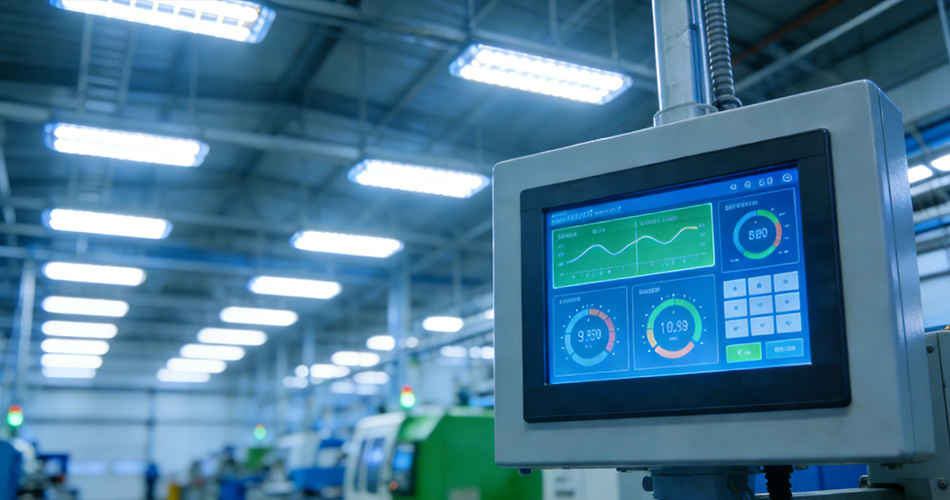
Industrial facilities often operate across multiple shifts, with lighting left on in unused zones for long periods. Smart lighting control systems eliminate this waste by automatically dimming or switching off lights in unoccupied areas.
Studies and large-scale deployments show that smart lighting control can reduce lighting energy usage by 30%–70%, depending on system design and facility layout. These savings directly translate into lower operating costs and faster return on investment for factory owners.
One of the most powerful features of smart systems is smart lighting control scheduling. Facilities can define lighting schedules based on production shifts, maintenance windows, or warehouse operating hours.
For example:
Production lines can follow shift-based lighting schedules
Warehouses can reduce lighting levels during low-activity periods
Office areas can automatically switch to energy-saving modes after hours
This automation ensures consistent lighting control without relying on manual intervention, reducing human error and improving overall efficiency.
Modern industrial lighting platforms often include a smart lighting control mobile app, allowing facility managers to monitor and control lighting systems remotely. Through a mobile interface, authorized personnel can:
View real-time lighting status
Adjust lighting zones and brightness levels
Override schedules when necessary
Monitor energy consumption trends
For large factories or distributed industrial sites, mobile access improves responsiveness and reduces the need for on-site adjustments, saving both time and labor costs.
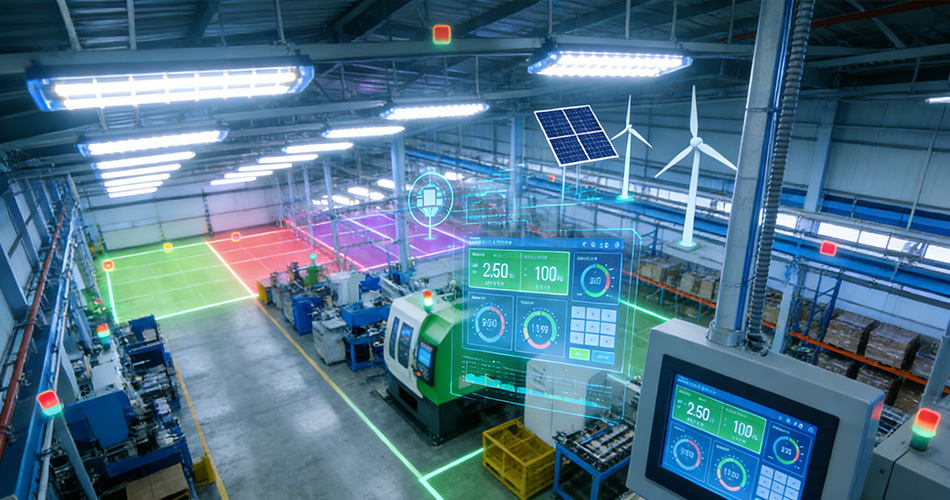
While traditionally associated with residential or office environments, voice controlled smart lighting is increasingly being adopted in controlled industrial spaces such as control rooms, laboratories, and maintenance areas.
Voice control enables hands-free operation, allowing technicians and operators to adjust lighting while focusing on critical tasks. When integrated with secure industrial systems, voice-controlled lighting enhances convenience without compromising safety or system reliability.
Large manufacturers often operate across multiple buildings—production halls, warehouses, offices, and auxiliary facilities. Multi building lighting control allows all lighting systems to be managed from a single centralized platform.
With multi building lighting control, facility managers can:
Apply consistent lighting policies across sites
Compare energy performance between buildings
Implement centralized scheduling and automation
Scale lighting control as facilities expand
This centralized approach is especially valuable for industrial parks, logistics hubs, and manufacturing campuses where coordinated energy management is critical.

Warehouses are ideal candidates for smart lighting control due to high ceilings, large floor areas, and variable occupancy patterns. Smart systems ensure that aisles, loading zones, and storage areas are illuminated only when workers or equipment are present.
By combining motion detection, daylight sensing, and scheduling, smart lighting control systems help warehouses achieve:
Lower energy bills
Improved worker safety
Better visibility for picking and loading operations
Reduced maintenance requirements
These benefits are particularly significant in high-bay warehouse environments where lighting costs are traditionally high.
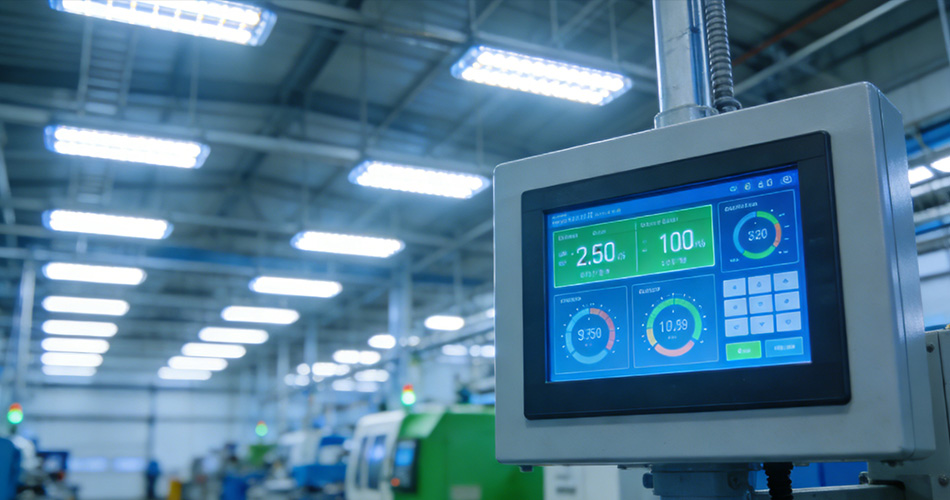
Smart lighting control systems do not operate in isolation. In modern industrial facilities, they are often integrated with broader building management systems (BMS), energy management platforms, and IoT infrastructure.
This integration enables:
Real-time energy monitoring
Data-driven optimization
Predictive maintenance planning
Alignment with ESG and sustainability goals
Lighting data becomes a valuable source of operational insight, helping factories continuously refine energy strategies and reduce carbon footprints.
To maximize the benefits of smart lighting control, industrial facilities should follow these best practices:
Identify high-consumption areas and prioritize zones where automation will deliver the greatest impact.
Choose smart lighting control platforms that support future expansion, additional buildings, and advanced automation features.
The strongest results come from systems that integrate occupancy sensing, daylight harvesting, smart lighting control scheduling, and centralized management.
Ensure staff understand how to use mobile apps, dashboards, and reporting tools to fully leverage system capabilities.
For modern industrial facilities, smart lighting control is no longer a luxury—it is a strategic investment in energy efficiency, operational control, and sustainability. By leveraging features such as smart lighting control mobile apps, voice controlled smart lighting, smart lighting control scheduling, and multi building lighting control, factories can significantly reduce energy consumption while improving lighting quality and management efficiency.
As energy prices rise and smart manufacturing accelerates, implementing advanced smart lighting control systems positions industrial facilities for long-term cost savings, compliance, and competitive advantage.


)
)
)
)

+86 15899791249

+86 755 2955 3313


Address: Huafeng No.1 Science and Technology Park, Sanwei, Bao'an District, Shenzhen, Guangdong, China.
