

Time:2025-12-16
As global attention to sustainability and energy efficiency intensifies, smart lighting control has evolved from a niche convenience feature to a foundational element of modern smart environments—spanning homes, commercial buildings, and even entire cities. Unlike traditional lighting systems that operate on fixed switches or rigid schedules, smart lighting control leverages advanced technologies to adjust illumination dynamically based on occupancy, ambient light, user preferences, and energy demands. This transformation not only slashes energy consumption but also elevates user comfort, enhances operational efficiency, and supports global carbon reduction goals. For building owners, urban planners, and homeowners alike, understanding the full potential of smart lighting control is key to creating environments that are both efficient and human-centric. This article explores the core value, diverse application scenarios, implementation strategies, and future trends of smart lighting control, highlighting its pivotal role in shaping sustainable smart ecosystems.
Lighting accounts for a significant portion of global energy consumption—approximately 15% of total electricity use in commercial buildings and 10% in residential settings. Traditional lighting systems contribute to unnecessary energy waste due to their inability to adapt to real-time needs: lights remain on in unoccupied spaces, operate at full brightness when natural light is abundant, and fail to align with dynamic usage patterns. Smart lighting control addresses these inefficiencies by enabling data-driven, adaptive illumination, making it a critical tool for achieving sustainability targets.
Beyond energy savings, smart lighting control plays a vital role in enhancing user experience and operational agility. In commercial settings, it allows businesses to tailor lighting to brand ambiance and customer behavior; in residential spaces, it adapts to individual lifestyles; in public areas, it balances safety and energy conservation. For cities aiming to become "smart and green," smart lighting control is a cornerstone infrastructure, integrating with other urban systems to create cohesive, efficient environments. The absence of smart lighting control not only increases energy costs but also limits the potential of smart building and smart city initiatives.
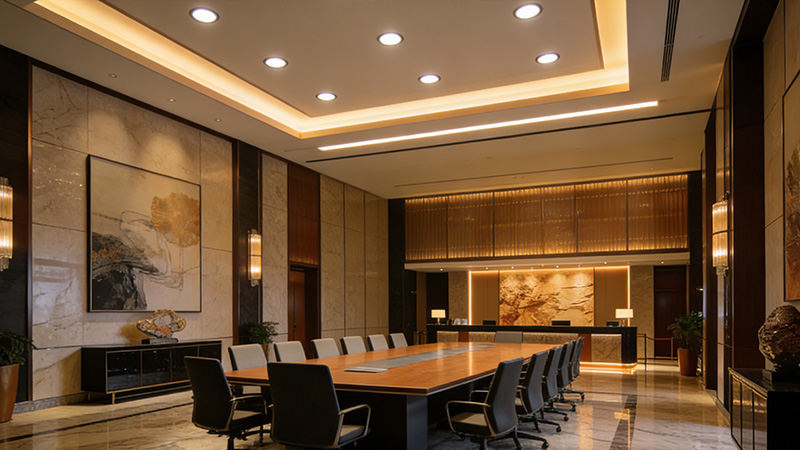
Smart lighting control delivers three interconnected benefits that redefine the role of lighting in modern environments:
First, significant energy savings and carbon footprint reduction. By automatically dimming or turning off lights in unoccupied zones, leveraging daylight harvesting (adjusting artificial light based on natural light levels), and optimizing lighting schedules, smart lighting control can reduce lighting-related energy consumption by 30-50%. For large commercial buildings or cities with extensive public lighting networks, these savings translate to substantial carbon emissions reductions, directly supporting global碳中和 goals. For example, a smart office building using daylight harvesting and occupancy-based control can cut its annual lighting energy use by 40%, reducing its environmental impact.
Second, personalized user-centric illumination. Smart lighting control enables customization of lighting parameters—brightness, color temperature, and activation timing—to match individual preferences and activity needs. In a home office, for instance, the system can adjust color temperature to warm tones in the evening to reduce eye strain, or bright cool tones during work hours to enhance focus. In healthcare facilities, it can create "rest mode" for patient rooms (dim, warm lighting) and "procedure mode" for treatment areas (bright, uniform lighting). This personalization enhances comfort, productivity, and well-being across all user groups.
Third, seamless integration with smart ecosystems. Smart lighting control acts as a data node and control hub, integrating with building management systems (BMS), IoT devices, security systems, and renewable energy sources. For example, it can sync with motion sensors to activate lights when occupancy is detected, coordinate with HVAC systems to optimize energy use in occupied zones, or integrate with solar panels to prioritize renewable energy for lighting. This synergy transforms lighting from an isolated system into a critical component of holistic smart environment management.
Smart lighting control adapts to a wide range of environments, delivering targeted value across residential, commercial, public, and industrial sectors:
Smart city public lighting: Urban areas use smart lighting control to optimize streetlights, park lights, and pedestrian walkway lighting. The system adjusts brightness based on traffic flow (dimming during low-traffic hours, brightening when vehicles or pedestrians are detected) and weather conditions (increasing brightness during fog or rain). Integration with city surveillance systems enhances safety by brightening lights in areas with unusual activity. This not only reduces municipal energy costs but also improves urban livability and safety.
Green data centers: Data centers require 24/7 lighting for maintenance but must minimize energy use to support cooling efficiency. Smart lighting control ensures lights are only activated in maintenance corridors when staff are present, using occupancy sensors and motion detection. It also integrates with data center BMS to adjust lighting based on server room temperature zones, avoiding unnecessary heat generation from lighting and reducing cooling loads.
Senior-friendly smart communities: These communities use smart lighting control to support elderly residents’ safety and independence. Hallways, bathrooms, and entryways feature motion-activated lighting with gradual brightness adjustment (to avoid glare and disorientation). Lighting can be synced with personal emergency call systems, brightening escape routes and alerting staff during emergencies. Customizable schedules also cater to residents’ sleep-wake cycles, enhancing well-being.
Retail and hospitality venues: Smart lighting control helps businesses create brand-specific ambiance while optimizing energy use. Retail stores adjust lighting to highlight product displays (bright, focused lighting for merchandise, warm lighting for fitting rooms) and adapt to foot traffic (brightening during peak hours, dimming during lulls). Hotels use it to personalize guest room lighting—allowing guests to set preferred scenes via in-room controls or mobile apps—and optimize common area lighting based on occupancy, reducing energy waste without compromising guest experience.

To maximize the value of smart lighting control, follow these strategic implementation guidelines:
First, align control strategies with environment-specific goals. Define clear objectives—energy savings, user comfort, safety, or sustainability—before designing the system. For example, a city’s public lighting project should prioritize energy efficiency and safety, while a residential project may focus on personalization and convenience. Tailor control features (daylight harvesting, occupancy sensing, scene customization) to meet these goals.
Second, prioritize system compatibility and scalability. Choose smart lighting control solutions that support industry-standard protocols (e.g., DALI, Zigbee, Wi-Fi) to ensure compatibility with existing and future smart devices, BMS, and renewable energy systems. Scalable solutions allow for expansion—whether adding new lighting zones, integrating new sensors, or extending control to additional buildings—without requiring a complete system overhaul.
Third, emphasize user-centric design and accessibility. Ensure the control interface—whether a mobile app, wall panel, or voice command system—is intuitive and accessible to all users. For public or commercial spaces, include multiple control options (automatic sensors, manual overrides, centralized management) to cater to diverse needs. For senior-friendly environments, avoid overly complex interfaces and include features like large buttons or voice control.
Fourth, conduct regular monitoring and optimization. Use data from the smart lighting control system to monitor energy usage, system performance, and user behavior. Analyze this data to identify optimization opportunities—adjusting schedules, fine-tuning sensor sensitivity, or updating scenes to better meet user needs. Regular maintenance and software updates also ensure the system remains efficient and secure.
As technology advances, smart lighting control is becoming more intelligent, sustainable, and integrated:
One trend is AI-driven predictive control. Future systems will use artificial intelligence to analyze historical occupancy data, weather patterns, and user behavior, predicting lighting needs and adjusting settings proactively. For example, a retail store system could predict peak foot traffic times and pre-adjust lighting to optimal levels, or a home system could learn a user’s morning routine and gradually brighten lights to match their wake-up schedule.
Another trend is integration with renewable energy and energy storage. Smart lighting control will deepen integration with solar panels, wind turbines, and battery storage systems, prioritizing renewable energy for lighting and adjusting usage based on energy generation levels. For example, during periods of high solar generation, the system may increase lighting brightness (if needed) to utilize excess energy, reducing reliance on grid power.
Finally, enhanced human-centric health integration. Future systems will incorporate biometric data and circadian rhythm research to adjust lighting in line with human physiological needs. For example, office lighting could adjust color temperature throughout the day to align with employees’ circadian rhythms, improving sleep quality and productivity, while healthcare lighting could support patient recovery by mimicking natural light cycles.
In conclusion, smart lighting control is more than just a tool for energy savings—it is a cornerstone of sustainable, user-centric smart environments. By enabling adaptive illumination, personalized experiences, and seamless integration with broader smart ecosystems, it delivers value across residential, commercial, and public sectors. Through strategic implementation aligned with specific goals, organizations and communities can unlock its full potential, reducing carbon footprints, enhancing user well-being, and supporting the evolution of smart, green environments. As AI, renewable energy, and health-centric design advance, smart lighting control will become even more intelligent and integral to global sustainability efforts. For anyone investing in smart environments, prioritizing smart lighting control is a strategic choice that delivers long-term environmental, economic, and social value.


)
)
)
)

+86 15899791249

+86 755 2955 3313


Address: Huafeng No.1 Science and Technology Park, Sanwei, Bao'an District, Shenzhen, Guangdong, China.
