

Time:2025-12-25
In the era of smart living and connected spaces, the role of lighting control has evolved from basic on/off functionality to a cornerstone of personalized and intelligent environments. The Smart lighting remote, as a key interface between users and smart lighting ecosystems, integrates advanced technologies such as AI, wireless connectivity, and scene recognition to redefine how people interact with light. Unlike conventional remote controls that merely transmit commands, modern Smart lighting remote enables proactive adaptation, personalized customization, and seamless integration with other smart devices, making it an indispensable component in residential, commercial, and hospitality smart spaces. For designers, facility managers, and homeowners, leveraging Smart lighting remote is crucial to unlocking the full potential of smart lighting, enhancing user comfort, and optimizing energy efficiency. This article explores the core intelligent advantages, diversified smart application scenarios, implementation guidelines, and future trends of Smart lighting remote, highlighting its pivotal role in shaping premium smart space experiences.
Traditional smart lighting remote controls, despite their wireless convenience, fail to meet the evolving demands of intelligent and user-centric spaces. Many early smart remotes lack true intelligence, functioning as mere "wireless switches" with limited customization options. They often require manual adjustment for every lighting change, unable to adapt to user habits or environmental changes—for example, users must manually switch lighting modes when moving from working to resting, leading to operational redundancy.
Another critical limitation is poor interoperability and fragmented control. Traditional smart lighting remotes are often brand-specific, unable to integrate with other smart home or building systems such as security cameras, thermostats, or voice assistants. This fragmentation forces users to manage multiple remotes or apps, undermining the convenience of smart spaces. Additionally, most traditional models lack user-centric design considerations, such as complex interfaces that confuse elderly users or insufficient accessibility features for people with disabilities. The Smart lighting remote addresses these gaps by prioritizing intelligence, interoperability, and user-friendliness, transforming lighting control into a seamless and personalized experience.
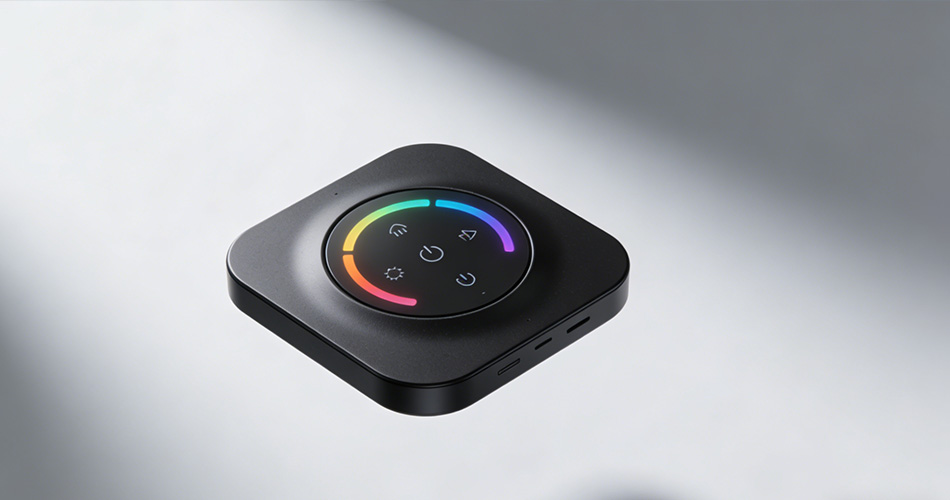
Smart lighting remote stands out with three core intelligent advantages that drive the upgrade of smart space experiences:
- AI-powered adaptive control: Equipped with AI algorithms, Smart lighting remote can learn user behavior patterns, such as preferred lighting brightness, color temperature, and usage time. It automatically adjusts lighting settings to match user habits—for instance, gradually brightening bedroom lights in the morning to simulate sunrise, or dimming living room lights in the evening for a relaxing ambiance. This adaptive capability reduces manual operation and creates a more intuitive user experience.
- Seamless multi-device interoperability: Leading Smart lighting remote supports mainstream smart home protocols (such as Matter, Zigbee, and Wi-Fi), enabling seamless integration with voice assistants, security systems, and home automation platforms. Users can control lighting via voice commands, or trigger lighting changes through linkage with other devices—for example, turning on hallway lights automatically when the smart door lock is activated, or dimming lights when a movie is played on the smart TV.
- Personalized scene customization and one-click activation: Smart lighting remote allows users to create and store multiple personalized lighting scenes, such as "work mode," "reading mode," "party mode," or "sleep mode." Each scene can be activated with a single button press, ensuring consistent lighting ambiance tailored to specific activities. Advanced models also support multi-user profile management, allowing different family members or employees to save their preferred settings.
Smart lighting remote excels in scenarios that demand personalization, intelligence, and seamless integration, delivering targeted value across diverse smart spaces:
- Smart hotels and hospitality venues: In luxury hotels, Smart lighting remote enables personalized guest experiences. Guests can adjust lighting to their preferences via the remote or mobile app, and the system can pre-set lighting scenes for check-in, sleeping, and working based on guest profiles. Hotel staff can also use the remote to monitor and adjust lighting in public areas (such as lobbies and restaurants) remotely, ensuring a consistent and welcoming ambiance while optimizing energy usage.
- Smart homes with elderly or disabled residents: For elderly or disabled individuals, Smart lighting remote with large, backlit buttons and voice control functionality enhances accessibility. The adaptive control feature can automatically adjust lighting brightness to suit visual impairments, and one-click scene activation eliminates the need for complex operations. Family members can also monitor lighting status remotely via a linked app, ensuring the safety of elderly residents.
- Intelligent office spaces: In modern offices, Smart lighting remote integrates with office automation systems to create a productive work environment. Employees can customize their workstation lighting via the remote, while managers can set up "meeting mode," "focus mode," or "break mode" scenes for different areas. The remote can also link with occupancy sensors to turn off lights in unoccupied areas, reducing energy waste.
- Smart retail and exhibition spaces: Retailers and exhibition organizers use Smart lighting remote to highlight products and create dynamic visual experiences. The remote allows quick adjustment of lighting intensity and color to match different products or exhibition themes. It can also integrate with sales data—for example, brightening display areas for best-selling products to attract customer attention. One-click scene switching simplifies the process of updating lighting for new exhibitions or promotions.
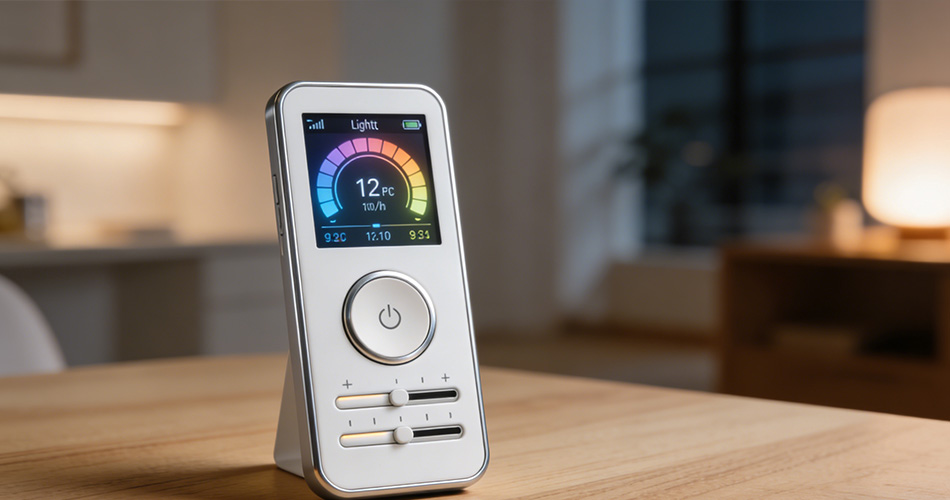
To maximize the intelligent value of Smart lighting remote and ensure a seamless user experience, follow these implementation guidelines:
- Select protocol-compatible devices: Choose Smart lighting remote and lighting fixtures that support universal smart protocols (such as Matter) to ensure interoperability with existing or future smart devices. Avoid proprietary protocols that may limit integration options and lead to fragmentation.
- Optimize user interface design: Prioritize remotes with intuitive, user-friendly interfaces. For residential use, select models with clear button labels and simple navigation; for commercial spaces, consider remotes with customizable buttons or touchscreens for complex scene management. Ensure the interface is accessible to all users, including those with limited technical skills.
- Configure personalized scenes and automation rules: Work with users to define common activities and configure corresponding lighting scenes. Set up automation rules based on user habits, time of day, or environmental triggers (such as ambient light or occupancy). Test and refine these rules to ensure they align with actual usage needs and enhance convenience.
- Ensure data security and privacy protection: Choose Smart lighting remote from reputable manufacturers that prioritize data security. Enable encryption for wireless communications and regularly update firmware to patch vulnerabilities. Avoid collecting unnecessary user data and ensure compliance with data protection regulations (such as GDPR for European markets).
Driven by advancements in AI, IoT, and human-computer interaction technologies, Smart lighting remote is evolving toward more intelligent, integrated, and user-centric directions:
- Biometric-aware personalization: Future Smart lighting remote will integrate biometric sensors (such as fingerprint or voice recognition) to identify individual users and automatically apply their personalized lighting settings. This enhances security and further simplifies the user experience by eliminating the need for manual profile switching.
- Integration with health and wellness systems: Smart lighting remote will link with health monitoring devices (such as smartwatches or sleep trackers) to adjust lighting based on user health data. For example, adjusting color temperature to regulate circadian rhythms and improve sleep quality, or increasing brightness to boost alertness during work hours.
- Augmented reality (AR)-assisted control: AR technology will enable users to visualize lighting changes in real time via a mobile app paired with the Smart lighting remote. Users can point their phone at a space, preview different lighting scenes, and adjust settings directly through the AR interface, making scene customization more intuitive and efficient.
- Edge computing for low-latency control: Smart lighting remote will leverage edge computing to process data locally, reducing reliance on cloud services and minimizing control latency. This ensures fast, reliable response times even in areas with poor network connectivity, enhancing the user experience in critical scenarios.
In conclusion, Smart lighting remote is more than just a control device—it is a key enabler of intelligent, personalized, and seamless smart space experiences. By addressing the limitations of traditional smart remotes through AI adaptation, interoperability, and user-centric design, it delivers significant value across hospitality, residential, office, and retail sectors. Through proper device selection, interface optimization, and automation configuration, users can fully unlock the potential of Smart lighting remote to enhance comfort, productivity, and energy efficiency. As technology advances, Smart lighting remote will continue to integrate with health, AR, and edge computing technologies, solidifying its role as a core component of future smart spaces. For anyone investing in smart space transformation, prioritizing Smart lighting remote is a strategic choice to create differentiated, user-centric environments and stay ahead in the evolving smart technology landscape.


)
)
)
)

+86 15899791249

+86 755 2955 3313


Address: Huafeng No.1 Science and Technology Park, Sanwei, Bao'an District, Shenzhen, Guangdong, China.
