

What are Smart lighting solutions?
Smart lighting solutions are integrated lighting systems that use connectivity and automation to optimize lighting performance. A complete solution typically includes:
-
LED luminaires (or retrofit LED kits)
-
Sensors (occupancy/motion, daylight/illuminance; sometimes additional inputs)
-
Controllers and dimming modules (luminaire-level or zone-level)
-
Network layer (wired, wireless, or hybrid)
-
Software (commissioning, zoning, scheduling, dashboards, reporting, alerts)
The result is a building-ready lighting system that can be managed centrally and adjusted quickly as your facility evolves.
Why commercial and industrial buildings upgrade to smart lighting
1) Energy waste is predictable—and so are savings
A large portion of lighting energy use is wasted simply because lights stay on when spaces are empty or over-lit. Smart systems cut waste by:
-
Using occupancy detection to dim or switch off in unused areas
-
Using daylight harvesting to reduce output near windows/skylights
-
Using schedules to prevent after-hours runtime
2) Operations want simplicity, not complexity
A well-designed solution reduces manual tasks: fewer “lights left on” issues, fewer complaints, and less time spent chasing switches across large facilities.
3) Maintenance teams want visibility and faster response
Smart systems can provide device status and fault alerts, enabling quicker troubleshooting and more planned maintenance—especially valuable in high-ceiling industrial spaces and large commercial portfolios.
4) Buildings change constantly
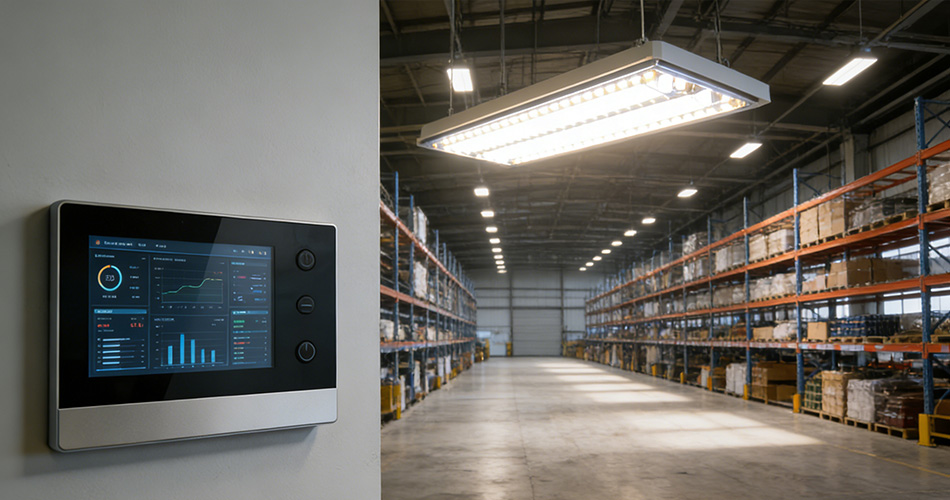
Tenants reconfigure offices, warehouses change racking layouts, and hotels remodel floors. Smart systems support regrouping and zoning in software—without rewiring.
What makes scalable smart lighting solutions truly “scalable”
The term scalable smart lighting solutions is often used loosely. For real projects, “scalable” should mean the system can grow from one zone to:
-
A whole floor
-
An entire building
-
A multi-building campus
-
A portfolio across multiple sites
…and still remain manageable for a small facility team.
Scalability checklist
A solution is genuinely scalable when it supports:
-
Role-based access (facility team, tenants, installers, read-only executives)
-
Standardized templates (schedules/scenes repeated across buildings)
-
Easy zoning and regrouping (without rewiring)
-
Central dashboards (portfolio comparison and alerts)
-
Stable network design (clear expansion path without performance degradation)
If a system becomes harder to manage every time you add a zone, it’s not scalable.
IoT smart lighting solutions: how they work (without the buzzwords)
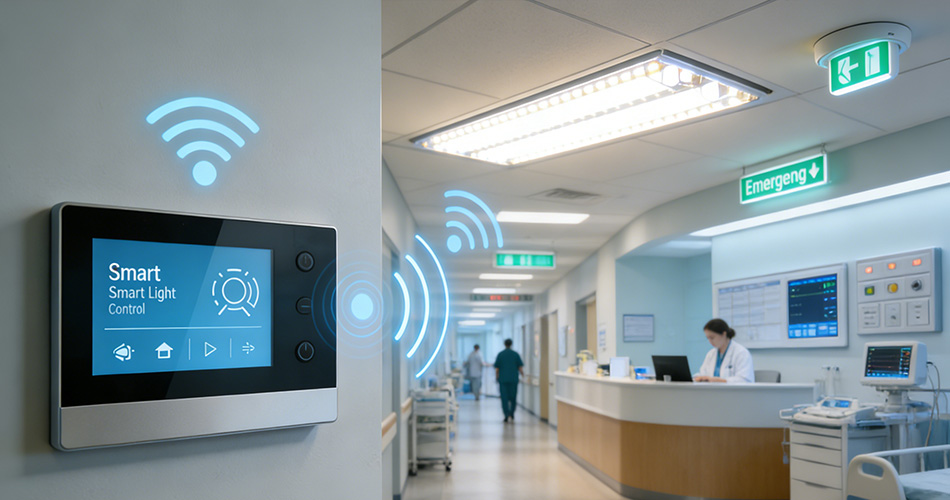
IoT smart lighting solutions connect lighting devices so data and control flow in both directions:
-
Sensors send data (occupancy, daylight levels)
-
Controllers apply logic (dimming, on/off, schedules)
-
Software monitors performance (runtime, faults, energy trends)
-
Operators adjust settings remotely (zones, scenes, schedules)
This “closed loop” is what transforms lighting from a static utility into a controllable building service. For owners, IoT enables:
-
Remote management
-
Standardization across sites
-
Data-driven optimization
-
Integration with broader building systems when required
Core features to demand in Smart lighting solutions
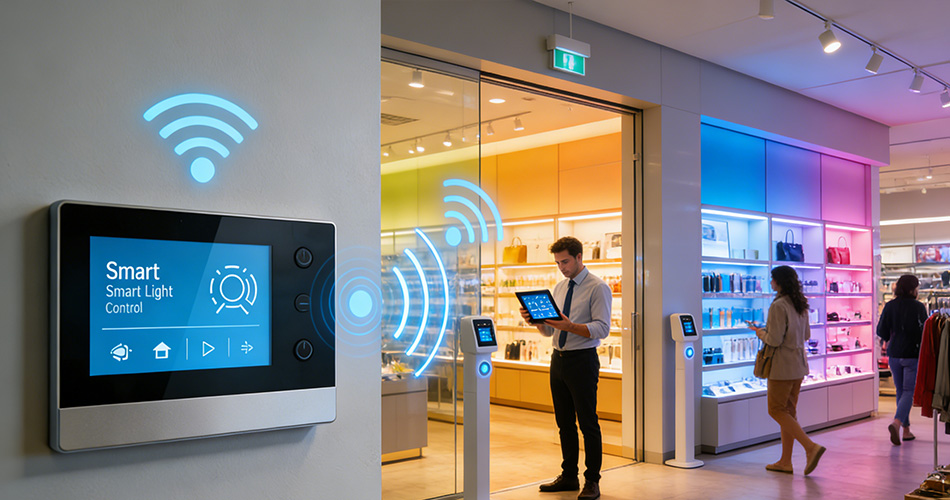
1) Zoning, grouping, and scenes
Your building is not one big room. Good smart lighting solutions allow:
-
Zones by function (work areas, corridors, docks, lobbies)
-
Groups by layout (aisles, departments, floors)
-
Scenes by activity (meeting mode, cleaning, security, night setback)
This is essential for both commercial comfort and industrial productivity.
2) Scheduling that matches reality
Schedules remain one of the highest-ROI features—when done right. Look for:
-
Weekly schedules per zone
-
Holiday exceptions
-
“After-hours dim-to-low” with occupancy boost
-
Manual overrides with timeout (so lights don’t stay forced ON forever)
3) Daylight harvesting
Perimeter spaces, skylit warehouses, and atriums can use daylight harvesting to maintain target light levels while cutting runtime and output.
4) Monitoring and reporting
A professional system should provide:
-
Device online/offline status
-
Fault alerts and diagnostics
-
Runtime trends by zone
-
Energy and utilization dashboards
-
Exportable summaries for internal reporting
5) Multi-user governance
If multiple people touch the system, you need permissions:
-
Admin vs facility operator vs tenant vs installer
-
Area restrictions (tenant manages only their suite)
-
Audit logs (who changed what)
This prevents “settings drift” and protects long-term performance.
Use cases by building type
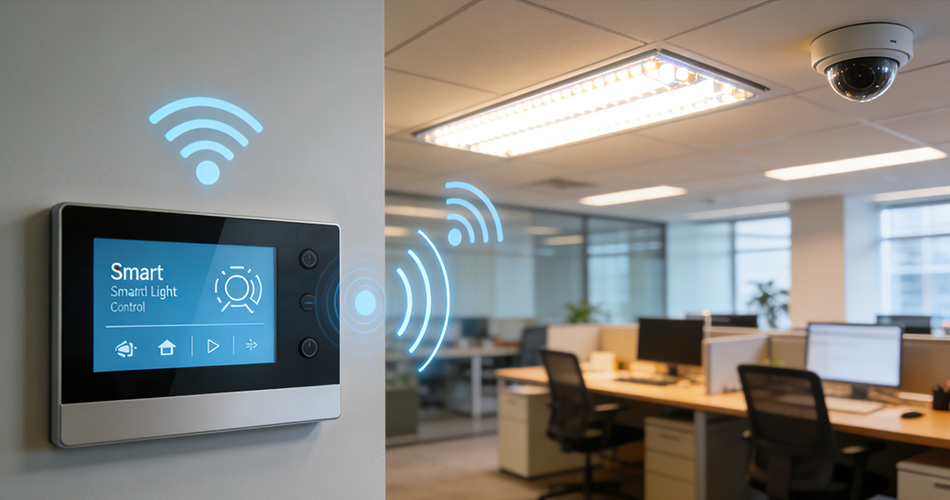
Commercial offices and mixed-use buildings
-
Meeting rooms: occupancy control + scenes
-
Open office: schedules + daylight zones
-
Common areas: consistent policies and limited overrides
-
Multi-tenant: role-based access and area-based permissions
Industrial facilities and warehouses
-
Aisles: occupancy with dim-to-low baseline
-
Workcells: stable task lighting with local overrides
-
Loading docks: schedule + occupancy boosts
-
Yards/perimeter: schedule + sensor-based control strategies
-
Maintenance: alerts to reduce lift trips and downtime
Smart lighting solutions for hotels
Hotels are one of the most compelling applications because they combine guest comfort, staff workflows, and strict brand standards.
Smart lighting solutions for hotels typically focus on:
-
Guest comfort (smooth dimming, scene presets, consistent ambiance)
-
Staff operations (housekeeping modes, maintenance alerts)
-
Energy savings (unoccupied guestroom behavior, corridor scheduling)
-
Common spaces (lobby, restaurant, conference rooms with scene control)
-
Multi-user permissions (front desk vs engineering vs housekeeping vs management)
Hotel-ready lighting scenes
-
Welcome / Relax / Night / Housekeeping / Do Not Disturb-friendly behavior
A strong solution standardizes these scenes across rooms and floors while allowing local flexibility for events and seasonal changes.
How to choose the right smart lighting solutions provider
A smart lighting solutions provider should offer more than products. The best providers deliver a repeatable process and reduce risk.
What to evaluate in a provider
-
Design support
-
Lighting intent by zone (lux targets, comfort, safety, code needs)
-
Control strategy design (occupancy, daylight, schedules, scenes)
-
Commissioning expertise
-
Device mapping and zoning
-
Sensor tuning (timeouts, sensitivity, dim levels)
-
Scene setup and verification
-
Scalability and lifecycle
-
Ability to expand without rework
-
Long-term maintenance tools (alerts, dashboards)
-
Training for your facility team
-
Reliability in your environment
-
Industrial: ingress protection (e.g., IP-rated options), temperature tolerance, robust mounting
-
Commercial: comfort dimming, scene consistency, multi-user governance
-
Support and documentation
-
Clear handover documents
-
Troubleshooting playbooks
-
Ongoing optimization options
Buyer tip: Ask for a “day 2 operations” demo—how your team will actually manage schedules, permissions, alerts, and reports after installation.
Implementation roadmap: from audit to long-term savings
Step 1: Baseline audit
-
Fixture inventory, wattage, mounting heights
-
Operating hours by zone
-
Problem zones (glare, dark spots, over-lighting)
-
Current controls (manual switches, timers, none)
Step 2: Define control intent (zone-by-zone)
For each zone decide:
-
Target illuminance and comfort needs
-
Occupancy strategy (on/off vs dim-to-low, timeouts)
-
Daylight zones
-
Schedule policies and exceptions
-
Override rules and permissions
Step 3: Deploy in phases
Start where savings are easiest and disruption is lowest:
-
Corridors, restrooms, meeting rooms (commercial)
-
Aisles, low-traffic zones, skylit areas (industrial)
Then scale outward.
Step 4: Commission and verify
-
Confirm sensors behave correctly (no nuisance triggering)
-
Confirm daylight zones dim smoothly (no visible “pumping”)
-
Confirm schedules match real operating patterns
Step 5: Operate with a simple optimization routine
-
Monthly: review dashboards and runtime outliers
-
Quarterly: tune schedules and sensor timeouts
-
Annually: recommission critical areas and update templates
This keeps savings from fading over time.
Commercial and industrial ROI: what decision-makers actually trust
When presenting smart lighting, avoid vague claims. The most persuasive ROI framing is practical:
-
Reduced runtime from occupancy and schedules
-
Reduced output from daylight harvesting in perimeter/skylit zones
-
Reduced maintenance labor through status visibility and faster fault isolation
-
Improved operational consistency across shifts, tenants, or hotel floors
A credible proposal shows savings by zone (not one building-wide number) and explains how control intent matches real usage.
FAQ
1) What are Smart lighting solutions?
Smart lighting solutions combine LED fixtures, sensors, controls, and software to automate lighting based on occupancy, daylight, and schedules—improving efficiency, comfort, and operational control.
2) What makes scalable smart lighting solutions different from basic “smart” products?
Scalable smart lighting solutions support expansion from a single area to multiple floors, buildings, and sites while maintaining centralized governance, templates, dashboards, and manageable operations.
3) What are IoT smart lighting solutions used for in buildings?
IoT smart lighting solutions connect lighting devices so operators can control zones remotely, automate behavior using sensor data, monitor system health, and generate reporting for optimization and accountability.
4) What should I look for in a smart lighting solutions provider?
A strong smart lighting solutions provider delivers design support, commissioning workflows, multi-user governance, scalable architecture, and long-term tools for monitoring, maintenance, and optimization.
5) Are smart lighting solutions for hotels worth it?
Yes. Smart lighting solutions for hotels can improve guest experience through consistent scenes and comfort dimming while reducing energy use in unoccupied rooms and simplifying staff workflows through role-based access and operational modes.
Call to Action (for building owners, contractors, and OEM buyers)
If you’re planning a retrofit or new-build upgrade and want Smart lighting solutions that are truly scalable, choose a system designed for long-term operations—complete with IoT smart lighting solutions connectivity, multi-user governance, scheduling, daylight strategies, and reporting dashboards.
For an accurate proposal, prepare:
-
Building type (office / warehouse / factory / hotel / mixed-use)
-
Floor plans or zone list
-
Fixture types and quantities (dimming requirements)
-
Operating hours and pain points (after-hours waste, maintenance, safety)
-
IT/security requirements (roles, permissions, audit needs)
-
Project timeline and downtime constraints
If you tell me whether your priority is hotels, industrial, or a mixed portfolio, I can tailor the next version with more targeted examples and keyword placement to capture higher-intent searches.


)
)
)
)


